Amina Shen — Customer Support and Sales Specialist
Home / Author / Amina Shen — Customer Support and Sales Specialist / 6801ZZ Ultra-Slim Deep Groove Ball Bearing for Compact Precision Equipment

6801ZZ Ultra-Slim Deep Groove Ball Bearing for Compact Precision Equipment

Modern equipment designers are continually challenged to create smaller, lighter, quieter, and more efficient products without sacrificing reliability. In compact motors, miniature fans, office equipment, household appliances, precision instruments, and light-duty electromechanical systems, the bearing often occupies a critical position within a very limited installation space. A bearing that is too wide can increase the size of the entire assembly, while a bearing with insufficient accuracy or unsuitable shielding may cause noise, friction, premature wear, or unstable rotation.

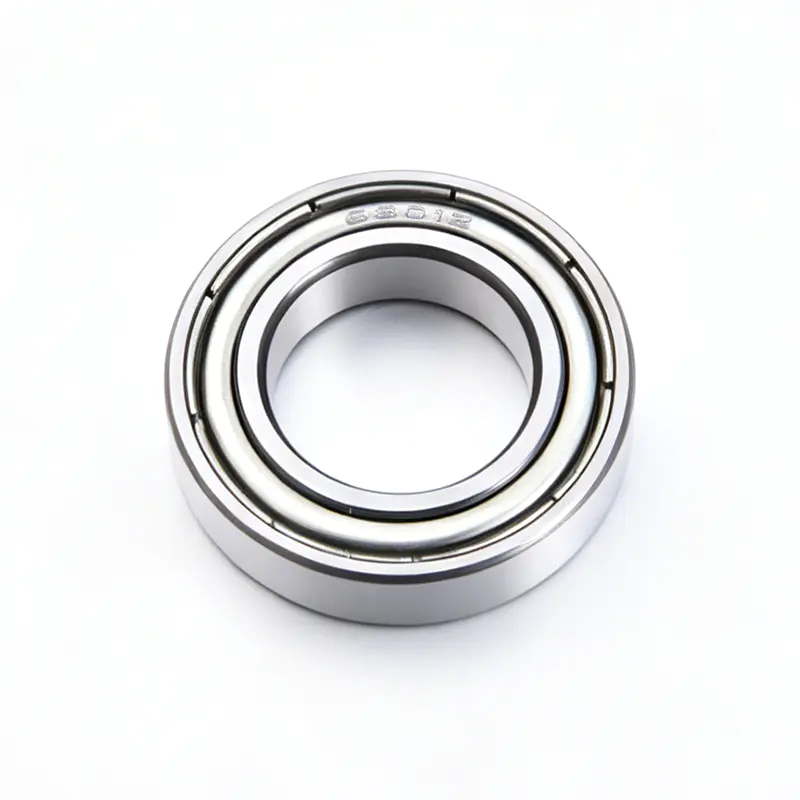
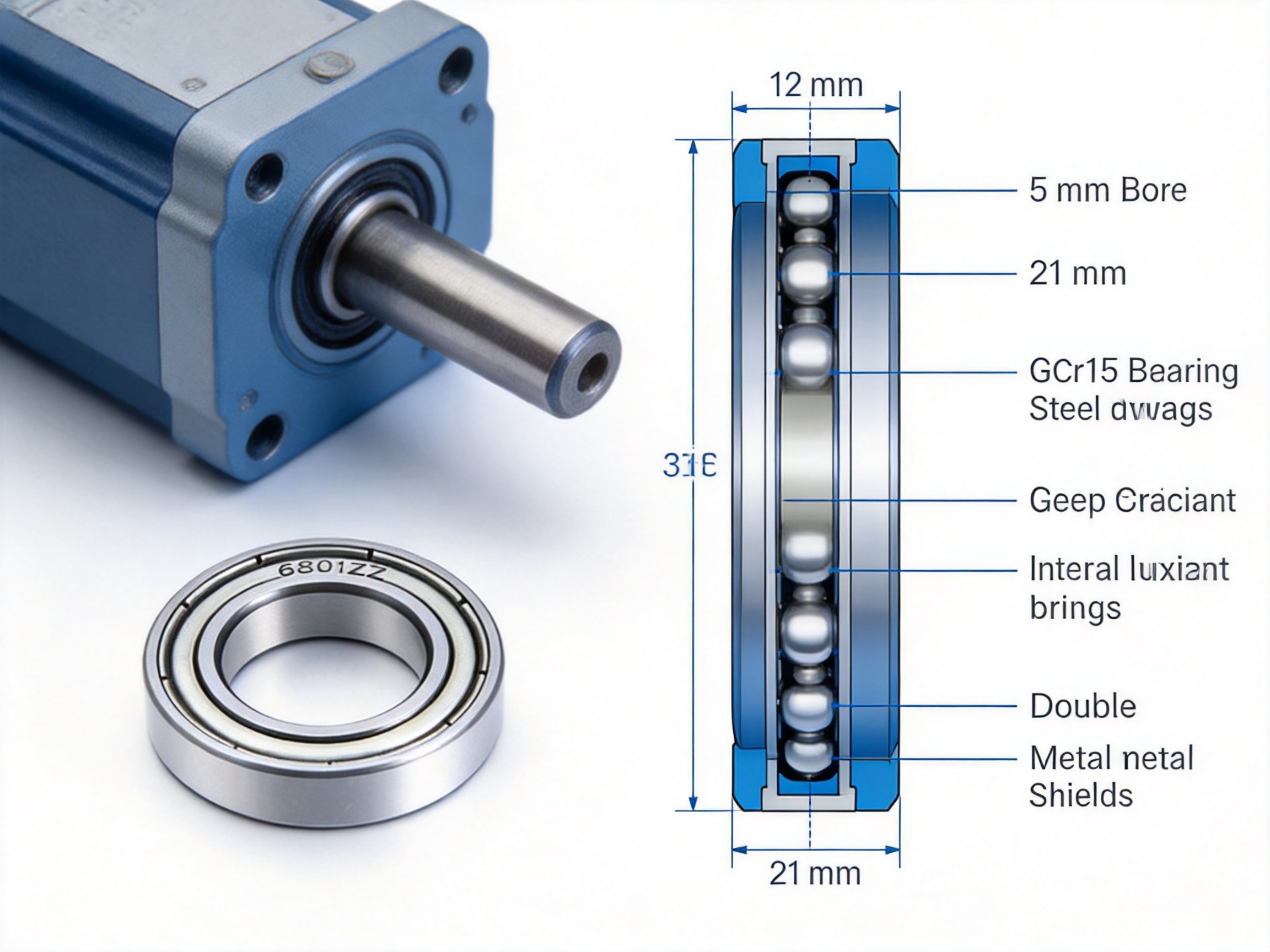
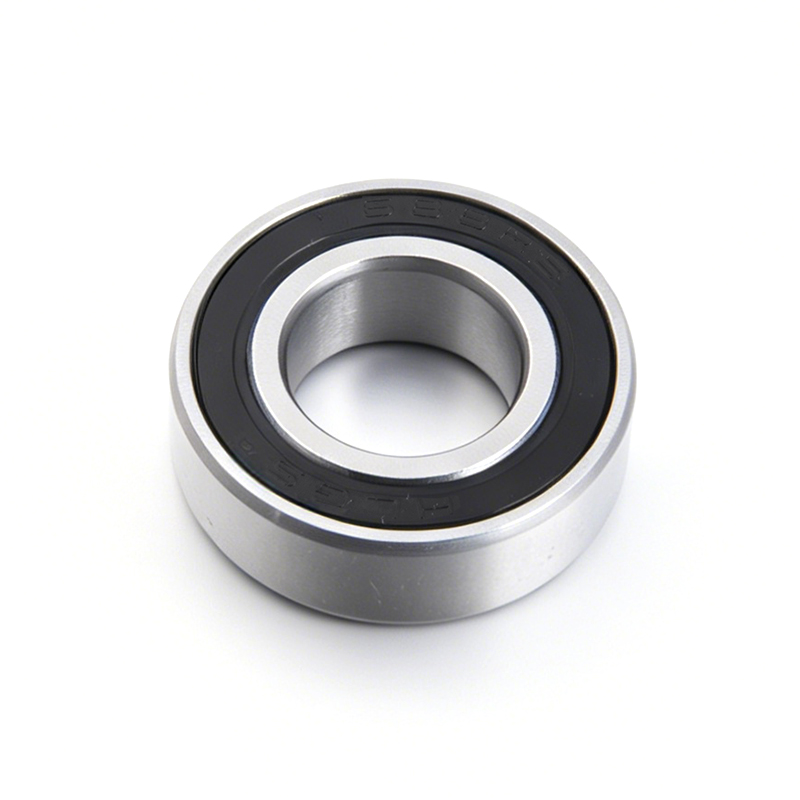
The 6801ZZ deep groove ball bearing is designed to address these requirements. With a 12 mm bore, 21 mm outside diameter, and only 5 mm width, it provides a slim and practical bearing solution for applications where axial space is restricted. Its double metal shields help protect the internal rolling elements and lubricant from common external contaminants, while its GCr15 bearing steel construction supports dependable service in a broad range of small mechanical systems.

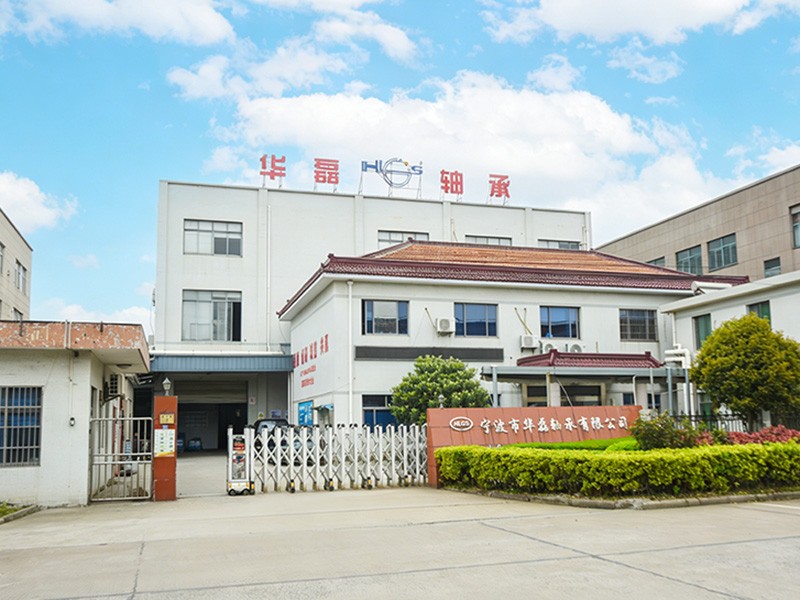
Manufactured by Ningbo Zhenhai Hualei Bearing Co., Ltd., the 6801ZZ reflects the company’s experience in miniature and small-sized deep groove ball bearings. The company has operated since 2001 and applies controlled manufacturing, precision machining, advanced testing equipment, and quality management practices based on ISO 9001 and ISO/TS 16949 systems. These capabilities support consistent dimensions, dependable rotation, and repeatable quality for both standard products and OEM or ODM requirements.

This article examines the design, performance, manufacturing strengths, application suitability, purchasing considerations, and maintenance requirements of the 6801ZZ ultra-slim ball bearing. It also explains how this bearing compares with more general-purpose alternatives and why its compact configuration can provide important advantages in modern equipment design.

6801ZZ Ultra Slim Ball Bearing for Small Motors and Precision Instruments

Product Overview

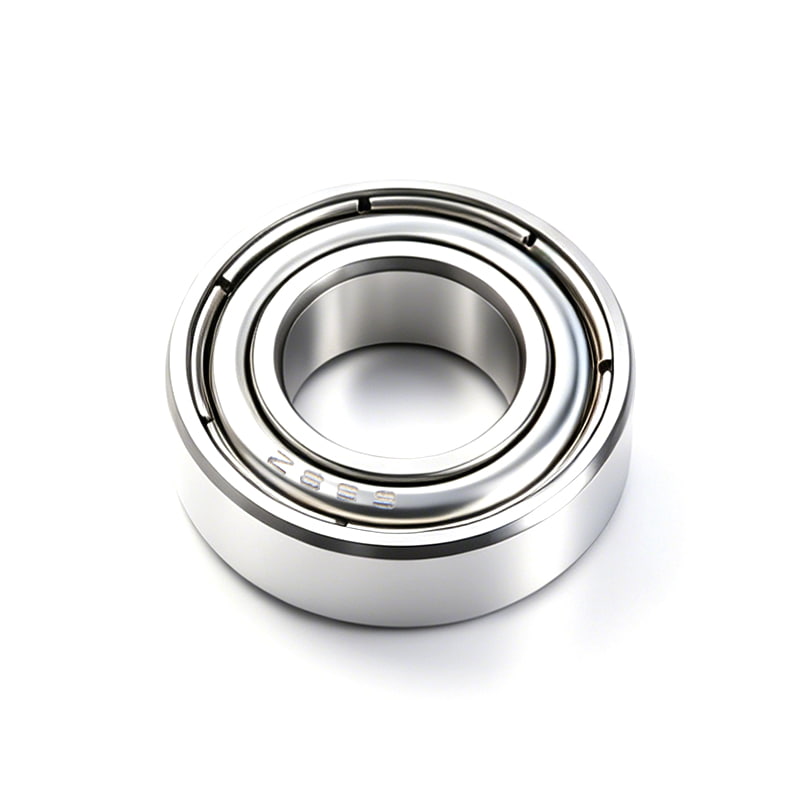
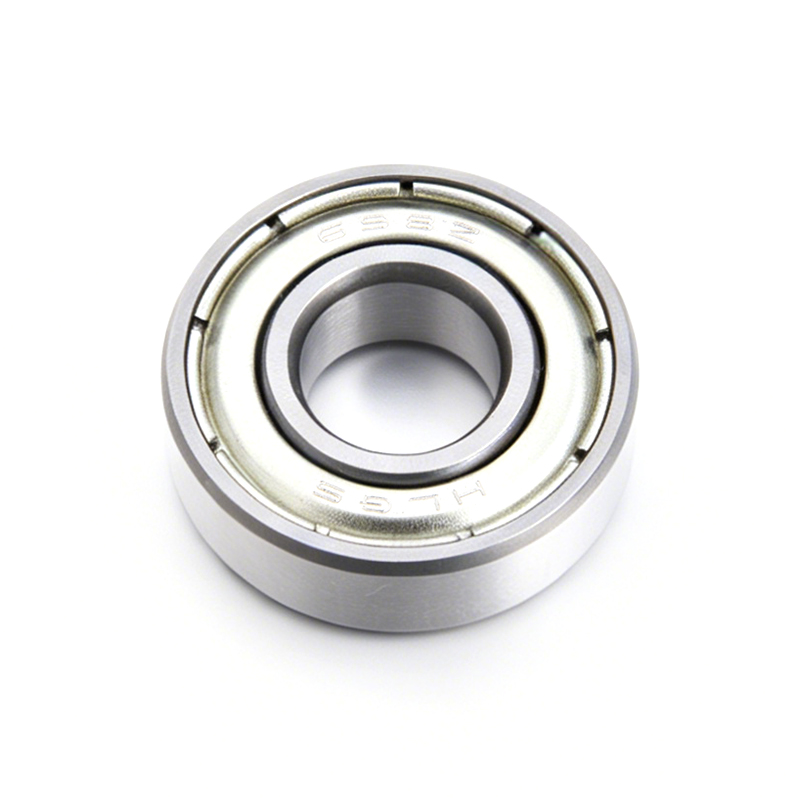
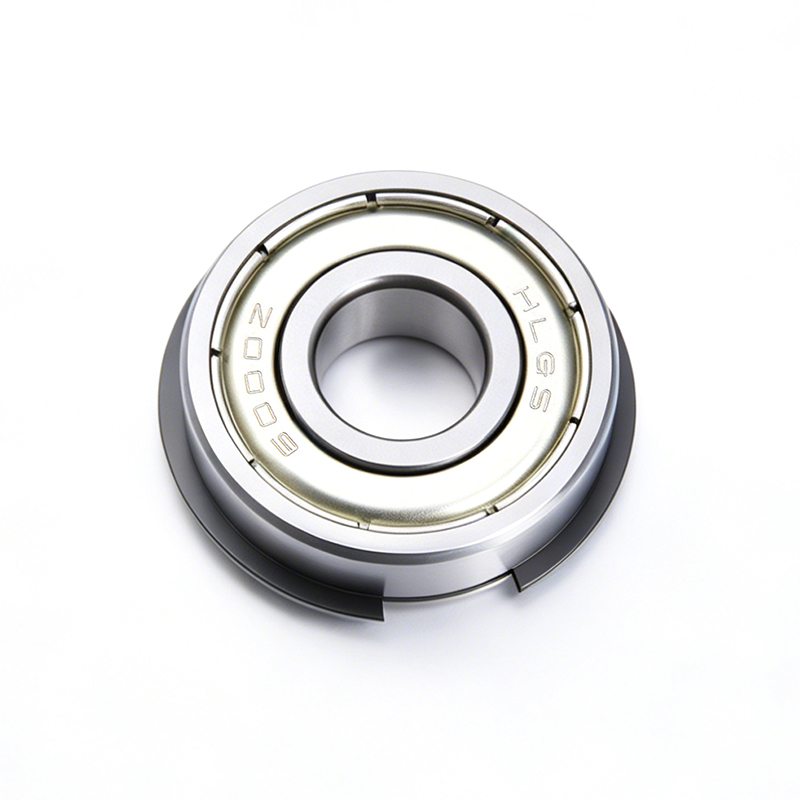
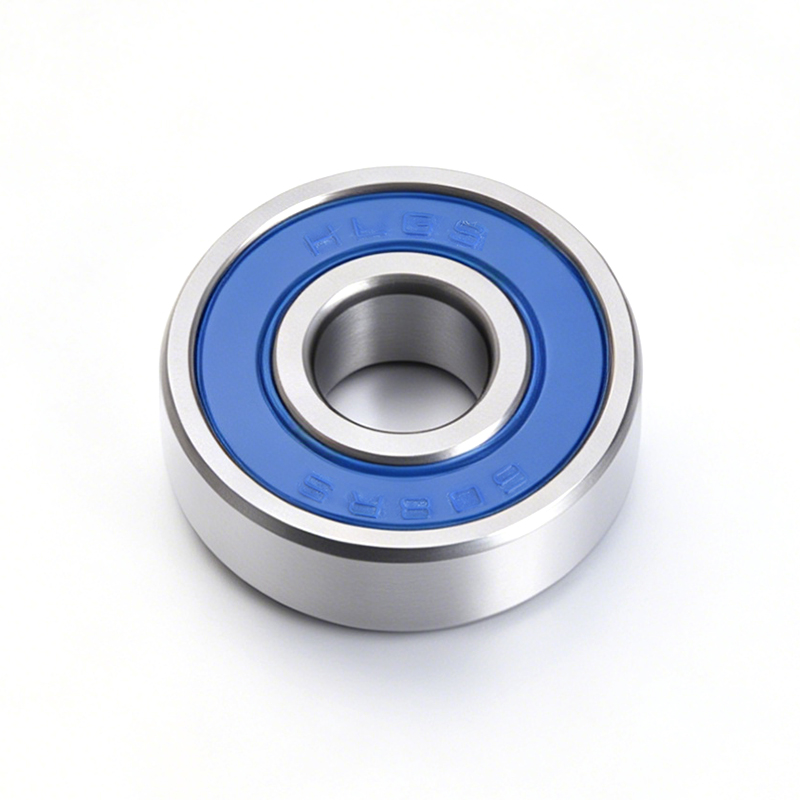
The 6801ZZ is a thin-section, single-row deep groove ball bearing. The designation “6801” identifies a bearing from the 6800 series, a family commonly selected for applications requiring a relatively large bore compared with the outside diameter and a narrow axial width. The suffix “ZZ” indicates double metal shields, with one shield positioned on each side of the bearing.

Its principal dimensions are 12 mm bore, 21 mm outside diameter, and 5 mm width. These dimensions make it suitable for assemblies that cannot accommodate the greater axial thickness of many standard 6200-series bearings. The 6801ZZ can therefore help equipment designers reduce housing length, limit rotating mass, and preserve valuable space for other components such as windings, gears, sensors, circuit boards, impellers, or drive couplings.

ParameterSpecificationDesign Significance
Bearing number6801ZZIdentifies the slim deep groove bearing and its double metal-shield configuration
Bore diameter12 mmProvides a compact shaft interface for small rotating assemblies
Outside diameter21 mmSupports installation in small bearing housings
Width5 mmReduces axial installation space compared with wider bearing series
Shield configurationDouble metal shields, ZZHelps limit dust entry and retain internal lubricant
Dynamic load rating, Cr1760 NIndicates the bearing’s rated capability for repeated rotating load conditions
Static load rating, Cor830 NIndicates resistance to permanent deformation under stationary or slow-moving load
MaterialGCr15 bearing steelProvides a hardened, wear-resistant material for rings and rolling elements

The product is intended for precision-oriented, light-duty, and moderate-duty applications rather than for large industrial loads. Correct application requires consideration of speed, load direction, temperature, shaft and housing fits, lubrication, contamination, and expected service life. Within its intended operating range, the 6801ZZ offers a balanced combination of compact dimensions, low friction, shielding, and reliable rotation.

Why the Slim 6800-Series Configuration Matters

In many mechanical products, bearing width directly affects the size of the shaft support structure. A wider bearing may require a longer housing, increased shaft shoulder spacing, additional retaining features, and more room between adjacent components. These changes can increase product weight and manufacturing cost. They may also restrict the available design space for electrical or mechanical functions.

The 5 mm width of the 6801ZZ gives designers greater freedom when packaging a small rotating system. A compact bearing support can contribute to a shorter motor body, a slimmer fan module, or a more compact instrument enclosure. In portable equipment, reducing the bearing’s axial footprint can help improve overall ergonomics and reduce material use.

The slim profile is especially useful when the radial load is relatively modest and the assembly benefits from a narrow bearing envelope. Typical examples include miniature motor shafts, small pulleys, instrument mechanisms, compact rollers, light-duty gear assemblies, and fan rotors. The bearing’s 12 mm bore is also large enough for many small shafts while remaining compatible with a 21 mm housing diameter.

Compared with a wider general-purpose bearing of similar bore, the 6801ZZ may provide a more efficient use of space. It is not simply a smaller version of a conventional bearing; it is a bearing selected for a particular packaging objective. Its value lies in matching the bearing geometry to the application instead of using excess bearing width that does not contribute useful performance.

Designers should nevertheless avoid treating thin-section construction as a universal replacement for heavier bearing series. A wider bearing may be preferable where high radial load, severe shock, significant misalignment, or demanding shaft support is present. The 6801ZZ is most advantageous when compactness, low friction, and stable rotation are more important than maximum load capacity.

Material Selection: GCr15 Bearing Steel

The 6801ZZ is made from GCr15 bearing steel, a widely used high-carbon chromium bearing material. When properly processed and heat treated, GCr15 provides the hardness, fatigue resistance, wear resistance, and dimensional stability required for rolling contact applications.

Bearings operate under concentrated contact stress. The rolling elements and raceways repeatedly pass through highly loaded contact zones, often millions or billions of times during the service life of the equipment. If the material lacks sufficient hardness or structural consistency, the raceway can develop indentations, spalling, or fatigue damage. Appropriate bearing steel helps maintain the geometry of the raceway and supports consistent rolling performance.

Material quality is important not only because of the nominal steel grade but also because of the steel’s cleanliness, heat-treatment condition, microstructure, and dimensional stability. Bearing manufacturers must control the material through multiple stages, including forming, machining, heat treatment, grinding, superfinishing, assembly, and final inspection. Each stage can influence noise, vibration, friction, and service life.

GCr15 is well suited to small deep groove bearings because it combines mechanical strength with established processing knowledge. Its use also supports a consistent supply chain for standard bearing components and makes the 6801ZZ appropriate for international OEM production. When matched with suitable lubricant and operating conditions, the material can provide dependable performance in motors, appliances, instruments, and office equipment.

Precision Machining and Raceway Quality

The performance of a miniature bearing depends heavily on the quality of its raceways. The raceway is the precision-formed track in which the balls rotate. Even small variations in roundness, waviness, surface roughness, or groove geometry can affect torque, sound, vibration, and service life.

Precision machining begins with accurate preparation of the inner and outer rings. The rings must be produced to the required dimensional tolerances before heat treatment and final finishing. Because heat treatment can cause controlled dimensional changes, the manufacturing process must allow for those changes and compensate through subsequent grinding and finishing operations.

Grinding is used to establish the final raceway geometry and critical dimensions. Subsequent finishing operations can improve surface quality and reduce irregularities that would otherwise increase friction or create unwanted vibration. Consistent raceway geometry helps the rolling elements distribute load smoothly as they circulate through the bearing.

For a thin-section bearing, process discipline is particularly important. The rings have limited cross-sectional thickness, so dimensional changes and deformation must be carefully controlled. A manufacturer experienced in miniature bearings understands that the process cannot simply be scaled down from large bearings. Tooling, fixturing, grinding parameters, cleaning, inspection, and assembly practices must all be appropriate for small components.

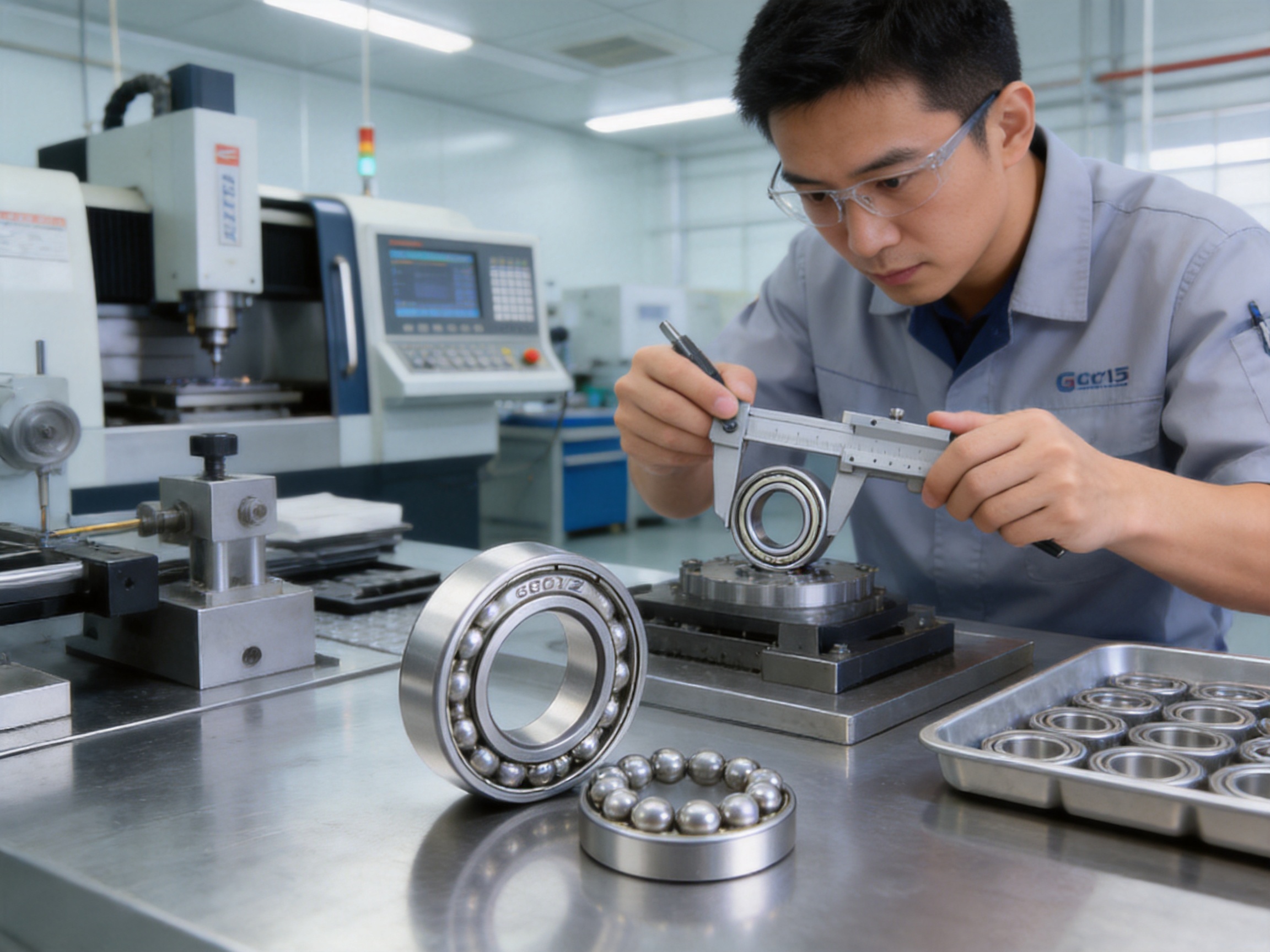
Ningbo Zhenhai Hualei Bearing Co., Ltd. describes its products as precision machined and tested using advanced equipment. This manufacturing approach is important for the 6801ZZ because compact applications often have less tolerance for noise, vibration, and installation variation. A bearing that rotates acceptably in a general mechanical assembly may not be suitable for a small motor or precision instrument where acoustic and torque performance are closely monitored.

Double Metal Shields and Contamination Protection

The “ZZ” configuration uses two metal shields, one on each side of the bearing. The shields are designed to reduce the entry of dust, fibers, and other common contaminants while helping retain the factory-applied lubricant inside the bearing. This arrangement is practical for many applications in which the bearing is exposed to ordinary environmental contamination but does not require a fully sealed, contact-seal construction.

Metal shields generally provide low contact resistance because they do not rub directly against the inner ring in the same manner as many contact seals. This can support low starting torque, low operating friction, and efficient high-speed rotation. These characteristics are valuable in small motors, miniature fans, and office equipment, where available power is limited and even modest frictional losses can affect efficiency or temperature.

The shield does not make the bearing completely impermeable. The 6801ZZ should not be treated as a waterproof bearing or selected for continuous exposure to washdown, submerged operation, heavy liquid contamination, or abrasive slurry. Where strong protection against water or fluid ingress is required, a suitable sealed bearing design and compatible lubricant should be considered.

For indoor electromechanical products, however, the ZZ arrangement offers a useful balance. It provides more protection than an open bearing while avoiding some of the friction associated with contact seals. The shield also reduces the likelihood that ordinary dust will mix with the lubricant and turn it into an abrasive compound.

When installing a shielded bearing, users should avoid damaging the shields with tools, burrs, sharp shaft shoulders, or excessive interference. The shield clearance and internal lubricant are part of the bearing’s intended operating design. Removing the shields or washing out the factory lubricant can change performance and may shorten service life.

Low Friction and Stable High-Speed Rotation

Small electric motors and precision mechanisms require bearings that rotate smoothly with minimal resistance. Excessive friction can increase power consumption, create heat, reduce battery life, and cause speed instability. In small assemblies, the bearing may represent a significant portion of the total mechanical loss, especially when the rotating load is light.

The 6801ZZ supports low-friction operation through its narrow geometry, precision raceways, rolling contact, and non-contact metal shields. Its compact construction can reduce the amount of material and rotational inertia compared with a larger bearing. This is advantageous where a motor must accelerate quickly or where a small drive has limited starting torque.

Stable rotation also depends on correct installation. A bearing cannot compensate for a bent shaft, an inaccurate housing, excessive fit interference, contamination, or improper axial clamping. When the shaft and housing are manufactured within appropriate tolerances, the bearing can operate with more uniform internal clearance and reduced vibration.

In precision instruments, smooth rotation can improve the repeatability of moving elements. In miniature fans, it can reduce tonal noise and rotor wobble. In office equipment, it can help support reliable paper-feed, actuator, or scanning mechanisms. In household appliances, it can contribute to quieter operation and a longer maintenance interval.

The 6801ZZ is not defined solely by its maximum speed. The correct speed limit depends on load, lubrication, temperature, mounting, balance, and operating environment. A lightly loaded bearing with a clean installation may perform differently from the same bearing installed under preload or exposed to elevated temperature. Application testing is recommended for designs operating near their performance limits.

Load Capacity and Application Balance

The published dynamic load rating of the 6801ZZ is 1760 N, while its static load rating is 830 N. These values provide useful reference points for engineering calculations and product selection. The dynamic rating relates to repeated rotating load conditions and is used in bearing life calculations. The static rating relates to stationary or very slow-moving conditions and helps evaluate the risk of permanent raceway or ball deformation.

Load ratings should not be interpreted as recommended everyday operating loads without considering the complete application. Bearing life is influenced by the magnitude and direction of the load, rotational speed, lubrication, contamination, alignment, temperature, shock, and installation accuracy. A bearing operating under clean, stable, properly aligned conditions can achieve a substantially different life from one exposed to impact or contamination.

The deep groove design can support both radial loads and moderate axial loads in either direction. This versatility explains why deep groove ball bearings are widely used in motors, rollers, pulleys, fans, and mechanical transmission systems. The 6801ZZ is particularly suitable when the primary load is radial and the axial load is limited or controlled by the surrounding assembly.

For applications with heavy axial loading, severe impact, high belt tension, large overhung loads, or substantial shaft deflection, another bearing type or a larger bearing series may be more appropriate. The thin 6801 configuration should be selected because it matches the application’s actual load and space requirements, not merely because it fits dimensionally.

Engineering teams can use the dynamic and static ratings as part of a broader selection process. They should also review required life, duty cycle, speed, temperature, mounting conditions, and safety factors. Where the bearing is used in a new product, prototype validation under actual operating conditions is a practical way to confirm noise, temperature, torque, and durability.

Advantages Compared with More General-Purpose Alternatives

Reduced Axial Footprint

The most obvious advantage of the 6801ZZ is its 5 mm width. A conventional bearing with a similar bore may occupy more axial space, requiring a longer housing or a wider support structure. The slim 6801 design allows the bearing to fit into compact assemblies without adding unnecessary axial length.

Efficient Use of Material and Space

A small bearing can reduce the overall mass of a rotating assembly and may help lower material usage in housings, spacers, and support brackets. This is particularly useful in portable products, compact motors, and equipment where every millimeter and gram influences the final design.

Low-Friction Shielding

The double metal-shield configuration protects the bearing from ordinary dust while generally maintaining low friction compared with contact-sealed constructions. This balance is valuable for high-speed miniature rotation, where a heavy sealing arrangement may produce unwanted drag.

Reliable Material Platform

GCr15 bearing steel is a well-established material for rolling bearings. Its broad industrial acceptance supports predictable performance, established heat-treatment practices, and compatibility with standard bearing manufacturing processes.

Broad Application Flexibility

The deep groove structure can handle common radial loads and moderate bidirectional axial loads. This gives the 6801ZZ greater application flexibility than a bearing designed only for one specialized load direction.

Manufacturing Consistency

The manufacturer’s experience in miniature deep groove bearings, combined with precision machining and advanced inspection, supports repeatable production. For OEM customers, consistency from batch to batch can be as important as the performance of an individual bearing.

These advantages do not mean that the 6801ZZ is superior for every application. A large bearing may carry more load, a contact-sealed bearing may offer better fluid protection, and a ceramic or hybrid bearing may suit extreme speed or electrical insulation requirements. The advantage of the 6801ZZ is its balanced design for compact, clean, light-duty, and precision-oriented equipment.

Manufacturing Strengths of the Producer

Ningbo Zhenhai Hualei Bearing Co., Ltd. was established in 2001 and specializes in miniature deep groove ball bearings. Long-term specialization provides practical knowledge of the dimensional, material, and assembly challenges associated with small bearings. This focus is relevant to the 6801ZZ because miniature products often require close attention to details that can be less critical in larger, slower, or heavier bearing applications.

The company produces a broad range of deep groove ball bearings under the HLGS trademark. Its products are used in food machinery, household appliances, automotive electromechanical systems, electric tools, mechanical transmission devices, and motors. Exposure to these different application environments supports a manufacturing perspective that considers not only dimensions but also noise, rotation, durability, installation, and customer-specific requirements.

The company reports that products are strictly tested with advanced equipment. Testing is an essential part of miniature bearing production because visual inspection alone cannot reliably identify all issues affecting performance. Depending on the production and inspection plan, bearing manufacturers may evaluate dimensions, radial clearance, rotation torque, vibration, noise, appearance, shield condition, lubricant condition, and packaging integrity.

Quality management under ISO 9001 supports systematic control of processes, records, corrective actions, supplier management, and customer requirements. ISO/TS 16949 experience is particularly relevant to automotive-related quality expectations, where traceability, process capability, preventive action, and consistency are closely emphasized. Although a bearing’s suitability must still be confirmed for each application, these management systems indicate a structured approach to production and quality control.

Manufacturing strength also includes the ability to support OEM and ODM projects. In 2016, the company established Ningbo Hotex Mechanical & Electrical Technology Co., Ltd. as its import and export department. This structure supports international customer communication, product coordination, and export service. For customers developing a new motor, appliance, instrument, or mechanical module, OEM and ODM capability can simplify communication between the bearing supplier and the product engineering team.

A capable supplier should be able to discuss more than a catalog number. Important technical discussions may include operating speed, load spectrum, shaft and housing tolerances, lubricant selection, shielding, packaging, inspection standards, sampling plans, and expected service life. A manufacturer with experience across multiple industries can help identify whether the 6801ZZ is genuinely suitable or whether another bearing configuration would provide a better result.

Applications for the 6801ZZ

Small Motors

The 6801ZZ is well suited to small motors used in fans, actuators, pumps, office equipment, and household products. Its narrow width helps reduce motor length, while its low-friction rotation supports efficient operation. The ZZ shields are useful in indoor motor environments where protection from dust and retention of grease are required.

Precision Instruments

Instrument mechanisms often require smooth, repeatable movement within a limited enclosure. The slim bearing can support shafts, rollers, rotating indicators, compact drive systems, and other low-load mechanisms. Proper installation and cleanliness are especially important because instrument users may notice small changes in torque, noise, or positioning accuracy.

Miniature Fans

Fans depend on stable rotor support and consistent rotation. A bearing with excessive friction can increase motor temperature and reduce airflow efficiency. The 6801ZZ’s slim profile can help maintain a compact fan hub or motor assembly while its shields help protect the lubricant from ordinary airborne dust.

Household Appliances

Compact appliances may contain small motors, rollers, adjustment mechanisms, or drive assemblies. The bearing can be considered for light-duty components where space is limited and the operating environment is relatively clean. Product designers should evaluate appliance-specific temperature, duty cycle, vibration, and moisture conditions before final selection.

Office Equipment

Printers, scanners, document-handling systems, and other office machines use small rotating shafts and rollers. Smooth bearing rotation can contribute to consistent movement, lower noise, and reliable repeated operation. The compact dimensions are useful when multiple mechanisms are installed close together.

Light-Duty Electromechanical Devices

Small gearboxes, compact drives, automation components, sensors, and laboratory equipment may benefit from a slim deep groove bearing. The product is most appropriate where loads and environmental conditions remain within the capabilities of the bearing and where low-friction rotation is a priority.

Installation and Fit Considerations

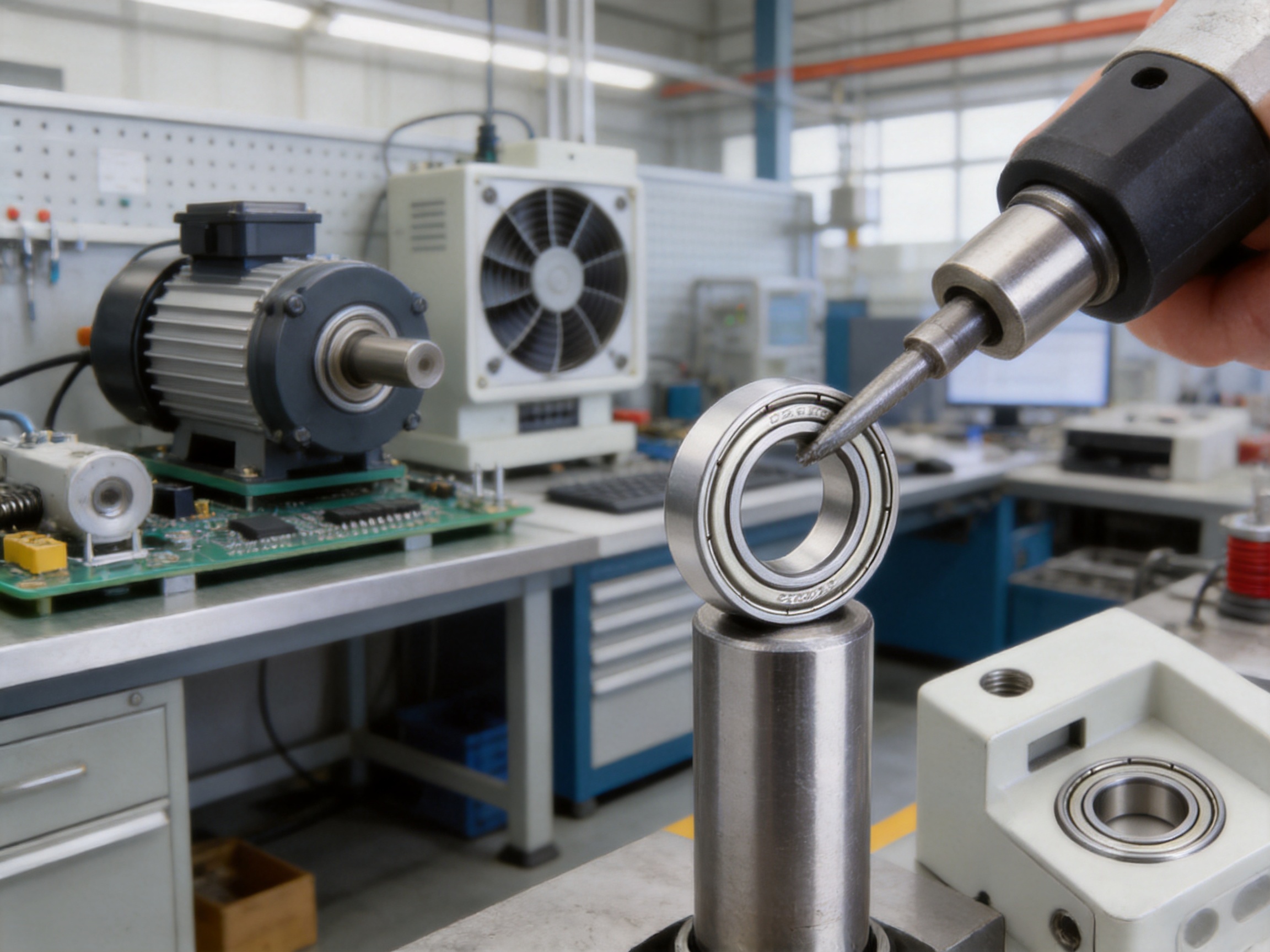
Correct installation is essential for achieving the intended performance of any precision bearing. The shaft and housing should be clean, round, and free from burrs, dents, corrosion, and machining debris. The bearing should be pressed onto the ring that receives the interference fit. For example, if the inner ring is fitted tightly to the shaft, installation force should be applied through the inner ring rather than transmitted through the balls and raceways.

Pressing through the wrong ring can create brinelling or raceway damage before the bearing has entered service. Impacting the bearing with a hammer, screwdriver, or other unsuitable tool can also deform the shields or damage precision surfaces. A properly sized arbor, bearing press, or controlled installation fixture is recommended.

Shaft and housing fits should be selected according to the direction and magnitude of the rotating load. An excessively loose fit may allow creep, fretting, or ring movement. An excessively tight fit can reduce internal clearance, increase friction, generate heat, and shorten fatigue life. The final fit should account for material, temperature, load, speed, and whether the inner or outer ring rotates relative to the load.

Axial clamping should be controlled carefully. The 6801ZZ is a narrow bearing, and excessive clamping force can distort the rings or restrict normal internal movement. Spacers, shoulders, retaining rings, and end caps should be designed to provide secure location without applying unintended preload unless preload has been deliberately specified.

Alignment is equally important. Although deep groove ball bearings can tolerate limited operational variation, they are not intended to compensate for major shaft misalignment or housing distortion. Parallel shafts, square shoulders, correct coaxiality, and adequate housing rigidity help reduce edge loading and vibration.

Lubrication and Operating Environment

The 6801ZZ is supplied with internal lubrication intended to support normal operation. Users should not automatically add grease or oil during installation. Over-lubrication can increase torque, raise operating temperature, and interfere with shield clearance. If the application requires a special lubricant, the compatibility of that lubricant with the original fill, shield material, temperature range, and operating speed should be confirmed before use.

Lubricant selection depends on speed, load, temperature, noise requirements, and environmental exposure. Small motors and instruments may require a low-noise grease with stable torque characteristics. Higher-temperature applications may require a lubricant with an appropriate temperature range. Where the equipment is exposed to chemicals, moisture, or unusual vapors, lubricant compatibility should be evaluated as part of the complete bearing selection.

The ZZ shields provide useful protection in ordinary indoor environments, but they are not intended to replace a dedicated sealing system in severe contamination. For dusty industrial environments, liquid exposure, outdoor equipment, or washdown applications, designers should compare shielded and sealed configurations and consider additional housing protection.

Storage conditions also influence bearing quality. Bearings should remain in their original packaging until installation and should be stored in a clean, dry location with stable temperature and humidity. Exposure to condensation, corrosive vapors, or direct contamination can affect uninstalled bearings even when the packaging appears intact.

Quality Assurance and Inspection

Quality assurance for a small bearing should extend from raw material control to final packaging. Material certificates, heat-treatment records, process inspection, dimensional checks, and final performance testing can all contribute to product consistency. A well-organized quality system makes it easier to identify deviations and implement corrective actions.

Dimensional inspection should confirm the bore, outside diameter, width, roundness, and other relevant geometry. These dimensions determine whether the bearing will fit properly into the shaft and housing. For OEM production, dimensional consistency is particularly important because a small variation can influence assembly force, shaft alignment, and the operating clearance of the complete mechanism.

Functional inspection may include rotation smoothness, torque, vibration, noise, and shield integrity. These characteristics are especially relevant in miniature motors and precision instruments. A bearing can meet basic dimensional requirements yet still be unsuitable for a low-noise application if its vibration or acoustic behavior is outside the equipment’s limits.

Packaging inspection protects the bearing after manufacturing. Proper packaging helps prevent corrosion, impact, contamination, and mixing of different bearing numbers. Clear identification of the 6801ZZ designation, quantity, production information, and customer-specific requirements supports warehouse control and traceability.

Customers purchasing for high-volume production should discuss inspection documentation and acceptance criteria with the supplier. Depending on the application, it may be appropriate to define sampling procedures, batch traceability, performance limits, packaging specifications, and procedures for handling nonconforming product.

OEM and ODM Support

Standard dimensions make the 6801ZZ easy to specify, but many equipment manufacturers require more than a standard catalog product. They may need a particular lubricant, packaging method, noise grade, clearance range, marking arrangement, or delivery schedule. OEM and ODM cooperation can help integrate these requirements into the manufacturing and inspection process.

During an OEM discussion, the customer should provide the shaft diameter, housing dimensions, load direction, rotational speed, temperature, operating cycle, environmental conditions, expected life, and noise requirements. Drawings or application samples can further clarify the installation and performance objectives.

A supplier can then evaluate whether the standard 6801ZZ configuration is appropriate or whether a modified specification is necessary. In some cases, a different internal clearance, lubricant, material option, shield arrangement, or packaging method may be considered. Any modification should be validated through testing, because changing one characteristic can influence torque, temperature, life, or noise.

For international customers, reliable communication and export coordination are also important. Ningbo Zhenhai Hualei Bearing Co., Ltd. provides import and export support through its related department and serves customers seeking OEM and ODM cooperation. This can be useful for manufacturers that need a stable source for repeated production rather than one-time spot purchases.

Selection Checklist for Engineers and Buyers

Before ordering the 6801ZZ, confirm that the 12 mm bore matches the shaft and that the 21 mm outside diameter matches the housing. The 5 mm width should be checked against shoulders, spacers, retaining rings, seals, and neighboring components. A dimensional fit alone is not sufficient; the entire assembly must provide appropriate support and retention.

Next, evaluate the load. Determine the radial load, axial load, shock load, belt or gear forces, and any load changes during operation. Compare these conditions with the 1760 N dynamic rating and 830 N static rating while applying suitable engineering factors and life calculations.

Review speed and temperature. A bearing operating at high speed, with preload, or in a warm enclosure may generate more heat than one operating at moderate speed in an open, ventilated assembly. Confirm that the lubricant and shield configuration are suitable for the complete duty cycle.

Assess contamination. The ZZ shields are appropriate for many clean or moderately dusty indoor applications, but the selection should be reconsidered where water, abrasive particles, chemicals, or heavy external contamination are expected.

Finally, consider quality and supply requirements. Ask about material, inspection, packaging, batch consistency, delivery capability, OEM support, and documentation. For production equipment, supplier reliability is part of product reliability.

Maintenance and Service Practices

Many 6801ZZ applications use sealed-for-life or shielded-for-life bearing arrangements in which routine relubrication is not required. Maintenance personnel should follow the equipment manufacturer’s service instructions rather than applying lubricant automatically. If the bearing develops abnormal noise, high temperature, roughness, or excessive play, replacement is usually more practical than attempting to service a shielded miniature bearing.

During maintenance, inspect the surrounding shaft, housing, shoulder, retaining hardware, and seals. A damaged bearing may be a symptom of another problem, such as misalignment, excessive belt tension, unbalanced rotors, loose housings, electrical damage, contamination, or insufficient support. Replacing the bearing without correcting the root cause may result in repeated failure.

Listen for changes in operating sound and monitor temperature where practical. Gradual increases in noise or vibration may indicate raceway fatigue, contamination, lubricant degradation, or installation damage. Sudden overheating can indicate excessive interference, preload, inadequate clearance, or an overloaded assembly.

When removing a bearing, pull through the ring that is fitted to the component being removed. Avoid transferring removal force through the rolling elements. Clean replacement components carefully and protect the new bearing from dust until it is installed.

Frequently Asked Questions

What are the dimensions of the 6801ZZ bearing?

The 6801ZZ has a 12 mm bore, a 21 mm outside diameter, and a 5 mm width. These dimensions make it a slim bearing for compact shafts and housings.

What does ZZ mean?

ZZ means that the bearing has double metal shields, with one shield on each side. The shields help limit dust entry and retain internal lubricant while generally maintaining low friction.

Is the 6801ZZ waterproof?

No. The metal shields provide protection against ordinary dust and help retain lubricant, but they do not make the bearing waterproof. Applications involving water, washdown, immersion, or heavy liquid contamination may require a different sealing arrangement.

What material is used?

The bearing is made from GCr15 bearing steel. This material is widely used for rolling bearings because of its hardness, wear resistance, and fatigue performance when properly processed and heat treated.

What are the load ratings?

The stated dynamic load rating is 1760 N, and the static load rating is 830 N. These ratings are reference values for engineering selection and should be evaluated together with speed, life, lubrication, alignment, temperature, and operating conditions.

Can the 6801ZZ be used in a small motor?

Yes. Small motors are one of its intended application areas. The slim width, low-friction rotation, and double metal shields can be beneficial in compact motor designs. The final selection should be verified against the motor’s speed, shaft fit, load, temperature, noise, and duty cycle.

Can it be used in a miniature fan?

Yes. The bearing can support miniature fan rotors where the load and environment are suitable. Correct rotor balance, shaft alignment, and installation are important for minimizing vibration and noise.

Does the bearing require additional grease during installation?

Normally, additional grease should not be added unless specified by the equipment or bearing supplier. Over-lubrication can increase friction and temperature. The original lubricant should also not be washed out without confirming lubricant compatibility and the correct relubrication procedure.

Is the 6801ZZ suitable for heavy industrial loads?

It is designed primarily for compact, light-duty, and moderate-duty applications. Heavy loads, severe shock, strong belt tension, or substantial misalignment may require a larger or different bearing series.

How should the bearing be installed?

Use clean components and apply installation force through the ring receiving the interference fit. Avoid hammering directly on the bearing and do not transmit pressing force through the balls. Correct shaft and housing fits, alignment, and axial location are essential.

Can the manufacturer provide OEM or ODM service?

Ningbo Zhenhai Hualei Bearing Co., Ltd. provides OEM and ODM support. Customers should communicate technical requirements such as dimensions, lubricant, clearance, noise, packaging, inspection, and delivery needs at the beginning of the project.

What industries use products from the manufacturer?

The company’s deep groove ball bearings are used in areas including food machinery, household appliances, automotive electromechanical systems, electric tools, mechanical transmission equipment, and motors. The 6801ZZ is especially relevant to compact mechanisms within these sectors.

Conclusion

The 6801ZZ ultra-slim deep groove ball bearing is a practical solution for compact rotating assemblies that require dependable performance within a narrow axial space. Its 12×21×5 mm configuration allows designers to reduce bearing width and preserve room for other components, while the deep groove design supports common radial loads and moderate axial loads in either direction.

Its GCr15 bearing steel construction provides a proven material foundation for wear resistance and rolling-contact fatigue performance. The double metal shields help protect against ordinary dust and retain internal lubricant without introducing the same level of friction typically associated with contact seals. Together with precision machining, the shielded configuration supports low-friction, stable rotation in small motors, instruments, fans, appliances, office equipment, and light-duty electromechanical devices.

The product’s advantages are strengthened by the manufacturer’s long experience in miniature deep groove bearings, advanced testing capabilities, structured quality management, and support for OEM and ODM programs. The company’s ISO 9001 and ISO/TS 16949 management systems provide a framework for process control and consistent quality, while its international service structure supports cooperation with customers in different markets.

As with any bearing, the 6801ZZ should be selected according to the actual load, speed, temperature, contamination, fit, alignment, and life requirements of the application. When these factors are properly evaluated, the 6801ZZ offers an efficient balance of compact size, reliable shielding, low friction, and manufacturing consistency for the next generation of small precision equipment.

References

1. ISO 9001, Quality Management Systems—Requirements, International Organization for Standardization.

2. ISO/TS 16949, Quality Management Systems—Particular Requirements for the Application of ISO 9001 for Automotive Production and Relevant Service Part Organizations.

3. ISO 281, Rolling Bearings—Dynamic Load Ratings and Rating Life, International Organization for Standardization.

4. ISO 76, Rolling Bearings—Static Load Ratings, International Organization for Standardization.

5. General technical principles for rolling-bearing installation, lubrication, fit selection, and maintenance, bearing engineering reference literature.

6. Product specifications and technical information supplied for the 6801ZZ deep groove ball bearing.

Product: 6801ZZ Ultra Slim Ball Bearing for Small Motors and Precision Instruments


Recent Articles