Blog
Home / Blog
Blog
  • 6205ZZ Deep Groove Ball Bearing: Reliable Performance for Motors, Pumps, and Industrial Machinery
    6205ZZ Deep Groove Ball Bearing: Reliable Performance for Motors, Pumps, and Industrial Machinery

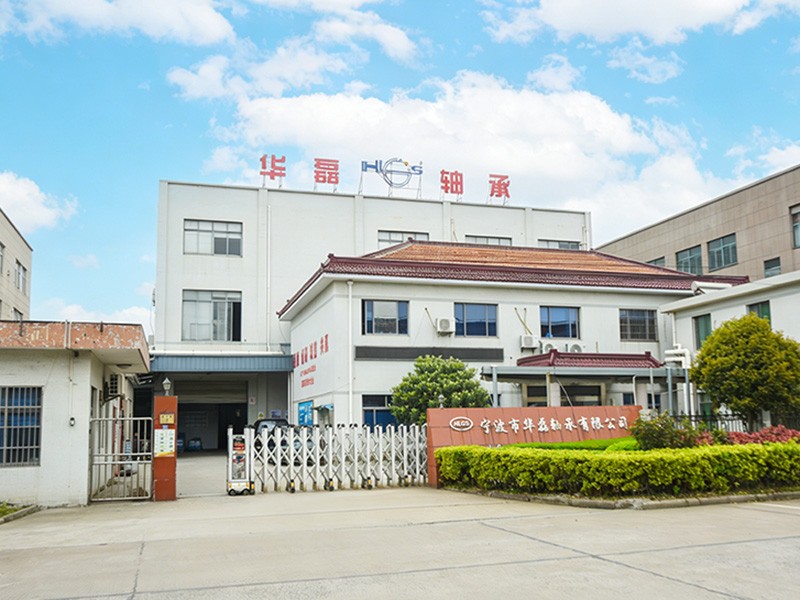
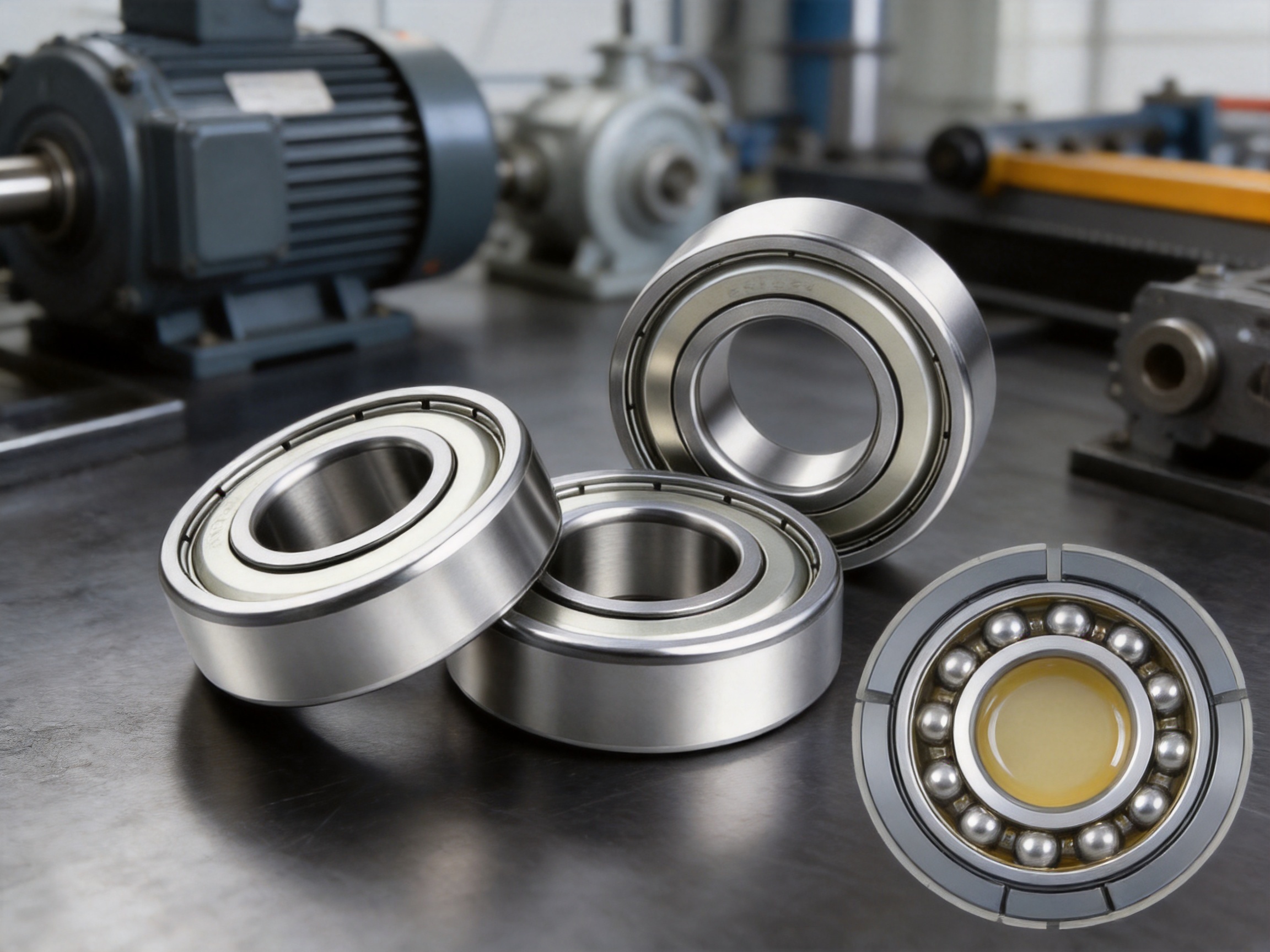
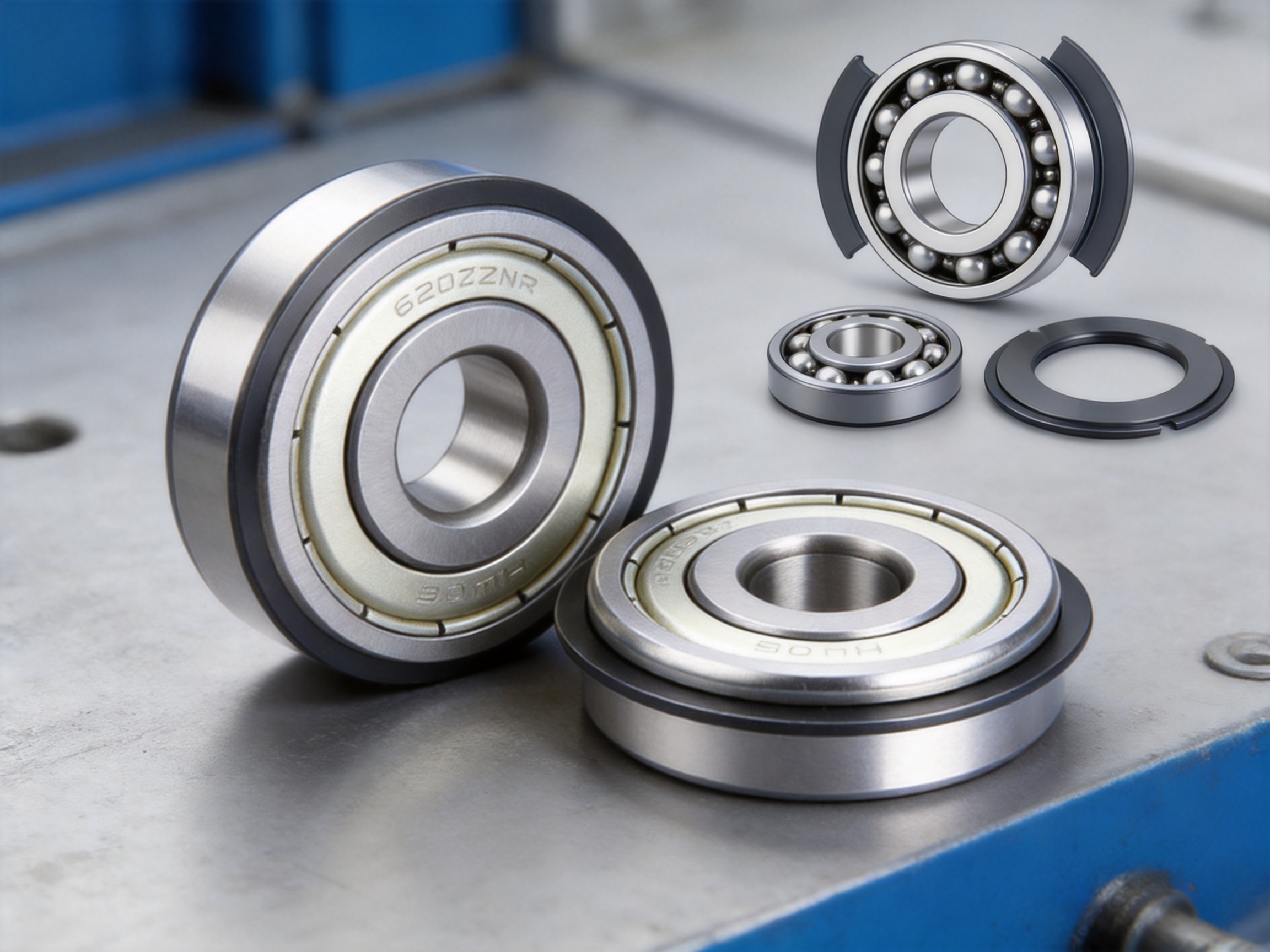
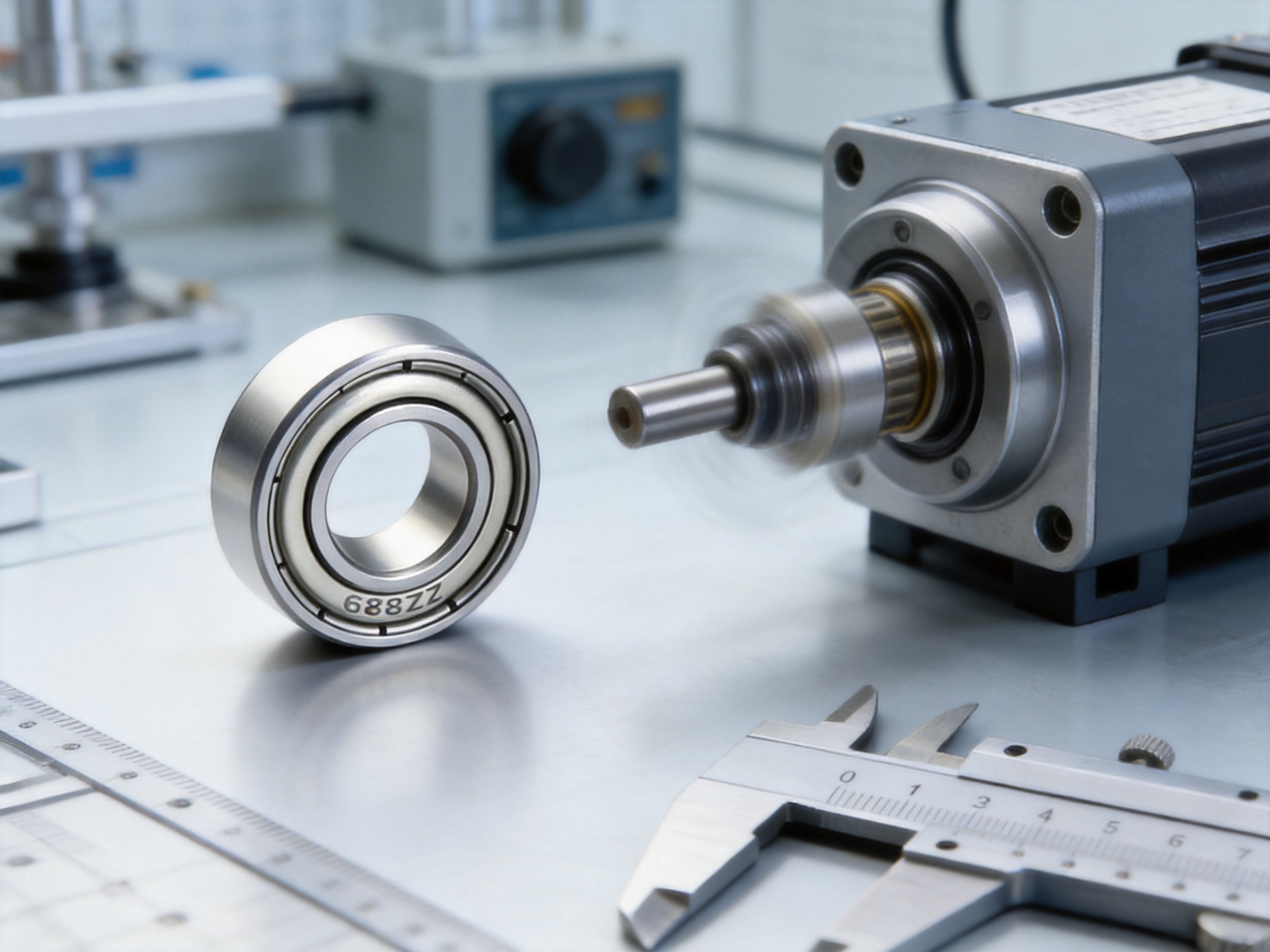
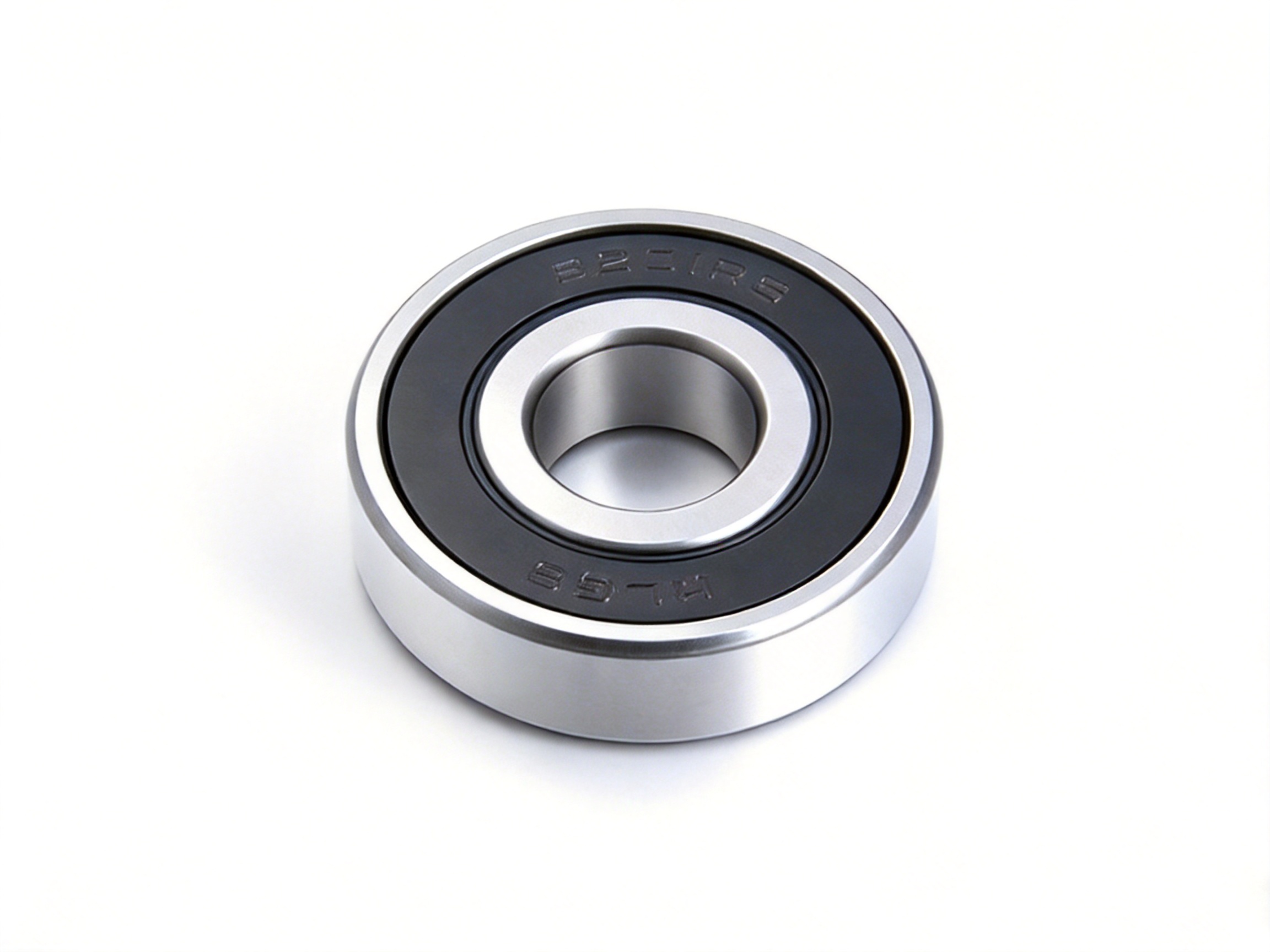
    The 6205ZZ deep groove ball bearing is a practical and dependable bearing solution for medium-load applications across industrial machinery, electric motors, pumps, fans, conveyors, agricultural equipment, gearboxes, and general mechanical systems. With a standard 25 × 52 × 15 mm size, this bearing combines a 25 mm bore, a 52 mm outside diameter, and a 15 mm width in a compact configuration that is easy to specify, install, and replace. Designed for continuous operation, the 6205ZZ provides stable radial load support, smooth rotation, low friction, and effective protection against common operating contaminants. Its double metal shields help retain internal lubricant while limiting the entry of dust and moisture. Manufactured from high-grade GCr15 bearing steel and precision-ground, it is intended to deliver consistent dimensional accuracy, dependable running performance, and a long operating life when correctly selected and maintained. For equipment manufacturers, maintenance departments, distributors, and replacement-parts buyers, the value of the 6205ZZ lies in its balance. It is neither an oversized bearing designed only for extreme loads nor a highly specialized bearing limited to a narrow operating environment. Instead, it offers a widely used dimensional format and a versatile performance profile for many rotating assemblies. Product Overview Deep groove ball bearings are among the most widely used rolling bearings because their raceway geometry allows them to support radial loads while also accommodating a degree of axial load. The 6205ZZ follows this established design. Its deep raceways guide the balls securely and support stable rotation under normal industrial conditions. The “6205” designation identifies the basic bearing series and size. The “ZZ” suffix indicates double metal shields. These shields are non-contact protective covers mounted on both sides of the bearing. Unlike contact seals, metal shields do not normally rub directly against the inner ring, which helps reduce friction and heat generation. At the same time, they provide a useful barrier against airborne dust, dirt particles, and incidental moisture. The bearing is supplied as a pre-lubricated unit for typical applications. Because the shields help preserve the internal lubricant, the bearing can often operate for extended periods without additional relubrication. Actual service life depends on speed, load, temperature, alignment, contamination, installation quality, and the operating environment. ParameterSpecificationBearing number6205ZZBore diameter25 mmOuter diameter52 mmWidth15 mmClosureDouble metal shields, ZZDynamic load rating14,000 NStatic load rating7,850 NMaterialGCr15 bearing steelPrimary load directionRadial, with limited axial-load capabilityTypical applicationsMotors, pumps, fans, conveyors, gearboxes, and general machinery The stated load ratings provide a useful basis for preliminary bearing selection. Engineers should still confirm the complete operating profile, including actual radial and axial loads, rotational speed, shaft and housing tolerances, temperature, vibration, and contamination levels before final approval. 6205ZZ Industrial Grade Ball Bearing for Motors, Pumps and Machinery Why the 6205ZZ Format Is Widely Used The 6205 size is popular because it fits a broad range of equipment designs. A 25 mm shaft diameter is common in small and medium-sized drive systems, while the 52 mm outside diameter provides an effective mounting envelope for many housings. The 15 mm width allows the bearing to be integrated into assemblies where axial space is limited but a stronger bearing is required than a smaller series can provide. Standard dimensions also simplify procurement and maintenance. A machine builder can design around an established bearing envelope, and an industrial user can often keep a replacement unit in stock without requiring a custom component. Standardization reduces downtime, improves interchangeability, and makes it easier to compare supply options. The 6205ZZ is especially useful when the application requires steady radial support rather than extreme thrust capacity. It is appropriate for shafts, rotors, pulleys, rollers, impellers, and other rotating elements where reliable alignment and low-resistance motion are important. Construction and Operating Principle Deep Raceway Geometry The inner and outer rings contain continuous deep grooves that guide the rolling balls. This geometry distributes contact forces over the raceways and allows the bearing to carry radial forces generated by belt tension, rotor weight, gear engagement, impeller rotation, and other common machine loads. Compared with simpler bearing arrangements, the deep groove design offers a useful combination of versatility and compactness. It can carry radial loads efficiently and accommodate moderate axial forces in either direction, provided that the application remains within the bearing’s calculated capacity. Rolling Elements The balls separate the inner and outer rings and reduce sliding friction. Precision manufacturing of the rolling elements is important because variations in size, roundness, or surface finish can increase vibration, noise, and localized stress. Uniform rolling elements contribute to smoother rotation and more consistent load distribution. Cage and Internal Guidance The cage maintains the spacing of the balls and helps prevent contact between adjacent rolling elements. Consistent ball spacing supports stable operation at speed and helps the bearing maintain predictable internal movement. Proper cage performance is particularly important in motor, fan, and pump applications where continuous rotation is common. Double Metal Shields The ZZ configuration places a metal shield on each side of the bearing. These shields help keep the factory-applied lubricant inside the bearing and reduce the risk of contamination entering through the sides. They are a practical choice for applications requiring low friction and moderate environmental protection. Metal shields are not equivalent to fully contacting rubber seals. They are best suited to relatively clean or moderately dusty environments where the bearing is not exposed directly to heavy water spray, abrasive slurry, or aggressive chemical contamination. Selecting the correct closure is essential to achieving the expected service life. Material Advantages of GCr15 Bearing Steel The 6205ZZ is manufactured from GCr15 bearing steel, a high-carbon chromium steel widely used for bearing rings and rolling elements. The material is valued for its hardness, wear resistance, fatigue strength, and ability to achieve a controlled surface finish after heat treatment and grinding. Rolling bearings are subjected to repeated contact stress as the balls pass through the raceways. Over time, insufficient material strength or poor heat treatment can lead to early fatigue, pitting, scoring, or dimensional instability. GCr15 is suitable for demanding rolling-contact applications because its metallurgical properties support a hard, wear-resistant working surface while maintaining the structural strength required for normal bearing loads. Material quality alone does not determine bearing performance. The steel must be processed correctly, heat-treated consistently, ground accurately, and inspected throughout production. A reliable manufacturing system therefore treats material selection, process control, cleanliness, dimensional inspection, and final testing as connected parts of the product. For buyers comparing bearings from different sources, the use of an established bearing steel is an important starting point. It should be considered together with production traceability, heat-treatment control, raceway accuracy, surface finish, cleanliness, and final quality inspection. Precision Manufacturing Process Consistent bearing performance begins with controlled manufacturing. The production of a 6205ZZ typically involves several connected stages, each affecting the finished bearing’s running accuracy and durability. Raw Material Preparation Suitable bearing steel is selected for the rings and rolling elements. Incoming material should be checked against the relevant technical requirements, including chemical composition, dimensions, surface condition, and traceability information. Controlled raw material preparation helps reduce the risk of inclusions, cracks, or inconsistent mechanical properties later in the process. Ring Forming and Machining The inner and outer rings are formed and machined to create the required bearing geometry. Ring dimensions must be controlled carefully because the bore, outside diameter, width, raceway profile, shoulder dimensions, and shield location all affect installation and operation. Machining operations establish the basic geometry before heat treatment and final finishing. Stable equipment, calibrated tooling, and process monitoring help maintain repeatability across production batches. Heat Treatment Heat treatment develops the hardness and mechanical properties required for rolling-contact service. The process must be controlled for heating temperature, holding time, atmosphere, cooling conditions, and subsequent tempering. Inconsistent heat treatment may result in excessive distortion, inadequate hardness, brittleness, or reduced fatigue resistance. After heat treatment, the rings and rolling elements are evaluated as required to confirm that the processed material meets internal quality criteria. Maintaining stable heat-treatment conditions is one of the most important factors in achieving predictable bearing life. Precision Grinding Precision grinding brings the bearing rings and rolling elements to their final dimensions and surface condition. The grinding process controls the raceway profile, roundness, waviness, bore accuracy, outside diameter, and width. These characteristics influence vibration, noise, friction, load distribution, and mounting quality. A precise raceway allows the balls to rotate smoothly and share the operating load more evenly. Better surface quality can reduce localized stress and support lower running resistance. This is particularly valuable in motors, fans, and pumps, where unnecessary friction can increase operating temperature and energy consumption. Cleaning and Assembly After grinding, parts must be cleaned to remove residual abrasive particles, metal debris, and processing contaminants. Clean assembly is essential because even small foreign particles can damage raceways or increase operating noise. The inner ring, outer ring, balls, cage, shields, and lubricant are assembled under controlled conditions. The double metal shields must be positioned securely and consistently to provide the intended protection without interfering with rotation. Lubrication The correct quantity and distribution of lubricant support smooth operation and help prevent metal-to-metal contact. Too little lubricant may increase wear and temperature, while too much can increase churning resistance and heat at higher speed. Controlled lubrication is therefore an important part of manufacturing consistency. Final Inspection and Testing Finished bearings are checked for relevant dimensional, visual, rotational, noise, vibration, and functional characteristics. Inspection procedures help identify problems such as improper shield installation, rough rotation, contamination, dimensional variation, or abnormal sound. The manufacturer described in the supplied materials uses advanced testing equipment and operates according to ISO 9001 and ISO/TS 16949 management systems. These systems support documented procedures, quality control, process monitoring, corrective action, and continual improvement. Certification does not eliminate the need for application-specific evaluation, but it demonstrates a structured approach to manufacturing and quality management. Performance Advantages Compared with Generic Alternatives The 6205ZZ offers several practical advantages when compared with lower-control or poorly matched alternatives. These advantages are not based only on the bearing number. They result from the combination of correct dimensions, suitable material, controlled processing, closure design, and application support. Stable Medium-Load Capacity With a dynamic load rating of 14,000 N and a static load rating of 7,850 N, the bearing is designed for a substantial range of medium-load applications. The ratings provide a useful reference for calculating expected fatigue life and checking static safety. A correctly selected bearing can support rotating shafts and machine components without requiring a larger and more expensive bearing than necessary. Low Friction and Smooth Rotation Precision-ground raceways and rolling elements help reduce irregular contact and unnecessary sliding. This supports smooth rotation, lower mechanical resistance, and reduced operating noise. In motor and fan applications, smooth running can contribute to stable vibration levels and reliable continuous operation. Protection from Everyday Contamination The two metal shields help protect the internal lubricant from airborne dust and moisture encountered in many indoor or sheltered industrial environments. They also reduce the likelihood of lubricant leakage during normal operation. This can lower maintenance requirements compared with open bearings used in the same environment. Long-Service Design High-quality bearing steel, controlled heat treatment, accurate grinding, and clean assembly all contribute to service durability. The bearing is designed for continuous operation when load, speed, temperature, lubrication, alignment, and contamination remain within suitable limits. Standardized Replacement The 25 × 52 × 15 mm envelope is widely recognized, simplifying replacement planning. Maintenance personnel can identify the bearing by its bore, outside diameter, width, and shield configuration. This reduces the risk of selecting a bearing with the wrong fit or closure type. Balanced Cost and Performance A bearing that is too lightly specified may fail prematurely, while an unnecessarily oversized bearing may increase cost, space requirements, and installation complexity. The 6205ZZ provides a balanced option for many medium-duty systems. Its standardized design and broad availability can also support efficient inventory management. Applications in Electric Motors Electric motors are among the most common applications for 6205ZZ bearings. The bearing can support the motor shaft and maintain rotor position while allowing efficient rotation. Its low-friction design is suitable for motors used in pumps, fans, conveyors, machine tools, household equipment, and industrial automation. Motor bearing performance depends on more than load rating. Electrical current passage, shaft grounding, vibration, rotor balance, belt tension, housing fit, and operating temperature may all affect service life. In systems where electrical fluting or stray current is a concern, engineers should consider whether an insulated or electrically isolated bearing is required instead of a standard steel bearing. Correct installation is also critical. Excessive press force applied through the wrong ring can transmit damaging force through the rolling elements and create early raceway indentation. The mounting method should match the interference fit and the direction of the applied force. Applications in Pumps and Fans Pumps and fans often operate continuously, making bearing stability and low friction particularly important. In a pump, the bearing supports the shaft and helps maintain the position of the impeller or coupling. In a fan, it supports the rotating assembly and helps control vibration generated by the impeller and airflow. Before using a 6205ZZ in a pump, the designer should evaluate water exposure, chemical compatibility, shaft loading, pressure conditions, and the possibility of seal failure. Metal shields provide useful protection but are not intended to replace external sealing arrangements in wet or contaminated service. Fan applications may involve high rotational speed and temperature variation. The lubricant, internal clearance, balancing condition, and housing design should be reviewed to ensure that the selected bearing is appropriate for the actual speed and thermal environment. Applications in Conveyors and Agricultural Machinery Conveyors place rolling bearings under repeated radial loads generated by rollers, pulleys, belt tension, and conveyed materials. The 6205ZZ can be used in suitable conveyor components where the load, speed, and environment remain within its operating range. Agricultural machinery presents more challenging conditions because dust, soil, vibration, moisture, and temperature changes may be present. The double metal shields provide a basic barrier, but the entire machine design should include suitable external sealing, protective covers, correct lubrication, and regular inspection. In severe contamination, a contact-sealed bearing may be more appropriate. The advantage of using a standard bearing in these applications is ease of replacement. Maintenance teams can establish replacement schedules, keep spare units available, and reduce equipment downtime when a bearing reaches the end of its service life. Applications in Gearboxes and General Machinery Gearboxes may use deep groove ball bearings to support shafts, maintain gear alignment, and accommodate radial forces generated by the gear mesh. The 6205ZZ may be suitable for smaller gearbox assemblies, auxiliary drives, and general transmission equipment, provided that the bearing can handle the combined radial and axial loads. In gearbox service, lubricant compatibility is especially important. The bearing’s factory grease must not be exposed to incompatible oils or additives without technical confirmation. If the bearing is intended to operate inside an oil-lubricated gearbox, the designer should verify whether the ZZ-shielded, pre-lubricated configuration is suitable or whether an open bearing designed for oil circulation is preferable. General industrial equipment often benefits from the bearing’s versatility. It can be used in rollers, idlers, small shafts, electric tools, mechanical transmission devices, and other assemblies where a compact, standard deep groove bearing is required. Selection Guidelines Check the Dimensions The shaft must match the 25 mm bore, the housing must accommodate the 52 mm outside diameter, and the available axial space must accept the 15 mm width. A dimensional match is necessary but does not by itself confirm suitability. Evaluate Load Determine the actual radial and axial loads, including shock loads, belt tension, gear forces, rotor weight, and any transient conditions. The dynamic load rating is used in fatigue-life calculations, while the static load rating is considered when the bearing is stationary or subject to heavy shock and slow movement. Confirm Speed Operating speed influences friction, heat, lubricant behavior, cage stability, and service life. The application should be compared with the manufacturer’s recommended speed limits and lubrication conditions. High-speed applications may require additional evaluation of balance, clearance, and temperature. Review the Environment ZZ shields are appropriate for many clean and moderately dusty environments. They may not be the best choice for direct water spray, abrasive particles, corrosive chemicals, or submerged service. Environmental protection should be assessed at the machine level, including external seals, covers, drainage, and cleaning procedures. Consider Temperature Temperature affects lubricant viscosity, internal clearance, seal performance, and steel properties. Normal industrial conditions may be suitable for the standard bearing configuration, but elevated or rapidly changing temperatures require confirmation of the grease, clearance, and material limits. Check Fit and Alignment Improper shaft or housing fits can cause ring creep, excessive internal preload, distortion, or premature fatigue. Misalignment can create uneven raceway loading and increase vibration. Shafts and housings should be manufactured and inspected according to the applicable bearing fit requirements. Installation Best Practices Before installation, inspect the bearing package and verify the bearing number, shield configuration, dimensions, and visible condition. Do not install a bearing with damaged shields, corrosion, contamination, or abnormal roughness. Keep the bearing in its original packaging until it is ready for installation. Work in a clean area and use clean tools. Avoid placing the bearing directly on dirty surfaces or exposing it unnecessarily to moisture and airborne particles. When pressing a bearing onto a shaft, apply force to the inner ring if the fit is on the shaft. When pressing the bearing into a housing, apply force to the outer ring if the fit is in the housing. If both rings require interference fits, use a suitable installation tool that applies force to both rings at the same time. Never strike the bearing rings directly with a hard metal hammer. Do not transmit installation force through the balls because this may create brinelling or raceway damage. Do not use excessive force to overcome a misaligned shaft or housing. After installation, rotate the assembly by hand where possible. Check for abnormal resistance, scraping, roughness, or unusual sound. Confirm that the shaft is correctly positioned and that adjacent components do not contact the shields. Maintenance and Service Considerations The 6205ZZ is designed to reduce maintenance through its shielded, pre-lubricated configuration, but no bearing is maintenance-free under every condition. Regular observation can identify problems before they cause an unexpected shutdown. Maintenance personnel should monitor temperature, vibration, noise, shaft movement, and lubricant leakage. A gradual increase in vibration or operating temperature may indicate contamination, misalignment, insufficient lubrication, excessive load, improper fit, or damage to the raceways. Do not wash a shielded bearing with solvents or inject lubricant through the shields unless a specific maintenance procedure permits it. Uncontrolled cleaning may remove or contaminate the factory lubricant. If the bearing has reached the end of its service life, replacement is normally more practical than attempting to rebuild it. Storage conditions also matter. Bearings should be stored in a dry, clean, temperature-stable location. Packages should remain sealed until use. Long-term storage should be managed according to the lubricant and packaging recommendations of the supplier. Quality and Manufacturing Strengths Ningbo Zhenhai Hualei Bearing Co., Ltd. was established in 2001 and specializes in the manufacture of deep groove ball bearings. According to the supplied company information, its products are used in food machinery, household appliances, automotive electromechanical systems, electric tools, mechanical transmission equipment, and motors. The company’s manufacturing strength is supported by experience in bearing production, documented quality management, and the use of advanced inspection equipment. Its stated ISO 9001 and ISO/TS 16949 management systems provide a framework for process control and product consistency. The company also provides OEM and ODM services through its import and export department. This capability can be valuable for customers requiring customized packaging, production coordination, application support, private labeling, or product specifications aligned with a particular equipment program. For industrial buyers, a capable supplier offers more than a single bearing shipment. Reliable supply depends on stable production, repeatable dimensions, responsive communication, clear documentation, quality records, and the ability to support ongoing purchasing requirements. These factors can be as important as the initial unit price when bearings are used in high-volume equipment or critical maintenance programs. The manufacturer’s stated philosophy of sincere trust and efficient service is consistent with the practical needs of bearing customers. Buyers generally require accurate specifications, predictable delivery, professional technical communication, and effective handling of quality questions. A supplier that combines manufacturing capability with export and OEM support can help reduce procurement risk. Why Choose This Bearing for Industrial Equipment? The 6205ZZ is a strong choice when an application needs a standard deep groove ball bearing with reliable medium-load performance, low-friction operation, and basic contamination protection. Its size is widely used, its construction is familiar to maintenance teams, and its material is appropriate for rolling-contact service. Its greatest advantage is the combination of versatility and practicality. It can be installed in many different types of rotating machinery without requiring a specialized design. It supports common radial loads, accommodates limited axial loading, and can operate continuously when properly selected and installed. The product also benefits from the manufacturing approach described by the supplier: GCr15 bearing steel, precision grinding, controlled assembly, shield installation, lubrication, and testing. Together, these processes are intended to provide stable performance from one bearing to the next. Compared with an unshielded bearing, the ZZ configuration can reduce exposure to everyday dust and help retain lubricant. Compared with an unnecessarily oversized bearing, it may reduce cost and space requirements. Compared with an inadequately manufactured generic product, controlled material and inspection processes can improve confidence in dimensional consistency and operating quality. These advantages should always be considered alongside the actual application. No bearing designation can compensate for excessive loading, poor alignment, incorrect fits, water ingress, electrical damage, or unsuitable lubrication. Proper engineering selection remains essential. Frequently Asked Questions What does 6205ZZ mean? 6205 identifies the bearing’s series and standard dimensional size. ZZ indicates that the bearing has double metal shields, one on each side. The complete bearing has a 25 mm bore, a 52 mm outside diameter, and a 15 mm width. What loads can the 6205ZZ support? The stated dynamic load rating is 14,000 N, and the stated static load rating is 7,850 N. These values are reference ratings for engineering calculations. The actual allowable load depends on speed, load direction, shock, temperature, lubrication, alignment, and required service life. Is the 6205ZZ suitable for electric motors? Yes, it is commonly suitable for many electric motor applications involving moderate radial loads. The motor designer must also check speed, temperature, shaft fit, vibration, rotor balance, and the possibility of electrical current passing through the bearing. Can the 6205ZZ be used in pumps? It can be used in suitable pump assemblies when the load, speed, temperature, and contamination conditions are compatible with a double-metal-shielded bearing. Direct water exposure, corrosive fluids, or heavy contamination may require a different closure or additional external protection. Does ZZ mean the bearing is waterproof? No. ZZ metal shields help protect against dust and incidental moisture, but they are not a guarantee of waterproof performance. Applications involving water spray, flooding, washdown, or submerged conditions require a more suitable sealing arrangement. Does the 6205ZZ require relubrication? It is normally supplied pre-lubricated and shielded, so routine relubrication is generally not required in ordinary service. Relubrication should not be attempted without confirming that the bearing design and maintenance procedure allow it. What material is used? The bearing is made from GCr15 bearing steel. This material is widely used for bearing rings and rolling elements because it can provide the hardness, wear resistance, and fatigue performance required for rolling contact. How should the bearing be installed? Use clean tools and apply installation force to the ring with the interference fit. Do not transmit force through the rolling elements and do not strike the bearing directly. Confirm shaft and housing tolerances before installation. How can bearing life be extended? Use the correct load and speed limits, maintain proper alignment, protect the bearing from contamination, control shaft and housing fits, avoid shock during installation, and monitor temperature and vibration during operation. Is the 6205ZZ interchangeable with every 6205 bearing? The basic dimensions may be the same among some 6205 variants, but closures, internal clearance, lubrication, materials, and performance specifications can differ. The replacement should match the original application requirements rather than relying only on the basic number. Can this bearing be used for high-speed machinery? It may be suitable for some high-speed applications, but the actual speed limit depends on lubrication, internal clearance, cage design, load, temperature, and mounting conditions. High-speed use should be confirmed through technical evaluation. What is the difference between ZZ and rubber-sealed versions? ZZ uses non-contact metal shields and generally offers low friction with moderate contamination protection. Rubber-sealed versions provide stronger sealing in many environments but may produce more friction and heat. The correct choice depends on contamination, speed, temperature, and service requirements. Conclusion The 6205ZZ deep groove ball bearing is a versatile industrial component designed for dependable medium-load operation. Its 25 × 52 × 15 mm dimensions make it suitable for many standard shafts and housings, while its deep groove geometry supports stable radial loading and limited axial loading in both directions. Its double metal shields help retain lubricant and protect the internal components from common dust and moisture. GCr15 bearing steel provides a suitable foundation for durability, while precision grinding and controlled assembly support smooth rotation, low friction, and consistent operation. The bearing is well suited to electric motors, pumps, fans, conveyors, agricultural machinery, gearboxes, electric tools, and general industrial equipment. Its standardized dimensions simplify sourcing and replacement, and its balanced performance can help reduce maintenance complexity. Supported by a manufacturer with long-term bearing experience, advanced inspection equipment, ISO-based quality management, and OEM and ODM capabilities, the 6205ZZ offers a practical solution for customers seeking dependable industrial bearing supply. Correct application selection, clean installation, suitable fits, and appropriate environmental protection remain essential to achieving the best possible service life. References 1. ISO 15, Rolling Bearings — Radial Bearings — Boundary Dimensions, International Organization for Standardization. 2. ISO 281, Rolling Bearings — Dynamic Load Ratings and Rating Life, International Organization for Standardization. 3. ISO 76, Rolling Bearings — Static Load Ratings, International Organization for Standardization. 4. ISO 9001, Quality Management Systems — Requirements, International Organization for Standardization. 5. ISO/TS 16949, Quality Management Systems — Particular Requirements for the Application of ISO 9001 for Automotive Production and Relevant Service Part Organizations. 6. Rolling Bearing Technical Principles, general guidance on bearing load, lubrication, installation, and service life. 7. GCr15 Bearing Steel Technical Data, general material guidance for high-carbon chromium bearing steel. Product: 6205ZZ Industrial Grade Ball Bearing for Motors, Pumps and Machinery .profile-card { display: flex; align-items: flex-start; gap: 2rem; background-color: white; padding: 2rem; border-radius: 12px; box-shadow: 0 2px 10px rgba(0,0,0,0.05); } .profile-avatar { width: 120px; height: 120px; border-radius: 50%; overflow: hidden; flex-shrink: 0; } .profile-avatar img { width: 100%; height: 100%; object-fit: cover; display: block; } .profile-info { flex-grow: 1; } .profile-name { font-size:27px; font-weight: 900; margin-bottom: 1rem; color: #1a1a1a; } .profile-bio { line-height: 1.6; color: #333; } @media (max-width: 600px) { .profile-card { flex-direction: column; align-items: center; text-align: center; gap: 1.5rem; } } Zhao Xinyue — Product Sales Consultant With six years of experience in bearing product sales, she handles customer consultations, application recommendations, order follow-up, and customized solutions for food machinery, household appliances, motors, and electric tools.

    View More
  • 608-2RS Deep Groove Ball Bearing: Compact Performance for Skates, Power Tools, and Miniature Motors
    608-2RS Deep Groove Ball Bearing: Compact Performance for Skates, Power Tools, and Miniature Motors

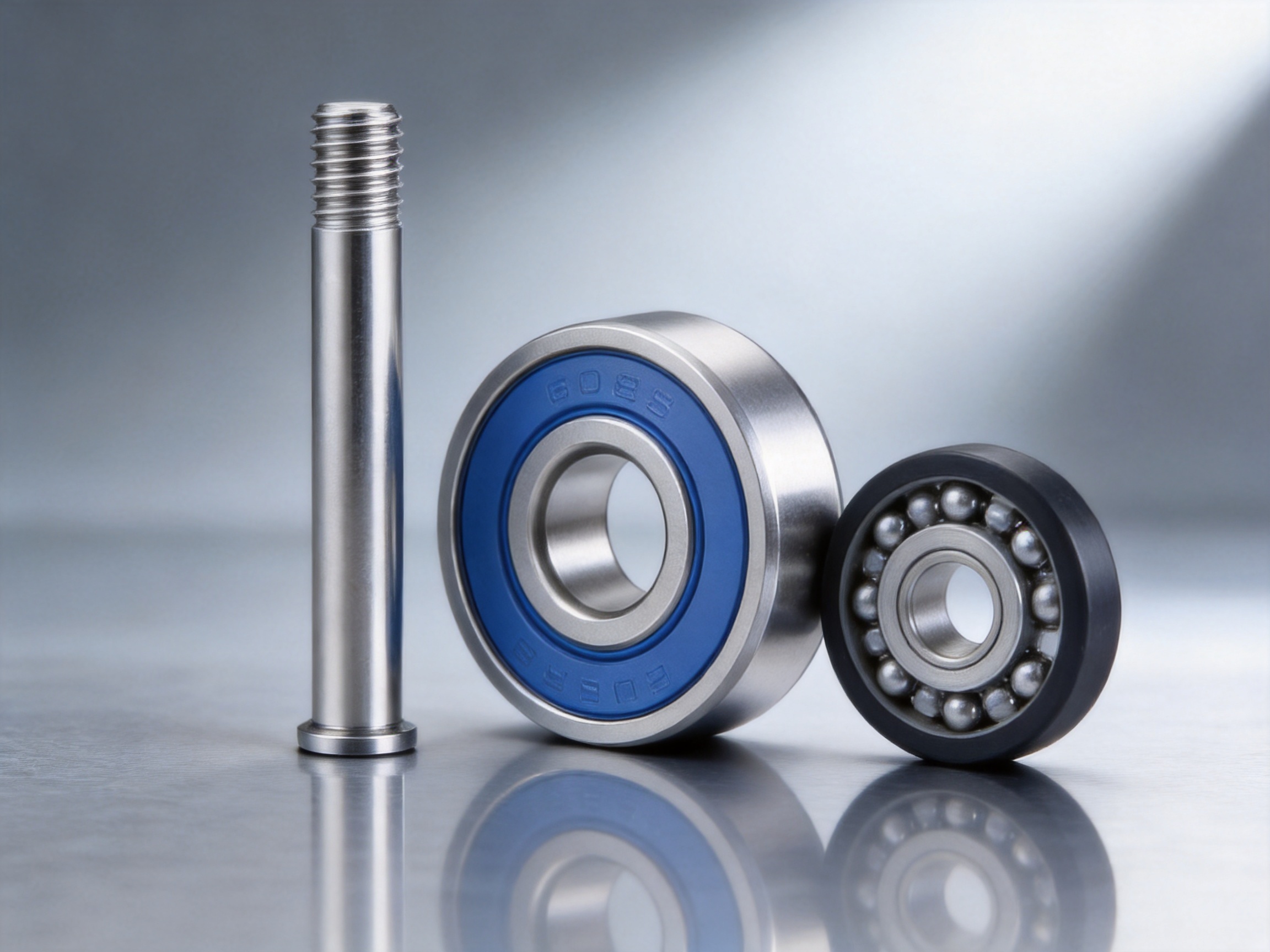
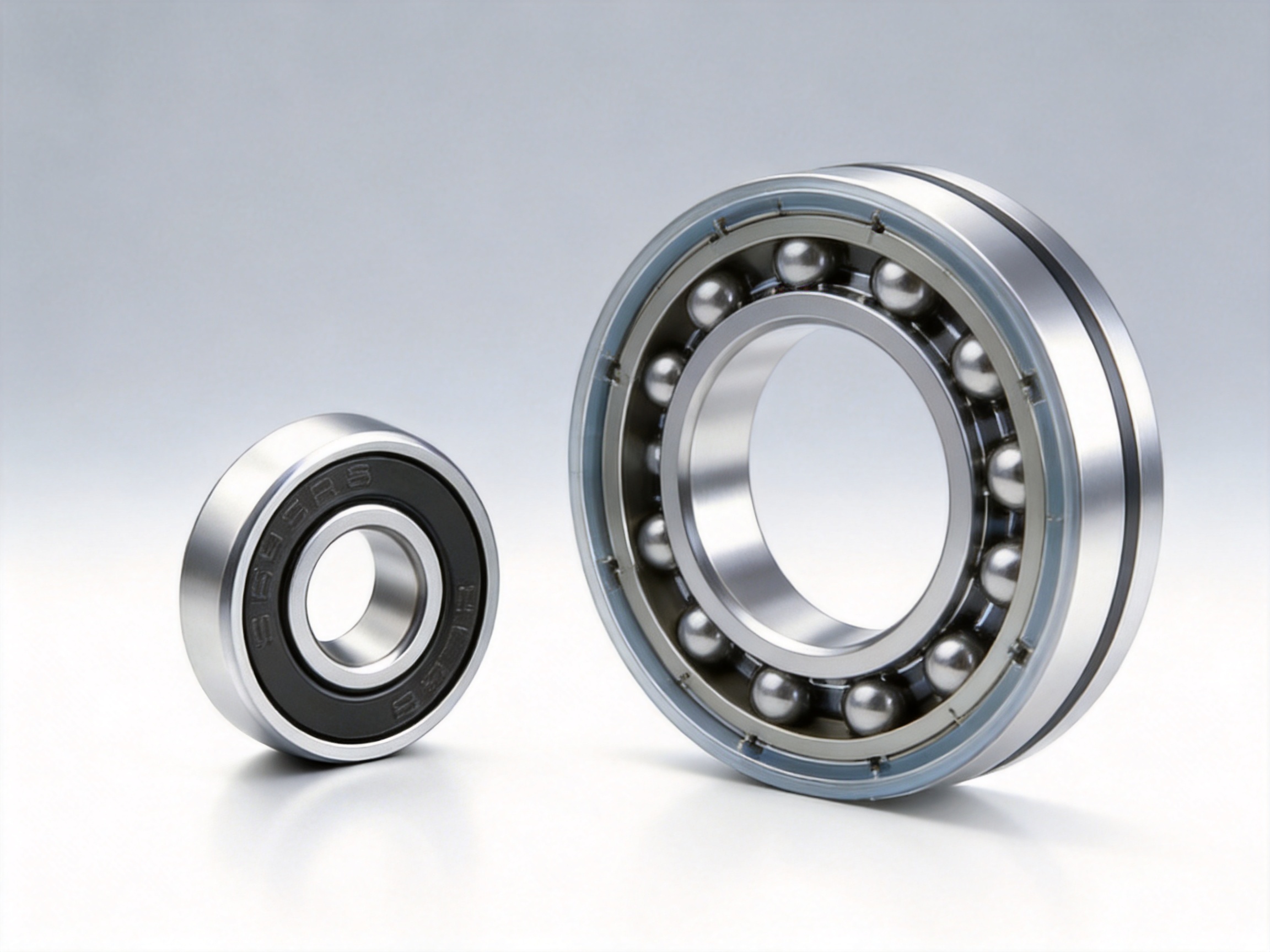
    The 608-2RS deep groove ball bearing is one of the most recognizable miniature bearing sizes in modern mechanical design. With an 8 mm bore, 22 mm outside diameter, and 7 mm width, it provides a practical combination of compact dimensions, dependable radial load capacity, low friction, and smooth rotation. These characteristics have made the 608 bearing a standard choice for skate wheels, inline skates, small electric motors, power tools, household appliances, mechanical transmission systems, and many other space-constrained applications. Although its dimensions are modest, a high-quality 608 bearing is a precision-engineered component rather than a simple commodity part. Its performance depends on the quality of its bearing steel, the accuracy of its raceways, the roundness and grade of its balls, the effectiveness of its seals or shields, the consistency of its heat treatment, and the control exercised during assembly and inspection. Small deviations in any of these areas can increase noise, friction, vibration, or premature wear. The 608-2RS product described in this article is manufactured from GCr15 bearing steel and is specified with a dynamic load rating of 3,450 N and a static load rating of 1,420 N. The supplied product information identifies its closure as double metal shields, commonly designated ZZ. Because bearing suffixes can vary between manufacturers and markets, customers should confirm whether the required version is a rubber-sealed 2RS bearing or a metal-shielded ZZ bearing before placing an order. The dimensions and performance requirements should also be checked against the application. 608-2RS Deep Groove Ball Bearing for Ideal for Skate, Power Tool and Mini Motor Product Overview A deep groove ball bearing supports rotating shafts while reducing friction between the shaft and the stationary housing. The 608 bearing uses two hardened steel rings, a set of precision balls, a cage, and protective closures. The inner ring rotates with the shaft, the outer ring is normally fitted into a housing or wheel hub, and the balls roll along the raceways between the two rings. The deep groove raceway geometry enables the bearing to carry primarily radial loads while also accommodating moderate axial loads from either direction. This makes the design more versatile than a bearing intended only for one type of load. In a skateboard wheel, for example, the bearing carries radial loads generated by the rider and the wheel contact surface while also tolerating limited side forces during turning, landing, and uneven loading. The 608 size is particularly valuable because it offers a widely standardized envelope. Designers can select a bearing with a known 8 × 22 × 7 mm footprint without dedicating excessive space to the support system. Replacement is also straightforward when the application follows the same dimensional standard. This interchangeability is useful for equipment manufacturers, maintenance teams, repair shops, and distributors. ParameterSpecificationApplication Relevance Bearing number608-2RSIdentifies the compact deep groove ball bearing size and configuration Bore diameter, d8 mmFits an 8 mm shaft or axle arrangement Outside diameter, D22 mmFits a 22 mm housing, wheel hub, or mounting seat Width, B7 mmSupports compact axial installation Closure listed in supplied dataDouble metal shields, ZZHelps restrict dust and larger contaminants while reducing lubricant loss Dynamic load rating, Cr3,450 NIndicates the bearing’s capacity under repeated rotating load conditions Static load rating, Cor1,420 NIndicates resistance to permanent deformation under stationary or slowly moving load MaterialGCr15 bearing steelProvides hardness, wear resistance, and fatigue strength after suitable processing The product title uses the designation 608-2RS, while the supplied technical information lists double metal shields, ZZ. In common bearing terminology, 2RS generally refers to two rubber or elastomeric contact seals, whereas ZZ commonly refers to two metal shields. This distinction affects friction, contamination resistance, temperature performance, and lubrication retention. The manufacturing configuration should therefore be confirmed in the purchase specification, drawing, sample approval, or packing documentation. Why the 608 Size Is Widely Used The popularity of the 608 bearing is not based on a single feature. It results from the balance between size, load capacity, availability, installation convenience, and application flexibility. An 8 mm bore is suitable for many small axles and motor shafts, while the 22 mm outside diameter provides enough raceway area for practical radial capacity. The 7 mm width keeps the bearing compact in wheel hubs and small housings. In skate applications, the 608 format has become a familiar standard. Skateboard and inline skate wheels are commonly designed around this bearing envelope, allowing users to replace worn bearings without replacing the entire wheel assembly. The same dimensional standard also supports efficient inventory management. A distributor can stock one widely used bearing type for several customer segments instead of maintaining many unique sizes. Miniature motors also benefit from the 608 design. Small motors used in appliances, laboratory equipment, light automation, fans, tools, and electromechanical devices need bearings that fit into a restricted internal space. Excessive bearing size can enlarge the motor, increase rotating mass, and raise production cost. A correctly selected 608 bearing can provide the necessary shaft support while preserving a compact motor architecture. Power tools place different demands on a small bearing. They may expose the bearing to vibration, speed changes, intermittent impact, dust, and thermal cycling. A bearing made with suitable steel, controlled raceway geometry, reliable closure components, and appropriate grease can help the tool operate smoothly over repeated duty cycles. The correct bearing selection must still consider actual speed, load, temperature, and contamination levels. Core Advantages of the Product Compact and Standardized Dimensions The 8 × 22 × 7 mm dimensions are a major advantage for equipment designers. The bearing occupies little radial and axial space, making it suitable for compact assemblies where every millimeter matters. Its standardized size also simplifies shaft, housing, and wheel design. Engineers can use established installation practices and avoid developing a custom bearing for applications that can use an existing standard. Compact dimensions can reduce the overall weight of a mechanism. This is particularly important in portable power tools, personal mobility equipment, small motors, and consumer products. A smaller support component can contribute to a lighter product, provided that the bearing’s load, speed, and operating conditions remain within acceptable limits. Reliable Radial Load Support The listed dynamic load rating of 3,450 N reflects the bearing’s capacity for repeated load under rotating conditions according to established bearing-rating principles. It is not a direct statement that every application can apply 3,450 N continuously. Actual life depends on load magnitude, load direction, speed, lubrication, mounting accuracy, contamination, temperature, and operating duty cycle. Nevertheless, the rating demonstrates that this small bearing is designed for more than simple low-load rotation. The deep groove raceways distribute load across the rolling elements and allow the bearing to support radial forces efficiently. In a wheel, this helps manage the load transferred from the axle through the bearing to the wheel. In a motor, it supports the rotor shaft and helps maintain the correct relationship between the rotating and stationary components. Low Friction and Smooth Rotation Rolling contact produces substantially less friction than sliding contact when the bearing is properly manufactured, lubricated, and installed. Low friction helps reduce energy loss, operating temperature, and wear. It can also improve the user experience in products such as skates and small fans, where smooth motion and quiet operation are noticeable immediately. Smooth rotation depends on more than the bearing’s nominal size. Raceway finish, ball quality, internal clearance, cage design, lubricant quantity, and seal or shield geometry all influence torque and noise. Consistent manufacturing and inspection are therefore important competitive factors. A bearing that meets the same dimensional specification as another product may still perform differently if its internal precision and production consistency are not equivalent. Protection Against Dust and Impurities The supplied specification identifies double metal shields, or ZZ closures. These shields are designed to help prevent dust and larger particles from entering the bearing while helping retain factory-applied lubricant. Metal shields generally offer low friction because they do not normally make strong contact with the inner ring. This can be beneficial in applications where rotational efficiency and speed are important. Metal shields are not the same as contact seals. A shielded bearing may not provide the same level of protection against water, fine slurry, or liquid contaminants as a properly selected rubber-sealed bearing. For dry environments such as many indoor mechanisms, small motors, and recreational wheel assemblies, shields may provide a suitable balance. For wet or heavily contaminated conditions, the customer should request and verify a sealing configuration designed for those conditions. GCr15 Bearing Steel GCr15 is a widely used high-carbon chromium bearing steel. When processed correctly, it provides the hardness, wear resistance, fatigue strength, and dimensional stability needed for rolling-element bearings. The material is suitable for rings and other bearing components that must withstand repeated contact stress. Material selection alone does not guarantee bearing life. The steel must be supported by controlled forging or forming, appropriate heat treatment, precision machining, grinding, cleaning, assembly, and inspection. The advantage of a professional bearing manufacturer is the ability to control these steps as an integrated process rather than treating the material as an isolated purchasing decision. Versatility Across Applications The 608 bearing can be used in many industries because the deep groove design is adaptable. Typical applications include skateboards, inline skates, roller skates, miniature motors, electric tools, household appliances, small transmission mechanisms, fans, office equipment, toys, compact pumps, and electromechanical products. This versatility can simplify sourcing. A manufacturer that uses the 608 size in several product families may reduce the number of unique components, standardize maintenance procedures, and improve purchasing efficiency. It can also make spare parts easier to identify and replace. Manufacturing Process and Quality Control The performance of a miniature bearing begins with the manufacturing process. Because the bearing is small, dimensional variation can have a significant effect on fit, noise, vibration, and service life. A professional production system must control the complete route from raw material to finished bearing. Material Preparation GCr15 bearing steel is selected for its suitability in rolling-contact applications. Material preparation includes control of chemical composition, cleanliness, internal structure, and traceability. High-quality steel helps reduce the risk of inclusions or structural irregularities that may become fatigue initiation points during service. Material consistency is especially important for miniature bearings because the raceways and balls operate under concentrated contact stress. Even a small imperfection can influence noise or shorten fatigue life. Reliable incoming inspection and supplier management are therefore essential elements of the manufacturing system. Ring Forming and Machining The inner and outer rings must be formed and machined to create accurate raceway profiles, bore dimensions, outside diameters, and shoulder geometry. Manufacturing operations may include forming, turning, heat-treatment preparation, and other controlled machining steps. The objective is to produce ring components with the correct geometry and enough material stability for subsequent hardening and grinding. Dimensional control at this stage affects later operations. If a ring is not correctly prepared before heat treatment, distortion may increase the difficulty of achieving final precision. A disciplined process therefore combines production planning, tooling management, equipment maintenance, and inspection at multiple stages. Heat Treatment Heat treatment gives bearing steel the hardness and structural properties required for rolling contact. The process must be controlled to achieve the required hardness while limiting distortion, residual stress, and undesirable microstructural changes. After heat treatment, the rings must be evaluated and prepared for precision finishing. The balance is important. Excessive softness can increase wear and plastic deformation, while excessive brittleness can reduce resistance to shock and fatigue. A stable heat-treatment process supports a longer and more predictable operating life. Precision Grinding and Superfinishing Grinding is used to bring the rings to accurate final dimensions and improve the raceway surface. The bore, outside diameter, side faces, and raceways must be controlled so the bearing can be installed correctly and rotate with minimal irregularity. Surface roughness and waviness can influence friction, noise, lubricant behavior, and rolling-contact fatigue. For miniature bearings, precision finishing is particularly significant because the small internal components leave limited tolerance for error. A raceway that is only slightly out of profile may cause uneven load distribution. A bore or outside diameter that is not properly controlled may create an incorrect fit, leading to creep, excessive preload, or reduced internal clearance. Ball and Cage Selection The rolling balls must be manufactured and graded for consistent diameter, roundness, and surface quality. Uniform balls help distribute load evenly around the bearing. The cage maintains ball spacing and guides the rolling elements through the raceways. Cage material and geometry must be compatible with the bearing’s speed, lubricant, and operating environment. Even when two bearings have identical external dimensions, differences in ball quality and internal assembly can affect running noise and torque. This is one reason why sourcing from a manufacturer with established process controls can offer an advantage over purchasing unverified low-cost alternatives. Cleaning, Lubrication, and Assembly Before assembly, components must be cleaned to remove machining residue, abrasive particles, and other contaminants. Clean assembly is essential because contamination can damage raceways and rolling elements. After the rings, balls, cage, and closure components are assembled, the bearing is filled with a suitable lubricant in a controlled quantity. Too little lubricant may increase wear and heat, while too much lubricant may increase starting torque and operating temperature. The appropriate lubricant depends on speed, load, temperature, materials, and application requirements. For standard products, the factory lubricant is selected for general-purpose use, but specialized applications may require consultation and a different grease specification. Closure Installation The supplied product specification lists double metal shields. The shields must be installed securely and concentrically without damaging the rings or interfering with rotation. Their purpose is to reduce the entry of external particles and help retain lubricant. If a customer requires 2RS contact seals instead, the closure type should be stated clearly in the purchase order and technical documentation. Contact seals may provide stronger contamination resistance, while shields may offer lower friction. The correct choice depends on the application rather than on the designation alone. Inspection and Testing Finished bearings should be inspected for dimensional accuracy, rotation condition, noise, vibration, appearance, and closure integrity. Load ratings are calculated or validated according to accepted bearing standards and design methods. Production testing helps identify problems that may not be visible through dimensional inspection alone. The company information provided states that products are strictly tested with advanced equipment and that the organization follows ISO 9001 and ISO/TS 16949 management systems. These systems indicate a structured approach to quality management, process control, documentation, corrective action, and customer requirements. ISO/TS 16949 is particularly associated with automotive quality expectations, where traceability and process consistency are important. Competitive Advantages Over Unverified Alternatives The most important competitive advantage of a miniature bearing is not necessarily the lowest purchase price. A bearing that produces excessive noise, fails early, damages a shaft, or requires frequent replacement can increase the total cost of ownership. Consistent quality, predictable dimensions, dependable materials, and responsive technical support may provide greater value over the full service life of the equipment. Consistency Between Batches Manufacturers of professional bearings establish documented processes to reduce variation from one production batch to another. Consistent dimensions and internal performance help customers maintain stable assembly results. This is valuable for OEMs that produce thousands or millions of units and cannot afford frequent adjustments to shafts, housings, or automated assembly equipment. Unverified alternatives may use inconsistent steel, variable heat treatment, irregular lubricant quantities, or poorly controlled closure components. Such variation can be difficult to detect until the bearing is installed in the final product. A stable manufacturing system reduces this risk. Balanced Performance Rather Than a Single Specification A bearing should be evaluated as a complete system. A high load rating is not enough if the bearing has poor noise performance. Low starting torque is not enough if contamination quickly damages the raceway. Attractive pricing is not enough if the dimensions do not remain within the customer’s required tolerance. The 608 product combines a compact standardized envelope, GCr15 steel, listed dynamic and static load ratings, protective closures, and suitability for multiple industries. This balance can make it more useful than a product optimized around only one feature. OEM and ODM Support The company’s import and export department provides OEM and ODM services. This is an advantage for customers who require private-label packaging, customized documentation, application-specific specifications, or coordinated production. OEM and ODM support can help customers integrate the bearing into a broader supply chain rather than treating it as an isolated purchase. Customization should always be defined precisely. Possible discussion points include bearing material, closure type, lubricant, clearance, packaging, marking, inspection standards, and delivery quantities. Customers should request written confirmation for any deviation from the standard product. Experience in Miniature Deep Groove Bearings Ningbo Zhenhai Hualei Bearing Co., Ltd. was established in 2001 and specializes in miniature deep groove ball bearings. Long-term experience in a focused product category can support practical knowledge of ring processing, miniature bearing assembly, customer applications, and quality problems that arise in real operating conditions. The company supplies bearings used in food machinery, household appliances, automotive electromechanical systems, electric tools, mechanical transmission devices, and motors. This range of applications suggests experience with different requirements for cleanliness, noise, speed, load, durability, and supply consistency. Quality Management and International Supply The company follows ISO 9001 and ISO/TS 16949 management systems and has established an import and export department to serve customers in international markets. A structured quality system can support clearer specifications, production records, inspection procedures, and corrective actions. International supply capability can also simplify communication, documentation, packaging coordination, and export arrangements for overseas customers. Application Guidance Skateboards and Inline Skates Skate wheels typically subject bearings to radial loads, shock, vibration, dust, and occasional moisture. The 608 format fits many standard wheel designs and can be installed in pairs or sets depending on the wheel construction. Correct axle alignment is essential. If the bearing is forced into the wheel at an angle, the rings may be damaged or the internal clearance may be altered. Installation tools should apply force to the ring with the interference fit. If the bearing is being pressed into a wheel hub, pressure should normally be applied to the outer ring. If it is being installed onto an axle, pressure should normally be applied to the inner ring. Applying force through the balls can create brinelling or raceway damage. Skate bearings should be protected from unnecessary water and abrasive contamination. Metal shields can reduce dust entry, but they are not a guarantee of waterproof performance. Users should avoid aggressive washing methods that force water or grit into the bearing. Replacement intervals depend on riding conditions, cleaning practices, load, speed, and storage. Miniature Motors In a miniature motor, the bearing supports the rotor and helps maintain the air gap between rotating and stationary components. The bearing’s radial accuracy and smooth operation can affect motor noise, vibration, efficiency, and service life. Shaft and housing fits must be selected carefully so that the rings are secure without producing excessive deformation. Motor designers should evaluate operating speed, starting torque, continuous temperature, electrical environment, shaft loading, and expected operating hours. A standard bearing may be suitable for many general-purpose motors, while high-speed or high-temperature motors may require a different internal clearance, lubricant, cage, or closure configuration. Power Tools Power tools may generate high rotational speed, intermittent impact, vibration, dust, and heat. The 608 bearing can be used in compact tool mechanisms where its load and speed capabilities are appropriate. However, the tool designer must consider the complete duty cycle rather than relying solely on a catalog load rating. Good housing support, accurate shaft alignment, suitable grease, and protection from abrasive dust are all important. If the application produces substantial impact or contamination, the customer may need to discuss a specialized bearing configuration. Contact seals may be preferred where dust and liquid exposure are significant, while metal shields may be favored where low friction and higher rotational efficiency are priorities. Household Appliances and Small Electromechanical Devices Household appliances often require quiet operation, compact size, reliable service, and stable supply. A 608 bearing may be suitable for fans, small drives, actuators, rollers, and other rotating mechanisms. Noise and vibration can be especially important in appliances used near people, so production consistency and proper installation are critical. Designers should also assess exposure to cleaning agents, humidity, temperature variation, and long periods of intermittent operation. The selected closure and grease must be compatible with these conditions. Mechanical Transmission Systems In small transmission devices, the bearing supports shafts, gears, pulleys, or rollers. The deep groove design can handle radial forces and moderate axial forces, but it is not a substitute for an angular-contact, tapered-roller, or thrust bearing when the application produces heavy axial or combined loads. Proper bearing selection begins with understanding the direction and magnitude of every significant load. Installation and Maintenance Recommendations Before installation, inspect the bearing packaging and confirm the bearing number, dimensions, closure type, and quantity. The shaft and housing should be clean, free of burrs, and within the required dimensional tolerances. Dirt, metal chips, paint, or corrosion on the mounting surfaces can misalign the bearing or create localized stress. Use suitable pressing tools rather than striking the bearing directly with a hammer. The installation force must be applied to the ring that has the interference fit. When a bearing is mounted simultaneously onto a shaft and into a housing, a tool that supports both rings may be necessary. Excessive force can damage the raceways even when the bearing appears visually intact. Do not rotate a dry or contaminated bearing at high speed. Standard factory-filled bearings are generally ready for installation, but the customer should not remove or add lubricant unless the application specification requires it. Mixing incompatible greases can reduce performance. If relubrication is necessary, the lubricant type, viscosity, operating temperature range, and quantity should be confirmed. During operation, monitor unusual noise, vibration, temperature rise, looseness, or changes in rotational resistance. These symptoms may indicate incorrect fit, misalignment, overloading, contamination, insufficient lubrication, electrical damage, or bearing fatigue. Early inspection can prevent damage to adjacent shafts and housings. Storage conditions also matter. Bearings should remain in their original packaging until needed and should be stored in a clean, dry environment with limited temperature fluctuation. Exposure to humidity, corrosive chemicals, or excessive vibration may affect the bearing before installation. How to Select the Correct Configuration The first selection step is dimensional compatibility. The shaft must accommodate an 8 mm bore, the housing or wheel hub must accommodate a 22 mm outside diameter, and the available axial space must accept the 7 mm width. Customers should also confirm whether the fit is loose, transition, or interference-based and whether thermal expansion will change the fit during operation. The second step is load evaluation. Radial load, axial load, shock load, and load distribution should be considered together. The listed dynamic rating of 3,450 N and static rating of 1,420 N provide reference values, but application life calculations require actual operating data. Static loading should be evaluated carefully when equipment remains stationary under load or experiences impact. The third step is speed and temperature. Higher speed increases frictional heat and places greater demands on lubricant and closure design. Higher temperature can reduce lubricant life and affect internal clearance. If the application operates continuously at elevated temperature, the customer should request a configuration and lubricant appropriate for that environment. The fourth step is contamination. Dry dust, fine abrasive particles, water, oil, chemicals, and food-processing materials create different protection requirements. The supplied 608 product is listed with double metal shields. If the application requires stronger sealing against liquid or fine contaminants, the required rubber-sealed configuration should be explicitly ordered and documented. The fifth step is noise and vibration. Motors, fans, appliances, and office equipment may require a low-noise grade or tighter control of internal components. Customers should describe the acceptable noise level and operating speed when requesting a quotation or technical recommendation. Purchasing and OEM Considerations For standard replacement orders, customers should provide the bearing number, quantity, closure requirement, material requirement, packaging preference, and delivery schedule. If the bearing will be used in a regulated or safety-sensitive product, the customer should also specify inspection records, material documentation, and quality requirements. For OEM projects, the manufacturer should receive drawings or assembly data showing shaft and housing dimensions, load conditions, speed, temperature, contamination, expected life, and installation method. This information helps determine whether the standard 608 configuration is suitable or whether a different clearance, seal, grease, or material option is necessary. Private-label and ODM projects may involve custom marking, packaging, product documentation, inspection plans, or coordinated supply schedules. These details should be approved before mass production. Sample testing is recommended when the bearing is being introduced into a new product or when the closure, lubricant, or internal specification differs from the standard version. Customers should also pay attention to the naming of 608-2RS and 608-ZZ. Because suffix conventions can vary, the purchase order should describe the physical closure rather than relying only on a suffix. For example, the customer can specify “two metal shields” or “two contact rubber seals” in addition to the requested bearing number. Q&A What is a 608-2RS deep groove ball bearing? It is a compact deep groove ball bearing commonly identified by an 8 mm bore, 22 mm outside diameter, and 7 mm width. It is used to support rotating shafts while reducing friction and is widely applied in skate wheels, miniature motors, power tools, appliances, and small mechanical systems. What are the dimensions of the 608 bearing? The specified dimensions are 8 mm inside diameter, 22 mm outside diameter, and 7 mm width. These dimensions are often written as 8 × 22 × 7 mm. Is the supplied bearing rubber-sealed or metal-shielded? The supplied product information lists double metal shields, identified as ZZ. However, the product number includes 2RS, which commonly refers to two rubber contact seals. Customers should confirm the exact closure configuration with the manufacturer before ordering, especially when water or fine contamination is present. What material is used for this bearing? The listed material is GCr15 bearing steel. This high-carbon chromium steel is widely used for bearing rings and rolling elements because it can provide suitable hardness, wear resistance, and fatigue performance after controlled heat treatment. What are the dynamic and static load ratings? The specified dynamic load rating is 3,450 N, and the specified static load rating is 1,420 N. These values are reference ratings rather than universal operating limits. Actual bearing life depends on load, speed, lubrication, contamination, mounting, temperature, and duty cycle. Why is the 608 bearing suitable for skateboards and inline skates? Its compact standardized size fits many common skate wheel designs. The bearing provides radial support for the wheel and axle while allowing smooth, low-friction rotation. Correct installation, protection from contamination, and suitable maintenance remain important for service life. Can the bearing be used in a miniature motor? Yes, it may be suitable for many miniature motors when the motor’s speed, load, temperature, clearance, lubricant, and fit requirements are compatible with the bearing. High-speed or high-temperature motor designs should be reviewed with the manufacturer before production use. What is the advantage of GCr15 over an unspecified bearing steel? GCr15 is an established bearing material with known processing characteristics and the ability to achieve the hardness and fatigue resistance required for rolling contact. The advantage is greatest when the steel is combined with controlled heat treatment, precision finishing, clean assembly, and inspection. Does a metal shield make the bearing waterproof? No. A metal shield helps restrict dust and larger particles and helps retain lubricant, but it is not equivalent to a contact seal. Applications exposed to water, slurry, or fine liquid contamination may require a rubber-sealed design or additional external protection. How should the bearing be installed? The shaft and housing should be clean and free of burrs. Use a suitable pressing tool and apply force to the ring with the interference fit. Do not transfer installation force through the balls, and do not strike the bearing directly. Misalignment and excessive force can cause hidden raceway damage. Does the manufacturer offer OEM and ODM services? The supplied company information states that OEM and ODM services are available through the company’s import and export department. Customers should discuss specifications such as marking, packaging, lubricant, closure, clearance, inspection, and delivery requirements in writing. What quality systems does the manufacturer follow? The company information states that Ningbo Zhenhai Hualei Bearing Co., Ltd. follows ISO 9001 and ISO/TS 16949 management systems. It also states that products are strictly tested with advanced equipment. Conclusion The 608-2RS deep groove ball bearing is a compact, versatile, and widely applicable solution for rotating mechanisms. Its 8 × 22 × 7 mm dimensions make it valuable where space is limited, while its GCr15 bearing steel construction, listed 3,450 N dynamic load rating, 1,420 N static load rating, and protective double-closure design support reliable operation in many general-purpose applications. Its strongest advantages are the balance of compact size, standardized installation, smooth rotation, practical radial capacity, and broad application compatibility. For skates, miniature motors, power tools, household appliances, and small electromechanical systems, this balance can simplify design and replacement while supporting dependable performance. The quality of the final bearing depends on the entire manufacturing system. Material control, heat treatment, precision grinding, component grading, clean assembly, lubrication, closure installation, and final testing all contribute to service life. The manufacturer’s experience in miniature deep groove bearings, international supply capability, OEM and ODM services, and stated ISO-based management systems provide a foundation for consistent production and customer support. Before purchase, customers should verify the closure type because the supplied information refers to a 608-2RS product while specifying double metal shields, commonly known as ZZ. They should also confirm load, speed, temperature, contamination, fit, lubrication, and installation requirements. With the correct configuration and proper application engineering, the 608 bearing can provide efficient, reliable support in a wide range of compact mechanical products. References 1. ISO 15, Rolling Bearings—Radial Bearings—Boundary Dimensions, International Organization for Standardization. 2. ISO 281, Rolling Bearings—Dynamic Load Ratings and Rating Life, International Organization for Standardization. 3. ISO 76, Rolling Bearings—Static Load Ratings, International Organization for Standardization. 4. ISO 9001, Quality Management Systems—Requirements, International Organization for Standardization. 5. ISO/TS 16949, Quality Management Systems for Automotive Production and Relevant Service Parts Organizations. 6. Bearing Steel Technical Literature for GCr15 High-Carbon Chromium Steel. 7. Rolling Bearing Selection, Mounting, Lubrication, and Maintenance Engineering Practices. 8. Product specifications and company information supplied for the 608-2RS deep groove ball bearing. Product: 608-2RS Deep Groove Ball Bearing for Ideal for Skate, Power Tool and Mini Motor .profile-card { display: flex; align-items: flex-start; gap: 2rem; background-color: white; padding: 2rem; border-radius: 12px; box-shadow: 0 2px 10px rgba(0,0,0,0.05); } .profile-avatar { width: 120px; height: 120px; border-radius: 50%; overflow: hidden; flex-shrink: 0; } .profile-avatar img { width: 100%; height: 100%; object-fit: cover; display: block; } .profile-info { flex-grow: 1; } .profile-name { font-size:27px; font-weight: 900; margin-bottom: 1rem; color: #1a1a1a; } .profile-bio { line-height: 1.6; color: #333; } @media (max-width: 600px) { .profile-card { flex-direction: column; align-items: center; text-align: center; gap: 1.5rem; } } Zhao Xinyue — Product Sales Consultant With six years of experience in bearing product sales, she handles customer consultations, application recommendations, order follow-up, and customized solutions for food machinery, household appliances, motors, and electric tools.

    View More
  • S688-2RS Ultra-Slim Stainless Steel Deep Groove Ball Bearing for Space-Constrained Applications
    S688-2RS Ultra-Slim Stainless Steel Deep Groove Ball Bearing for Space-Constrained Applications

    Miniature bearings play an essential role in equipment where every millimeter of installation space matters. In precision instruments, compact motors, office equipment, medical devices, consumer electronics, and small household appliances, a bearing must provide more than basic rotational support. It must fit accurately into a restricted housing, operate quietly, resist wear and corrosion, and maintain stable performance over an extended service life. The S688-2RS is an ultra-slim stainless steel deep groove ball bearing designed for these demanding miniature applications. With a nominal bore diameter of 8 mm, an outer diameter of 16 mm, and a width of only 5 mm, it offers a compact 8 × 16 × 5 mm configuration. This thin profile allows equipment designers to reduce the size of bearing housings, simplify compact assemblies, and preserve valuable internal space for other components. Although small in size, the S688-2RS is engineered for dependable operation under light-load conditions. Its stainless steel construction supports improved corrosion resistance compared with ordinary bearing steel, while its miniature deep groove design provides smooth radial rotation and practical versatility. The bearing has a rated dynamic load of approximately 830 N, a rated static load of approximately 400 N, and an approximate weight of only 0.003 kg. This article examines the bearing’s structure, technical characteristics, application value, manufacturing considerations, quality-control advantages, and selection guidelines. It also explains how a specialized miniature-bearing manufacturer can provide greater consistency, customization support, and engineering assistance than general-purpose suppliers. 1. Product Overview The S688-2RS belongs to the miniature stainless steel deep groove ball bearing family. Deep groove ball bearings are among the most widely used bearing types because their internal raceway geometry supports radial loads and can accommodate limited axial loads in both directions. This makes them suitable for many compact mechanisms in which a simple, low-friction, and reliable bearing arrangement is required. The S688-2RS configuration is especially suitable where a standard bearing would be too large or too heavy. Its 5 mm width gives it a notably slim profile, while the 8 mm bore provides a practical shaft interface for miniature motors, rollers, fans, actuators, precision mechanisms, and compact transmission systems. The bearing is produced from corrosion-resistant stainless steel, with the supplied technical information identifying stainless steel grades such as 440C or AISI 304. The exact material grade should be confirmed for each order because 440C and AISI 304 have different hardness, corrosion-resistance, and load-performance characteristics. A manufacturer can normally recommend the most appropriate grade according to load, speed, humidity, chemical exposure, temperature, and cleanliness requirements. The product description identifies the bearing as an S688-2RS, a designation commonly associated with two rubber seals. However, the supplied specification table identifies the sealing arrangement as double metal shields, or ZZ. Because seal and shield configurations affect friction, contamination protection, lubrication retention, and operating temperature, customers should confirm the final configuration before purchase. This is an important technical point rather than a minor labeling issue: the correct suffix must match the actual construction supplied. 2. Main Technical Specifications Parameter Specification Engineering Significance Bearing number S688-2RS Identifies the miniature deep groove ball bearing configuration. Bearing type Miniature stainless steel deep groove ball bearing Suitable for compact radial and limited axial-load applications. Bore diameter 8 mm Fits an 8 mm nominal shaft or shaft arrangement. Outer diameter 16 mm Supports a compact housing and reduced installation envelope. Width 5 mm Provides an ultra-slim axial profile. Sealing or shielding Double metal shields (ZZ) listed; configuration to be confirmed Helps retain lubricant and limit the entry of ordinary contaminants. Material Stainless steel, listed as 440C/AISI 304 Provides corrosion resistance and supports miniature bearing durability. Dynamic load rating Approximately 830 N Indicates the bearing’s basic dynamic load capacity under defined rating conditions. Static load rating Approximately 400 N Indicates resistance to permanent deformation under stationary or slow-moving loads. Approximate weight 0.003 kg Helps minimize moving mass and supports lightweight equipment design. Load ratings are useful for preliminary design, but they should not be treated as a complete service-life prediction. Actual bearing life depends on speed, load direction, load magnitude, lubrication, contamination, mounting accuracy, shaft and housing tolerances, temperature, vibration, and duty cycle. In miniature equipment, assembly quality can be just as important as the nominal load rating. 3. Ultra-Slim Dimensions for Compact Machinery The principal advantage of the S688-2RS is its compact dimensional envelope. An 8 mm bore, 16 mm outside diameter, and 5 mm width create a highly space-efficient bearing arrangement. When compared with wider or larger bearings, the S688-2RS can help engineers reduce housing width, shorten shaft length, lower assembly weight, and create more room for wiring, sensors, gears, circuit boards, or other mechanisms. Space savings are especially valuable in products that must meet strict size and weight targets. A portable instrument, compact actuator, miniature fan, handheld device, or small office machine may have very little unused internal volume. In these applications, a bearing with excessive width can force a redesign of the shaft, housing, retaining structure, or neighboring components. The thin S688-2RS profile helps reduce these design constraints. The reduced bearing width may also support simpler axial arrangements. For example, an engineer may be able to position two bearings closer together, create a shorter rotating assembly, or reduce the distance between a bearing and a driven component. However, such benefits must be evaluated against shaft deflection, alignment, preload, and load-distribution requirements. A slim bearing is not automatically suitable for every arrangement; the complete system must be analyzed. Compared with larger standard bearings, the S688-2RS offers a practical balance between a useful 8 mm bore and a compact 16 mm housing diameter. This combination is often appropriate for small motors and rotating components that require a meaningful shaft diameter but cannot accommodate a large external bearing envelope. S688-2RS Ultra-Slim Deep Groove Ball Bearing Features a Thin Profile and Is Space-Saving 4. Stainless Steel Construction and Corrosion Resistance Stainless steel is a major advantage in applications exposed to moisture, condensation, occasional splash, humid storage conditions, or corrosive operating environments. Ordinary bearing steel can provide excellent load capacity, but it may require additional environmental protection when exposed to water or corrosive substances. Stainless steel provides an additional level of material resistance that can help reduce surface oxidation and preserve functional reliability. The product information refers to stainless steel grades including 440C and AISI 304. These grades are not interchangeable in every application. 440C is a hardened martensitic stainless steel commonly selected for bearing components because it can provide high hardness and wear resistance after suitable heat treatment. AISI 304 is an austenitic stainless steel known for strong general corrosion resistance, although its hardness and load-bearing characteristics differ from hardened bearing-grade materials. For this reason, material selection should be matched to the intended operating conditions. A high-load, high-speed application may require a hardened bearing material and carefully controlled heat treatment. A corrosion-sensitive application may prioritize resistance to moisture or chemicals. In clean equipment, food-related machinery, laboratory instruments, or medical-adjacent mechanisms, the full material specification, lubricant type, seal material, and cleaning procedure should be reviewed together. Stainless steel does not make a bearing immune to every form of corrosion. Chlorides, strong acids, alkaline cleaners, abrasive contaminants, and galvanic contact with dissimilar metals may still create risks. Proper storage, handling, lubrication, cleaning, and installation remain necessary. Nevertheless, stainless steel construction gives the S688-2RS an important advantage over basic carbon-chrome bearing options when environmental resistance is part of the design requirement. 5. Smooth Rotation and Low Operating Noise Miniature bearings are frequently installed close to sensors, electronic components, microphones, optical elements, and user-facing surfaces. In these products, excessive vibration or bearing noise can reduce perceived quality and interfere with equipment operation. A properly manufactured S688-2RS is intended to provide smooth, stable rotation with low operating noise under suitable light-load conditions. Low noise depends on several factors. Raceway geometry, ball size consistency, surface finish, internal clearance, cage design, lubricant quantity, sealing or shielding arrangement, and cleanliness all influence the final result. Even a high-quality bearing can become noisy if it is pressed into a distorted housing, mounted on an oversized shaft, contaminated during installation, or operated with excessive misalignment. For miniature equipment, dimensional accuracy is particularly important because a small deviation can represent a significant proportion of the bearing’s total size. Controlled grinding and finishing of the raceways help support consistent contact between the balls and raceways. Consistent internal components help limit vibration and torque variation. Clean assembly helps prevent particles from creating localized damage or irregular running behavior. Applications that benefit from quiet operation include compact electric motors, office equipment, precision instruments, miniature fans, optical mechanisms, medical equipment, and consumer electronics. The S688-2RS should still be tested in the actual assembly because system noise is affected by motor electromagnetic forces, gear meshing, housing resonance, shaft balance, and external vibration as well as the bearing itself. 6. Sealing, Shielding, and Lubricant Retention The supplied information lists double metal shields, identified by the ZZ designation, while the product name includes the 2RS suffix. Both configurations are used to protect the internal rolling elements, but they function differently. Metal shields generally provide a non-contact barrier that limits the entry of larger particles and helps retain factory lubricant with relatively low friction. Rubber seals typically provide stronger contact protection against dust and moisture, but they may produce greater friction and heat at higher speeds. Because the supplied data contains both descriptions, the final sealing arrangement should be verified on the drawing, quotation, purchase order, and inspection documentation. This confirmation is particularly important when the bearing is intended for dusty equipment, humid environments, high-speed operation, or applications with strict torque requirements. A shielded arrangement may be suitable for clean or moderately protected equipment where low friction and compact construction are important. A sealed arrangement may be preferable where contamination or splash exposure presents a greater risk. The appropriate choice depends on the balance among contamination protection, speed, temperature, friction torque, lubricant life, and maintenance expectations. Factory lubrication is another important consideration. Miniature bearings normally contain a carefully controlled quantity of grease or oil selected for the intended speed and temperature range. Too little lubricant may increase wear and noise, while too much lubricant may increase starting torque and operating temperature. Customers with specialized requirements should request information about lubricant type, operating temperature range, compatibility, and relubrication policy. 7. Load Capacity and Light-Load Performance The S688-2RS has a listed dynamic load rating of approximately 830 N and a static load rating of approximately 400 N. These values show that the bearing is capable of supporting meaningful loads for a miniature bearing of its size. They also provide a useful basis for comparing candidate bearings during the preliminary design stage. The dynamic load rating relates to bearing life calculations under rotating conditions. Engineers commonly use the rating together with the equivalent dynamic bearing load, rotational speed, operating conditions, and reliability target. The static load rating is used to evaluate stationary loads, slow oscillation, shock, or the risk of permanent indentation in the raceways and rolling elements. In the intended light-load applications, the bearing can provide stable and efficient rotation when properly fitted and lubricated. Light-load service is common in miniature motors, instrument knobs, small rollers, office mechanisms, and low-power actuators. However, extremely light loads can sometimes create their own concerns, particularly at high speed, because the rolling elements may not maintain ideal traction. A suitable operating load, correct lubrication, and appropriate internal clearance should be considered. Shock loads, belt tension, gear forces, axial preload, and cantilevered components may increase the actual equivalent bearing load. Engineers should calculate these loads rather than relying only on the weight of the rotating component. If the equipment experiences impact, vibration, frequent starts and stops, or sudden reversals, a safety factor should be included in the design. 8. Manufacturing Process and Engineering Control The performance of a miniature bearing depends heavily on manufacturing precision. The small dimensions of the S688-2RS require careful control at every stage, from raw-material selection and ring forming to heat treatment, grinding, superfinishing, assembly, lubrication, and final inspection. 8.1 Material Preparation Material preparation begins with the selection and verification of stainless steel suitable for the intended bearing components. Chemical composition, cleanliness, hardness potential, and material traceability are important. When different stainless steel grades are available, the manufacturer should match the material to the customer’s requirements rather than treating all stainless steel as identical. Material certificates, incoming inspection, and batch identification help support traceability. This is especially valuable for OEM customers who need consistent production across multiple orders. Clear material documentation also helps identify the correct heat-treatment and finishing route. 8.2 Ring Machining The inner and outer rings require accurate machining of the bore, outside diameter, raceways, shoulders, and side faces. The raceway profile must provide consistent contact with the balls while controlling friction and stress concentration. The bore and outside diameter must remain within the required dimensional tolerances so that the bearing can be installed correctly on the shaft and in the housing. Grinding and finishing operations are used to improve roundness, dimensional consistency, and surface quality. In miniature bearings, small variations in roundness or raceway form can affect torque, noise, vibration, and service life. Controlled machining processes and calibrated measuring equipment are therefore essential. 8.3 Heat Treatment Where a hardened stainless steel such as 440C is used, heat treatment must be carefully controlled. Hardness, dimensional stability, retained austenite, and resistance to distortion all affect the final bearing performance. Heat treatment parameters should be established according to the selected material grade and product requirements. For stainless steel components, heat treatment is not only about achieving hardness. It must also preserve corrosion resistance and maintain the dimensional stability needed for miniature raceways. Improper treatment can create distortion, excessive brittleness, reduced hardness, or dimensional changes that compromise assembly accuracy. 8.4 Raceway Finishing After heat treatment and rough grinding, precision finishing improves the raceway surface. Fine finishing can reduce surface roughness, support smoother rolling contact, and help lower vibration and friction. It also helps create a consistent contact pattern between the balls and the raceways. For a compact bearing used in low-noise equipment, surface quality is especially important. A small roughness defect or localized damage can produce repetitive noise each time the affected area passes through the load zone. Careful finishing and inspection help reduce this risk. 8.5 Ball, Cage, and Retainer Control The rolling elements must have consistent diameter, roundness, surface finish, and material quality. A miniature bearing contains very small components, and even minor variation among balls can influence load distribution and rotational smoothness. The cage or retainer must maintain appropriate ball spacing without introducing unnecessary friction. Assembly procedures should control cleanliness, component matching, internal clearance, and lubricant quantity. Contamination from metal particles, dust, fibers, or moisture can reduce service life. A clean assembly environment and appropriate handling procedures are therefore important aspects of miniature-bearing production. 8.6 Shield or Seal Installation Shield or seal installation must be consistent around the entire circumference. A deformed shield may rub against internal components or fail to provide the expected barrier. A damaged rubber seal may increase torque or allow contamination to enter. Proper tooling and visual inspection help ensure that the protective components are seated correctly. As the supplied product data includes both a 2RS name and a ZZ specification, configuration control is particularly important for this model. A professional manufacturer should be able to distinguish the requested configuration in production documents, packaging labels, inspection records, and customer approvals. 8.7 Final Testing Final inspection may include dimensional checks, rotational torque evaluation, noise and vibration testing, visual inspection, seal or shield verification, and sampling-based load or life assessment. The exact inspection plan depends on the customer’s quality requirements and the intended application. Advanced testing equipment helps a manufacturer identify variations that cannot be detected by visual inspection alone. For miniature bearings, automated or instrumented testing can improve repeatability and provide more meaningful data for process improvement. The supplied company information states that products are strictly tested with advanced equipment and managed under ISO 9001 and ISO/TS 16949 systems. 9. Advantages Compared with Ordinary Competitor Options The S688-2RS offers several advantages when compared with ordinary non-stainless, oversized, or inconsistently specified miniature bearings. The first is its highly compact form. A 5 mm width allows designers to reduce axial space without immediately moving to a much smaller bore that may weaken the shaft or limit the choice of mounting hardware. The second advantage is stainless steel construction. In environments where humidity, condensation, or incidental exposure to moisture is possible, stainless steel can provide greater resistance to oxidation than standard carbon-chrome bearing steel. This can help protect running surfaces and preserve appearance and function in applications where corrosion would be unacceptable. The third advantage is the balance between small size and practical load ratings. The listed 830 N dynamic rating and 400 N static rating provide a useful capacity for many compact mechanisms. The bearing is not intended to replace a larger bearing in heavy industrial service, but it can provide a strong miniature solution for appropriately sized loads. The fourth advantage is application flexibility. The deep groove configuration is suitable for radial loads and limited axial loads in both directions. This allows a relatively simple bearing arrangement in many compact assemblies without requiring a more complex angular-contact or thrust-bearing design. The fifth advantage is low weight. At approximately 0.003 kg, the bearing adds very little mass to a moving or portable assembly. Low bearing weight can contribute to reduced inertia, faster acceleration, lower energy consumption, and easier handling during production. The sixth advantage is access to specialized manufacturing support. A company focused on miniature deep groove ball bearings can often provide more relevant engineering feedback than a broadline supplier whose primary products are large industrial bearings. Specialized support may include material recommendations, clearance selection, seal or shield selection, lubrication advice, sample development, OEM packaging, and production consistency. These advantages should be evaluated through application testing rather than marketing claims alone. Competitor comparisons should include dimensional accuracy, rotational torque, noise, corrosion performance, load ratings, internal clearance, lubricant, sealing arrangement, documentation, delivery reliability, and total cost of ownership. 10. Applications 10.1 Precision Instruments Precision instruments often contain small rotating knobs, scanning mechanisms, optical stages, miniature actuators, and sensor assemblies. The S688-2RS can support these mechanisms where smooth motion, compact dimensions, and stable operation are required. Stainless steel can also be beneficial where instruments are used in laboratories or environments subject to cleaning and humidity. 10.2 Micro Motors Micro motors require bearings that fit within a limited rotor and housing envelope. The 8 mm bore and 16 mm outside diameter can be suitable for compact motor designs, depending on the shaft, rotor mass, speed, and load. Low noise and controlled rotational torque are important for fans, pumps, portable devices, and small automation systems. 10.3 Consumer Electronics Consumer electronics often prioritize thinness, low weight, quiet operation, and a long service life with little maintenance. A slim miniature bearing can help designers reduce mechanical volume while maintaining a precise rotating interface. Possible uses include compact fans, adjustment mechanisms, hinges with rotary elements, small drive systems, and miniature positioning components. 10.4 Small Household Appliances Small household appliances may contain compact motors, rollers, rotary selectors, and mechanisms exposed to variable temperature and humidity. Stainless steel construction can provide additional protection in suitable environments, although the bearing must still be protected from direct water jets, aggressive cleaners, and excessive contamination unless a suitable sealed configuration is confirmed. 10.5 Office Equipment Printers, scanners, document feeders, compact copiers, and other office machines use many small rollers and rotating shafts. Low noise, reliable starting, and consistent torque are important because users may notice mechanical sounds immediately. The S688-2RS can be considered for compact roller assemblies and internal drive mechanisms where its load and speed limits are appropriate. 10.6 Medical and Laboratory Devices Medical and laboratory equipment may require corrosion-resistant materials, quiet movement, compact installation, and repeatable performance. The bearing itself does not automatically satisfy medical-device regulations or sterilization requirements, so the complete material, lubricant, cleaning, and validation plan must be reviewed. Nevertheless, its stainless construction and miniature dimensions can make it a candidate for selected mechanisms. 10.7 High-Precision Miniature Machinery Small automation equipment, inspection devices, pick-and-place mechanisms, compact measurement systems, and miniature transmission devices can benefit from an accurate deep groove bearing. In these applications, the bearing should be selected together with the shaft, housing, preload or clearance arrangement, and control system. 11. Company Manufacturing and Service Strengths The manufacturer associated with this product was established in 2001 and specializes in miniature deep groove ball bearings. Long-term concentration in this product category can support practical process knowledge across material selection, miniature component production, assembly, inspection, and application engineering. The company provides a range of deep groove ball bearings for food machinery, household appliances, automotive electromechanical systems, electric tools, mechanical transmission devices, and motors. This range indicates experience across different operating environments and customer requirements. Such experience can be useful when a customer needs more than a standard catalog bearing. The company states that its products are tested using advanced equipment and that it follows ISO 9001 and ISO/TS 16949 management systems. ISO 9001 supports a structured quality-management approach, while ISO/TS 16949 was developed for automotive-related quality systems. Customers should request current certificates, scope statements, and applicable production records when formal compliance documentation is required. The establishment of a dedicated import and export department in 2016 expanded the company’s ability to serve international customers. For overseas buyers, an experienced export function can help coordinate product specifications, packaging, documentation, shipping, customs information, and communication across time zones. The company also provides OEM and ODM services. OEM support is valuable when a customer requires an existing bearing design with customer-specific labeling, packaging, documentation, or delivery arrangements. ODM support may be appropriate when a customer needs a modified bearing, a different material, a special clearance, a particular lubrication solution, or a configuration developed for a new mechanism. Professional cooperation should include clear technical documentation. For the S688-2RS, the quotation or drawing should identify the exact dimensions, material grade, seal or shield arrangement, internal clearance, lubricant, tolerance class, noise requirements, load ratings, and inspection method. Confirming these items prevents misunderstandings caused by suffix differences or regional naming conventions. 12. Design and Installation Recommendations Before selecting the bearing, calculate the actual radial and axial loads. Include the weight of rotating components, belt or gear forces, external operating loads, acceleration, shock, and any preload. Compare the calculated loads with the dynamic and static load ratings while applying a suitable safety factor. Check the operating speed and temperature. A sealed bearing may have a different speed and friction profile from a shielded bearing. Grease type, seal material, internal clearance, and cage design can all affect temperature performance. If the application operates continuously at high speed, request a speed recommendation from the manufacturer. Control the shaft and housing tolerances. An excessively tight fit can reduce internal clearance, increase friction, and generate heat. An excessively loose fit can allow creep, vibration, or fretting. The appropriate fit depends on the rotating ring, load direction, temperature, material, and required accuracy. Keep the shaft and housing shoulders square to the bearing axis. Misalignment can place uneven loads on the balls and raceways. The housing bore should be clean, round, and free from burrs. The shaft should have a suitable chamfer so that the bearing ring is not damaged during installation. Apply force only to the ring being fitted. If the bearing is pressed onto a shaft, apply installation force to the inner ring. If it is pressed into a housing, apply force to the outer ring. Transmitting pressing force through the balls can create raceway indentations and reduce service life. Do not hammer directly on the bearing rings. Use a suitable press, mandrel, or installation sleeve. Avoid dropping miniature bearings, touching precision raceways with dirty hands, or exposing open packages to dust and moisture for extended periods. After installation, check starting torque, rotational smoothness, noise, axial movement, and temperature rise. Early testing can identify incorrect fits, misalignment, excessive preload, contamination, or an incorrect seal configuration before the product enters mass production. 13. Procurement and Quality-Control Checklist When purchasing the S688-2RS, the buyer should first confirm that the bearing number corresponds to the required dimensional series. The nominal dimensions are 8 mm bore, 16 mm outside diameter, and 5 mm width. The actual tolerance class and dimensional tolerance should be stated in the technical documentation. The buyer should next confirm the exact material grade. If the application requires hardened 440C stainless steel, that requirement should not be replaced by a general statement such as “stainless steel.” If AISI 304 is requested for corrosion reasons, the buyer should confirm whether its mechanical properties are suitable for the expected load and speed. The sealing or shielding arrangement must be confirmed. The supplied information refers to both 2RS and ZZ, so the customer should obtain a drawing or sample approval before placing a large order. The same configuration should appear consistently on the quotation, purchase order, packaging, inspection report, and product label. Other useful quality documents may include material certificates, dimensional inspection reports, noise and vibration results, rotational torque data, lubricant information, batch traceability, and certificates related to the manufacturer’s quality-management systems. The level of documentation should be proportional to the risk and importance of the application. For OEM programs, customers should also discuss annual demand, minimum order quantities, packaging format, labeling, delivery schedules, sample approval, change-control procedures, and nonconformance handling. Early clarification reduces the likelihood of production interruptions and helps ensure that the bearing remains consistent throughout the product life cycle. 14. Frequently Asked Questions What are the dimensions of the S688-2RS? The nominal dimensions are an 8 mm bore diameter, a 16 mm outer diameter, and a 5 mm width. This 8 × 16 × 5 mm size gives the bearing an ultra-slim profile for compact machinery and space-limited assemblies. What type of bearing is the S688-2RS? It is a miniature stainless steel deep groove ball bearing. The deep groove design is primarily intended for radial loads and can also accommodate limited axial loads in both directions when the application is correctly designed. Is the S688-2RS made from stainless steel? Yes. The supplied product information identifies stainless steel construction and lists 440C/AISI 304. Because these grades have different characteristics, the exact grade should be confirmed for the order and matched to the load, speed, corrosion, temperature, and cleanliness requirements. Does the bearing have rubber seals or metal shields? The product name uses the 2RS designation, while the specification table lists double metal shields, or ZZ. Customers should confirm the final configuration with the manufacturer before ordering. This distinction affects friction, contamination resistance, lubricant retention, and operating temperature. What are the listed load ratings? The listed dynamic load rating is approximately 830 N, and the listed static load rating is approximately 400 N. These values are useful for preliminary selection, but actual service life also depends on speed, load spectrum, lubrication, fit, alignment, contamination, vibration, and temperature. What applications are suitable for this bearing? Potential applications include precision instruments, micro motors, consumer electronics, small household appliances, office equipment, medical devices, laboratory mechanisms, and other high-precision miniature machinery. The final selection should be based on the actual load, speed, environment, and mounting conditions. Can this bearing be used in wet environments? Stainless steel construction can improve resistance to moisture-related corrosion compared with ordinary bearing steel. However, stainless steel alone does not guarantee waterproof performance. The seal or shield arrangement, lubricant, housing design, cleaning chemicals, and exposure conditions must all be evaluated. What is the approximate weight? The approximate weight is 0.003 kg, or about 3 grams. The low mass is beneficial for lightweight equipment and rotating assemblies where reduced inertia is desirable. Can the bearing be customized? OEM and ODM services are available according to the supplied company information. Possible areas for discussion may include material, internal clearance, lubrication, seal or shield configuration, packaging, labeling, inspection documentation, and other application-specific requirements. Any change should be confirmed through technical drawings and sample approval. How should the bearing be installed? Use a suitable press or installation tool and apply force only to the ring being fitted. Keep the shaft, housing, and bearing clean, remove burrs, maintain alignment, and avoid impacts through the balls. After installation, inspect torque, noise, temperature, and rotational smoothness. Is the S688-2RS suitable for heavy industrial loads? It is a miniature bearing intended primarily for compact equipment and light-load working conditions. Its listed load ratings may support moderate loads within its size class, but it should not be selected for heavy industrial duty without a complete engineering calculation and application test. 15. Conclusion The S688-2RS ultra-slim stainless steel deep groove ball bearing provides a practical solution for machinery designers who need reliable rotation in a restricted installation space. Its 8 × 16 × 5 mm dimensions reduce the axial and radial envelope, while the stainless steel construction offers an advantage in applications where corrosion resistance is important. Its listed dynamic load rating of approximately 830 N, static load rating of approximately 400 N, low operating noise, smooth rotation, wear resistance, and approximate weight of only 0.003 kg make it suitable for a broad range of miniature mechanisms. Potential uses include precision instruments, micro motors, consumer electronics, small household appliances, office equipment, medical devices, and compact high-precision machinery. The product’s value also depends on manufacturing discipline. Precision machining, controlled heat treatment, raceway finishing, component matching, clean assembly, lubricant control, and final testing all contribute to miniature-bearing performance. A manufacturer with long-term specialization, structured quality systems, advanced testing equipment, and OEM or ODM capabilities can provide advantages beyond the bearing’s basic dimensions. Before purchase, customers should confirm the exact stainless steel grade, seal or shield configuration, internal clearance, lubricant, tolerance class, operating speed, and inspection requirements. In particular, the difference between the 2RS designation in the product name and the ZZ configuration in the specification table should be clarified in writing. With accurate specification control and correct installation, the S688-2RS can support compact, quiet, corrosion-resistant, and dependable mechanical designs. References 1. ISO 15, Rolling Bearings — Radial Bearings — Boundary Dimensions, International Organization for Standardization. 2. ISO 76, Rolling Bearings — Static Load Ratings, International Organization for Standardization. 3. ISO 281, Rolling Bearings — Dynamic Load Ratings and Rating Life, International Organization for Standardization. 4. ISO 9001, Quality Management Systems — Requirements, International Organization for Standardization. 5. ISO/TS 16949, Quality Management Systems — Particular Requirements for the Application of ISO 9001 for Automotive Production and Relevant Service-Part Organizations. 6. Manufacturer-supplied product specifications for the S688-2RS miniature stainless steel deep groove ball bearing. 7. General engineering principles for miniature rolling-bearing selection, installation, lubrication, and maintenance. Product: S688-2RS Ultra-Slim Deep Groove Ball Bearing Features a Thin Profile and Is Space-Saving .profile-card { display: flex; align-items: flex-start; gap: 2rem; background-color: white; padding: 2rem; border-radius: 12px; box-shadow: 0 2px 10px rgba(0,0,0,0.05); } .profile-avatar { width: 120px; height: 120px; border-radius: 50%; overflow: hidden; flex-shrink: 0; } .profile-avatar img { width: 100%; height: 100%; object-fit: cover; display: block; } .profile-info { flex-grow: 1; } .profile-name { font-size:27px; font-weight: 900; margin-bottom: 1rem; color: #1a1a1a; } .profile-bio { line-height: 1.6; color: #333; } @media (max-width: 600px) { .profile-card { flex-direction: column; align-items: center; text-align: center; gap: 1.5rem; } } Zhao Xinyue — Product Sales Consultant With six years of experience in bearing product sales, she handles customer consultations, application recommendations, order follow-up, and customized solutions for food machinery, household appliances, motors, and electric tools.

    View More