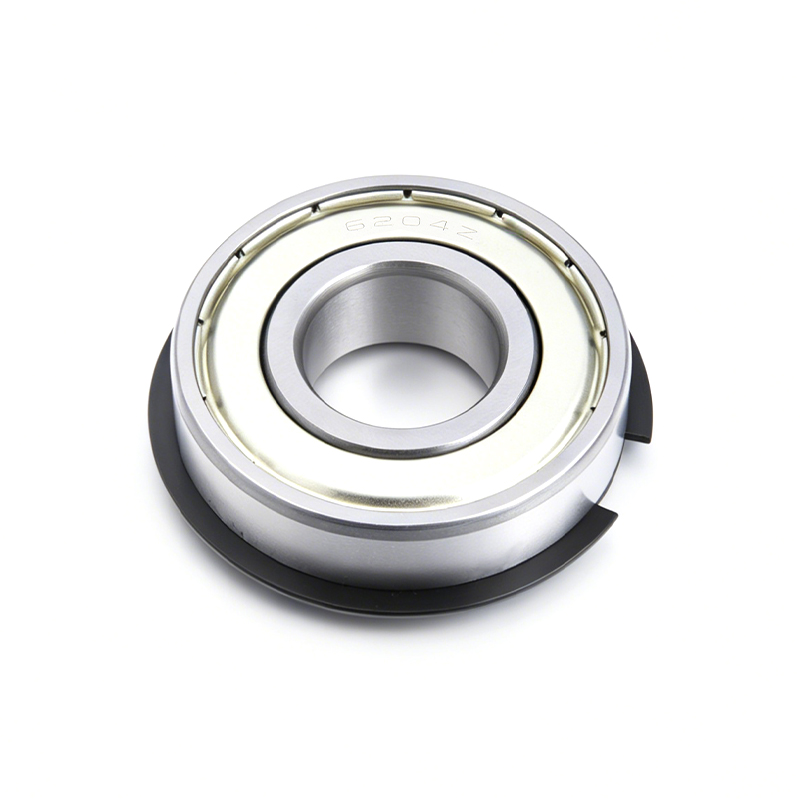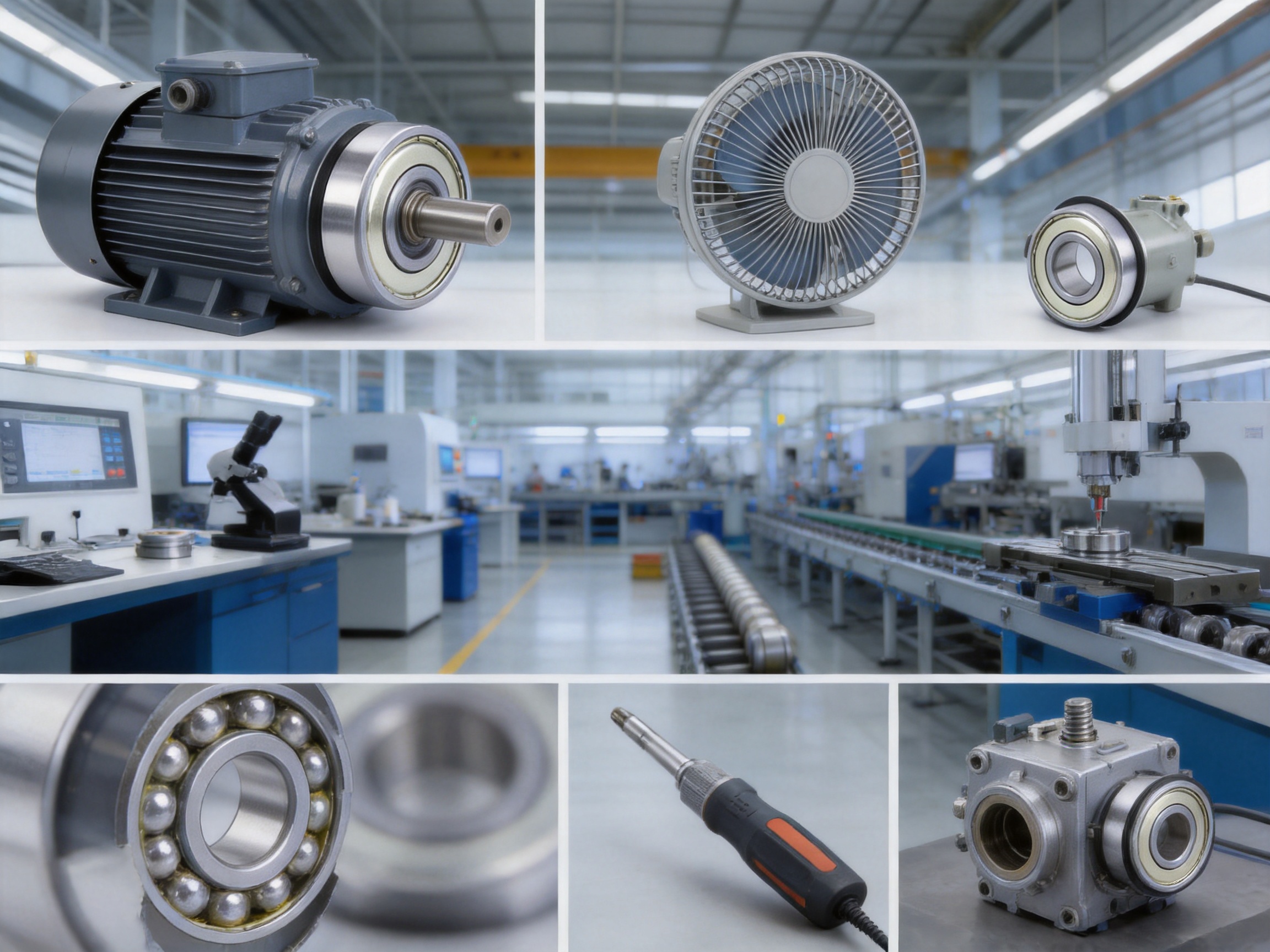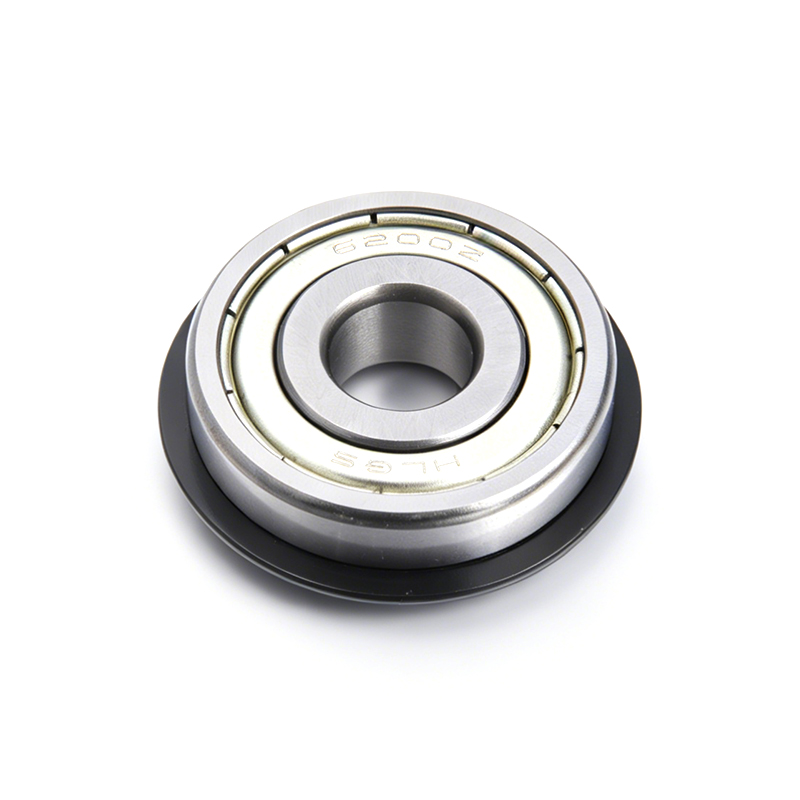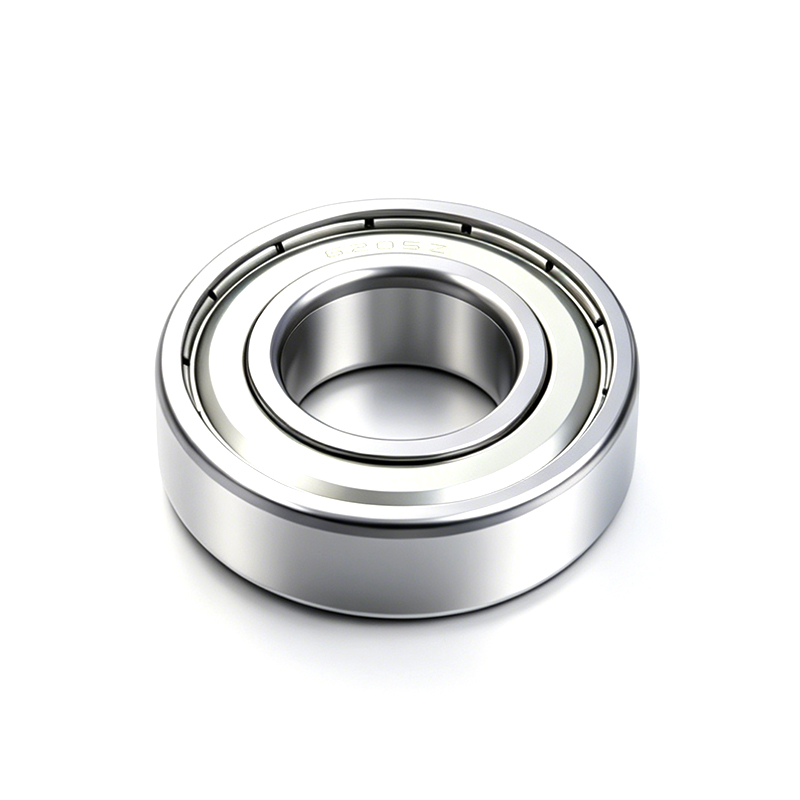
The 6204ZZNR is a single-row deep-groove ball bearing designed for industrial equipment that requires dependable radial support, bidirectional axial load capability, low friction, and secure axial positioning within a housing. Its standardized 20 × 47 × 14 mm dimensions make it suitable for a broad range of electric motors, fans, pumps, conveyors, gear-driven machines, household equipment, and general mechanical transmission systems.
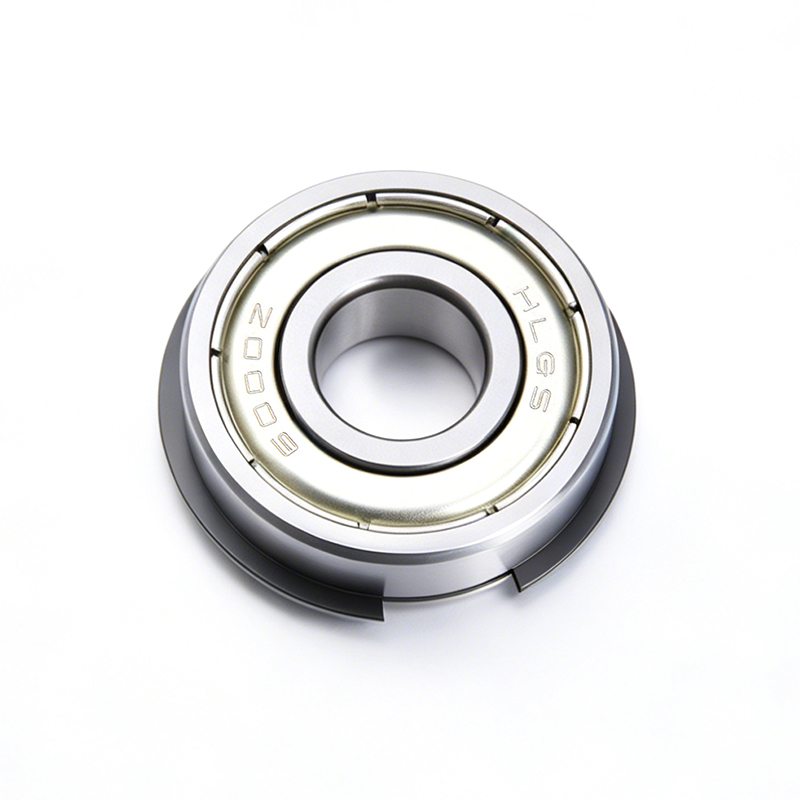
This bearing combines two practical design features: double metal shields, identified by the suffix “ZZ,” and a pre-installed outer-ring snap ring, identified by the suffix “NR.” The metal shields help retain lubricant and limit the entry of dust and other common contaminants, while the snap ring provides a convenient and secure method of locating the bearing axially in a housing. These features make the 6204ZZNR particularly useful where installation efficiency, consistent operation, and compact housing design are important.
Manufactured from high-carbon chromium bearing steel, commonly identified as GCr15, the 6204ZZNR is engineered to provide a balance of hardness, wear resistance, dimensional stability, and fatigue strength. Its 12,700 N dynamic load rating and 6,650 N static load rating support demanding operating conditions when the bearing is correctly selected, mounted, lubricated, and maintained.

6204ZZNR Ball Bearing Is Double Shielded with a Snap Ring and Features Industrial-Grade Performance
The 6204ZZNR belongs to the 6200 series of metric deep-groove ball bearings. This series is widely recognized for its versatile geometry and ability to accommodate both radial and axial forces. The internal raceway profile is designed to allow the bearing to operate smoothly under ordinary radial loading while also supporting axial loads in either direction.
The bearing has a 20 mm bore, a 47 mm outside diameter, and a 14 mm width. These dimensions are standardized and are suitable for many commercially available shafts, bearing housings, retaining arrangements, and replacement applications. Because the 6204 size is widely used across mechanical industries, maintenance personnel can often replace a worn unit without redesigning the surrounding equipment.
| Parameter | Specification |
| Bearing designation | 6204ZZNR |
| Bearing type | Single-row deep-groove ball bearing |
| Bore diameter | 20 mm |
| Outside diameter | 47 mm |
| Width | 14 mm |
| Shield configuration | Double metal shields, ZZ |
| Retention configuration | Outer-ring groove with pre-installed snap ring, NR |
| Dynamic load rating | 12,700 N |
| Static load rating | 6,650 N |
| Primary material | High-carbon chromium bearing steel, GCr15 |
| Typical applications | Motors, fans, pumps, conveyors, tools, and industrial transmission equipment |
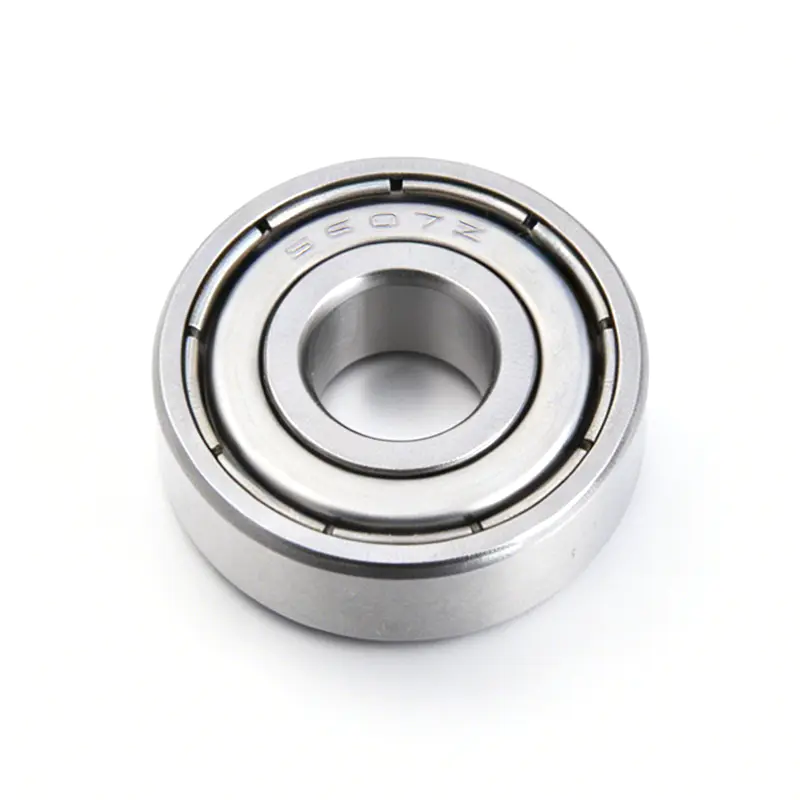
The “ZZ” designation indicates that the bearing is fitted with metal shields on both sides. These shields are positioned close to the inner ring without normally making contact with it. This non-contact arrangement reduces friction compared with many contact-sealed designs while still helping protect the rolling elements and lubricant from ordinary environmental contamination.
The “NR” designation indicates that the bearing has an external snap ring fitted in a groove on the outer ring. The snap ring is not a sealing element. Instead, it is a retaining and positioning component that helps hold the bearing in an axial location within a compatible housing. This arrangement can simplify assembly and reduce the need for a separate housing shoulder, cover, or retaining plate.
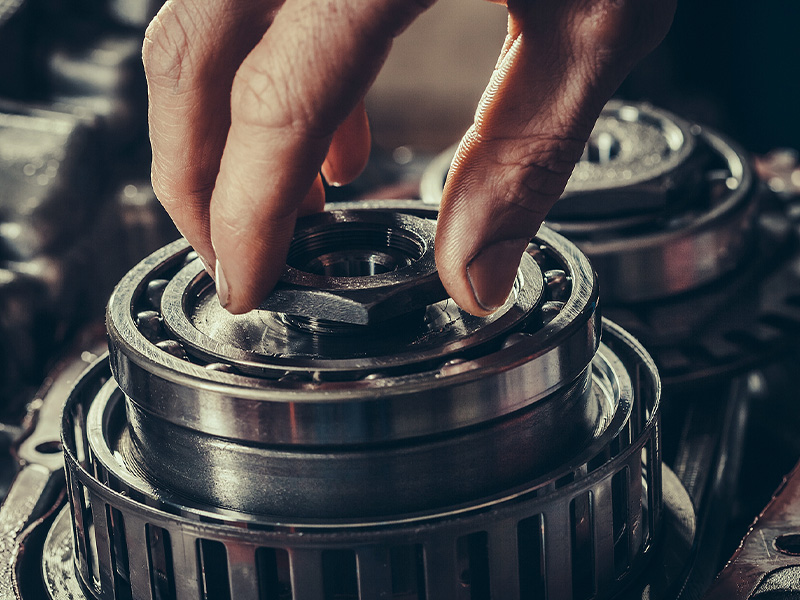
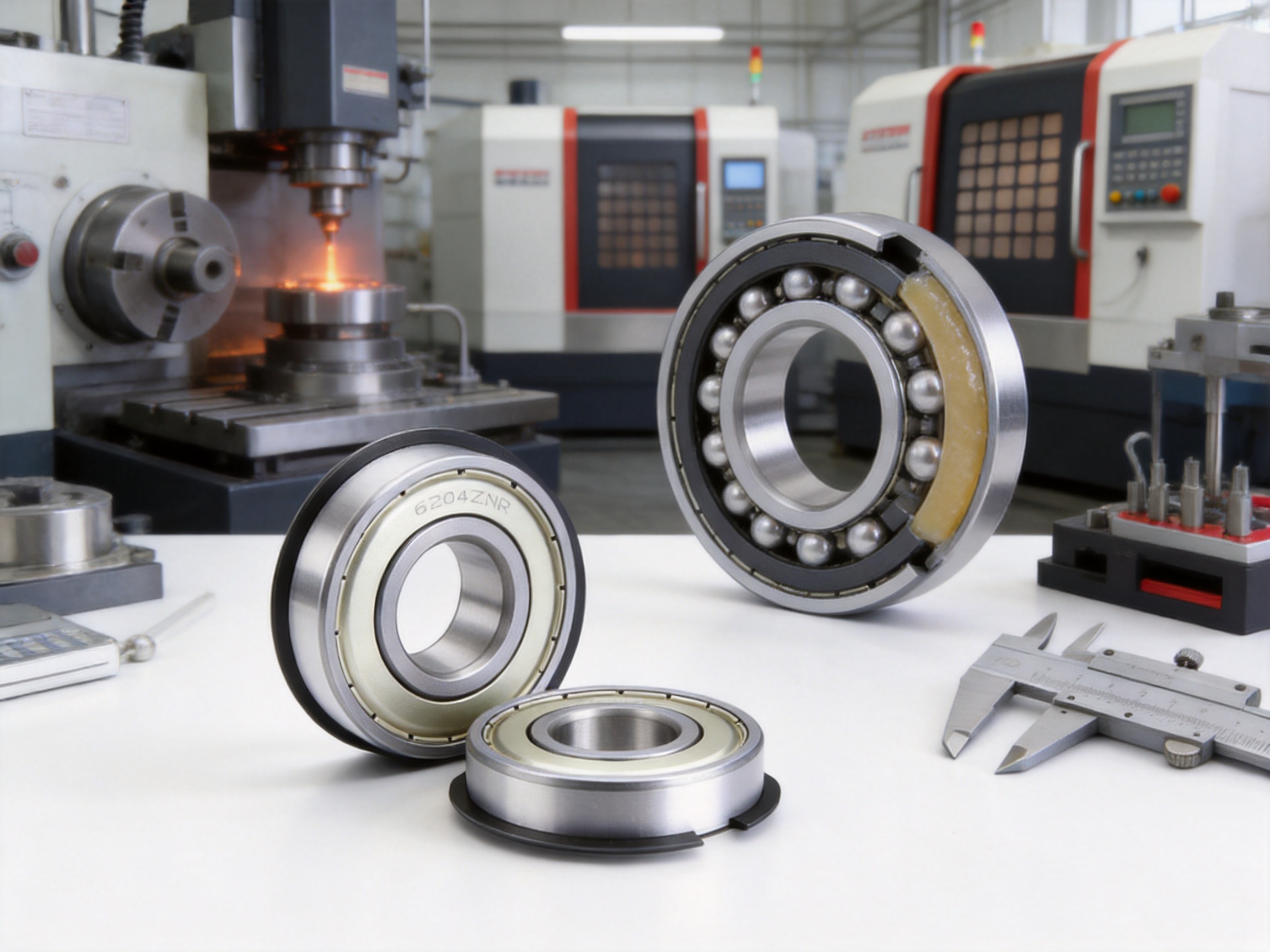
A deep-groove ball bearing consists of an inner ring, an outer ring, rolling balls, a cage, lubricant, and protective closures or shields. In the 6204ZZNR, the inner ring rotates with the shaft in most applications, while the outer ring is fitted into a stationary housing. The balls roll along the raceways between the two rings, converting sliding motion into rolling motion and reducing mechanical friction.
The deep-groove raceways extend around the circumference of both rings. This geometry provides a relatively large contact area between the balls and raceways and allows the bearing to support radial forces as well as axial forces from either direction. The bearing is therefore more versatile than a radial-only design and can be used in equipment where the direction of axial force may change during operation.
The cage maintains an even separation between the balls. Proper ball spacing reduces the likelihood of ball-to-ball contact, supports stable lubricant distribution, and helps control friction and noise. The cage also assists the bearing during rotation by guiding the rolling elements around the raceway at a controlled distance from one another.
The double metal shields are especially suitable for applications where the bearing is pre-lubricated and does not require frequent relubrication. The shields help reduce the migration of grease from the bearing interior and help limit the entry of dust, metal particles, and other contaminants. Since the shields are non-contacting in normal use, they can support efficient rotation and relatively low operating friction.
The external snap ring provides a positive axial reference point. During installation, the bearing can be pressed into a housing until the snap ring reaches the corresponding groove, shoulder, or retaining recess. Once seated, the ring helps prevent movement of the bearing along the housing bore. This is valuable in equipment exposed to vibration, alternating axial forces, or repeated start-and-stop cycles.
Contamination is one of the most common causes of premature rolling bearing failure. Dust, abrasive particles, moisture, and process residue can enter the raceway and create dents, scratches, or accelerated wear. The double metal shields of the 6204ZZNR provide a protective barrier that reduces the direct path for contaminants to reach the rolling elements.
The shields are not intended to make the bearing completely waterproof or suitable for heavy exposure to liquid. However, they are highly practical for clean or moderately dusty industrial environments where the primary objective is to retain factory-applied grease and limit ordinary airborne contamination.
Because the shields are designed as non-contact closures, they normally do not rub against the inner ring. This minimizes additional sealing torque and supports smooth rotation. Low friction can contribute to reduced energy consumption, lower heat generation, and stable performance in equipment that operates continuously.
Low friction is particularly beneficial in electric motors, ventilation fans, small pumps, and conveyor rollers. In these applications, the bearing may rotate at high speed for long periods, so even a modest reduction in resistance can support lower operating temperatures and improved system efficiency.
Factory-applied grease must remain in the bearing long enough to provide a durable lubricating film between the balls and raceways. The two metal shields help retain the lubricant inside the bearing while reducing the risk of grease being displaced by airflow or vibration.
Lubricant retention also helps maintain more consistent operating characteristics over the service life of the bearing. The correct grease type and quantity remain important, but the shield arrangement provides a practical enclosure for standard industrial applications.
Compared with contact seals, non-contact metal shields generally produce less drag. This makes the ZZ configuration a common choice for applications where speed, low noise, and low starting torque are important. Actual permissible speed depends on factors such as load, lubrication, operating temperature, shaft accuracy, housing fit, balancing, and alignment.
Users should not assume that every shielded bearing is suitable for unlimited speed. Instead, operating conditions should be compared with the supplier’s recommended speed values and the equipment manufacturer’s requirements. Correct installation and adequate heat dissipation are equally important in high-speed service.
A bearing can function correctly only when its rings are properly located relative to the shaft and housing. Unwanted axial movement may cause misalignment, rubbing, vibration, noise, and uneven load distribution. The pre-installed snap ring on the 6204ZZNR provides a convenient method of controlling the bearing’s axial position in a compatible housing.
The snap ring acts as a positive stop. When the outer ring is pressed into the housing, the ring engages with a matching retaining shoulder or groove. This arrangement helps prevent the outer ring from moving through the housing during operation, especially when the assembly experiences axial vibration or alternating thrust.
A standard bearing without an external retaining ring may require a stepped housing, end cover, shoulder, threaded retainer, or separate circlip. The 6204ZZNR can reduce the number of separate components needed for suitable housing designs. This can simplify machining, shorten assembly time, and reduce the possibility of losing or incorrectly installing a separate retaining element.
For equipment designers, the snap ring can provide greater flexibility when creating compact bearing seats. For maintenance teams, the pre-installed ring makes it easier to identify the intended axial orientation and replacement configuration.
Assembly errors can occur when a separate retaining ring is omitted, installed in the wrong direction, or not fully seated. Since the 6204ZZNR is supplied with its snap ring already fitted, the assembly process can be more consistent. Operators still need to confirm that the housing is compatible and that the ring is fully engaged after installation.
The snap ring does not replace correct interference fits or proper housing design. It is an axial retention feature, not a substitute for correct radial support. The housing bore, shaft fit, shoulder dimensions, and operating temperature must all be considered during the design or replacement process.
The 6204ZZNR is manufactured from high-carbon chromium bearing steel, commonly known as GCr15. This material is widely used for rolling bearing rings and balls because it can achieve high hardness after heat treatment and offers strong resistance to rolling contact fatigue and wear.
Material quality begins with the selection and inspection of steel. Bearing steel must have suitable chemical composition, cleanliness, microstructure, and consistency. Excessive inclusions or improper heat-treatment response can reduce fatigue life. A reliable manufacturing process therefore requires control from incoming raw material inspection through machining, heat treatment, grinding, assembly, and final testing.
The inner and outer rings are formed through a series of controlled operations. Depending on the production method, these may include cutting, forging or forming, turning, heat treatment, grinding, superfinishing, washing, and inspection. Each stage influences the final accuracy and performance of the bearing.
Turning establishes the basic dimensions and geometry of the rings. Heat treatment develops the required hardness and structural properties. Subsequent grinding and superfinishing operations refine the raceways, shoulders, bore, outside diameter, and side faces. These finishing operations are essential because the rolling elements interact with the raceways under concentrated contact stress.
The raceway surface must be smooth and accurately formed. A poor surface can increase friction, generate vibration, accelerate lubricant degradation, and create local stress concentrations. Precision grinding and finishing help create a consistent rolling path for the balls and support quiet, stable operation.
Heat treatment is a key part of rolling bearing manufacture. The process must produce a hardened working surface while maintaining appropriate toughness and dimensional stability. Overheating, insufficient hardening, or uncontrolled cooling can cause distortion, cracking, or reduced fatigue resistance.
Advanced production systems use controlled heating, atmosphere management, quenching, tempering, and process monitoring. The exact process parameters depend on the steel grade, ring size, production equipment, and required performance. The objective is to provide a uniform microstructure that can withstand repeated rolling contact.
After heat treatment, bearing rings may require corrective grinding to restore dimensional accuracy. Inspection of hardness, size, roundness, and surface condition helps verify that the rings meet the required specification before assembly.
The balls used in a deep-groove bearing must have consistent diameter, roundness, surface finish, and hardness. Even small variations can influence load distribution among the rolling elements. Balls are therefore processed through forming, heat treatment, grinding, lapping, cleaning, and classification.
Uniform rolling elements help distribute the operating load more evenly. This supports lower vibration and more predictable service life. The ball grade and internal clearance must also be matched to the bearing design and application requirements.
The cage is manufactured to maintain the correct spacing between the balls. Its design must provide sufficient strength, dimensional accuracy, and resistance to lubricant and temperature conditions. During assembly, the cage and balls are fitted between the rings in a controlled sequence to prevent damage to the raceways or rolling elements.
The double metal shields are fitted after the rolling elements and cage have been installed and lubricated. Their position must be controlled carefully so that they provide effective protection without interfering with the inner ring. A properly fitted shield supports lubricant retention and helps maintain consistent running characteristics.
The snap ring is installed in the outer-ring groove and checked for seating, shape, and retention. A correctly installed ring should remain securely engaged while maintaining the designed profile for housing installation.
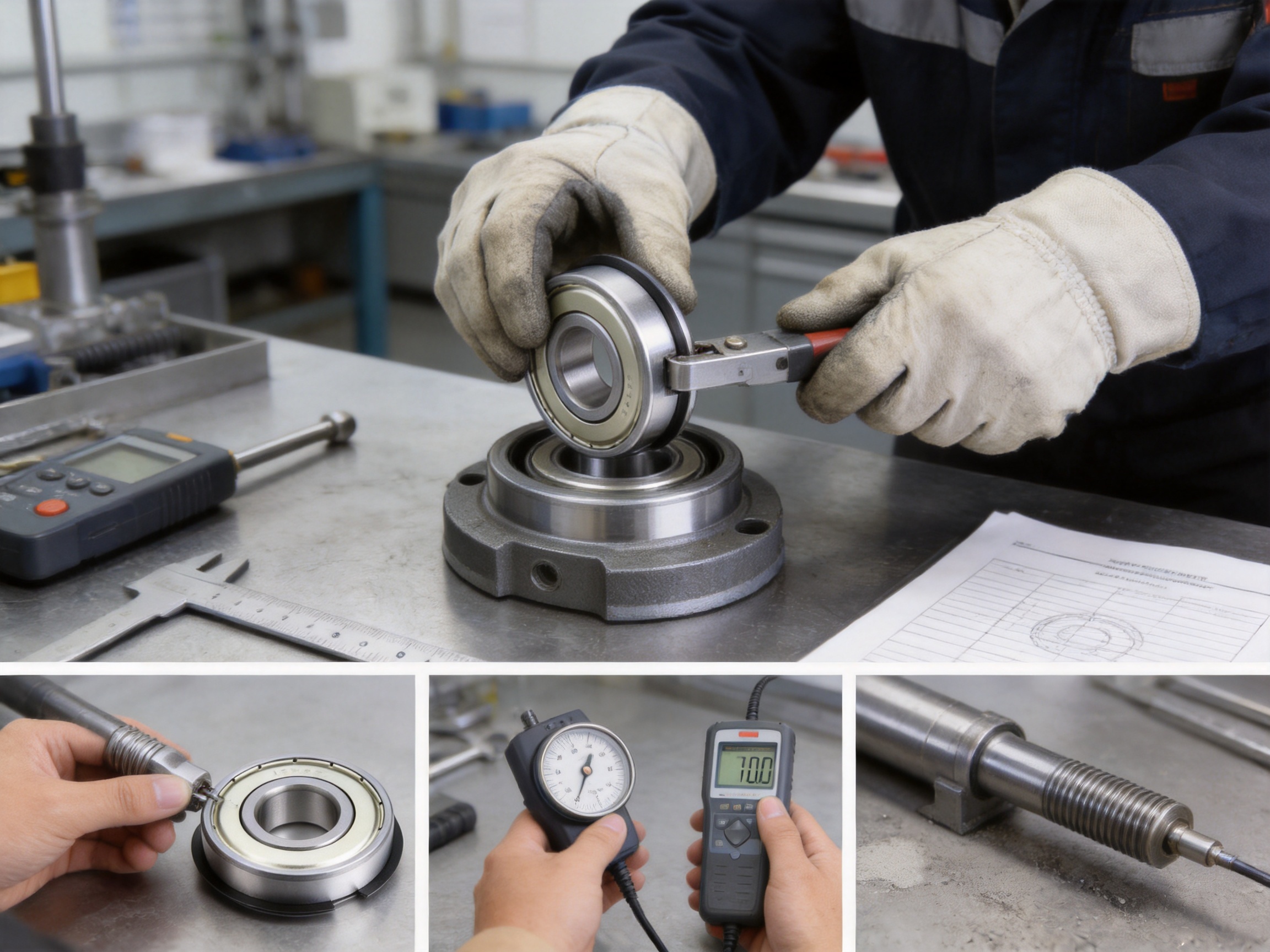
Reliable bearing performance depends on more than dimensional conformity. A bearing may have the correct basic size but still perform poorly if its raceways, internal clearance, lubricant quantity, shields, or snap ring are not properly controlled. Comprehensive quality management therefore considers materials, processes, assembly, and final performance.
Inspection typically includes the bore diameter, outside diameter, width, chamfer dimensions, ring geometry, snap-ring groove, and overall fit-related characteristics. Measuring equipment must be calibrated and suitable for the required tolerance range. Statistical process control can help identify gradual variation before it becomes a production problem.
Raceways and rolling surfaces require careful inspection for scratches, dents, grinding burns, waviness, and other defects. Surface roughness and form accuracy influence friction, noise, and fatigue life. Visual inspection may be combined with specialized measurement equipment for more detailed evaluation.
Noise and vibration testing can identify irregularities that may not be obvious from dimensional inspection alone. Unbalanced components, contamination, poor raceway finish, incorrect clearance, or damaged rolling elements can all increase operating noise. Testing helps verify that the completed bearing meets the intended quality level for quiet industrial operation.
The amount and distribution of grease are important in a pre-lubricated shielded bearing. Too little lubricant may reduce service life, while too much can increase churning, temperature, and starting torque. The shields should be inspected for correct seating, deformation, and clearance from the inner ring.
The snap ring must be checked for correct dimensions, elasticity, surface condition, and secure placement in the outer-ring groove. A ring that is not fully seated may disengage during installation or operation. Final inspection should confirm that the ring is suitable for the intended housing arrangement.
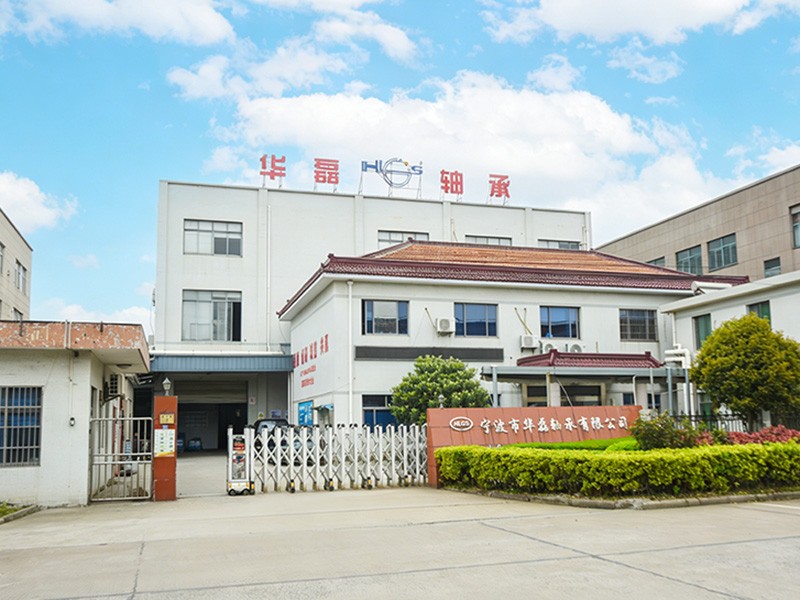
Ningbo Zhenhai Hualei Bearing Co., Ltd. was established in 2001 and specializes in the manufacture of deep-groove ball bearings. Its product range serves food machinery, household appliances, automotive electromechanical systems, electric tools, mechanical transmission equipment, and motors.
The company operates under the HLGS registered trademark and applies structured quality management practices associated with ISO 9001 and ISO/TS 16949 systems. These management frameworks support documented procedures, traceability, process control, corrective action, and continuous improvement. For bearing customers, such systems can improve consistency from order review through production and delivery.
The company’s experience in deep-groove bearing production provides a foundation for manufacturing standardized metric sizes such as the 6204ZZNR. Its production approach emphasizes controlled inspection and the use of advanced testing equipment. This is important because deep-groove bearings often appear simple externally, yet their service performance depends on many tightly controlled internal characteristics.
The company also established Ningbo Hotex Mechanical & Electrical Technology Co., Ltd. in 2016 as an import and export department. This supports international customer communication, order coordination, OEM and ODM projects, documentation, and export services. A dedicated international business function can help customers manage customized requirements, packaging, production schedules, and technical communication more efficiently.
OEM and ODM customers may require specific clearance, grease, packaging, marking, shield configuration, snap-ring arrangement, or inspection documentation. A capable manufacturer should be able to review these requirements before production and determine whether they are compatible with the intended application.
For a bearing such as the 6204ZZNR, customization may involve packaging quantities, product labeling, customer branding, grease selection, inspection reports, or application-specific production controls. Any requested change should be confirmed technically because alterations to internal clearance, lubricant, or sealing configuration can affect speed, temperature, noise, and service life.
Bearings used in motors, fans, pumps, tools, and household equipment may share the same basic designation but operate under different conditions. Motor bearings may prioritize low noise and stable high-speed rotation. Conveyor bearings may face vibration and contamination. Pump applications may experience humidity or temperature variation. Electric tools may require resistance to shock and intermittent loading.
Experience across these sectors helps a manufacturer understand how standardized bearing designs are applied in real equipment. It also supports more informed discussions about fit, clearance, grease, shields, operating speed, and environmental conditions.
Open bearings have no shields or seals, allowing easier access to the rolling elements and lubricant. They may be appropriate inside protected housings with a centralized lubrication system. However, they offer less protection against airborne contamination and may require more frequent lubrication or a more carefully designed housing.
The 6204ZZNR offers a practical advantage in pre-lubricated applications because its double shields help retain grease and protect the internal components. For motors, fans, and general industrial assemblies, this can reduce maintenance requirements compared with an open configuration.
Contact-sealed bearings use a seal that rubs against the inner ring or a nearby surface. This arrangement can provide stronger protection against dust, moisture, and fluid ingress than non-contact metal shields. However, contact seals may create more friction, higher starting torque, and greater heat generation, especially at increased rotational speed.
The 6204ZZNR is advantageous when low friction, low noise, and speed capability are more important than maximum fluid resistance. It should not be selected for severe washdown, submerged, or heavily contaminated environments without confirming that the shield configuration is adequate.
A standard bearing without an external snap ring can be used in housings that have shoulders, covers, threaded retainers, or separate circlips. This arrangement may be suitable for conventional bearing seats but can require more housing components or additional machining.
The 6204ZZNR offers integrated axial retention through its pre-installed snap ring. This may reduce assembly steps and simplify housing design. The advantage is greatest when the equipment is specifically designed for an NR-type bearing. The snap ring must not be forced into a housing that lacks the correct groove or clearance.
Angular contact bearings are optimized for combined radial and axial loads with a defined contact angle. Tapered roller bearings are suitable for heavier combined loads and can often be adjusted for preload. Cylindrical roller bearings can provide high radial load capacity with limited axial capability depending on their design.
The 6204ZZNR is not intended to replace these specialized bearing types in every application. Its strength is versatility, compactness, low friction, ease of installation, and suitability for moderate radial and bidirectional axial loading. For many general-purpose machines, this combination provides a more economical and straightforward solution than a specialized bearing design.
Electric motors commonly require bearings that rotate smoothly, generate limited noise, and operate reliably over long periods. The 6204ZZNR’s double shields help retain grease and reduce contamination, while its deep-groove geometry supports radial rotor loads and moderate axial forces.
The snap ring can help locate the bearing in motor end shields or compatible housings. Before installation, the motor designer or maintenance technician should verify the correct fit, internal clearance, shaft tolerance, temperature range, and electrical protection requirements.
Fans and blowers often operate at relatively high speeds and are sensitive to vibration and acoustic noise. The low-friction, non-contact shield arrangement can support smooth running when the bearing is correctly installed and balanced.
Fan applications may involve dust, elevated temperature, or continuous operation. The bearing should therefore be selected based on the actual environment. Where heavy dust or moisture is present, a stronger sealing arrangement or additional external protection may be necessary.
Small pumps and general-purpose fluid-handling equipment may use deep-groove bearings to support shaft rotation and radial loads. The 6204ZZNR can be appropriate when the bearing is positioned away from direct fluid exposure and the equipment provides adequate protection from leakage.
In pump assemblies, shaft alignment and seal condition are particularly important. Fluid contamination can rapidly degrade grease and raceway surfaces. The 6204ZZNR should not be treated as a liquid-proof bearing solely because it has shields.
Conveyors use bearings in rollers, drive assemblies, pulleys, tensioning mechanisms, and small gear units. The bearing’s standardized dimensions and snap-ring retention can support efficient replacement and simplified assembly.
Conveyor environments vary greatly. Clean indoor conveyor systems may be well suited to double-shielded bearings, while outdoor, abrasive, or washdown conveyors may require additional seals, protective housings, or more frequent inspection.
Electric tools often combine high rotational speed, intermittent shock, vibration, and compact installation spaces. The 6204ZZNR may be used where the load and dimensional requirements match the bearing’s capabilities.
Tool manufacturers should evaluate starting torque, speed, temperature rise, vibration, and impact loads. The correct internal clearance and grease are important because compact housings can transmit heat directly to the bearing.
Gearboxes, rollers, shaft supports, small machines, and general transmission equipment often use standardized deep-groove bearings because they are economical and readily available. The 6204ZZNR can provide both radial and bidirectional axial support in compact assemblies.
The bearing is especially useful when the equipment needs an externally retained outer ring and a pre-lubricated, low-maintenance bearing arrangement. Its selection should still be based on calculated loads, speed, temperature, contamination, and expected operating life.
Before installation, verify that the replacement bearing is 6204ZZNR and not a visually similar bearing with a different shield, seal, clearance, or retaining-ring configuration. The dimensions may appear similar, but suffix differences can change installation and operating behavior.
The shaft and housing should be clean, dry, and free from burrs, corrosion, dents, and excessive wear. A damaged shaft can prevent the inner ring from seating correctly, while an oversized or distorted housing can allow outer-ring movement.
The housing must have the appropriate retention arrangement for the external snap ring. Confirm that the ring can pass through the housing bore during insertion and that it will engage the intended shoulder or groove after the bearing is seated.
When pressing the bearing onto a shaft, apply force to the inner ring. When pressing the bearing into a housing, apply force to the outer ring. Pressing through the rolling elements can create brinelling or raceway damage, even if the damage is not immediately visible.
Do not hammer directly on the shields, cage, or snap ring. Use suitable installation tools that provide even pressure around the ring being fitted. If an interference fit is substantial, use an appropriate induction heater or controlled heating method rather than excessive mechanical force.
After insertion, confirm that the snap ring is fully engaged in the housing’s retaining feature. Rotate the bearing by hand and check that it turns smoothly without binding. Verify that the outer ring cannot move unexpectedly in the axial direction.
Keep the bearing in its original packaging until installation. Avoid placing it on dirty workbenches or exposing it to metal filings, dust, moisture, or unfiltered compressed air. Do not wash out the factory grease unless the application specifically requires a different lubricant and the procedure is approved.
Double-shielded bearings are generally designed for low-maintenance operation, but they are not maintenance-free under all conditions. Periodic inspection remains useful in equipment where bearing failure could cause production loss or safety concerns.
Monitor for changes in noise, vibration, temperature, and rotational resistance. A gradual increase in sound may indicate lubricant degradation, contamination, raceway fatigue, or misalignment. A sudden temperature rise may indicate excessive load, incorrect fit, inadequate clearance, over-lubrication in adjacent components, or a developing bearing failure.
Do not add grease through the metal shields unless the bearing design and maintenance procedure specifically allow it. Attempting to force grease through the shields can deform them or introduce contaminants. If the bearing has reached the end of its service life, replacement is normally more practical than disassembly.
Check adjacent components as well. A bearing may fail prematurely because of a bent shaft, loose housing, unbalanced rotor, damaged seal, excessive belt tension, or poor alignment. Replacing the bearing without correcting the underlying cause may result in repeated failure.
The 12,700 N dynamic load rating indicates the bearing’s capacity for a defined level of repeated rolling load under standardized rating conditions. It should not be interpreted as a universal allowable working load for every machine. Actual service life depends on the magnitude and direction of the load, speed, lubrication, contamination, mounting, temperature, and alignment.
The 6,650 N static load rating relates to conditions in which the bearing is stationary or rotates very slowly and is subject to permanent deformation risk. Static loading may occur during transport, machine shutdown, shock events, or heavy intermittent force. A suitable safety factor should be applied when shock or vibration is present.
Combined radial and axial loads should be evaluated using the applicable bearing calculation method. Although a deep-groove bearing can support axial loads in both directions, high thrust loads may significantly reduce calculated life. If axial forces dominate, a different bearing type may be more appropriate.
Speed capability depends on more than the bearing designation. Grease type, internal clearance, heat dissipation, cage design, load level, mounting accuracy, and operating temperature all influence the practical speed limit. A bearing operating at high speed with poor alignment may run hotter and noisier than the same bearing in a properly designed assembly.
For equipment manufacturers and distributors, consistency between production batches is as important as the nominal specification. A bearing that performs differently from one shipment to the next can create assembly problems, noise variation, unexpected temperature rise, and uncertain field life.
Consistent manufacturing requires stable raw materials, controlled machinery, calibrated measurement systems, documented work instructions, trained personnel, and traceable inspection records. It also requires feedback from production and customer applications so that recurring issues can be identified and corrected.
The manufacturing experience and quality-management approach associated with Ningbo Zhenhai Hualei Bearing Co., Ltd. support the production of standardized deep-groove bearings for domestic and international applications. Its focus on testing, documented management systems, and OEM or ODM service can be valuable for customers that need repeatable supply rather than one-time purchases.
When purchasing the 6204ZZNR, customers should confirm the exact designation, quantity, packaging requirements, grease condition, expected service environment, and required documentation. For large-volume orders, it is advisable to discuss production schedules, inspection standards, sample approval, labeling, and traceability before placing the order.
Customers should also identify whether the application requires standard internal clearance or a special clearance class. Temperature, interference fits, shaft speed, and housing conditions can affect the final operating clearance. If the bearing is used in an electric motor, fan, pump, or high-speed machine, the application details should be provided to the supplier for technical review.
For replacement purchases, compare the original bearing’s complete designation rather than relying only on the basic 6204 size. A bearing marked 6204, 6204ZZ, 6204-2RS, or 6204ZZNR may have different closures and retention features. Correct suffix matching helps prevent installation problems and performance differences.
6204 identifies the basic bearing size and series. The “ZZ” suffix indicates double metal shields, and “NR” indicates an outer-ring snap ring groove with a pre-installed snap ring. Together, the designation describes a 20 × 47 × 14 mm deep-groove ball bearing with two metal shields and external axial retention.
The bore diameter is 20 mm, the outside diameter is 47 mm, and the bearing width is 14 mm. These are standard metric dimensions, but the complete suffix must still be checked because closure and retaining features may vary between bearing versions.
No. The double metal shields help limit the entry of ordinary dust and retain lubricant, but they are not designed to provide complete protection against water, pressurized spray, or immersion. Applications with substantial moisture may require contact seals, external shields, or a specially protected housing.
Yes. Its deep-groove raceways allow it to support radial loads and bidirectional axial loads. The permissible axial load depends on the magnitude of the radial load, speed, lubrication, temperature, and required service life.
The snap ring helps locate the outer ring axially in a compatible housing. It can reduce the need for a separate retaining ring or housing cover. It does not replace proper shaft and housing fits, and it must be used with a housing designed to accommodate the ring.
The snap ring is supplied as part of the bearing configuration. Removing or modifying it may affect retention, installation, and warranty conditions. Unless the application specifically requires a different arrangement and the supplier confirms the change, the ring should remain installed.
In most standard applications, the double metal shields and factory-applied grease are intended to provide long-term lubrication without routine relubrication. Relubrication should not be attempted through the shields unless a specific approved procedure is available. When the grease is exhausted or contaminated, replacement is normally recommended.
The rings and rolling elements are manufactured from high-carbon chromium bearing steel, commonly referred to as GCr15. This material is selected for its hardness, wear resistance, and ability to withstand repeated rolling contact after appropriate heat treatment.
Use clean tools and apply installation force only to the ring receiving the fit. Apply force to the inner ring when mounting on a shaft and to the outer ring when fitting into a housing. Never apply installation force through the balls, cage, shields, or snap ring.
Typical industries and applications include electric motors, fans, pumps, conveyors, household appliances, electric tools, food machinery, automotive electromechanical systems, and general mechanical transmission equipment. Suitability depends on the actual load, speed, environment, and mounting conditions.
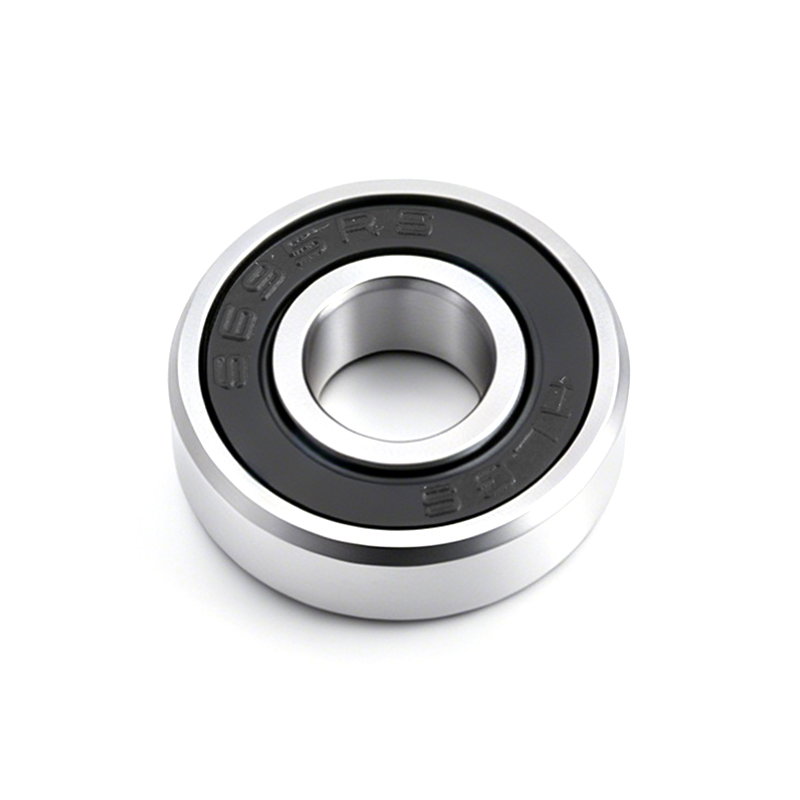
A 6204ZZNR uses double metal shields and includes an external snap ring. A 6204-2RS generally uses two contact seals and may not include a snap ring. The ZZ configuration normally offers lower friction and good speed performance, while contact seals may provide stronger protection against moisture and contaminants.
It may be used within the temperature range of its specified material, grease, shields, and application design. High-temperature service should be reviewed with the supplier because standard grease and shield materials may not be suitable for extreme temperatures.
Useful information includes the bearing designation, quantity, application, load, speed, temperature, environment, fit requirements, internal clearance, lubricant requirements, packaging, labeling, inspection standards, and delivery schedule. Providing complete information helps the manufacturer evaluate feasibility and recommend appropriate production controls.
The 6204ZZNR is a versatile deep-groove ball bearing that combines standardized dimensions with two practical performance features: double metal shields and an integrated outer-ring snap ring. Its 20 × 47 × 14 mm size makes it suitable for many established industrial designs, while its deep-groove geometry supports both radial and bidirectional axial loading.
The double metal shields help retain grease, reduce contamination risk, and support low-friction rotation. The snap ring assists with axial positioning and can simplify compatible housing designs. Manufactured from high-carbon chromium bearing steel, the bearing is designed for reliable operation in electric motors, fans, pumps, conveyors, tools, and general transmission equipment.
Its performance depends on correct selection, fit, installation, lubrication, alignment, and operating conditions. When these factors are properly managed, the 6204ZZNR can offer a practical balance of service life, maintenance convenience, installation efficiency, and cost control.
Ningbo Zhenhai Hualei Bearing Co., Ltd. brings long-term experience in deep-groove bearing production, documented quality-management practices, advanced testing, and OEM and ODM support. These capabilities provide a foundation for consistent product manufacturing and responsive service for customers requiring dependable metric ball bearings for industrial and electromechanical applications.
1. ISO 15, Rolling Bearings—Radial Bearings—Boundary Dimensions, applicable metric bearing dimension principles.
2. ISO 281, Rolling Bearings—Dynamic Load Ratings and Rating Life, principles for bearing load and life evaluation.
3. ISO 76, Rolling Bearings—Static Load Ratings, principles for evaluating static bearing capacity.
4. ISO 9001, Quality Management Systems—Requirements, quality-management principles relevant to controlled manufacturing.
5. ISO/TS 16949, Quality Management Systems for Automotive Production and Relevant Service Parts Organizations, process-control principles for automotive-related manufacturing.
6. Rolling Bearing Engineering Reference Materials, general guidance on bearing installation, lubrication, load, speed, and maintenance.
7. High-Carbon Chromium Bearing Steel Technical References, material and heat-treatment principles for rolling bearing rings and rolling elements.
Picture a maintenance engineer holding a replacement bearing stamped 6204-2RS C3. The part looks id...
A spindle starts to leave a faint chatter mark at 8,000 rpm. The deep groove ball bearing meets its...
Quick Answer: Open vs. Sealed vs. Shielded at a Glance The core difference lies in how each type ba...
Choosing between an angular contact ball bearing and a deep groove ball bearing often comes down to...