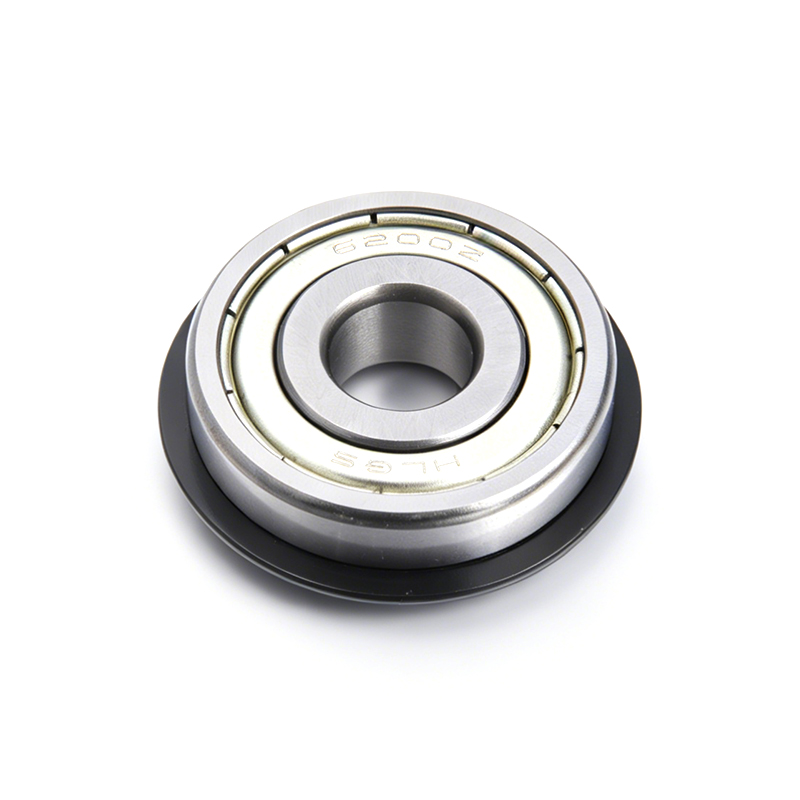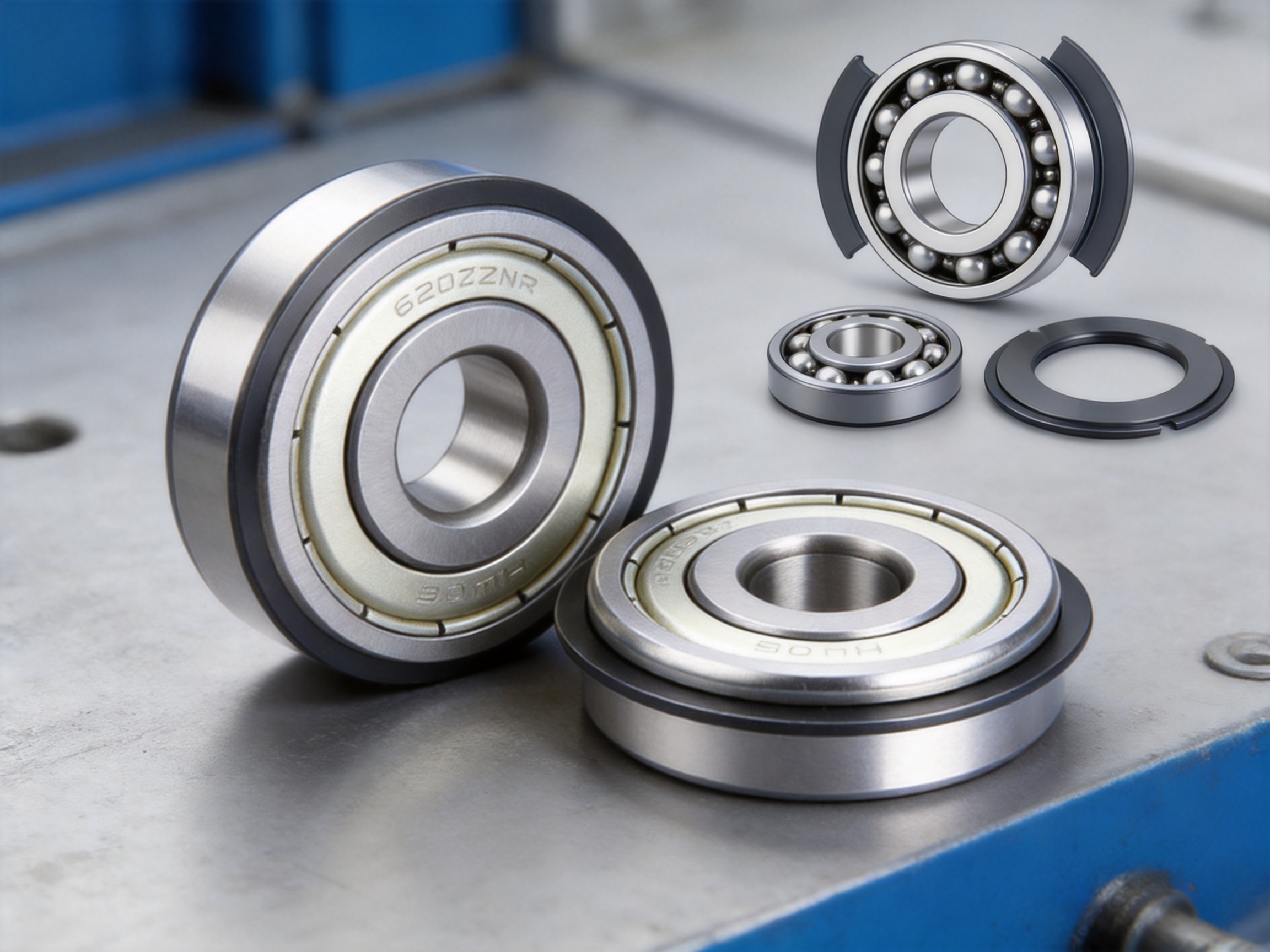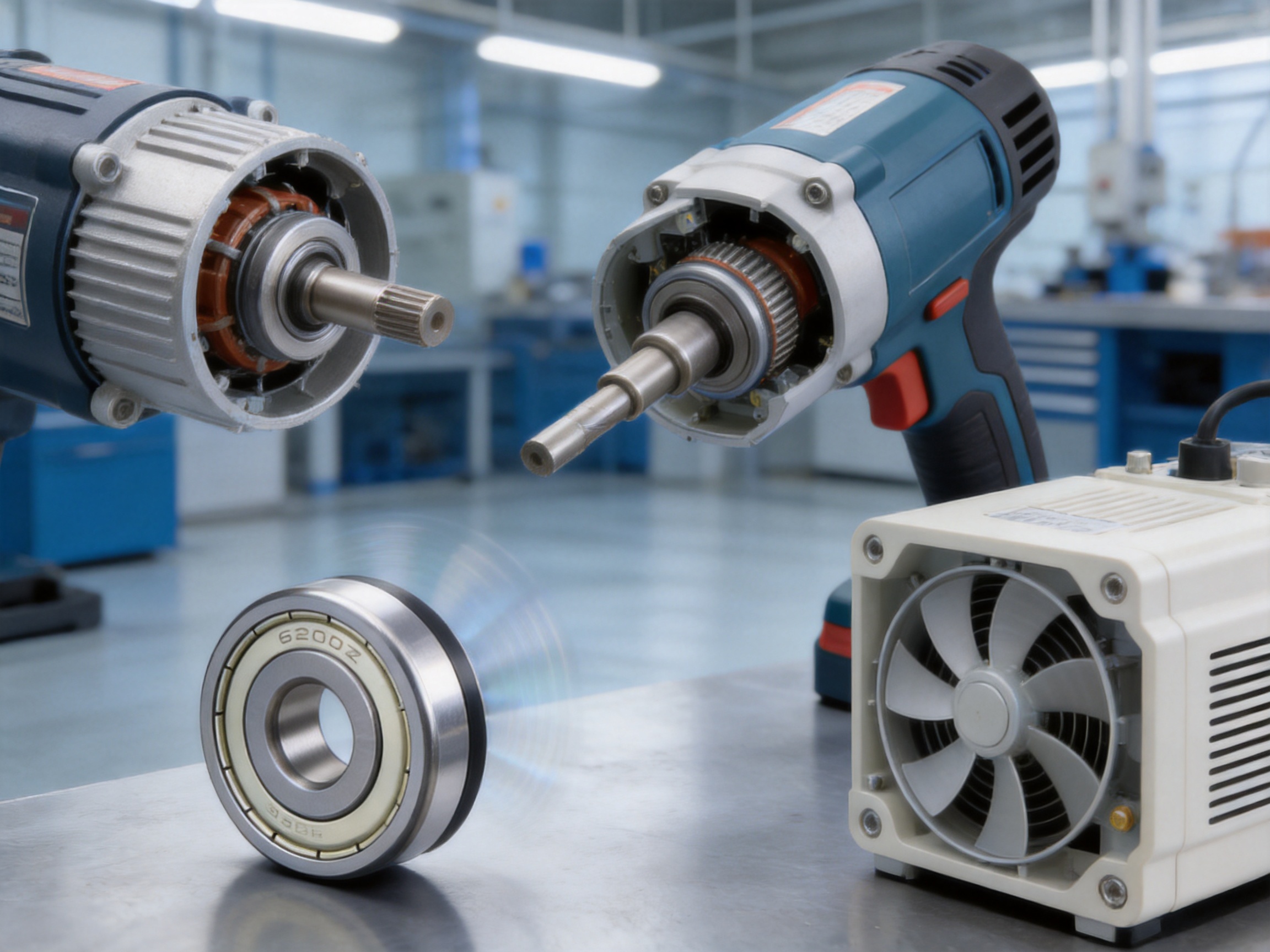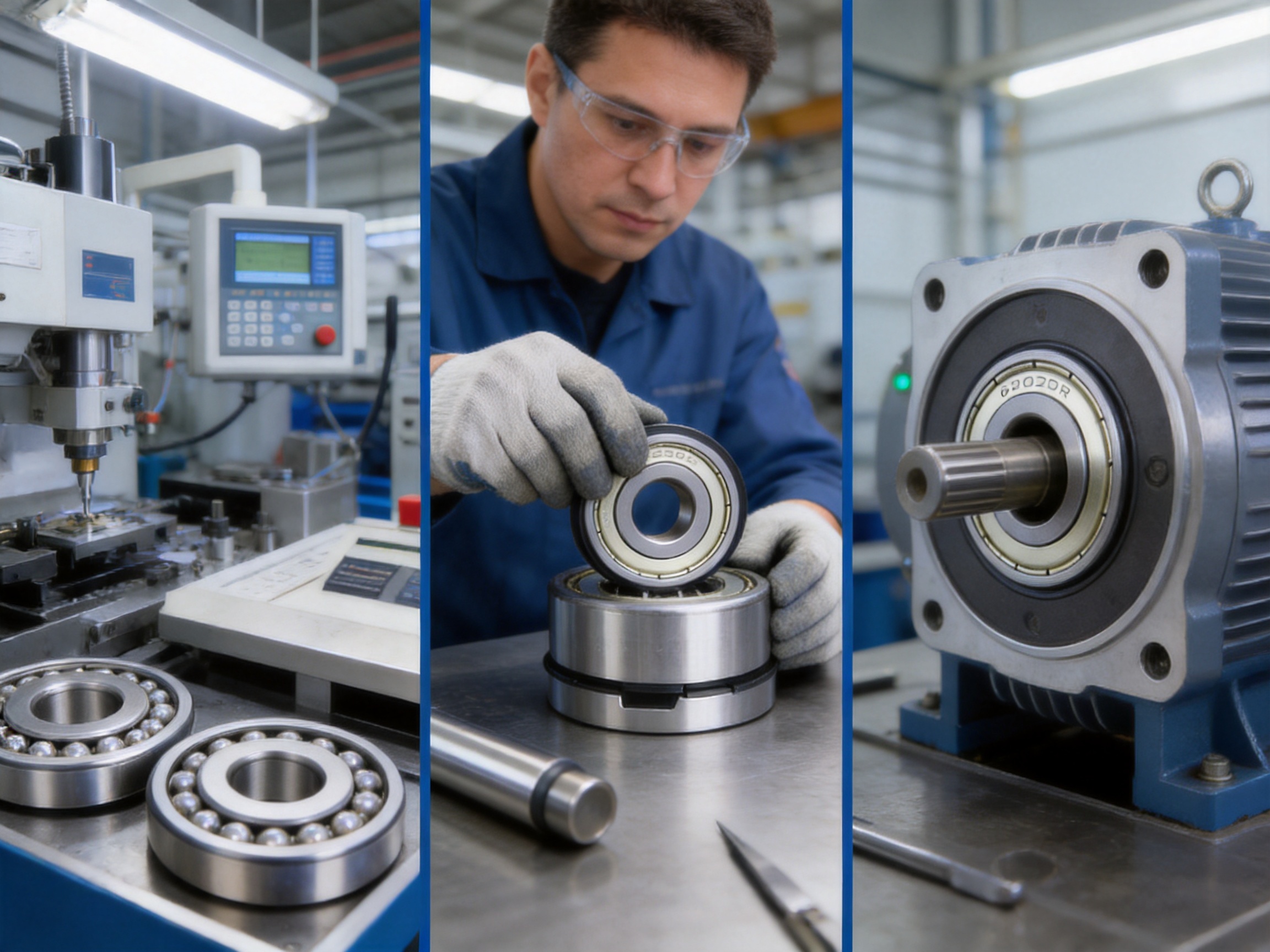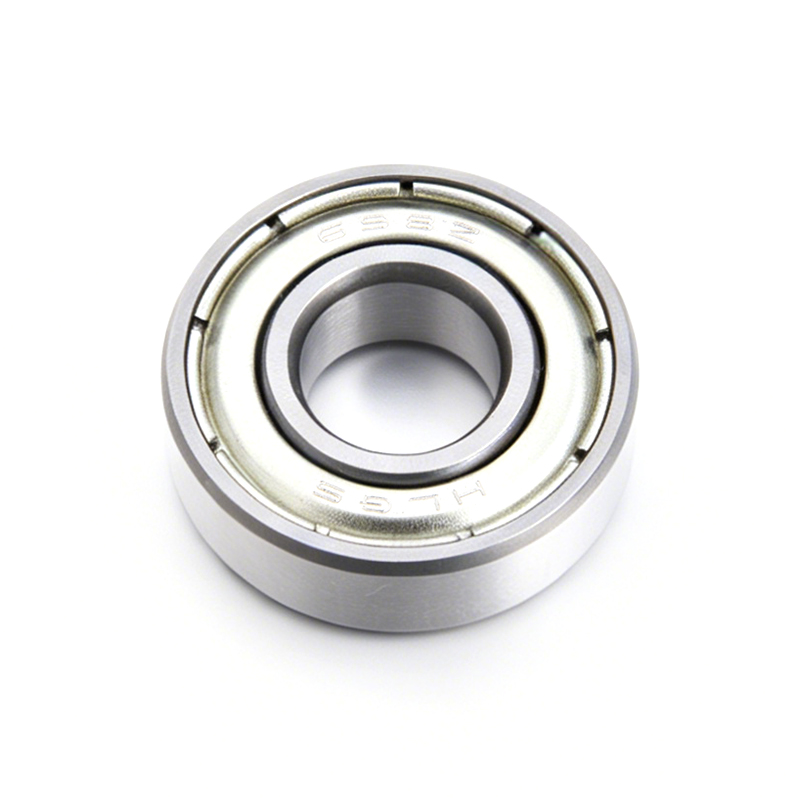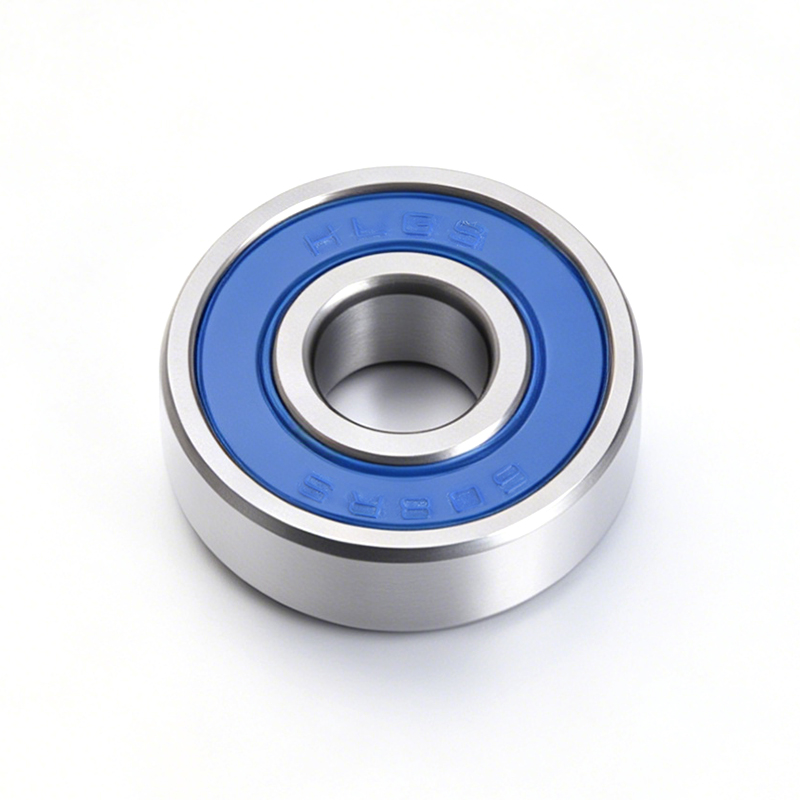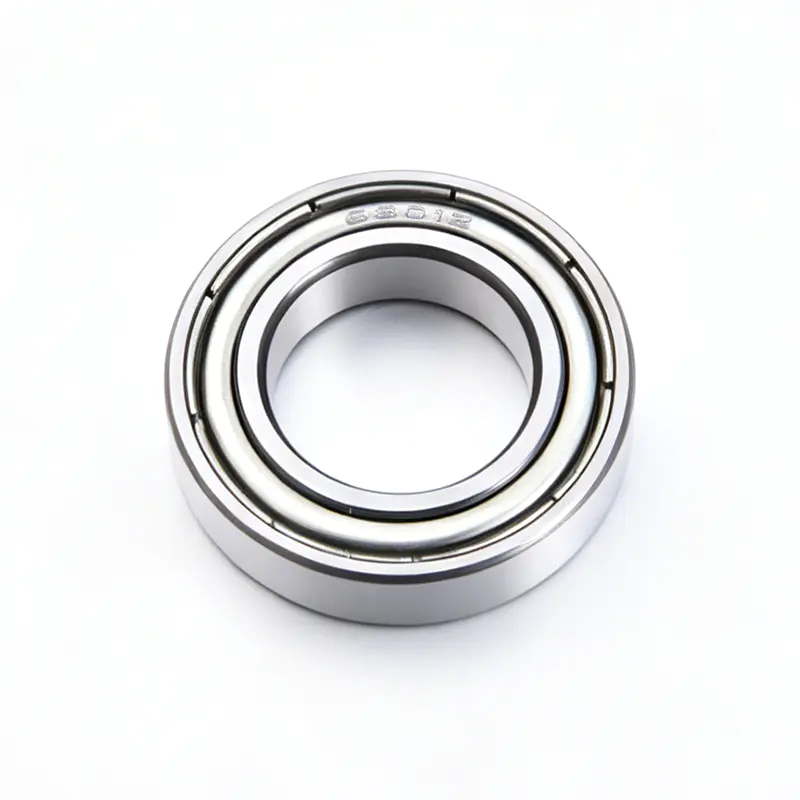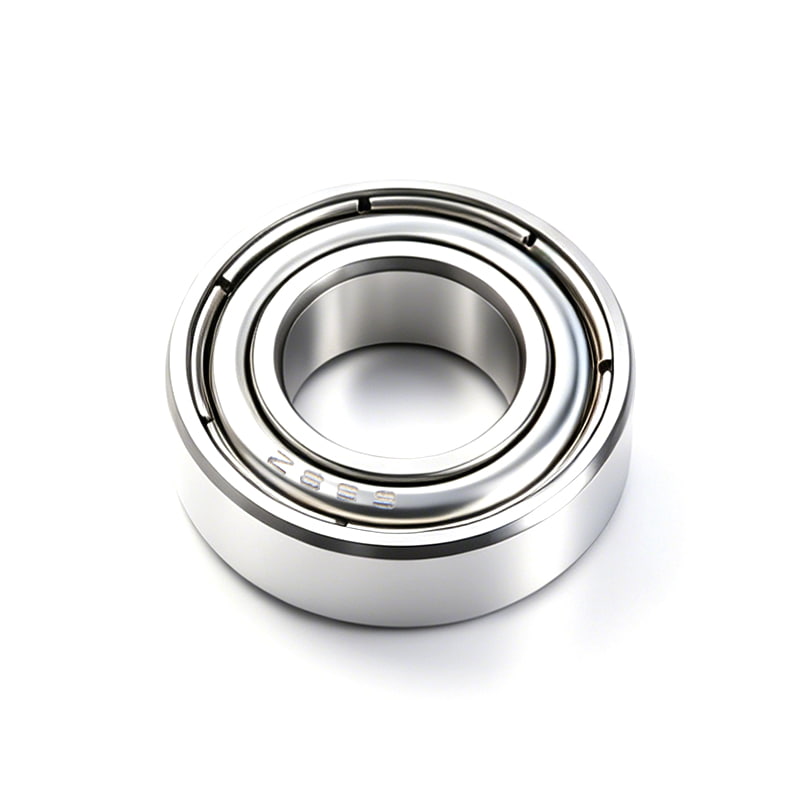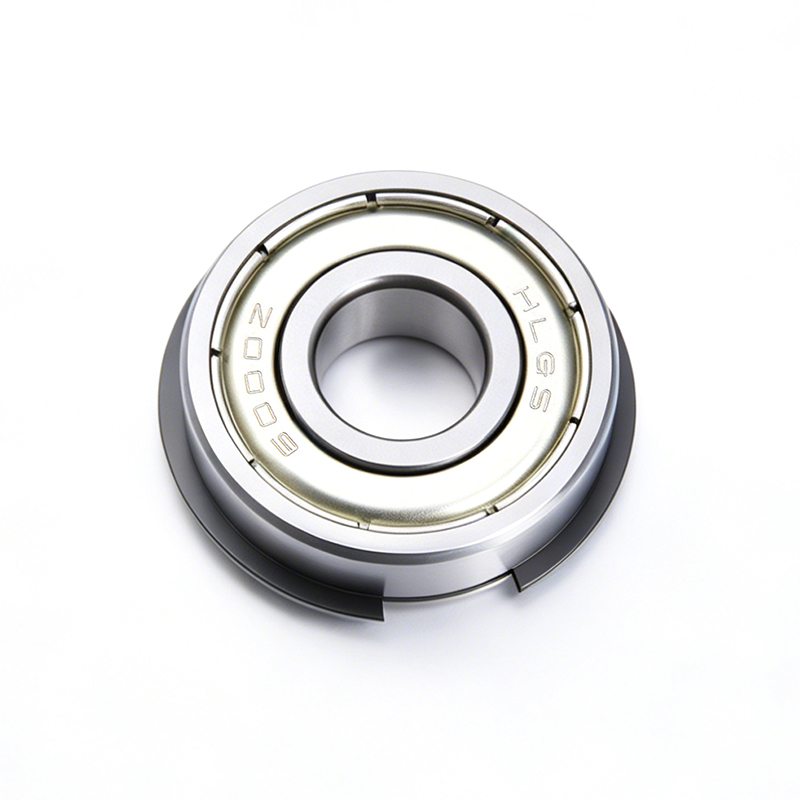
The 6200ZZNR is a single-row deep-groove ball bearing developed for compact equipment that requires dependable rotation, efficient load support, and convenient installation. With a 10 mm bore, 30 mm outside diameter, and 9 mm width, this bearing provides a practical combination of compact dimensions and useful load capacity for small motors, fans, electric tools, household appliances, and light-duty mechanical transmission systems.
Its construction combines high-carbon chromium bearing steel, double metal shields, and an outer-ring snap ring. These features allow the 6200ZZNR to support radial loads and axial loads in both directions while helping protect the internal rolling elements from dust and retain the factory-applied lubricant. The integrated snap ring also simplifies axial positioning inside a housing, reducing the need for additional positioning components in many applications.
For equipment manufacturers, maintenance teams, and distributors, the 6200ZZNR offers a balanced solution where installation efficiency, dimensional consistency, service life, and stable operation are important. It is especially suitable for compact mechanisms in which a bearing must operate reliably without occupying excessive space.

6200ZZNR Industrial Bearing Is Designed for Small Motors and Power Tools
The 6200ZZNR belongs to the 6200 series of single-row deep-groove ball bearings. This bearing family is widely selected for general-purpose rotating equipment because its internal geometry can accommodate both radial and moderate axial forces. The 6200 series is also known for its standardized envelope dimensions, making it easier to integrate into established machine designs and replace existing bearings during maintenance.
The “ZZ” designation identifies the double metal shields on both sides of the bearing. These shields create a protective barrier around the internal ball-and-raceway assembly. They help limit the entry of common workplace contaminants and reduce the escape of grease during normal operation. The shields are non-contacting, which helps preserve smooth rotation and low friction compared with sealing arrangements that place a rubbing seal directly against the inner ring.
The “NR” designation indicates that the bearing is supplied with an external snap ring mounted in a groove on the outer ring. This ring is used to locate the bearing axially within a compatible housing. Instead of relying exclusively on a shoulder, cover plate, or separate retaining component, the housing can be designed with a corresponding groove or retaining feature. This can make assembly faster and help maintain the correct bearing position during operation.
With a 10 mm bore, the bearing is suitable for shafts commonly used in small electric motors, compact gear-driven equipment, fans, pumps, power tools, and other low- to medium-capacity mechanisms. The 30 mm outside diameter offers sufficient contact area for housing support while maintaining a compact radial envelope. Its 9 mm width helps designers conserve axial space in assemblies where every millimeter matters.
| Parameter | Specification |
| Bearing number | 6200ZZNR |
| Bearing type | Single-row deep-groove ball bearing |
| Bore diameter | 10 mm |
| Outside diameter | 30 mm |
| Width | 9 mm |
| Shield configuration | Double metal shields, ZZ |
| Retention feature | External snap ring, NR |
| Dynamic load rating | 5,100 N |
| Static load rating | 2,200 N |
| Material | High-carbon chromium bearing steel, GCr15 |
The dynamic load rating of 5,100 N represents the bearing’s rated capacity under a defined rating methodology and is useful when evaluating repeated or rotating loads. The static load rating of 2,200 N is important when the bearing is exposed to stationary loads, shock loads, vibration, or temporary overload conditions. Actual performance depends on operating speed, load direction, lubrication, mounting accuracy, temperature, contamination, shaft and housing tolerances, and the overall design of the machine.
These ratings should therefore be used as part of a complete bearing selection process rather than as stand-alone guarantees. Nevertheless, they demonstrate that this compact bearing is engineered to provide meaningful load support in a relatively small package.
The central advantage of a deep-groove ball bearing is its versatile raceway design. The raceways in the inner and outer rings are formed to guide the balls smoothly while maintaining a broad area of contact. This allows the bearing to support radial loads generated perpendicular to the shaft, as well as axial loads acting along the shaft in either direction.
In small motors and power tools, loads are rarely limited to one direction. A motor may experience belt tension, gear reaction forces, rotor weight, vibration, and axial forces generated by the connected mechanism. A fan can produce thrust in addition to radial loading. A power tool may encounter changing loads as the operator applies pressure or the tool engages with a workpiece. The 6200ZZNR’s deep-groove configuration is well suited to these mixed operating conditions when the applied forces remain within the bearing’s design limits.
The single-row arrangement also contributes to a relatively low-friction design. The bearing uses one row of balls, allowing it to maintain a compact cross-section and smooth rotational behavior. This is valuable in electric motors and portable equipment, where energy efficiency, heat control, noise, and available installation space are all important.
Proper load distribution is essential to achieving the expected service life. Excessive misalignment, uneven housing support, shaft deflection, or incorrect fits can concentrate force on a small portion of the raceway. For this reason, the bearing should be installed with clean mating components and suitable shaft and housing tolerances. When correctly mounted, the deep-groove structure helps distribute operating loads smoothly across the rolling contact surfaces.
The 6200ZZNR is equipped with double metal shields, commonly identified by the suffix “ZZ.” A shielded bearing is often selected for applications that need protection from ordinary dust and particles but do not require the higher sealing resistance of a contact-sealed bearing. The metal shields cover both sides of the bearing and help maintain the internal lubrication during normal service.
Because the shields do not normally rub against the inner ring, they can support smooth rotation and help limit frictional losses. This characteristic is valuable in small motors, fans, and tools that operate at relatively high speeds. Lower friction can also contribute to reduced heat generation, although operating speed, grease type, preload, fit, and environmental conditions must all be considered.
The shielding arrangement helps prevent many common contaminants from reaching the balls and raceways. It also helps retain the lubricant placed inside the bearing during production. Keeping contamination away from the rolling contacts is important because small abrasive particles can cause surface damage, increased noise, vibration, and premature fatigue.
Metal shields are not intended to make the bearing completely waterproof or suitable for severe washdown environments. Where the bearing is exposed to heavy moisture, aggressive chemicals, fine abrasive dust, or direct fluid spray, a contact-sealed bearing or a separate external sealing arrangement may be more appropriate. The 6200ZZNR is best applied in clean or moderately dusty equipment where the housing provides additional environmental protection.
One of the most useful features of the 6200ZZNR is its external snap ring. The ring is installed on the outside diameter of the outer ring and is designed to engage with a compatible groove or retaining shoulder in the housing. Its purpose is to restrict axial movement of the bearing after installation.
In a conventional open or shielded bearing without an external retention feature, designers may need to add a separate circlip, cover, shoulder, spacer, or end plate. Such components can increase the number of parts, assembly steps, and opportunities for error. The NR configuration incorporates the retention element into the bearing package, which can simplify both the bearing and housing design.
The snap ring can be particularly useful in compact motor housings, fan frames, appliance mechanisms, and light-duty gear assemblies. It can help hold the bearing in its intended position during transport, assembly, operation, and maintenance. This is beneficial in equipment exposed to vibration or repeated changes in load direction.
The mating housing must be designed correctly for the snap ring. The retaining groove should have appropriate dimensions, sufficient strength, and suitable edge geometry. The ring should not be forced into an incompatible housing or used as a substitute for correct interference or clearance fits. The bearing must also be pressed into position through the correct ring. When installing the bearing into a housing, force should generally be applied to the outer ring; when installing it onto a shaft, force should generally be applied to the inner ring. Applying installation force through the balls can damage the raceways.
Compared with a standard 6200ZZ bearing, the 6200ZZNR can offer a practical installation advantage when external axial retention is needed. This does not mean that the NR version is suitable for every housing. Rather, it provides an integrated option for machines designed around a snap-ring retention method.
The bearing is manufactured from high-carbon chromium bearing steel identified as GCr15. This material is widely used for rolling bearings because it can be processed to achieve high hardness, suitable fatigue resistance, wear resistance, and stable dimensional performance after heat treatment and precision finishing.
The inner ring, outer ring, and rolling elements must maintain accurate geometry and surface quality. Even small deviations can affect noise, vibration, friction, load distribution, and service life. GCr15 provides a suitable material foundation for producing the hardened raceways and balls required in compact rolling bearings.
Material selection is only one part of bearing quality. The manufacturing process must also control cleanliness, heat treatment, dimensional accuracy, surface finish, roundness, raceway geometry, assembly conditions, and lubrication. A high-grade material cannot compensate for poor processing or inadequate inspection. For this reason, reliable production depends on coordinated control across the full manufacturing chain.
The use of a recognized bearing steel also supports consistent product planning and quality management. It allows the manufacturer to establish repeatable processing parameters and inspection criteria for different bearing sizes and configurations. For customers, this can help simplify procurement and qualification when the same material system is used across a broader product range.
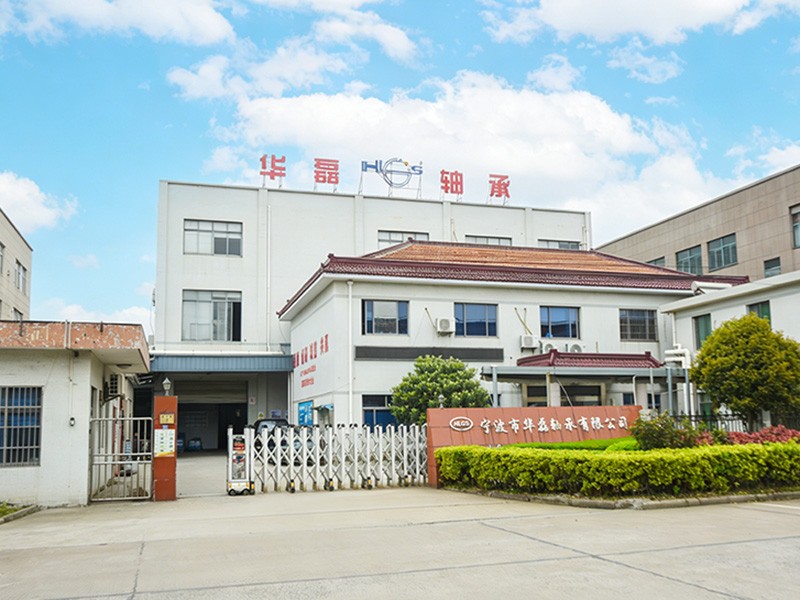
Ningbo Zhenhai Hualei Bearing Co., Ltd. was established in 2001 and specializes in miniature deep-groove ball bearings. The company manufactures a broad range of deep-groove bearing products under the HLGS trademark and serves applications including food machinery, household appliances, automotive electromechanical systems, electric tools, mechanical transmission equipment, and motors.
The company reports that its products are strictly tested with advanced equipment. This testing approach is important for miniature and small-size bearings because compact components require precise control. A small deviation in bore size, outside diameter, width, radial clearance, shield installation, or snap-ring position can affect the fit and function of the finished assembly.
Quality management is supported by ISO 9001 and ISO/TS 16949 management systems. ISO 9001 provides a framework for controlled processes, documented procedures, corrective action, customer-focused quality management, and continual improvement. ISO/TS 16949 is associated with the automotive supply chain and emphasizes process consistency, risk control, traceability, defect prevention, and systematic improvement. These management principles are valuable even when a bearing is supplied for non-automotive applications.
A controlled production system can help ensure that raw materials, production stages, inspections, packaging, and customer service are handled according to defined procedures. For bearing customers, this is particularly important when ordering repeat batches for motors or appliances. Consistent dimensions and performance reduce assembly adjustments and help manufacturers maintain stable product quality.
The company also established Ningbo Hotex Mechanical & Electrical Technology Co., Ltd. in 2016 as its import and export department. This structure supports international customer communication, OEM and ODM services, order coordination, and export-related activities. Customers seeking customized packaging, application support, or product arrangements can benefit from working with a supplier experienced in both manufacturing and overseas cooperation.
The 6200ZZNR offers several practical advantages when compared with more basic bearing configurations. Its benefits are not limited to one feature; they result from the combination of standardized dimensions, deep-groove load capability, double metal shields, an external snap ring, bearing steel construction, and controlled manufacturing.
A standard 6200 bearing without an external snap ring may require a separate retaining component. The 6200ZZNR integrates the snap ring into the outer-ring design, helping reduce the number of parts required for axial positioning. This can shorten assembly time and simplify housing design where the correct retaining groove is available.
Open bearings expose the internal balls and raceways to the surrounding environment. They may be suitable when the bearing is installed inside a fully protected, continuously lubricated housing, but they are less convenient for many compact assemblies. The 6200ZZNR’s double metal shields offer a practical level of protection for general industrial environments while preserving a low-friction, non-contacting configuration.
Contact seals can provide stronger contamination and moisture resistance, but they may introduce additional rubbing friction and heat, especially at higher speeds. The non-contacting metal shields in the 6200ZZNR can be advantageous in motors, fans, and tools where smooth rotation and moderate-to-high speed are more important than resistance to direct fluid exposure.
Compared with bearing types intended primarily for radial loads, the deep-groove arrangement can accommodate axial loads in both directions as well as radial loads. This versatility allows one bearing type to serve a wide variety of compact mechanisms. It can reduce the need to use different bearing families for simple mixed-load applications.
The 10 × 30 × 9 mm dimensions are suitable for many established small-equipment designs. Standardized envelope dimensions make replacement easier and allow designers to work with commercially familiar shaft and housing arrangements. The bearing can be considered when upgrading an existing assembly or selecting a replacement for a comparable 6200-series bearing.
The use of GCr15 high-carbon chromium bearing steel provides an appropriate foundation for durable raceways and rolling elements. Combined with inspection using advanced equipment and quality systems based on ISO 9001 and ISO/TS 16949, the product is positioned for customers who require more than an unverified low-cost bearing source.
Small electric motors require bearings that can rotate smoothly, manage radial rotor loads, limit noise and vibration, and operate consistently over extended periods. The 6200ZZNR is well matched to these requirements when the motor’s speed, load, temperature, and environment fall within the bearing’s operating range.
In a motor, the bearing supports the shaft and helps maintain the rotor’s position relative to the stator. Excessive clearance, contamination, or raceway damage can produce vibration and audible noise. A properly selected and installed shielded bearing helps maintain a clean internal rolling path and retain lubrication during normal operation.
The external snap ring can also help simplify the motor housing. It can locate the bearing axially and reduce the need for an additional retaining plate. This may be useful in compact motor designs where internal space is limited and assembly speed affects manufacturing cost.
Before selecting the bearing for a motor, engineers should verify operating speed, starting and stopping frequency, shaft fit, housing fit, expected temperature, electrical current paths, and potential vibration. In some motor designs, stray electrical current can damage bearing surfaces. Where this risk exists, an electrically insulated bearing or another protective strategy may be required instead of a standard steel bearing.
Power tools often experience variable loads, vibration, intermittent duty cycles, and sudden changes in operating force. Drills, grinders, sanders, saws, and other compact tools rely on bearings to support rotating shafts and transfer power efficiently.
The 6200ZZNR can be used in suitable power-tool mechanisms where its size and load ratings match the design requirements. Its deep-groove geometry supports radial forces from gears, pulleys, and rotating shafts, while its axial capacity can help accommodate thrust generated during operation. The double metal shields help protect the internal components from ordinary dust generated during handling and use, although severe abrasive exposure may require additional external protection.
Tool designers should pay particular attention to vibration and mounting accuracy. A bearing that is pressed into place unevenly may develop internal stress or raceway damage before the tool enters service. Housing rigidity, shaft straightness, proper fits, and controlled assembly forces are essential for maintaining smooth operation.
For maintenance departments, the snap-ring configuration can simplify replacement if the tool housing is designed for an NR bearing. The technician can remove and install the bearing while maintaining the intended axial position. However, the replacement bearing must match the original bearing number, dimensions, retention arrangement, clearance, and shielding configuration.
Fans, blowers, washing-machine mechanisms, food-processing equipment, small pumps, and household appliances often require compact bearings with stable rotation and low maintenance requirements. The 6200ZZNR can be considered for these applications when the environment is relatively clean and the load conditions are appropriate.
In fans, the bearing must support the rotating impeller and shaft while limiting vibration. The double metal shields can help retain lubricant and protect against ordinary airborne dust. The low-friction shield arrangement may also be useful where efficient motor operation and reduced heat generation are design priorities.
Household appliances may use bearings in motors, rollers, transmission assemblies, pumps, and actuator mechanisms. The 6200ZZNR’s standardized 10 × 30 × 9 mm envelope makes it practical for compact assemblies that have already been designed around 6200-series dimensions. The NR snap ring can help secure the bearing in a molded, stamped, or machined housing designed with the appropriate retaining groove.
For food machinery, the bearing’s suitability depends on the exact location and hygiene requirements. If the bearing is positioned in a sealed area away from food contact, a standard shielded configuration may be appropriate. If it is exposed to washdown, food particles, cleaning chemicals, or regulated food-contact conditions, the equipment designer must select lubrication, sealing, materials, and compliance documentation suitable for that environment.
Correct installation is essential to achieving the bearing’s rated performance. Before assembly, inspect the shaft, housing, retaining groove, and surrounding components. Remove burrs, dirt, rust, machining chips, and old lubricant that could interfere with seating or contaminate the bearing.
Confirm that the bearing number and dimensions match the equipment requirements. The 6200ZZNR has a 10 mm bore, 30 mm outside diameter, and 9 mm width. The outer-ring snap ring must also match the housing design. Do not substitute a bearing with a different shield, seal, clearance, or retention configuration without verifying the engineering consequences.
When mounting the bearing onto a shaft, apply installation force to the inner ring. When mounting the bearing into a housing, apply installation force to the outer ring. If both rings are being fitted simultaneously, use a tool that applies force to both rings at the same time. Never transmit pressing force through the balls, because this can create indentations or raceway damage.
Use clean tools and avoid striking the shields or snap ring. The snap ring should be fully seated in the housing groove after installation. Verify that the bearing rotates smoothly by hand before connecting the assembly to the rest of the machine.
Do not wash out the factory lubricant unless the application specifically requires relubrication or a different lubricant. If additional lubrication is necessary, use a grease compatible with the existing lubricant, bearing material, operating temperature, and speed. Excessive grease can increase heat generation and starting torque, particularly in small high-speed bearings.
Bearing service life depends on the combined influence of load, speed, lubrication, contamination, temperature, installation, alignment, and vibration. The dynamic load rating provides a basis for fatigue-life calculations, but it does not represent a universal maximum working load for every application.
Radial and axial loads should be calculated from the actual machine design. Where gears, pulleys, belts, fans, or eccentric mechanisms are present, the resulting forces can vary during operation. Shock loads and vibration may have a greater effect than a simple static calculation suggests. The static load rating of 2,200 N should be considered when the bearing is stationary under load or exposed to impact and temporary overload.
Temperature affects lubricant viscosity, internal clearance, material expansion, and seal or shield performance. If the bearing will operate at elevated temperatures, the customer should confirm the suitability of the lubricant and bearing clearance. Standard shielded bearings are not automatically suitable for every high-temperature application.
Contamination is another major factor. Fine particles can enter through the housing or along the shaft interface, while moisture can cause corrosion and lubricant degradation. The 6200ZZNR’s metal shields provide practical protection, but they should be used with a housing design that offers additional environmental protection when necessary.
Noise and vibration monitoring can help identify developing problems. Abnormal sound, increased temperature, rough rotation, or rising vibration may indicate contamination, insufficient lubrication, overloading, misalignment, incorrect fit, electrical damage, or raceway fatigue. Early inspection can prevent damage to adjacent shafts and housings.
For distributors and equipment manufacturers, bearing procurement involves more than comparing unit price. Product consistency, documentation, packaging, technical communication, delivery coordination, and the supplier’s ability to support repeat orders are also important.
Ningbo Zhenhai Hualei Bearing Co., Ltd. provides OEM and ODM services through its import and export department. This can support customers who require product sourcing for their own equipment, packaging, labeling, or distribution programs. Before placing a production order, customers should provide the application, expected operating speed, load conditions, environment, preferred lubricant, packaging requirements, and any inspection or documentation standards.
For repeat purchasing, it is useful to establish clear acceptance criteria. These may include dimensional tolerances, radial clearance, shield condition, snap-ring installation, noise level, vibration level, grease quantity, packaging method, and batch traceability. A supplier with documented quality systems can help customers create a more reliable incoming-inspection and supplier-management process.
The company’s experience since 2001 and focus on miniature deep-groove ball bearings provide a foundation for serving customers in motors, appliances, tools, and mechanical transmission equipment. Its product range can also make it easier for a customer to source related bearing sizes from one specialized supplier rather than managing multiple sources for similar components.
| Configuration | Main Characteristics | Relative Benefit of 6200ZZNR |
| Open 6200 bearing | Exposed internal rolling elements; suitable for protected or externally lubricated housings | Provides added protection through double metal shields |
| 6200ZZ bearing | Double metal shields without an external snap ring | Adds integrated axial positioning through the NR snap ring |
| 6200RS bearing | Contact seals; stronger resistance to contaminants and moisture | May offer lower friction and higher-speed suitability through non-contacting metal shields |
| Non-retained standard bearing | Requires a separate retaining feature in the housing | Can simplify compatible housing and assembly through the integrated snap ring |
| Non-standard compact bearing | May require custom sourcing or special housing dimensions | Uses a familiar 6200-series envelope for easier replacement and integration |
This comparison does not mean that one configuration is universally better than another. Contact seals may be preferable in wet or heavily contaminated environments, while open bearings may be ideal inside a well-sealed oil bath. The 6200ZZNR’s main advantage is its balanced design for general industrial applications requiring shielding, moderate environmental protection, smooth rotation, and integrated retention.
Although the 6200ZZNR is designed for low-maintenance operation, regular equipment inspection can improve reliability. Maintenance teams should check for unusual noise, vibration, temperature rise, shaft looseness, housing movement, and changes in motor current or tool performance.
The external snap ring should be checked during installation and whenever the bearing is removed. A bent, damaged, corroded, or incompletely seated ring may not provide reliable axial retention. The housing groove should also be inspected for wear or deformation.
When a bearing is replaced, inspect the shaft and housing rather than replacing the bearing alone. A worn shaft seat, damaged housing bore, or misaligned support can cause the replacement bearing to fail prematurely. If the original bearing shows flaking, discoloration, scoring, or cage damage, determine the underlying cause before installing a new component.
Store bearings in clean, dry conditions and keep them in their original packaging until installation. Avoid placing them near corrosive chemicals, high humidity, dust, or vibration. Handle the bearing carefully and do not rotate it unnecessarily before it is installed and lubricated within the machine.
Before specifying the 6200ZZNR, confirm that the 10 mm bore fits the shaft and that the 30 mm outside diameter and 9 mm width fit the housing. Verify that the housing includes a compatible feature for the NR snap ring and that the bearing can be installed without damaging the shields or retention ring.
Calculate the expected radial and axial loads and compare them with the published dynamic and static load ratings. Consider peak loads, shock, vibration, acceleration, deceleration, and any belt or gear forces. Confirm that the bearing’s speed capability and lubrication are appropriate for the application.
Evaluate environmental conditions, including dust, water, cleaning chemicals, humidity, temperature, and possible abrasive particles. Double metal shields are well suited to general-purpose protection but should not be treated as a complete barrier against fluid or severe contamination.
Finally, review the required service life, noise level, vibration limits, inspection procedures, packaging, and replacement schedule. A complete selection process will produce a more dependable result than choosing a bearing based only on dimensions or purchase price.
6200 identifies the bearing’s series and size. ZZ indicates double metal shields on both sides, while NR indicates an external snap ring on the outer ring for axial positioning in a compatible housing.
The bearing has a 10 mm bore, a 30 mm outside diameter, and a 9 mm width.
As a single-row deep-groove ball bearing, it can support radial loads and axial loads in both directions. Its listed dynamic load rating is 5,100 N, and its listed static load rating is 2,200 N. Actual allowable loads depend on speed, lubrication, mounting, temperature, and operating conditions.
The double metal shields help protect the internal balls and raceways from ordinary dust and help retain lubricant. Because they are non-contacting, they can support smooth rotation and relatively low friction. They are not intended to provide complete waterproof protection.
The NR snap ring helps secure the bearing axially inside a compatible housing. It can reduce the need for a separate external retaining component, provided that the housing has the correct groove or retaining feature.
Yes. It is designed for applications such as small motors, fans, and compact electromechanical equipment, provided that the motor’s loads, speed, temperature, environment, and shaft and housing fits are compatible with the bearing.
It can be used in suitable power-tool mechanisms that require a compact shielded deep-groove bearing with an external retaining ring. The application should be evaluated for vibration, shock, dust, speed, and load conditions.
The bearing is made from high-carbon chromium bearing steel, identified as GCr15. This material is commonly used for rolling-bearing rings and balls because it can achieve the hardness and wear resistance required for rolling contact applications.
Use clean tools and make sure the shaft, housing, and snap-ring groove are free of burrs and contamination. Apply force to the inner ring when fitting the bearing onto a shaft and to the outer ring when fitting it into a housing. Do not transmit installation force through the balls.
The bearing is supplied with internal lubrication for normal applications. Additional grease should not be added automatically. If relubrication is required, the lubricant must be compatible with the existing grease, operating speed, temperature, and application conditions.
No. Double metal shields provide practical protection against ordinary dust and help retain lubricant, but they do not make the bearing waterproof. Applications involving direct water spray, washdown, or severe moisture may require a different sealing arrangement and additional housing protection.
Both configurations use double metal shields, but the 6200ZZNR also includes an external snap ring. The NR version is useful when the bearing must be axially retained in a compatible housing without relying entirely on a separate retaining component.
The manufacturer reports quality management based on ISO 9001 and ISO/TS 16949 systems and states that products are strictly tested using advanced equipment. These systems support controlled manufacturing, inspection, traceability, corrective action, and continual improvement.
Yes. The company provides OEM and ODM services through its import and export department. Customers should discuss dimensions, bearing configuration, packaging, labeling, inspection requirements, and application conditions before production.
The 6200ZZNR is a compact and versatile deep-groove ball bearing designed for equipment that needs stable rotation, practical load capacity, and convenient axial positioning. Its 10 × 30 × 9 mm size fits many small motor, fan, power-tool, appliance, and light-transmission applications.
The combination of double metal shields and an external snap ring distinguishes this bearing from basic open or non-retained alternatives. The shields help protect the internal rolling elements and retain lubricant, while the snap ring can simplify compatible housing designs and assembly operations. Its GCr15 high-carbon chromium bearing steel provides a suitable material base for reliable rolling contact performance.
Supported by experience in miniature deep-groove bearing production, advanced inspection equipment, ISO 9001 and ISO/TS 16949 quality management systems, and OEM and ODM capabilities, Ningbo Zhenhai Hualei Bearing Co., Ltd. is positioned to serve customers requiring consistent bearing supply and application-focused cooperation. With correct selection, installation, lubrication, and maintenance, the 6200ZZNR can provide an efficient and dependable solution for a broad range of compact industrial mechanisms.
1. Product specification information for the 6200ZZNR single-row deep-groove ball bearing, including dimensions, shielding, snap-ring configuration, material, and load ratings.
2. General engineering principles for single-row deep-groove ball bearings, radial and axial load support, bearing fits, installation methods, and service-life evaluation.
3. ISO 9001, Quality Management Systems—Requirements.
4. ISO/TS 16949, Quality Management Systems for Automotive Production and Relevant Service Parts Organizations.
5. General technical references for high-carbon chromium bearing steel, including GCr15 material characteristics and rolling-contact applications.
A spindle starts to leave a faint chatter mark at 8,000 rpm. The deep groove ball bearing meets its...
A motor that has run for years rarely announces a bearing failure early. The first sign is a low hu...
Imagine a small electric motor in a kitchen appliance that starts making a grinding noise after a f...
The Direct Answer: A Deep Groove Ball Bearing Supports Both Radial and Axial Loads Using a Simple, ...