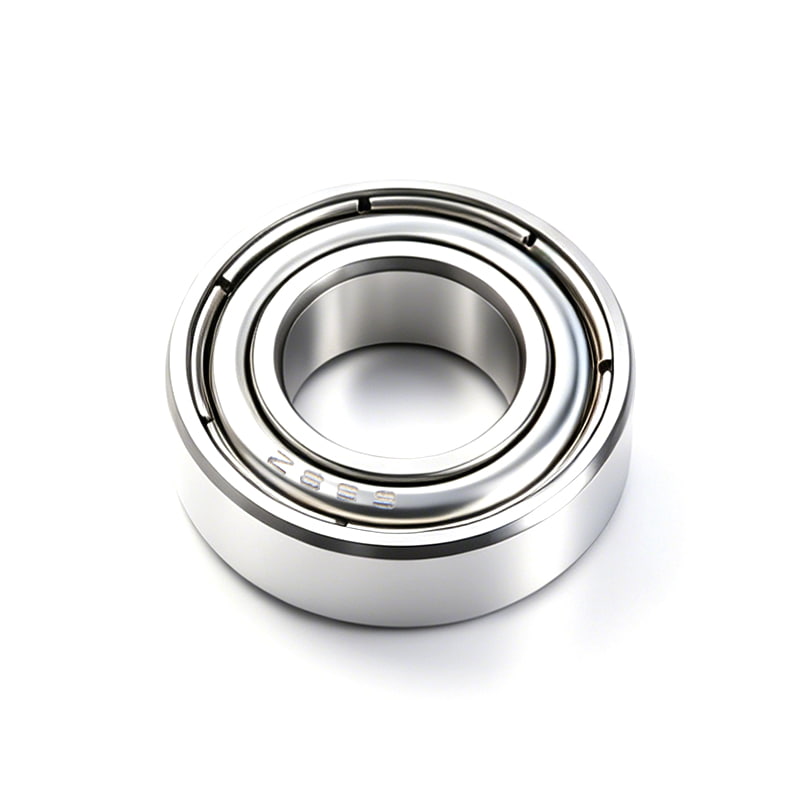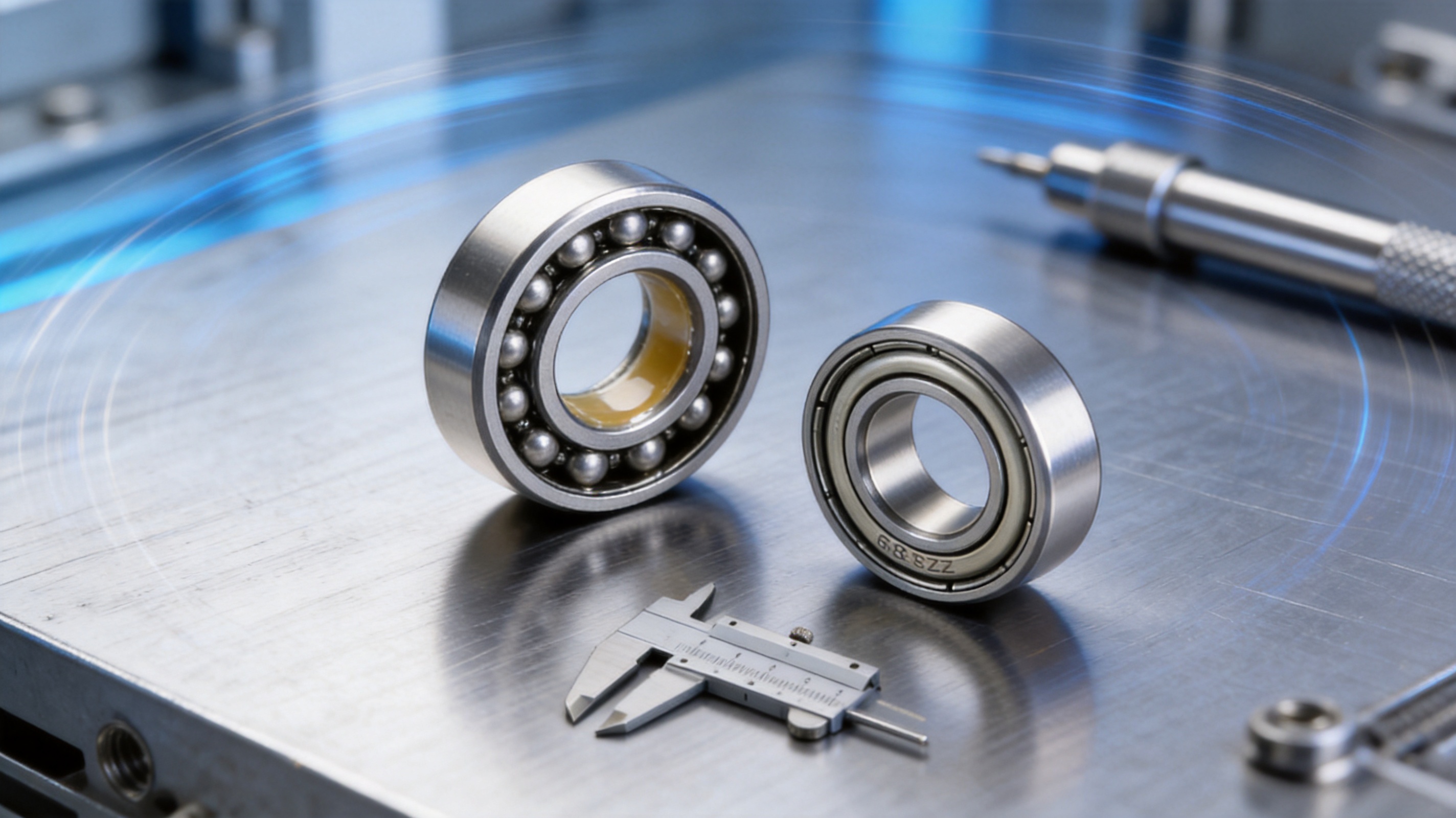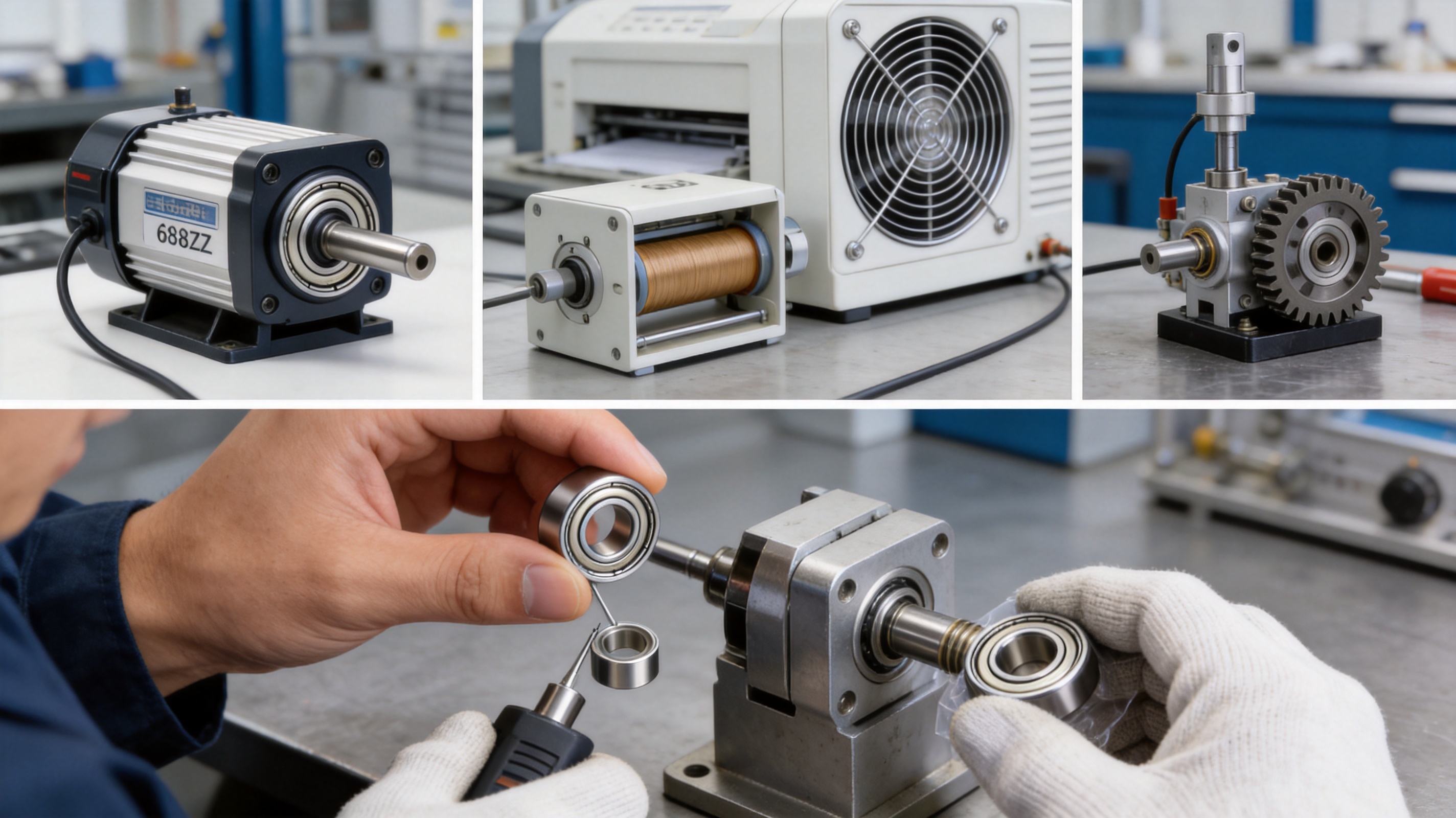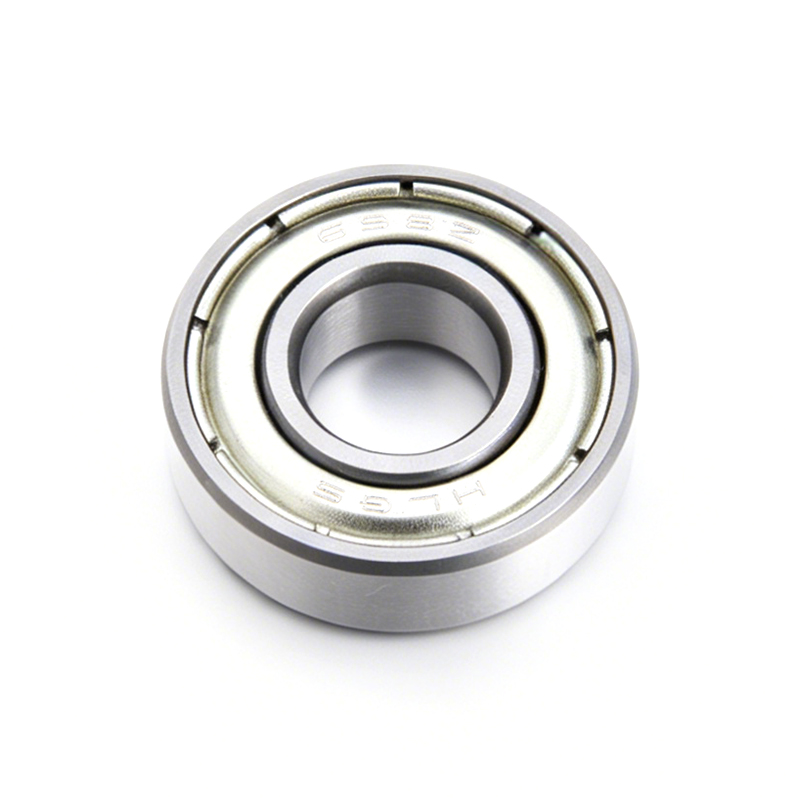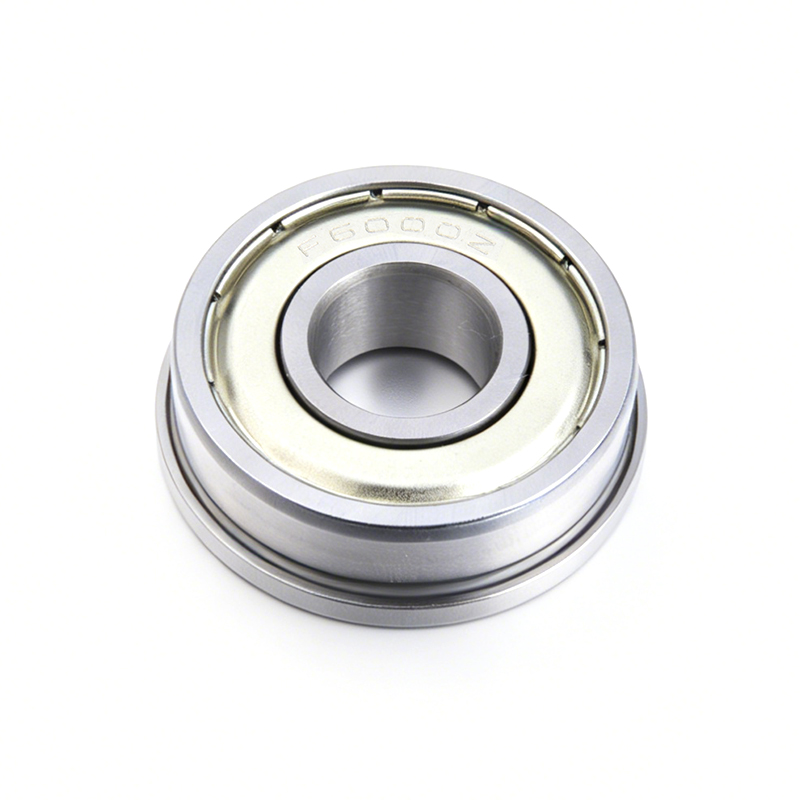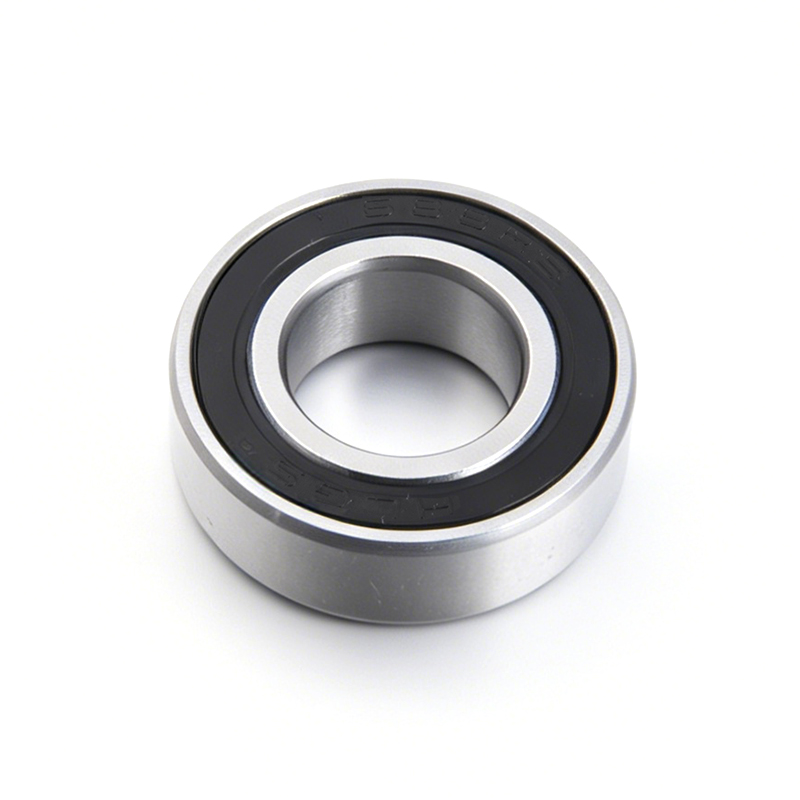
The 688ZZ deep groove ball bearing is a miniature bearing designed for equipment that requires dependable rotation, low friction, compact dimensions, and protection against ordinary dust and handling contaminants. With an 8 mm bore, 16 mm outside diameter, and 5 mm width, this double-shielded bearing provides a practical combination of small size and reliable load capacity for light-duty mechanical systems.
Although miniature bearings occupy very little space, their influence on equipment performance can be significant. A suitable bearing helps reduce friction, maintain shaft alignment, limit vibration, support smooth rotation, and extend the service life of surrounding components. The 688ZZ is engineered for these requirements in applications such as miniature motors, electric toys, precision instruments, office equipment, small household appliances, and compact mechanical transmission systems.
Manufactured from GCr15 bearing steel, the 688ZZ offers a carefully balanced specification for general industrial and commercial use. Its double metal shields help retain factory-applied grease while reducing the entry of dust and other common contaminants. Its single-row deep-groove structure supports radial loads and limited axial loads in both directions, making it more versatile than a bearing intended only for one specific loading condition.
For equipment designers, maintenance departments, distributors, and original equipment manufacturers, the value of the 688ZZ lies in more than its dimensions. It is a standardized, easily integrated bearing that combines compact construction, high rotational capability, straightforward installation, and dependable manufacturing control.
The 688ZZ is a miniature single-row deep-groove ball bearing. The “688” designation identifies the basic bearing series and size, while the “ZZ” suffix indicates two non-contact metal shields, one on each side of the bearing. These shields help protect the internal raceways and rolling elements from ordinary dust and help preserve the grease inside the bearing during operation.
The bearing has a nominal bore diameter of 8 mm. This bore is suitable for compact shafts used in small motors, rollers, pulleys, instruments, and light mechanical assemblies. The 16 mm outside diameter allows the bearing to fit into relatively small housings, while the 5 mm width minimizes the axial space required for installation.
Its dimensions are particularly useful when a design requires a bearing that is smaller than standard light-series bearings but stronger and more stable than many very low-capacity miniature alternatives. The 688ZZ therefore occupies an important position between extremely delicate instrument bearings and larger bearings intended for heavier loads.
| Parameter | Specification |
| Bearing number | 688ZZ |
| Type | Single-row deep-groove ball bearing |
| Bore diameter | 8 mm |
| Outside diameter | 16 mm |
| Width | 5 mm |
| Shield configuration | Double metal shields, ZZ |
| Dynamic load rating | 1,260 N |
| Static load rating | 590 N |
| Material | GCr15 bearing steel |
| Grease-lubricated limiting speed | 36,000 rpm |
The stated performance values should always be considered together with the actual operating conditions. Shaft fit, housing fit, lubrication, temperature, contamination, vibration, installation accuracy, and load direction all influence practical bearing life. Nevertheless, the specification demonstrates that the 688ZZ is suitable for demanding high-speed, light-load applications where space is limited.
A deep-groove ball bearing uses balls running in deep, continuous grooves formed in the inner and outer rings. This geometry allows the bearing to accommodate radial forces while also supporting limited axial forces. Because the raceway profile surrounds a substantial portion of each ball, the structure provides stable contact and smooth movement during rotation.
The single-row arrangement keeps the bearing narrow and efficient. Compared with multi-row designs, a single-row miniature bearing requires less installation space and generally produces less internal resistance when used within its intended load range. This makes the 688ZZ suitable for compact shafts where a larger or wider bearing would be impractical.
The deep-groove configuration also simplifies product selection. In many light-duty mechanisms, the bearing does not need a specialized angular-contact, thrust, needle, or self-aligning design. A standard deep-groove bearing can provide an economical and versatile solution for supporting a rotating shaft, guiding a small roller, or reducing friction between moving components.
Axial load capability is an important benefit in real equipment. Even when the primary force is radial, small axial forces may occur because of belt tension, gear engagement, assembly tolerances, rotor movement, or external operating forces. The 688ZZ can accommodate light axial loads in either direction, helping it perform reliably in mechanisms where the force pattern is not perfectly radial.
The bearing is not intended to replace a dedicated thrust or angular-contact bearing in applications involving substantial axial force, high preload, or demanding combined-load conditions. Correct application selection remains essential. Within light-duty and moderate-load conditions, however, its deep-groove form offers a practical balance of performance, simplicity, and cost.
The compact 8 × 16 × 5 mm envelope is one of the most important advantages of the 688ZZ. Modern products increasingly require smaller motors, lighter mechanisms, reduced noise, and more efficient use of internal space. A bearing with a small outer diameter can help engineers reduce housing size, while a narrow width can simplify axial stack-up and leave room for other components.
The 8 mm bore is large enough to provide a useful shaft interface while remaining compact for miniature machinery. The 16 mm outside diameter provides a practical housing fit for small assemblies. The 5 mm width reduces the need for deep bearing seats and can help shorten the overall shaft-support structure.
Compact dimensions can also support product miniaturization. In small electric motors, for example, bearing envelope size affects rotor diameter, end-shield design, winding arrangement, and total motor length. In office equipment and compact appliances, the bearing may be installed near gears, rollers, fans, or actuator components where every millimeter matters.
Compared with larger bearings selected merely because they are readily available, the 688ZZ can help prevent unnecessary oversizing. An oversized bearing may increase housing dimensions, weight, rotating inertia, and material usage. When the application requires only light-duty capacity, a correctly sized miniature bearing can provide a more efficient design solution.
At the same time, the bearing should not be undersized. Designers should compare the dynamic and static load ratings with the actual forces, expected operating hours, speed, shock, and service environment. The benefit of compactness is greatest when the bearing is matched carefully to the application rather than chosen solely on physical dimensions.

688ZZ Deep Groove Ball Bearing Features a Compact Design Ideal for Light-Duty Applications
The 688ZZ is made from GCr15 bearing steel, a material widely used for rolling bearings because of its hardness, wear resistance, fatigue performance, and suitability for precision heat treatment. Bearing rings and rolling elements must withstand repeated contact stress during rotation. The material must therefore offer a controlled combination of strength, hardness, toughness, and dimensional stability.
GCr15 is a high-carbon chromium bearing steel commonly associated with reliable rolling-contact performance. When processed correctly, it can produce raceways and balls capable of supporting repeated rolling cycles with controlled wear. The material is suitable for miniature bearing components where raceway quality and dimensional precision are especially important.
Material selection alone does not determine bearing quality. The final result depends on the complete production chain, including steel quality, forging or forming, heat treatment, grinding, superfinishing, cleaning, assembly, lubrication, inspection, and packaging. Consistency at each stage is necessary to achieve stable running behavior and predictable service performance.
For customers, the use of GCr15 provides a familiar and widely recognized material basis for general-purpose bearing applications. It also supports compatibility with common shafts, housings, lubricants, and maintenance practices used in miniature machinery.
The ZZ designation means that the bearing has two metal shields. These shields are fitted on both sides of the bearing and create a protective barrier around the internal rolling elements. Their primary functions are to help reduce the entry of ordinary dust and to help retain the internal grease.
Metal shields are especially useful in applications where the bearing is exposed to dry dust, airborne particles, assembly debris, or general workshop conditions. They are also valuable when a customer wants a pre-lubricated bearing that does not require frequent relubrication during normal service.
Because the shields are non-contact or low-clearance metal components rather than rubbing rubber seals, they generally contribute to low friction and support high-speed operation. This is an important distinction when comparing shielded miniature bearings with sealed designs intended for stronger contamination protection. A rubber-sealed bearing may provide greater resistance to liquid or heavy contamination, but it can also create more seal friction and heat.
The 688ZZ is therefore a strong choice for clean or moderately dusty environments where high rotational speed and low resistance are important. It is not a waterproof bearing, and the metal shields should not be treated as a substitute for full-contact seals in wet, corrosive, or heavily contaminated conditions.
Correct installation and storage are also important. Shields should not be pried out, pierced, or exposed to tools that could deform them. The bearing should remain in its original protective packaging until installation, especially in humid or chemically aggressive environments.
The grease-lubricated limiting speed of the 688ZZ is stated as 36,000 rpm. This high-speed capability makes the bearing suitable for many miniature motors, compact fans, precision rotating devices, and other mechanisms where rapid shaft rotation is required.
High-speed bearing performance depends on several factors. The bearing must have accurate raceways, properly finished surfaces, correctly sized rolling elements, suitable internal clearance, balanced lubrication, and effective control of manufacturing tolerances. Even a bearing with a high published speed rating may perform poorly if it is installed with excessive interference, exposed to misalignment, overloaded, or filled with an unsuitable lubricant.
The double metal-shield design supports high-speed operation by limiting the friction associated with contacting seals. The compact structure also reduces the mass and rotational inertia of the bearing compared with larger bearing types. These characteristics can help small motors start efficiently and operate with lower mechanical resistance.
In practice, the limiting speed should be treated as a reference value rather than an automatic operating target. Continuous operation near the maximum value requires careful attention to temperature, shaft and housing tolerances, lubrication condition, vibration, and load. Applications involving acceleration, frequent starts and stops, or high ambient temperatures may require a lower working speed.
For most product designs, it is beneficial to establish a safety margin below the limiting speed. Testing under actual operating conditions can confirm bearing temperature, noise, vibration, and service life. This approach helps ensure that the bearing is not merely capable of rotating at a specified speed but is also suitable for long-term operation in the finished machine.
Low friction is a central performance requirement for miniature bearings. Excessive resistance can reduce motor efficiency, increase energy consumption, raise operating temperature, and interfere with the movement of precision mechanisms. The 688ZZ is designed to provide smooth rolling contact with low friction when used under appropriate loads and lubrication conditions.
Its single-row deep-groove structure, metal shields, precision-finished raceways, and grease lubrication work together to support efficient rotation. Low friction is especially valuable in small motors because the bearing can represent a meaningful portion of total mechanical resistance. Reducing bearing drag can improve starting performance and help maintain stable rotational speed.
Quiet operation is equally important in office equipment, household appliances, miniature fans, toys, precision instruments, and consumer products. Bearing noise may result from raceway roughness, ball-size variation, contamination, inadequate lubrication, excessive clearance, misalignment, or damage during installation. Consistent manufacturing and clean assembly are therefore necessary to achieve smooth acoustic performance.
A quiet bearing does not mean that the bearing is completely silent under every condition. The final noise level also depends on shaft balance, motor electromagnetic noise, housing resonance, gear engagement, fan blades, mounting rigidity, and the surrounding structure. Nevertheless, a precision miniature bearing provides an important foundation for controlling mechanical noise.
Customers selecting bearings for quiet products should evaluate the complete assembly. Bearing quality, correct fit, clean installation, appropriate grease, and accurate shaft alignment should be considered together. When these factors are controlled, the 688ZZ can contribute to a smoother and quieter operating system.
The 688ZZ has a dynamic load rating of 1,260 N and a static load rating of 590 N. The dynamic load rating relates to the bearing’s ability to withstand repeated rolling loads during rotation and is used in bearing-life calculations. The static load rating relates to the load that can be applied when the bearing is stationary or moving very slowly without producing unacceptable permanent deformation under standard calculation methods.
These ratings demonstrate that the bearing is designed for more than purely decorative or exceptionally delicate mechanisms. It can support useful radial loads in miniature equipment, provided that the shaft, housing, lubrication, speed, temperature, and operating cycle remain within suitable limits.
In a typical radial application, the load is applied perpendicular to the shaft. Examples include a small motor rotor, a roller, or a pulley. The deep-groove design also allows limited axial load in either direction, which can be useful where minor thrust forces occur during operation.
Load ratings should not be interpreted as direct operating loads for every situation. Shock loads, vibration, impact, shaft misalignment, contamination, and poor fits can reduce practical life. A bearing subject to repeated starting torque, sudden acceleration, or belt tension may experience loads that differ considerably from a simple static calculation.
For reliable selection, engineers should determine the equivalent dynamic bearing load, equivalent static bearing load, required life, rotational speed, and operating temperature. If the application includes substantial axial force, severe impact, high preload, or very high reliability requirements, a more specialized bearing design may be appropriate.
| Application factor | Why it matters |
| Radial load | Determines the primary rolling-contact load and influences fatigue life. |
| Axial load | Must be checked when thrust forces occur in either direction. |
| Speed | Influences heat generation, lubrication behavior, and vibration. |
| Temperature | Can change grease viscosity, clearances, and material stability. |
| Contamination | Dust, moisture, and particles can accelerate wear and noise. |
| Fit and alignment | Incorrect fits can create excessive preload, looseness, or raceway stress. |
| Shock and vibration | May produce momentary loads greater than the calculated average load. |
The 688ZZ offers several practical advantages over generic miniature bearings that may have less clearly defined specifications or inconsistent production controls. Its standardized dimensions simplify replacement and integration. Customers can design around a recognized 8 × 16 × 5 mm envelope and maintain consistent interchangeability across production batches when quality controls are properly applied.
The stated GCr15 material provides a clear basis for evaluating the bearing’s expected wear and fatigue characteristics. In contrast, an unspecified miniature bearing may not provide sufficient information about ring material, rolling-element material, heat treatment, or quality standards. Material transparency helps engineers make better decisions about service conditions and maintenance planning.
The double metal shields provide a useful balance between protection and low friction. Compared with open bearings, the 688ZZ is better protected from ordinary dust and is less likely to lose grease during handling and operation. Compared with heavily contacting sealed designs, the shielded configuration can offer lower resistance and stronger high-speed suitability in clean environments.
The 36,000 rpm grease-lubricated limiting speed is another important advantage for compact high-speed equipment. Not every miniature bearing is optimized for rapid rotation. A bearing selected for high-speed service must be manufactured with suitable precision and used with appropriate lubrication. The 688ZZ is positioned for applications where small size and high rotational capability are both required.
The bearing also offers a useful load rating for its compact envelope. With a dynamic load rating of 1,260 N and a static load rating of 590 N, it can serve in many light-duty mechanisms without the space penalty of a larger bearing. This combination can help equipment manufacturers reduce size while retaining dependable shaft support.
Another advantage is application flexibility. The same basic bearing can be used in miniature motors, toys, instruments, office equipment, appliances, and mechanical transmission devices. This versatility can simplify purchasing, inventory management, and replacement planning for customers who use multiple compact products.
Reliable miniature bearing production requires more than basic turning and assembly. The small dimensions of the 688ZZ demand accurate control of ring geometry, raceway profile, ball diameter, internal clearance, shield position, grease quantity, and surface finish. Small deviations can affect noise, vibration, speed capability, temperature, and service life.
A professional manufacturing process begins with controlled raw materials. Bearing steel must meet appropriate chemical and cleanliness requirements before it enters forming and machining operations. Consistent steel quality helps reduce the risk of inclusions or material variation that could affect rolling-contact fatigue.
Ring production generally involves forming, machining, heat treatment, grinding, and finishing. The inner and outer rings must achieve accurate dimensions and raceway geometry. Heat treatment develops the required hardness and structural properties, while grinding and superfinishing improve surface quality and dimensional accuracy.
The rolling elements must also be manufactured and sorted carefully. Ball diameter variation, roundness, surface finish, and material quality influence load distribution and running noise. A precision miniature bearing requires balls that work together as a matched set rather than random components with uncontrolled variation.
After component processing, the bearing is cleaned before assembly. Cleanliness is essential because small particles can generate noise, mark raceways, increase wear, and shorten service life. Assembly includes placing the rolling elements and cage, checking internal clearance, installing the metal shields, and applying the specified grease quantity.
Grease filling must be controlled carefully. Too little grease may reduce protection and lubrication life, while too much grease can raise starting torque and operating temperature, particularly at high speed. Consistent grease quantity supports repeatable performance from bearing to bearing.
Final inspection may include dimensional measurement, rotational inspection, noise and vibration testing, appearance checks, shield verification, and packaging inspection. These controls help identify defects before shipment and support stable performance in customer equipment.
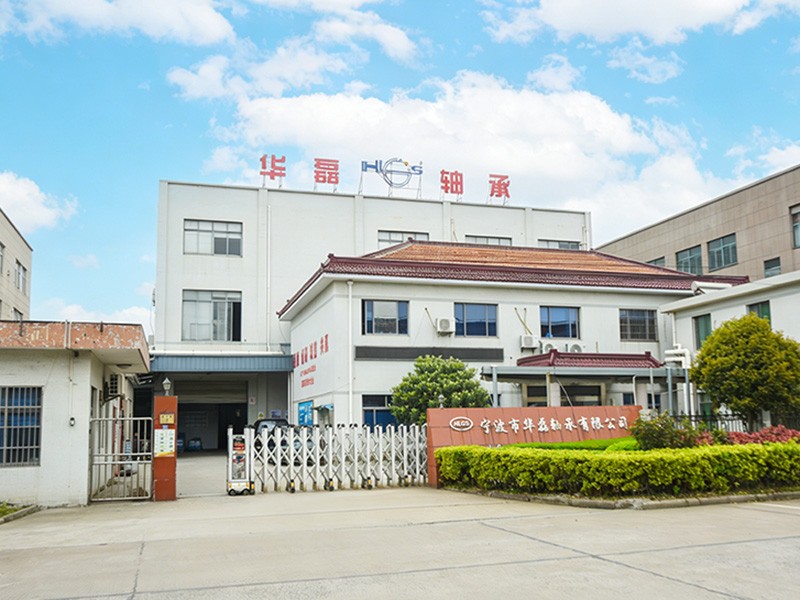
The manufacturer has operated since 2001 and specializes in miniature deep-groove ball bearings. This long-term focus provides valuable experience in the design, production, inspection, packaging, and application support of small bearing products.
The company follows ISO 9001 and ISO/TS 16949 management systems. These systems support structured quality procedures, process documentation, traceability, corrective action, and continual improvement. ISO-based management is especially important for customers that require repeatable supply, controlled production records, and dependable communication across international orders.
ISO/TS 16949 experience is particularly relevant to automotive and automotive-related electromechanical applications, where quality planning, process discipline, risk control, and defect prevention are essential. Even when a 688ZZ bearing is used outside the automotive sector, these management principles can contribute to improved production consistency.
Advanced testing equipment is used to inspect products before delivery. Testing and inspection help verify that the manufactured bearing corresponds to the required size, material, shield configuration, and performance expectations. For miniature bearings, inspection is critical because defects that appear small visually can create significant effects at high rotational speeds.
The company supplies a broad range of deep-groove ball bearings under the HLGS trademark. Its product experience covers applications including food machinery, household appliances, automotive electromechanical systems, electric tools, mechanical transmission devices, and motors. This broad application base can help the manufacturer understand different customer requirements concerning speed, noise, load, packaging, and delivery.
In addition to standard products, the company provides OEM and ODM services through its import and export department, established in 2016. OEM and ODM capability can benefit customers that need customized packaging, product identification, production coordination, application support, or a bearing specification adapted to a particular assembly.
A strong manufacturing partner should offer more than a catalog dimension. It should be able to discuss operating conditions, identify potential installation risks, support quality documentation, and coordinate production requirements. The company’s experience in miniature bearings and international cooperation provides a foundation for this type of service.
Miniature motors are among the most common applications for the 688ZZ. The bearing’s 8 mm bore can support a compact rotor shaft, while the 16 mm outside diameter fits many small motor end shields and housings. Its low friction and high-speed capability are useful in motors for fans, actuators, toys, office machines, and compact appliances.
Motor designers should consider rotor balance, shaft tolerance, bearing preload, electrical operating temperature, and axial movement. A bearing that is correctly selected but poorly mounted may experience excessive noise or premature wear. Press-fitting forces should be applied only to the ring being fitted, and impact should never be transferred through the rolling elements.
Electric toys often contain small motors, gear trains, wheels, rollers, or rotating decorative elements. The 688ZZ can help these mechanisms operate smoothly while occupying little internal space. Its shields provide practical protection against ordinary dry dust, and its pre-lubricated design can simplify assembly.
Toy manufacturers may also value standardized dimensions because the same bearing can be used across several product models. However, toys may experience shock, rough handling, frequent starts and stops, and intermittent overload. The bearing should therefore be applied with suitable mechanical protection and not exposed to loads beyond its intended capacity.
Precision instruments require smooth, stable, and low-noise motion. The 688ZZ can be used in small rotary stages, adjustment mechanisms, compact scanners, measuring devices, and other equipment where shaft guidance is required in a limited space.
Instrument designers should pay close attention to runout, clearance, mounting accuracy, lubricant compatibility, and environmental cleanliness. In highly sensitive systems, the bearing may need to be evaluated as part of the complete instrument rather than as an isolated component.
Printers, scanners, document-handling machines, copiers, and other office equipment often use small rollers and drive systems. Smooth rotation helps maintain paper movement, reduce operating noise, and prevent unnecessary motor load. The compact dimensions of the 688ZZ make it suitable for assemblies where rollers and shafts are installed close together.
Office equipment may operate for long periods and may be installed in relatively clean indoor environments. These conditions are generally favorable for a double-shielded miniature bearing, provided that paper dust, toner, and other particles are controlled through suitable equipment design.
Small household appliances may contain compact fans, rotating shafts, gear assemblies, and motorized actuators. The 688ZZ can support these functions where loads are moderate and space is restricted. Its low friction can help maintain efficient motor operation, while the metal shields offer protection from ordinary household dust.
Applications involving steam, water spray, cleaning chemicals, or high humidity require additional evaluation. Metal shields do not provide complete waterproof protection. In these environments, a sealed bearing, protective housing, corrosion-resistant material, or specially selected lubricant may be necessary.
Some compact electric tools and mechanical transmission systems use miniature bearings to support gears, spindles, rollers, or auxiliary shafts. The 688ZZ may be suitable when the load and speed fall within its capability and when shock loads are controlled.
Electric tools can produce significant vibration and impact. Engineers should carefully evaluate tool duty cycles, spindle loads, gear forces, temperature, and contamination. A bearing intended for continuous smooth rotation may require a different selection when the equipment experiences repeated impacts or sudden load changes.
Correct installation is essential to achieving the expected performance of a precision miniature bearing. Before installation, inspect the shaft and housing for burrs, corrosion, dirt, and dimensional damage. The mating surfaces should be clean and free from particles that could distort the bearing or affect alignment.
Confirm the bearing number, dimensions, shield condition, and packaging before use. Do not install a bearing if the shield is bent, the rings are visibly damaged, or contamination is present inside the package. Bearings should be handled with clean tools and hands or suitable gloves to prevent corrosion caused by moisture and fingerprints.
The fit between the inner ring and shaft should be selected according to the rotating-load condition and the expected temperature range. Similarly, the housing fit should prevent unwanted movement without producing excessive interference. An overly tight fit can reduce internal clearance and increase operating temperature, while an excessively loose fit can cause creep, vibration, and fretting.
When installing the bearing onto a shaft, apply force to the inner ring if the inner ring is the fitted component. When installing the bearing into a housing, apply force to the outer ring. If both rings are being fitted simultaneously, use a tool that applies force evenly to both rings. Never transmit installation force through the balls from one ring to the other.
Pressing is preferable to hammering. If a press is unavailable, a clean installation sleeve may be used carefully. Direct impact on the shields can deform them and may damage the internal components. After installation, rotate the shaft by hand to check for abnormal resistance, roughness, or noise before operating the equipment at full speed.
Alignment should also be verified. Angular misalignment can create uneven load distribution and may increase vibration or noise. The shaft, housing, spacers, and end covers should be designed so that the bearing is not forced into a skewed position during tightening.
The 688ZZ is supplied as a grease-lubricated bearing. The internal grease supports rolling contact and helps reduce friction during normal service. In many applications, the original factory grease is sufficient for the intended operating life, especially when the bearing is shielded and the environment is clean.
Additional grease should not be added automatically. Overfilling can create churning, increase torque, raise temperature, and reduce high-speed performance. If relubrication is required, the replacement grease must be compatible with the original lubricant and suitable for the operating speed, temperature, load, and materials.
Lubricant selection should consider base oil viscosity, thickener type, temperature range, oxidation resistance, water resistance, and compatibility with seals or shields. A grease that performs well in a slow, heavily loaded bearing may not be appropriate for a small bearing operating at tens of thousands of revolutions per minute.
Maintenance personnel should monitor operating temperature, noise, vibration, and rotational resistance. A gradual increase in noise or temperature may indicate lubricant deterioration, contamination, incorrect fit, misalignment, or developing raceway damage. Early investigation can prevent secondary damage to shafts, housings, gears, and motors.
Bearings stored for extended periods should remain sealed in their original packaging. Storage areas should be clean, dry, temperature-stable, and free from corrosive vapors. Avoid placing heavy objects on bearing packages, and rotate stock according to a controlled inventory system.
The first step is to confirm the required envelope dimensions. The shaft must accommodate the 8 mm bore, the housing must accept the 16 mm outside diameter, and the available axial space must allow the 5 mm width. Designers should also verify shoulder dimensions, fillet radii, retaining methods, and access for installation tools.
The next step is to identify the load direction and magnitude. Determine the radial load, axial load, combined load, shock load, and duty cycle. Compare these values with the dynamic and static load ratings. If the bearing will remain stationary under a heavy load or experience repeated impacts, the static rating deserves particular attention.
Speed and temperature should then be reviewed. The stated grease-lubricated limiting speed is 36,000 rpm, but the practical operating speed may be lower depending on load, mounting, lubrication, ambient temperature, and acceleration. Heat generated by the bearing must be able to dissipate through the shaft, housing, and surrounding structure.
Environmental conditions are equally important. The ZZ metal shields are appropriate for ordinary dry contamination protection, but they are not designed to provide complete protection from water, aggressive chemicals, fine liquid spray, or heavy abrasive particles. If the environment is severe, consider additional external shielding or another sealing and material configuration.
Noise and vibration requirements should be defined early. Equipment manufacturers should test bearings in the actual shaft and housing arrangement because system resonance and assembly conditions can influence sound levels. A bearing that performs quietly in a test fixture may behave differently in a flexible housing or a mechanism with gear excitation.
Finally, consider supply requirements. Standardized 688ZZ dimensions can simplify replacement and inventory planning. For large-volume programs, customers may also evaluate packaging, batch consistency, inspection records, OEM labeling, delivery schedules, and technical communication.
Incoming inspection can confirm that delivered bearings match the requested specification. Basic checks may include bearing number, bore diameter, outside diameter, width, shield condition, visible cleanliness, and packaging identification. For critical applications, customers may also conduct rotational torque, noise, vibration, radial clearance, and temperature tests.
Dimensional inspection should use calibrated equipment and appropriate measuring methods. Miniature bearings are sensitive to measurement force and temperature, so procedures should be consistent. Measurements taken without proper fixturing can produce misleading results.
Application testing should reproduce the actual operating cycle as closely as possible. Include the intended speed, radial and axial loads, temperature, mounting fits, lubrication condition, acceleration, and duty pattern. Monitor temperature and vibration throughout the test rather than relying only on a short initial run.
Failure analysis should examine both the bearing and the surrounding components. Raceway marks, ball damage, discoloration, shield deformation, grease condition, and mounting marks can help identify the cause of a problem. Many apparent bearing failures originate from misalignment, electrical current, contamination, improper fits, or installation damage.
Manufacturers of equipment may require more than standard catalog supply. OEM and ODM services can support customer-specific packaging, product identification, labeling, production quantities, inspection arrangements, and application coordination. These services are particularly useful when a miniature bearing is part of a long-term product program.
During technical discussions, customers should provide shaft dimensions, housing dimensions, load information, speed, temperature, environment, operating cycle, expected life, and noise requirements. The more complete the information, the more effectively the supplier can evaluate suitability and identify potential risks.
For international customers, a dedicated import and export function can simplify communication, documentation, order management, and shipping coordination. Stable communication is important when customers require repeat orders across multiple production locations or product generations.
Customized service should not eliminate the need for technical verification. Any modification to material, clearance, grease, shields, packaging, or inspection criteria should be documented and validated before mass production. A controlled change process helps ensure that a lower-cost or customized option does not unintentionally alter performance.
Miniature bearings may appear simple, but producing them consistently requires specialized knowledge. The smaller the bearing, the more influential small dimensional variations can become. A minor change in raceway geometry or internal clearance may affect torque, noise, heat generation, or load distribution.
Long-term experience enables manufacturers to refine machining parameters, heat-treatment practices, grinding processes, assembly methods, inspection standards, and packaging procedures. It also helps production teams understand how different applications place different demands on the same bearing size.
Experience across food machinery, household appliances, motors, electric tools, automotive electromechanical systems, and mechanical transmission equipment provides a broad technical perspective. The same 688ZZ bearing may require different design considerations depending on whether it is installed in a quiet office machine, a high-speed motor, or a compact actuator.
Quality management systems add structure to this experience. Documented processes, trained personnel, equipment maintenance, inspection plans, traceability, and corrective actions help convert individual expertise into repeatable manufacturing performance.
For distributors, the 688ZZ is an attractive product because it addresses several common market requirements in one standard bearing. It is compact, double-shielded, grease lubricated, suitable for high-speed applications, and useful across many industries. These features make it relevant to both replacement markets and original equipment projects.
Standard dimensions also support broad compatibility. A distributor can serve customers using miniature motors, office equipment, toys, appliances, and small machinery without maintaining an unusually specialized product. Clear specifications make it easier for sales and engineering teams to recommend the bearing accurately.
For purchasing departments, supplier reliability is as important as unit price. Stable quality, repeatable dimensions, responsive communication, documented inspection, and predictable delivery can reduce total procurement risk. A bearing that is inexpensive but inconsistent may create greater costs through assembly problems, returns, downtime, or field failures.
The combination of manufacturing experience, quality-system support, OEM and ODM capability, and international service can provide value beyond the individual bearing. Customers can work toward a long-term supply relationship rather than treating each order as an isolated transaction.
A technically responsible product evaluation should recognize the limits of the 688ZZ. It is a miniature bearing for light-duty and moderate-load applications. It should not be selected automatically for heavy industrial loads, severe shock, substantial thrust, high contamination, underwater use, or applications requiring complete fluid exclusion.
The ZZ shields protect against ordinary dust but are not equivalent to full-contact rubber seals. Exposure to water, washdown, corrosive chemicals, or fine liquid contaminants may require another bearing configuration or additional external protection.
The published 36,000 rpm limiting speed is not a guarantee of continuous operation at that speed in every assembly. Actual speed capability depends on load, lubrication, temperature, fits, alignment, balance, and operating cycle. Engineering validation remains essential for high-speed applications.
Similarly, load ratings do not mean that the bearing should be operated continuously at those values without a life calculation. Shock, vibration, misalignment, and contamination may reduce practical performance. Correct selection and installation are necessary to obtain the benefits of the product.
688 identifies the miniature deep-groove bearing size series, while ZZ indicates double metal shields. The bearing has an 8 mm bore, a 16 mm outside diameter, and a 5 mm width.
Its main advantages are compact dimensions, double metal-shield protection, GCr15 bearing steel construction, low friction, quiet operation, a high grease-lubricated limiting speed, and the ability to support radial and light axial loads.
The stated grease-lubricated limiting speed is 36,000 rpm. The actual allowable operating speed should be confirmed according to load, temperature, lubrication, fit, alignment, and equipment design.
The double metal shields help protect against ordinary dry dust, but they do not provide complete waterproof protection. Wet, humid, chemically aggressive, or washdown environments may require a sealed, corrosion-resistant, or specially protected bearing.
The bearing is made from GCr15 bearing steel, a commonly used material for rolling-bearing rings and rolling elements because of its hardness, wear resistance, and rolling-contact fatigue performance.
The 688ZZ is primarily intended for radial loads and can also accommodate light axial loads in both directions. Its dynamic load rating is 1,260 N, and its static load rating is 590 N. Actual operating loads must be evaluated with speed, shock, temperature, and duty cycle included.
Yes. Its 8 mm bore, compact envelope, low friction, and high-speed capability make it suitable for many miniature motors. Motor designers should still check shaft fit, rotor balance, axial movement, operating temperature, and expected service life.
It is supplied as a grease-lubricated bearing, and additional grease is not normally required at installation. If relubrication is necessary, the grease type, quantity, compatibility, speed, and temperature range should be evaluated carefully.
Use clean tools and apply installation force only to the ring being fitted. Pressing is preferred to hammering. Avoid transferring force through the balls and avoid deforming the metal shields. Shaft and housing alignment should be checked after installation.
The manufacturer follows ISO 9001 and ISO/TS 16949 management systems and uses advanced testing equipment to inspect products. These systems support documented processes, quality control, traceability, and continual improvement.
OEM and ODM services are available for customers that require coordinated production, customized packaging, product identification, or other project-specific support. Technical requirements should be confirmed before production begins.
Typical industries include miniature motors, electric toys, precision instruments, office equipment, household appliances, electric tools, food machinery, automotive electromechanical systems, mechanical transmission devices, and other compact machines.
The 688ZZ deep-groove ball bearing is a practical solution for compact mechanisms requiring smooth, quiet, and high-speed rotation. Its 8 × 16 × 5 mm dimensions support space-efficient design, while the single-row deep-groove structure provides radial support and limited axial-load capability. Double metal shields help retain grease and protect against ordinary dust, and GCr15 bearing steel provides a reliable material foundation for rolling-contact performance.
With a dynamic load rating of 1,260 N, a static load rating of 590 N, and a grease-lubricated limiting speed of 36,000 rpm, the bearing offers a strong balance of capacity and speed for light-duty applications. Compared with unspecified or poorly controlled miniature alternatives, its defined material, dimensions, shielding, and performance data make engineering evaluation and procurement more straightforward.
The product’s performance also depends on manufacturing discipline. Controlled material selection, heat treatment, precision grinding, surface finishing, ball sorting, cleaning, assembly, grease filling, shield installation, and final inspection all contribute to dependable bearing quality. Supported by experience since 2001, ISO 9001 and ISO/TS 16949 management systems, advanced testing, and OEM and ODM capabilities, the manufacturer is positioned to serve both standard replacement demand and customized equipment programs.
When correctly selected, installed, lubricated, and protected, the 688ZZ can help equipment manufacturers achieve smaller designs, lower mechanical resistance, reduced operating noise, and dependable service in a wide range of miniature machines.
1. International Organization for Standardization, ISO 9001, Quality Management Systems—Requirements.
2. International Organization for Standardization and International Automotive Task Force, ISO/TS 16949, Quality Management Systems for Automotive Production and Relevant Service Parts Organizations.
3. International Organization for Standardization, ISO 281, Rolling Bearings—Dynamic Load Ratings and Rating Life.
4. International Organization for Standardization, ISO 76, Rolling Bearings—Static Load Ratings.
5. General technical principles for miniature single-row deep-groove ball bearings, including bearing designation, dimensional selection, load rating, lubrication, installation, and maintenance practices.
6. Product specification data for the 688ZZ miniature deep-groove ball bearing, including dimensions, shield configuration, material, load ratings, and grease-lubricated speed information.
A spindle starts to leave a faint chatter mark at 8,000 rpm. The deep groove ball bearing meets its...
A motor that has run for years rarely announces a bearing failure early. The first sign is a low hu...
Picture a maintenance engineer holding a replacement bearing stamped 6204-2RS C3. The part looks id...
Fundamental Definitions and Classifications of Miniature Transmission Systems In modern precision me...