Mireille Qiao — International Sales Executive
Home / Author / Mireille Qiao — International Sales Executive / F6000ZZ Flanged Deep Groove Ball Bearing: Dimensions, Performance, Applications, and Selection Guide

F6000ZZ Flanged Deep Groove Ball Bearing: Dimensions, Performance, Applications, and Selection Guide

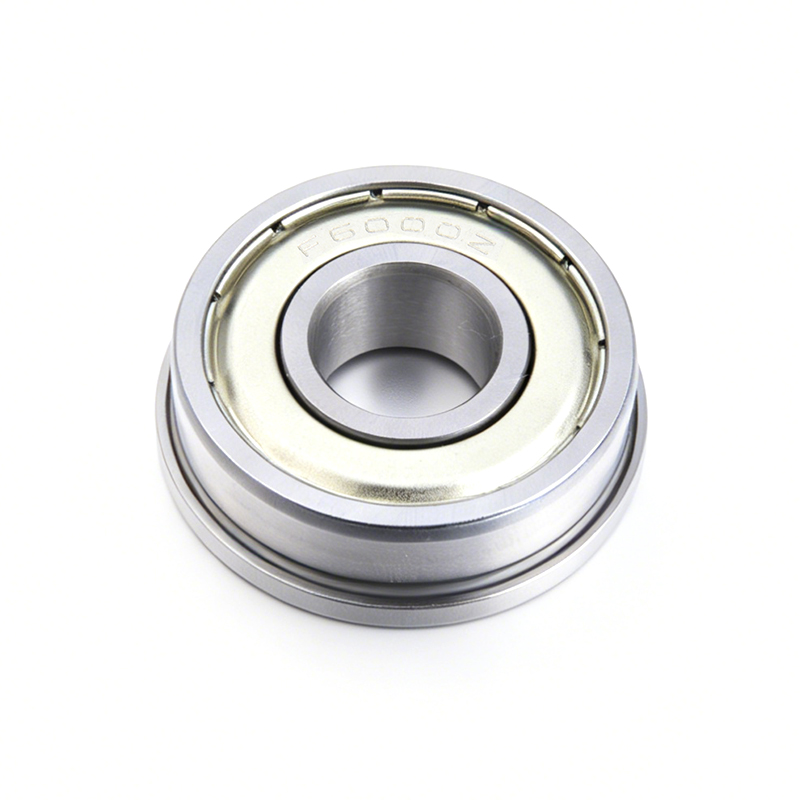
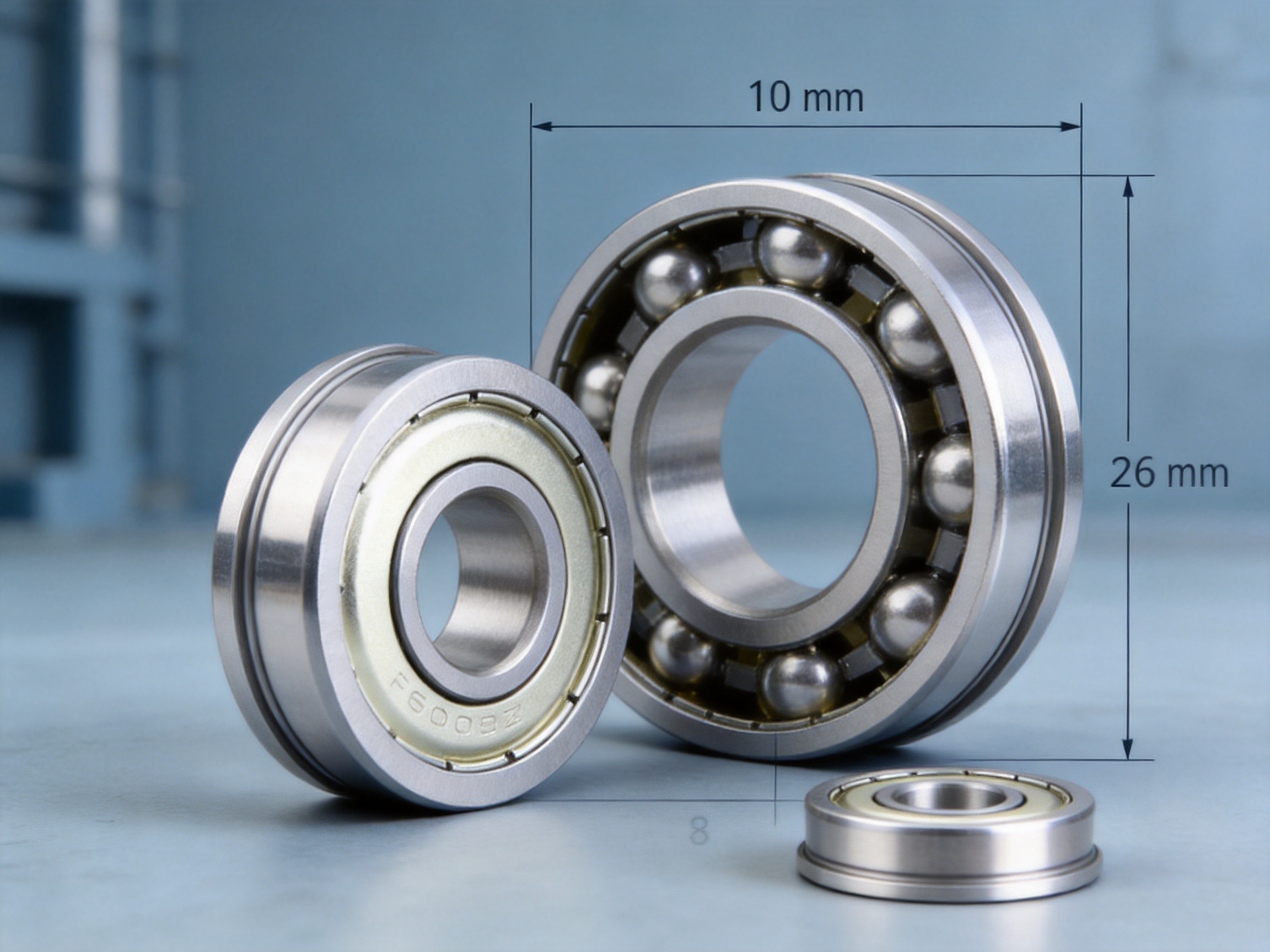
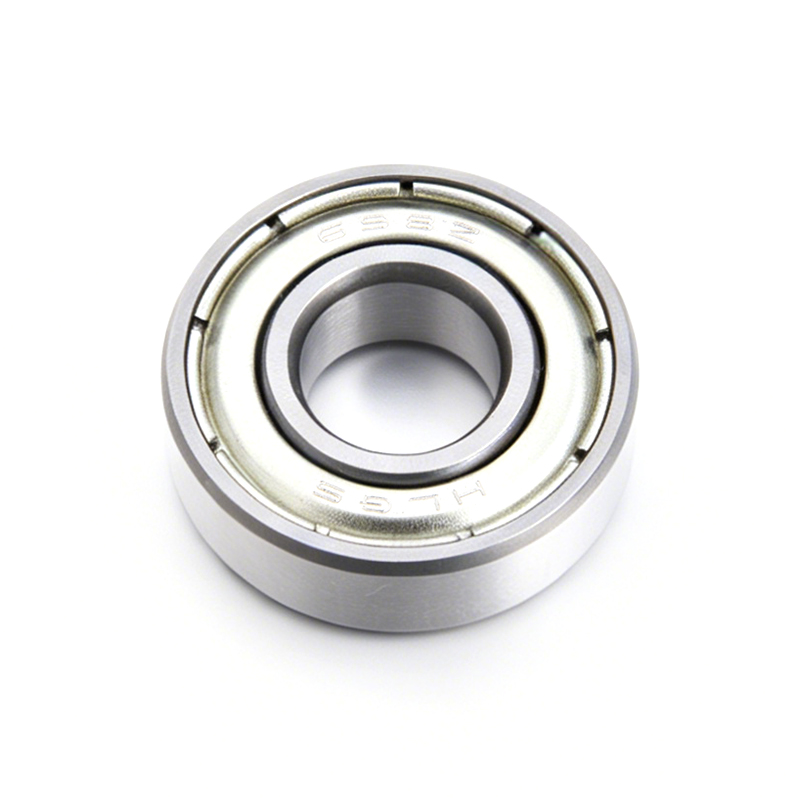
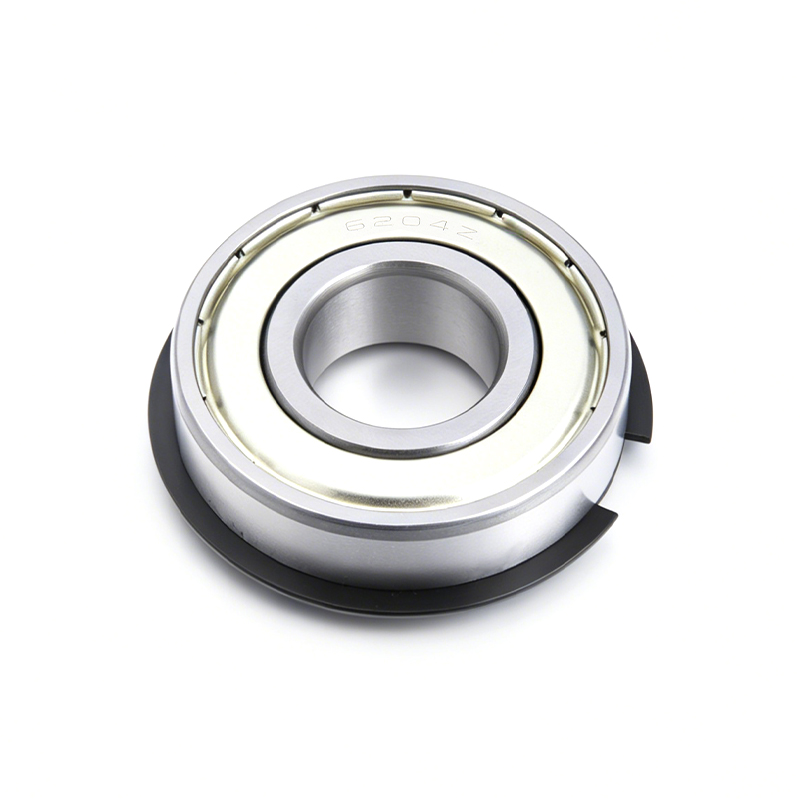
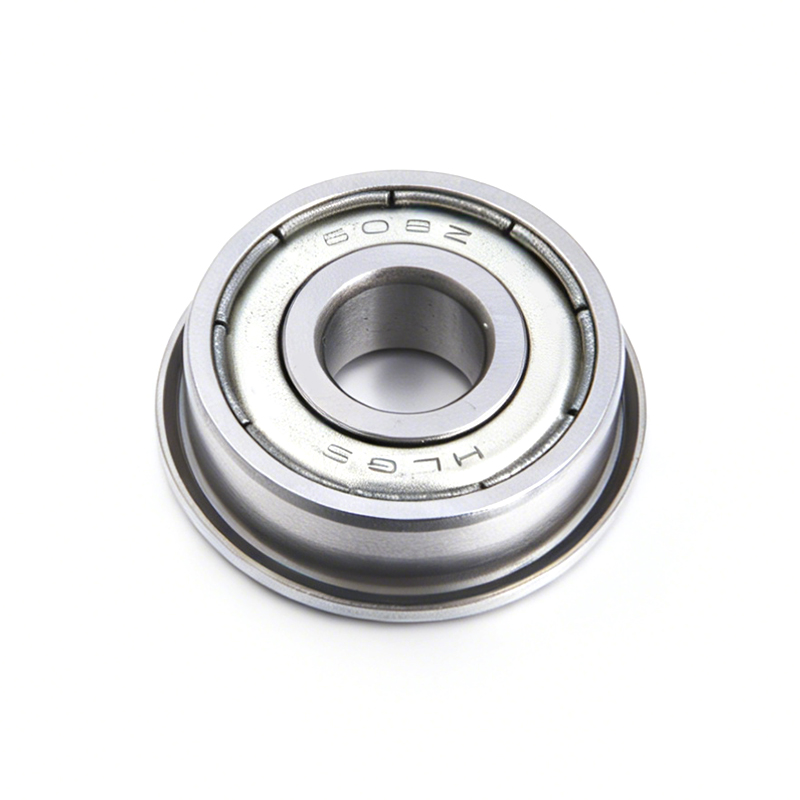
The F6000ZZ flanged deep groove ball bearing is a compact, shielded bearing designed for applications that require reliable radial rotation, accurate axial positioning, and efficient installation. With a 10 mm bore, 26 mm outside diameter, 8 mm bearing width, and 27.5 mm flange diameter, this bearing combines the operating characteristics of a miniature deep groove ball bearing with the mounting convenience of an integral flange.

Its flanged configuration can simplify housing design by helping locate the bearing axially within a bore. The integral flange also supports improved mounting rigidity in applications where bearing movement or installation variation must be controlled. At the same time, the standard deep groove raceway provides balanced performance under medium-load operating conditions.

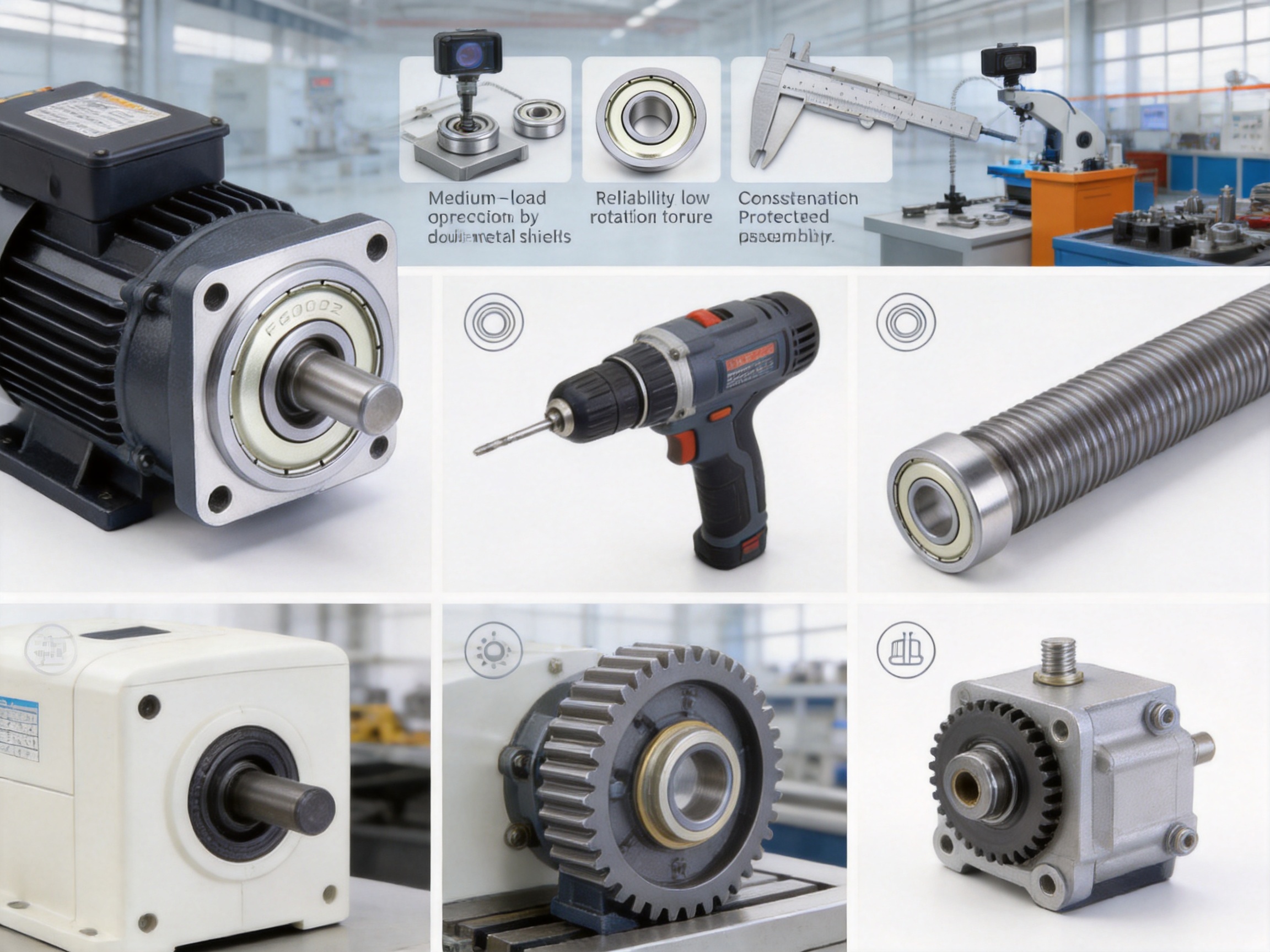
The F6000ZZ uses double metal shields, identified by the suffix “ZZ.” These shields help reduce the entry of dust and other external contaminants while retaining lubricant inside the bearing. This makes the bearing particularly suitable for enclosed or semi-enclosed mechanisms, fractional horsepower motors, power tools, conveyor rollers, household appliances, and general industrial transmission equipment.

Manufactured from high-carbon chromium bearing steel, with GCr15 and stainless steel listed among the available material options, the F6000ZZ is designed to provide dimensional stability, low rotational torque, and dependable anti-friction performance. Its compact geometry makes it a practical choice where installation space is limited but consistent rotation and controlled bearing location remain important.

Product Overview

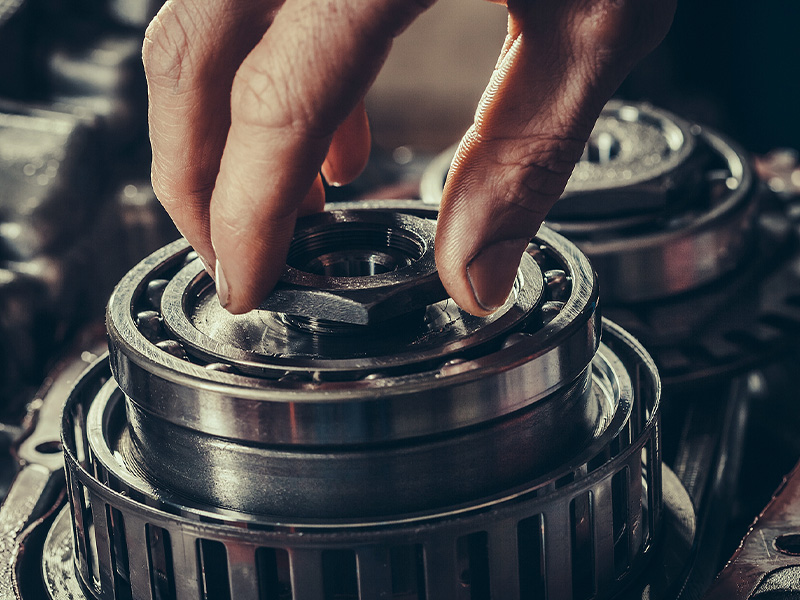
A deep groove ball bearing supports rotating components by separating the inner ring and outer ring with precision balls. The balls roll along carefully formed raceways, allowing relative movement with significantly less friction than sliding contact. In the F6000ZZ, this basic bearing structure is supplemented by an integral flange on the outer ring.

The flange extends beyond the standard outer diameter and creates a locating shoulder. For the F6000ZZ, the nominal outer diameter is 26 mm and the flange diameter is 27.5 mm. This difference provides a compact external locating feature without requiring a separate retaining ring, spacer, or complicated housing step in many designs.

The bearing has an internal bore of 10 mm. A shaft with a compatible 10 mm nominal diameter can be supported through the inner ring, subject to the appropriate shaft tolerance, fit, load, speed, and operating-temperature requirements. The 8 mm width provides a relatively short axial envelope, which is useful in compact products and mechanisms.

ParameterSpecification
Bearing numberF6000ZZ
TypeFlanged deep groove ball bearing
Bore diameter10 mm
Outside diameter26 mm
Bearing width8 mm
Flange diameter27.5 mm
Shield configurationDouble metal shields, ZZ
Dynamic load rating4550 N
Static load rating1970 N
Material informationGCr15 / stainless steel

The listed dynamic load rating is 4550 N, while the listed static load rating is 1970 N. These figures are important reference values for bearing selection, but they should not be treated as universal operating limits. Actual bearing life depends on the applied radial and axial loads, rotational speed, lubrication, temperature, alignment, contamination, mounting accuracy, and duty cycle.

The F6000ZZ is therefore best understood as a compact, general-purpose flanged bearing for medium-load applications rather than as a solution for every high-load or severe-environment requirement. Correct selection requires consideration of the complete operating system, including the shaft, housing, seals, load direction, speed, and surrounding components.

How the Flanged Design Improves Installation

The main structural difference between the F6000ZZ and a conventional non-flanged deep groove ball bearing is the integral flange. A standard bearing usually relies on a housing shoulder, retaining ring, clamp plate, or other external feature to control its axial position. A flanged bearing can provide this locating function directly at the bearing’s outer ring.

During installation, the flange can act as a stop when the bearing is inserted into a suitable housing bore. This can make assembly more repeatable because the bearing can be pressed until the flange contacts the designated housing surface. The result is a defined axial position that may reduce dependence on manual measurement or separate retaining components.

The flange may also help prevent the outer ring from moving axially in one direction. This is especially useful in small mechanisms where the housing has limited space for circlips, shoulders, or clamping parts. By integrating the locating feature into the bearing, designers may reduce component count and simplify the surrounding structure.

However, the flange should not automatically be treated as a substitute for every retention method. The required retention arrangement depends on the direction and magnitude of loads, housing material, shock conditions, thermal expansion, and assembly method. If the bearing experiences substantial axial force, the housing and flange must be evaluated together to ensure that contact stress and structural strength remain acceptable.

The 27.5 mm flange diameter is only slightly larger than the 26 mm bearing outside diameter. This creates a useful locating lip while preserving a compact overall envelope. Compared with a larger external mounting plate or separate retaining ring, the integral design can be advantageous in miniature equipment and space-constrained assemblies.

Deep Groove Bearing Performance

Deep groove ball bearings are widely used because they can accommodate radial loads and moderate axial loads in both directions. Their raceway geometry supports smooth rotation and allows a broad range of applications. The F6000ZZ follows this general design principle while adding the practical advantages of the flange and double metal shields.

The bearing’s low-friction rolling contact helps reduce the torque required to start and maintain rotation. Low rotational torque can be valuable in fractional horsepower motors, small actuators, power tools, fans, office equipment, household appliances, and other devices where available driving power is limited.

Reduced friction can also help control heat generation. Nevertheless, bearing temperature is affected by more than friction alone. Speed, preload, lubricant quantity, seal or shield design, shaft and housing fits, ambient temperature, and load all influence operating temperature. A bearing that performs well in one assembly may require different specifications or lubrication in another.

The F6000ZZ is suited to medium-load operating conditions. Its dynamic load rating of 4550 N provides a basis for calculating theoretical fatigue life when the bearing is subjected primarily to a known radial load. If axial loads are present, an equivalent dynamic bearing load should be calculated using accepted bearing selection methods.

Static loading must also be checked. The listed static load rating of 1970 N relates to the load level associated with permanent deformation considerations under defined rating conditions. Shock loads, vibration, impact during installation, and stationary loading can be particularly important because a bearing may suffer damage even when its average operating load appears acceptable.

Double Metal Shields and Contamination Protection

The “ZZ” suffix indicates that the F6000ZZ has metal shields on both sides. These shields do not contact the rotating inner ring in the same way that contact seals do. As a result, they can support low rotational resistance while providing a barrier against many forms of external contamination.

Double metal shields are commonly selected when the application benefits from pre-lubrication and does not require frequent relubrication. The shields help retain the factory-applied grease and limit the entry of dust, light debris, and incidental contaminants. This configuration is practical for many electric motors, rollers, tools, and enclosed mechanical assemblies.

Because metal shields are generally non-contacting, they may offer lower friction than contact seals. This can be an advantage in compact, high-efficiency mechanisms. However, a shielded bearing is not automatically waterproof or fully sealed. If the application is exposed to heavy moisture, washdown, corrosive chemicals, fine abrasive particles, or pressure-cleaning equipment, a contact-sealed or specialized bearing may be more appropriate.

The surrounding equipment should also provide suitable environmental protection. A shielded bearing installed in a poorly protected housing may still be exposed to contamination through gaps around the shaft or housing. Good design practice includes controlling ingress at the system level rather than relying on the bearing shields alone.

Lubricant selection is another important consideration. The appropriate grease depends on speed, temperature, load, compatibility, service life, and environmental conditions. Adding incompatible grease during maintenance can reduce performance or damage the original lubricant system. In many applications, the bearing should be used with its original lubrication unless a controlled relubrication procedure has been established.

F6000ZZ Flanged Deep Groove Ball Bearing

Material and Manufacturing Strengths

The supplied product information identifies high-carbon chromium bearing steel as the manufacturing material and lists GCr15 and stainless steel among the material options. These materials are widely associated with bearing rings and rolling elements because they can provide the hardness, wear resistance, fatigue strength, and dimensional stability required for rolling contact applications.

GCr15 is a commonly used bearing steel in precision bearing manufacture. When correctly heat-treated and processed, it can provide a hard, wear-resistant working surface with a suitable balance of toughness and rolling-contact fatigue performance. The quality of the final bearing depends not only on the nominal material but also on steel cleanliness, heat treatment, grinding, raceway geometry, surface finish, assembly accuracy, and inspection controls.

Stainless steel options may be considered when improved corrosion resistance is required. The exact performance of a stainless steel bearing depends on the specific grade, heat treatment, surface condition, lubricant, and environmental exposure. Stainless steel should therefore be selected according to the actual corrosive conditions rather than solely by material name.

A professional bearing manufacturing process normally begins with carefully controlled ring blanks. The inner and outer rings are formed, machined, heat-treated, and finished to create accurate raceways and mounting surfaces. Rolling elements are manufactured and graded to achieve consistent size and roundness. Cages, shields, and lubricant are then integrated during assembly.

For a flanged bearing, flange geometry is an additional quality consideration. The flange must maintain its specified diameter and relationship to the bearing outside diameter. Excessive variation could affect housing fit, axial location, or installation force. Consistent flange dimensions are therefore important for repeatable assembly in production equipment.

Raceway and rolling-element quality strongly influence noise, vibration, torque, and service life. Fine grinding and finishing operations help create smooth contact surfaces. Dimensional inspection verifies the bore, outside diameter, width, flange diameter, and other critical features. Functional inspection may include rotation torque, noise, vibration, clearance, shield fit, and visual quality.

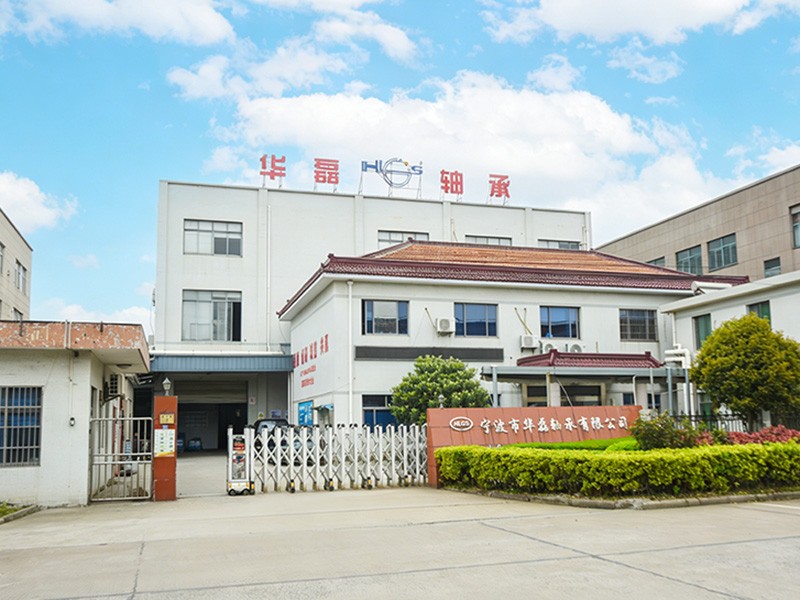
The manufacturer described in the supplied information, Ningbo Zhenhai Hualei Bearing Co., Ltd., was established in 2001 and specializes in miniature deep groove ball bearings. Its product range covers deep groove bearing solutions for food machinery, household appliances, automotive electromechanical systems, electric tools, mechanical transmission devices, and motors.

The company states that its products are strictly tested using advanced equipment and that it follows ISO 9001 and ISO/TS 16949 management systems. ISO 9001 is associated with quality management processes, while ISO/TS 16949 was developed for quality management in the automotive supply chain. These systems can support process consistency, traceability, corrective action, supplier control, and continual improvement when properly implemented.

The company also established Ningbo Hotex Mechanical & Electrical Technology Co., Ltd. in 2016 as its import and export department. The supplied information indicates that this department provides OEM and ODM services. For customers requiring customized packaging, product identification, dimensional variations, or application-specific bearing arrangements, OEM and ODM capability can simplify communication between design, manufacturing, and export operations.

Advantages Compared with Conventional Alternatives

The F6000ZZ offers several practical advantages when compared with a conventional 6000-series bearing without a flange.

Integrated Axial Location

The integral flange provides an external locating feature. In suitable housings, this can reduce the need for a separate shoulder or retaining ring. Fewer components may lower assembly time, reduce purchasing complexity, and make the design easier to service.

Compact Overall Construction

With a 10×26×8 mm bearing body and a 27.5 mm flange diameter, the F6000ZZ remains compact while adding a useful mounting feature. This can be advantageous where a designer needs positional control but cannot accommodate a large external mounting structure.

Low Rotational Resistance

The deep groove ball bearing design and non-contacting metal shields can support smooth rotation and low torque. This is particularly useful in small motors and devices where efficiency, start-up behavior, or battery life matters.

Reduced Maintenance Demand

Double metal shields help retain lubricant and protect the internal rolling elements from common external contaminants. In many normal-duty applications, the bearing can operate for an extended period without routine relubrication.

Broad Application Compatibility

The bearing’s standard dimensions and general-purpose geometry support a wide range of applications. It can be evaluated for fractional horsepower motors, power tools, conveyor rollers, household appliances, and industrial transmission assemblies.

Manufacturing and Custom-Service Support

A specialized miniature-bearing manufacturer can provide more than a standard catalog item. Experience with small bearings, inspection systems, OEM production, and ODM cooperation can help customers address packaging, batch consistency, technical communication, and application-specific requirements.

Compared with a basic low-cost bearing from an uncontrolled source, a bearing produced under a structured quality management system may offer better consistency from batch to batch. This distinction is important for manufacturers whose products must maintain predictable noise, torque, fit, and service performance across large production volumes.

Recommended Applications

Fractional Horsepower Motors

Small motors often require bearings with low friction, compact dimensions, and dependable rotation over long operating periods. The F6000ZZ can be considered for motor applications where the 10 mm bore, 26 mm outside diameter, and 8 mm width match the shaft and housing design.

The metal shields help retain grease and limit contamination in enclosed motor housings. The flange can assist with axial positioning during motor assembly. Designers should still verify speed, electrical equipment temperature, shaft fit, radial load, rotor balance, and expected service life.

Power Tools

Power tools may impose a combination of radial load, vibration, intermittent shock, and changing speed. The F6000ZZ may be suitable for moderate-load tool mechanisms where the bearing is properly supported and protected from abrasive dust.

In dusty cutting, grinding, or drilling environments, the bearing’s shields should not be considered a complete substitute for external dust management. Housing labyrinths, protective covers, and appropriate sealing arrangements may be necessary. Installation quality is also critical because impact loads applied directly to the wrong bearing ring can damage raceways.

Conveyor Rollers

Small conveyor rollers may benefit from a flanged bearing because the flange can simplify axial placement inside a roller tube or support bracket. The 10 mm bore can accommodate a compatible shaft, while the compact bearing width helps preserve available roller space.

Before specifying the F6000ZZ for a conveyor, the designer should calculate the combined load from product weight, roller spacing, belt or chain tension, acceleration, impact, and misalignment. Contamination, washdown exposure, and continuous operating speed should also be evaluated.

Household Appliances

Household appliances often require quiet operation, compact assemblies, and stable performance. The F6000ZZ can be considered for fans, small drive systems, mechanisms, and rotating supports where the bearing load and environment are within its operating range.

Noise and vibration are especially important in consumer products. Correct shaft and housing fits, balanced rotating parts, clean assembly conditions, and consistent lubricant quantity all contribute to acoustic performance. A high-quality bearing cannot compensate for a misaligned shaft or an unbalanced rotor.

Industrial Transmission Assemblies

In general industrial transmission equipment, the F6000ZZ may be used in auxiliary shafts, guide rollers, small pulleys, idlers, and compact mechanical linkages. Its flange can make it useful in modular mechanisms where repeatable axial placement simplifies assembly.

Industrial equipment varies substantially in load and duty cycle. For heavy shock, high axial force, elevated temperature, or continuous high-speed operation, a larger bearing, different seal arrangement, or specialized internal clearance may be required.

Installation Best Practices

Correct installation is essential to obtaining the expected life from any ball bearing. Before installation, inspect the bearing, shaft, housing, flange, and surrounding components. Remove burrs, dirt, chips, corrosion, and damaged surfaces. Confirm that the bearing number and dimensions match the drawing and assembly instructions.

The shaft and housing should be manufactured to suitable tolerances. An overly tight fit can reduce internal clearance and create excessive friction or heat. An excessively loose fit can permit creep, fretting, or movement of the ring. The correct fit depends on which ring rotates, the load direction, the load magnitude, the temperature, and the materials of the shaft and housing.

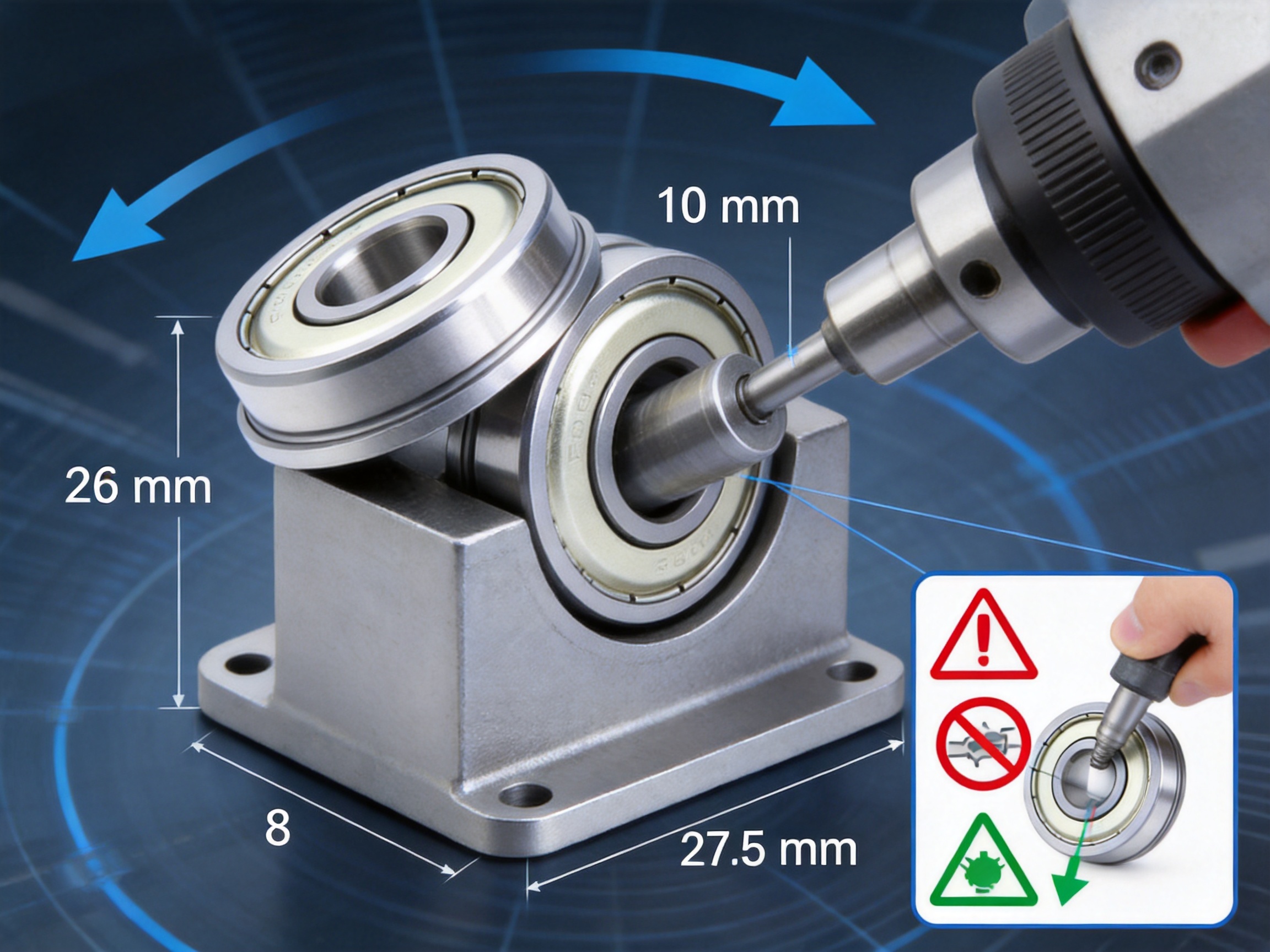
When pressing the bearing onto a shaft, apply force only to the inner ring. When pressing the bearing into a housing, apply force only to the outer ring. If force is transmitted through the rolling elements, raceways may develop indentations or brinelling. Such damage can produce noise, vibration, increased torque, and premature failure.

The flange should be supported evenly during installation. Do not use the flange as an impact surface unless the installation method has been specifically designed for that purpose. Pressing equipment, controlled insertion force, and suitable tooling are preferable to hammering.

Keep the bearing sealed in its original packaging until it is ready for assembly. Clean handling prevents particles from entering through the shield openings or contaminating the mounting surfaces. Do not rotate a dry or contaminated bearing unnecessarily before installation.

After assembly, rotate the shaft by hand when possible. Check for roughness, binding, abnormal noise, excessive axial movement, or unusual torque. If the bearing feels rough immediately after installation, investigate shaft alignment, fit, flange contact, housing deformation, and contamination before operating the equipment.

Load, Speed, and Life Considerations

Bearing selection should begin with a clear description of the operating cycle. Record the radial load, axial load, speed, temperature, start-stop frequency, shock level, contamination, and required service life. A bearing that runs continuously at one speed may have different requirements from a bearing that accelerates rapidly, reverses direction, or experiences frequent impact.

The dynamic load rating of 4550 N can be used in a bearing-life calculation. In simplified form, the basic rating life of a ball bearing is commonly related to the ratio of the dynamic load rating to the equivalent dynamic bearing load, raised to the power of three. This relationship is useful for preliminary engineering, but it does not capture every factor affecting real service life.

Real operating life can be reduced by contamination, poor lubrication, misalignment, electrical current passage, incorrect mounting, excessive preload, vibration while stationary, and manufacturing or assembly damage. In miniature bearings, small particles can be significant relative to the size of the raceway and rolling elements.

Static load evaluation is necessary when the bearing is stationary under load, exposed to shock, or subject to vibration. The listed static load rating of 1970 N provides a reference for checking permanent deformation risk. Applications involving impact should include appropriate safety factors and should not rely solely on nominal average load.

Speed capability should be confirmed for the complete bearing configuration. Shield design, lubricant type, internal clearance, operating temperature, and load all affect the practical speed limit. A catalog size alone cannot determine whether a bearing is suitable for a specific high-speed application.

Temperature affects lubricant viscosity, dimensional relationships, and material expansion. If the shaft, housing, and bearing rings reach different temperatures, internal clearance can change. High-temperature service may require specialized grease, clearance, cage material, or heat-resistant construction.

Quality Control and Production Consistency

Precision bearing production depends on control at multiple stages rather than a single final inspection. Material verification helps confirm that rings and rolling elements meet the intended specification. Heat treatment must produce the required hardness and structural properties without creating excessive distortion.

Grinding and superfinishing influence raceway roughness, roundness, waviness, and geometry. These characteristics affect contact stress, friction, vibration, and noise. Consistent ball grading helps maintain a controlled internal arrangement and supports smooth operation.

Assembly controls are equally important. Internal clearance, cage positioning, shield installation, lubricant quantity, and cleanliness must be maintained within defined limits. Excess lubricant may increase torque and temperature, while insufficient or unsuitable lubricant may reduce wear protection.

Inspection of the F6000ZZ should include its flange because the flange is central to the product’s function. Important checks may include flange diameter, concentricity, axial position, outer-ring geometry, and surface condition. These checks help ensure that the bearing seats correctly and provides repeatable axial location.

The company’s stated use of advanced testing equipment and ISO 9001 and ISO/TS 16949 management systems indicates an emphasis on controlled manufacturing and documented quality processes. For industrial buyers, such systems can be valuable when they are supported by traceability, inspection records, process audits, sample approval, and effective corrective-action procedures.

For large-volume users, quality assurance should be discussed before ordering. Useful topics include drawing approval, batch identification, incoming inspection standards, allowable dimensional variation, noise and vibration requirements, packaging, corrosion protection, and procedures for handling nonconforming products.

OEM and ODM Cooperation

Standard F6000ZZ bearings are often sufficient for replacement and general equipment manufacturing. However, OEM and ODM customers may have additional requirements. These can include private labeling, customized packaging, specific grease, modified clearance, corrosion-resistant material, application-specific inspection, or coordinated delivery schedules.

A manufacturer with experience in miniature deep groove bearings can help customers assess whether a standard product is appropriate or whether a customized design is necessary. Application information should include drawings, shaft and housing details, load conditions, speed, temperature, environment, expected life, and installation method.

Customization should be based on engineering need rather than on changing specifications without validation. A different shield, lubricant, material, or clearance can influence torque, noise, temperature, and service life. Prototype testing and sample approval are therefore recommended before full-scale production.

For international customers, an established export department can support product communication, order coordination, documentation, packaging, and logistics. Clear technical documents reduce the risk of ordering a bearing with the correct nominal size but the wrong shield, material, clearance, or application configuration.

Comparison with Other Bearing Configurations

F6000ZZ Versus Standard 6000ZZ

The standard 6000ZZ has the same basic bore, outside diameter, and width family as the F6000ZZ but does not include the integral flange. The standard version may be preferable when the housing already provides a precise shoulder or retaining arrangement. The F6000ZZ is advantageous when integrated axial location can simplify the design.

F6000ZZ Versus Contact-Sealed Bearings

Contact-sealed bearings may provide stronger protection against moisture and fine contamination because the seal contacts the rotating ring. However, contact can increase friction and torque. The F6000ZZ’s metal shields are a practical choice for cleaner, enclosed applications where low rotational resistance is important.

F6000ZZ Versus Stainless Steel Bearings

A stainless steel version may offer improved corrosion resistance compared with standard bearing steel. However, material selection should consider load rating, hardness, temperature, lubricant, and chemical exposure. Standard GCr15 construction may be more appropriate for many general-purpose medium-load applications, while stainless steel may be considered for humid or corrosive surroundings.

F6000ZZ Versus Plain Bushings

Plain bushings can be useful in slow oscillating or heavily contaminated applications, but they rely on sliding contact and may have different friction, wear, lubrication, and tolerance characteristics. The F6000ZZ offers rolling contact and can provide smoother rotation and lower starting torque in suitable applications.

F6000ZZ Versus Larger Bearings

A larger bearing can provide greater load capacity and improved resistance to shock, but it also requires more installation space and may increase system weight and cost. The F6000ZZ is attractive when the load is moderate and compactness is a priority.

Application Design Checklist

Before approving the F6000ZZ for a machine or product, confirm the following points:

First, verify the dimensional envelope. The shaft must accommodate the 10 mm bore, the housing must accept the 26 mm outside diameter, and the flange seat must provide sufficient clearance and support for the 27.5 mm flange diameter.

Second, calculate the operating loads. Include radial force, axial force, belt tension, gear force, gravity, acceleration, impact, and any preload. Do not evaluate only the static weight of the supported component.

Third, determine the operating speed and duty cycle. Continuous running, intermittent running, frequent starts, reversing motion, and vibration can produce different bearing demands.

Fourth, evaluate the environment. Consider dust, water, humidity, chemicals, washdown, temperature, radiation, and nearby heat sources. Double metal shields are suitable for many normal environments but are not equivalent to fully sealed or specialized environmental protection.

Fifth, select compatible fits and mounting methods. Confirm that the shaft and housing will not create excessive clearance reduction or ring creep. Make sure installation forces are applied to the correct ring.

Sixth, review lubricant requirements. Determine whether the factory lubricant is suitable for the operating temperature, speed, and chemical environment. Avoid mixing greases without compatibility information.

Seventh, establish inspection criteria. Depending on the application, this may include dimensional checks, rotation torque, noise, vibration, visual appearance, flange geometry, packaging condition, and batch traceability.

Finally, validate the bearing under representative operating conditions. Prototype testing should reproduce the actual load, speed, temperature, contamination, mounting arrangement, and duty cycle as closely as possible.

Maintenance and Troubleshooting

In normal applications, maintenance begins with observing the surrounding equipment. A change in noise, vibration, temperature, torque, or shaft movement may indicate a bearing or system problem. Operators should investigate changes early rather than waiting for complete failure.

Abnormal noise can result from contamination, raceway damage, insufficient lubrication, excessive clearance, incorrect fit, or misalignment. Vibration may originate from the bearing, but it can also come from an unbalanced rotor, bent shaft, loose housing, gear mesh, or structural resonance.

Excessive temperature may be caused by high load, high speed, excessive grease, unsuitable grease, excessive preload, shield contact, poor alignment, or inadequate heat dissipation. Measuring temperature alone does not identify the root cause; it should be combined with inspection of the entire assembly.

Premature flange damage may indicate improper housing support, excessive axial force, impact during installation, or an installation tool contacting the wrong surface. The flange should be treated as a precision locating feature, not as a general-purpose impact shoulder.

If replacement is necessary, use the same bearing designation only after confirming that the replacement meets the application’s material, shield, clearance, lubrication, and dimensional requirements. A bearing with the same basic size but a different suffix may not perform identically.

Purchasing and Supplier Evaluation

When purchasing F6000ZZ bearings, buyers should provide the exact bearing number and any additional requirements. The designation identifies the core product, but application conditions may require confirmation of material, clearance, lubricant, packaging, corrosion protection, or inspection standards.

Supplier evaluation should consider technical capability, production experience, quality systems, testing resources, delivery reliability, export support, and responsiveness. The supplied company information identifies a manufacturer established in 2001 with specialization in miniature deep groove ball bearings and support for OEM and ODM services.

For repeat orders, buyers should seek consistency in product dimensions, torque, noise, shield fit, lubricant quantity, and packaging. Initial samples should be approved against a controlled drawing or specification. Subsequent changes to materials, production equipment, lubricant, or subcontracted processes should be communicated and evaluated.

Packaging is also important. Bearings should be protected from moisture, dust, impact, and corrosion during storage and transport. Product labels should clearly identify the bearing number, quantity, batch information where applicable, and any special handling requirements.

Frequently Asked Questions

What does F6000ZZ mean?

F6000ZZ identifies a flanged deep groove ball bearing. The “F” indicates the flanged configuration, while “6000” identifies the basic bearing size series. The “ZZ” suffix indicates double metal shields.

What are the dimensions of the F6000ZZ?

The nominal bore diameter is 10 mm, the bearing outside diameter is 26 mm, and the bearing width is 8 mm. The flange diameter is listed as 27.5 mm.

What is the load rating of this bearing?

The listed dynamic load rating is 4550 N and the listed static load rating is 1970 N. These values are reference ratings and should be evaluated together with actual loads, speed, mounting conditions, lubrication, and required life.

Is the F6000ZZ waterproof?

No. The F6000ZZ has double metal shields, which help protect the internal components from common external contamination, but metal shields should not be treated as waterproof seals. Applications exposed to water, washdown, or severe contamination may require another sealing arrangement.

What is the benefit of the flange?

The flange provides an integral locating feature that can help control the bearing’s axial position in a suitable housing. It may reduce the need for a separate retaining ring or housing shoulder and can simplify assembly.

Can the F6000ZZ support axial loads?

Deep groove ball bearings can generally accommodate radial loads and moderate axial loads in both directions. The allowable axial load depends on the actual bearing arrangement, speed, lubrication, internal clearance, and application conditions. Specific axial-load calculations should be completed before approval.

Is the F6000ZZ suitable for high-speed motors?

It may be suitable for some motor applications, but speed capability must be confirmed for the complete bearing configuration. Lubricant, temperature, load, clearance, shield design, and motor construction all affect high-speed performance.

What materials are available?

The supplied product information lists GCr15 and stainless steel. GCr15 is commonly used for general-purpose bearing construction, while stainless steel may be considered when improved corrosion resistance is needed. The exact material choice should match the operating environment and load requirements.

How should the bearing be installed?

Apply installation force to the ring being fitted. Press on the inner ring when installing onto a shaft and press on the outer ring when installing into a housing. Avoid transmitting force through the rolling elements, and use controlled tooling whenever possible.

Can the bearing be customized?

OEM and ODM services are indicated in the supplied company information. Potential requirements should be discussed with the manufacturer and validated through technical drawings, samples, and application testing before mass production.

What industries use this type of bearing?

Typical applications include fractional horsepower motors, power tools, conveyor rollers, household appliances, food machinery, automotive electromechanical systems, mechanical transmission devices, and general industrial equipment.

How should the bearing be stored?

Store it in its original packaging in a clean, dry environment protected from moisture, dust, vibration, and corrosive chemicals. Do not remove protective packaging until the bearing is ready for installation.

Conclusion

The F6000ZZ flanged deep groove ball bearing combines a compact 10×26×8 mm bearing structure with a 27.5 mm integral flange, double metal shields, and a general-purpose deep groove raceway. This combination makes it a strong candidate for medium-load applications that require low rotational torque, dependable anti-friction performance, and convenient axial location.

Its advantages over a conventional non-flanged bearing include simplified mounting, reduced dependence on separate locating hardware, compact installation, and repeatable positioning in an appropriately designed housing. The double metal shields support low-friction operation and lubricant retention in clean or moderately protected environments.

The listed 4550 N dynamic load rating and 1970 N static load rating provide useful selection references, while the material options of GCr15 and stainless steel allow consideration of different performance and environmental requirements. Actual suitability must be confirmed through load, speed, temperature, contamination, fit, lubrication, and service-life analysis.

The manufacturer’s specialization in miniature deep groove ball bearings, stated quality-management systems, advanced testing capabilities, and OEM and ODM support provide additional value for equipment manufacturers and international buyers. With correct specification, controlled production, proper installation, and suitable application validation, the F6000ZZ can provide a practical and reliable bearing solution for compact rotating equipment.

References

1. Product specification information for the F6000ZZ flanged deep groove ball bearing, including dimensions, materials, shields, and load ratings.

2. ISO 9001, Quality Management Systems—Requirements.

3. ISO 281, Rolling Bearings—Dynamic Load Ratings and Rating Life.

4. ISO 76, Rolling Bearings—Static Load Ratings.

5. General engineering principles for rolling-bearing mounting, lubrication, fit selection, contamination control, and service-life evaluation.

6. Manufacturer information concerning miniature deep groove bearing production, quality management, testing, OEM services, and ODM cooperation.

7. Standard bearing-design practices for deep groove ball bearings, flanged bearing arrangements, shielded bearings, and medium-load industrial applications.

Product: F6000ZZ Flanged Deep Groove Ball Bearing


Recent Articles