Amina Shen — Customer Support and Sales Specialist
Home / Author / Amina Shen — Customer Support and Sales Specialist / 608-2RS Deep Groove Ball Bearing: Compact Performance for Skates, Power Tools, and Miniature Motors

608-2RS Deep Groove Ball Bearing: Compact Performance for Skates, Power Tools, and Miniature Motors

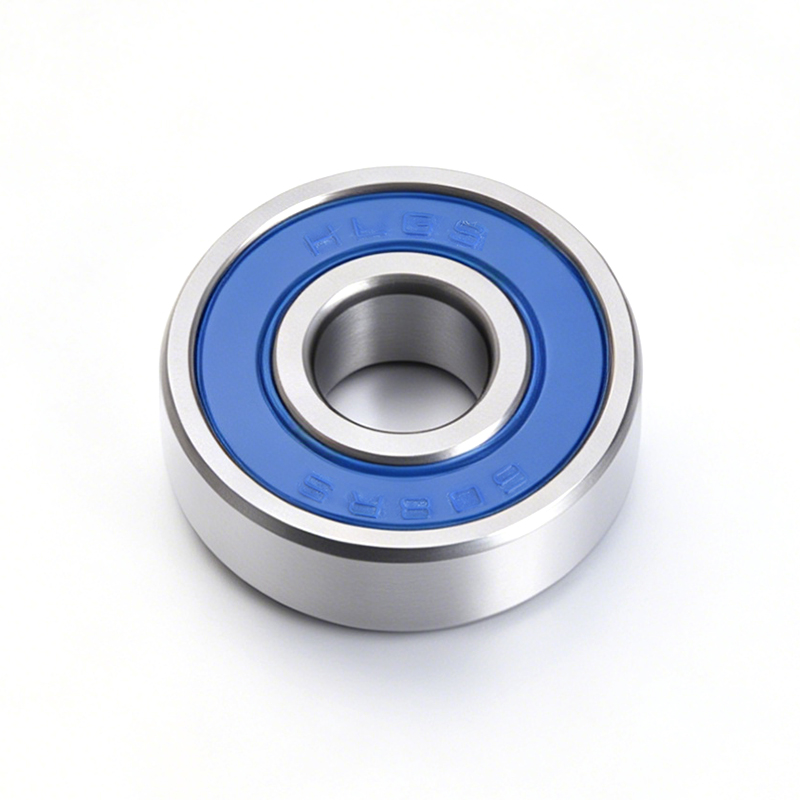
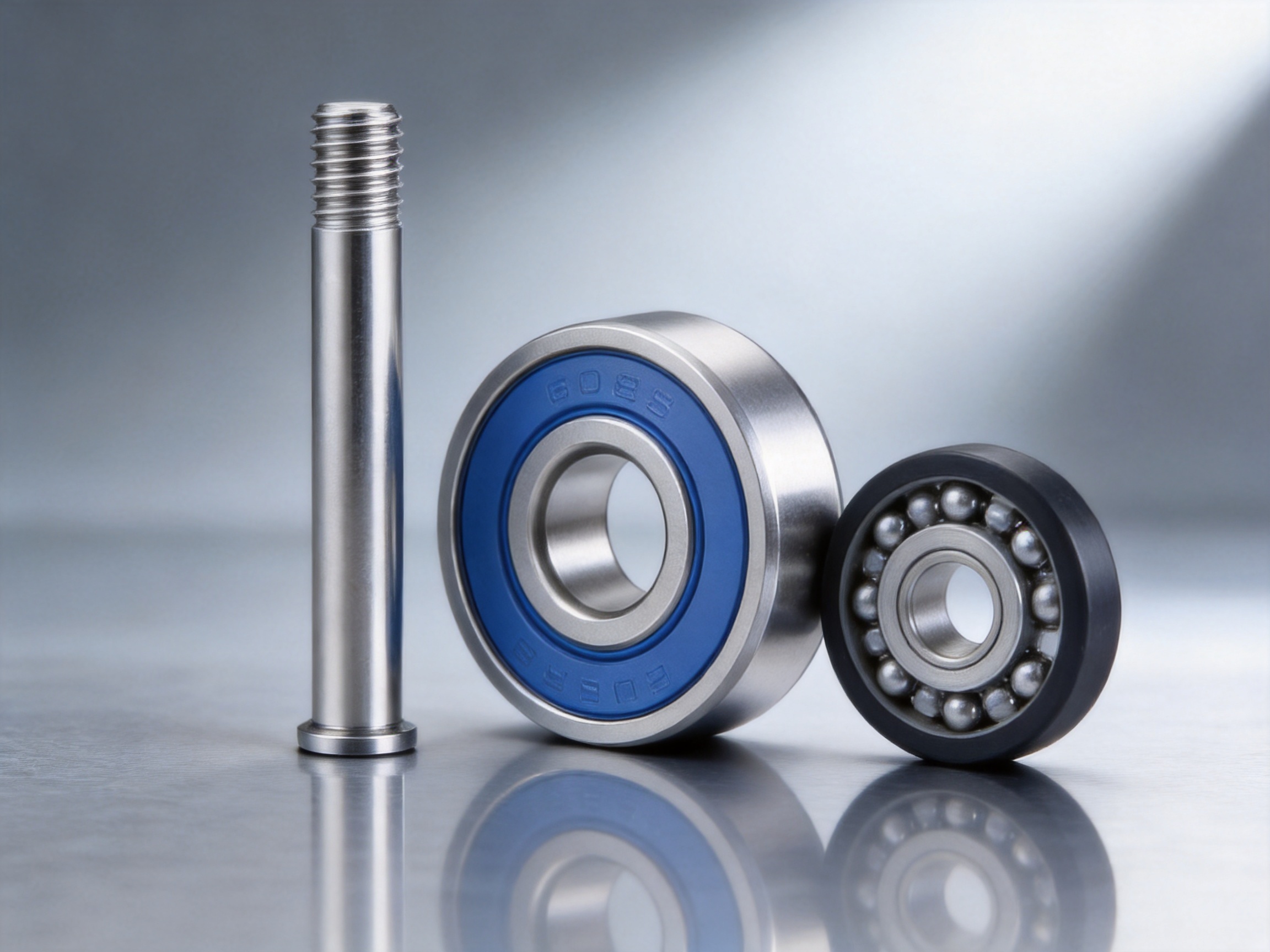
The 608-2RS Deep Groove Ball Bearing is a compact, versatile, and widely applicable miniature bearing designed for equipment that requires dependable radial support, smooth rotation, low friction, and efficient use of installation space. With an 8 mm bore, 22 mm outside diameter, and 7 mm width, this bearing provides a practical combination of compact dimensions and useful load capacity. Its standardized size makes it suitable for skate wheels, inline skates, small motors, power tools, household appliances, mechanical transmissions, and many other electromechanical products.

Although miniature bearings are small in physical size, their influence on equipment performance is significant. A bearing that is manufactured with accurate geometry, carefully controlled materials, high-quality raceways, and suitable sealing can reduce friction, noise, vibration, heat generation, and maintenance requirements. Conversely, a poorly manufactured bearing may lead to premature wear, unstable rotation, excessive noise, and unnecessary downtime. The 608-2RS is engineered to provide consistent support in applications where installation space is limited but smooth and reliable movement remains essential.

Product Overview

The 608-2RS belongs to the deep groove ball bearing family. Deep groove bearings are characterized by raceway grooves formed in both the inner and outer rings. These grooves accommodate the rolling balls and allow the bearing to support primarily radial loads while also handling moderate axial loads in either direction. This basic construction provides a useful balance between load-carrying capability, rotational speed, installation simplicity, and cost efficiency.

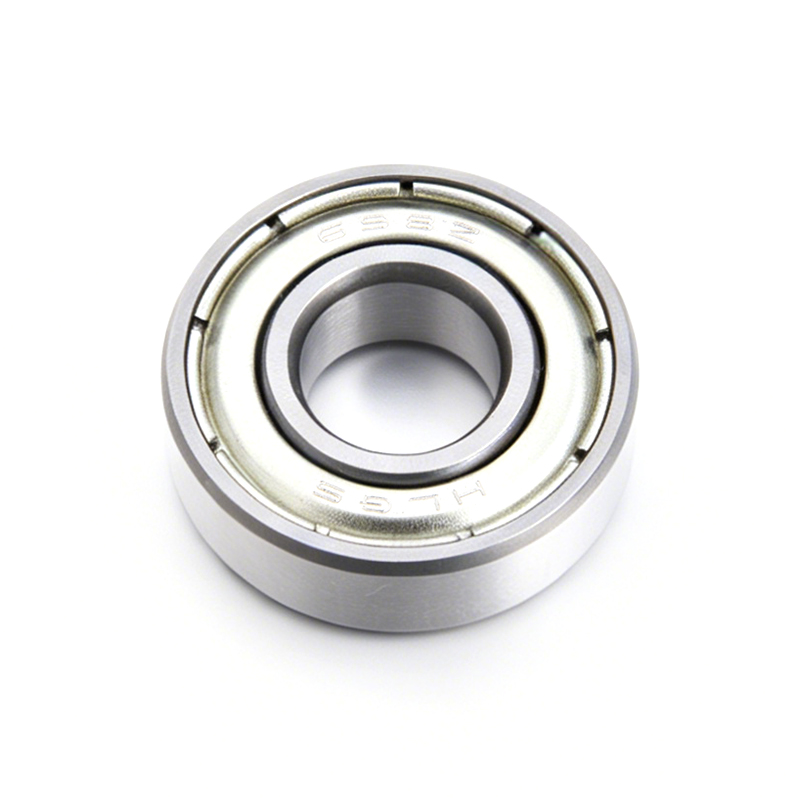
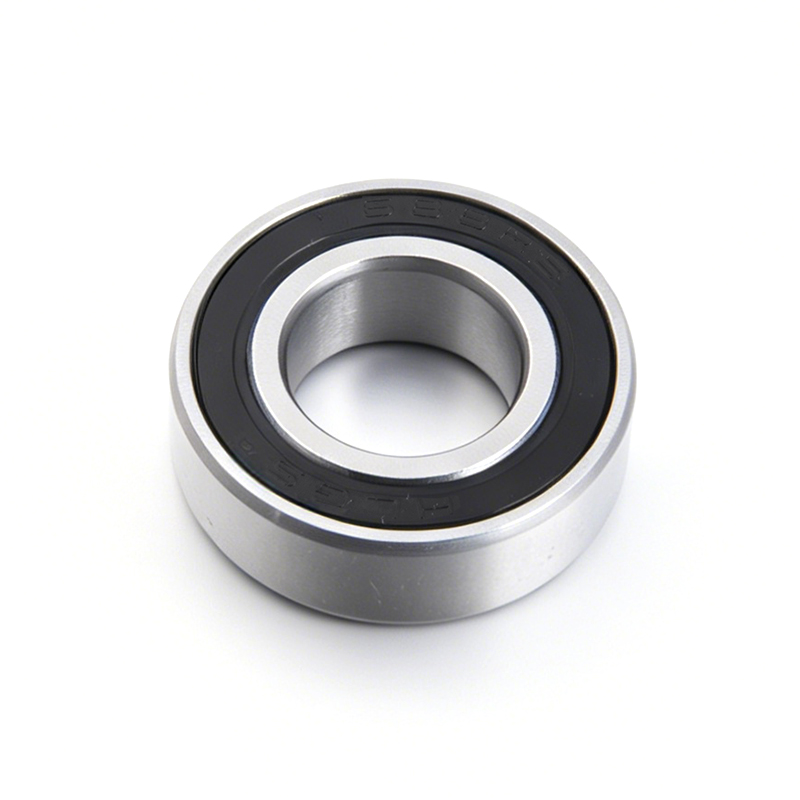
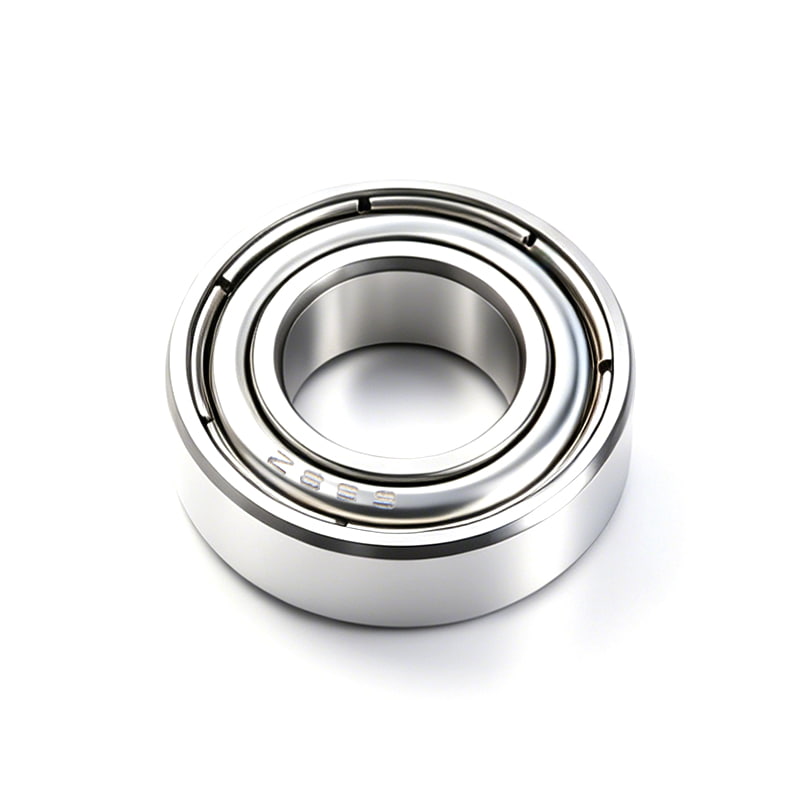
The bearing is manufactured in the widely used 608 dimensional series. The designation 608 identifies the basic bearing size, while the suffix indicates the sealing or shielding arrangement. The supplied product information identifies the bearing as 608-2RS and lists double metal shields under the seal specification as ZZ. Because 2RS is commonly used in the bearing industry to describe double rubber contact seals, while ZZ commonly describes double metal shields, buyers should confirm the exact sealing configuration before ordering large quantities. The dimensional and performance information supplied for this product remains centered on the 608 bearing format: an 8 mm bore, 22 mm outside diameter, and 7 mm width.

This clarification is important because sealing design affects friction, contamination resistance, lubrication retention, operating temperature, and service life. A metal-shielded configuration is often selected for lower friction and applications with relatively clean operating conditions. A rubber-sealed configuration generally provides stronger protection against dust, moisture, and small contaminants, although it can create somewhat greater seal friction. Selecting the correct configuration allows engineers to match the bearing to the actual operating environment rather than relying only on a general product name.

ParameterSpecification
Bearing number608-2RS
Bore diameter8 mm
Outside diameter22 mm
Width7 mm
Listed seal or shield configurationDouble metal shields, identified as ZZ in the supplied information
Dynamic load rating3,450 N
Static load rating1,420 N
MaterialGCr15 bearing steel
Product categoryMiniature deep groove ball bearings

The 608 format is one of the most recognized miniature bearing sizes worldwide. Its standardized geometry allows designers to source replacement bearings, develop interchangeable assemblies, and simplify inventory management. For manufacturers of skate products, small electric motors, and consumer equipment, this level of standardization can reduce redesign work and support efficient maintenance programs.

608-2RS Deep Groove Ball Bearing for Ideal for Skate, Power Tool and Mini Motor

Compact Dimensions and Efficient Space Utilization

One of the main advantages of the 608-2RS is its compact 8×22×7 mm size. The 8 mm bore is suitable for small shafts, while the 22 mm outside diameter provides an adequate rolling path for a miniature bearing. The 7 mm width helps designers minimize the axial length of a wheel hub, motor housing, pulley assembly, or small transmission mechanism.

Space efficiency is especially important in modern product design. Portable power tools, miniature motors, robotics components, compact household appliances, and recreational products are often expected to deliver high performance without increasing overall size or weight. A bearing that occupies unnecessary space may force designers to enlarge the housing, increase shaft length, or reduce room for other components. The 608 bearing helps simplify these constraints by providing a standardized support element in a very small envelope.

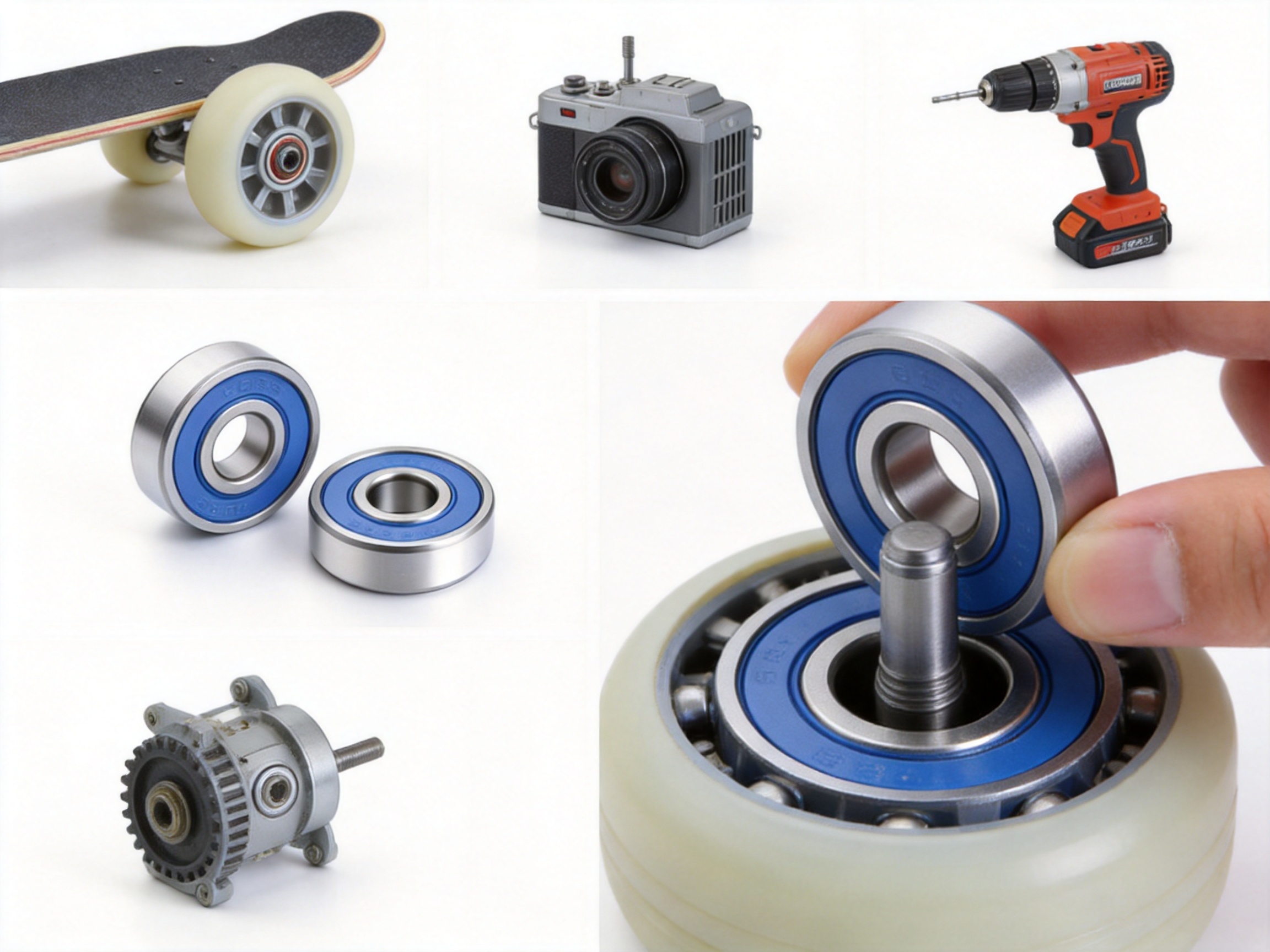
For skate and inline-skate applications, the bearing’s dimensions are particularly practical. The bearing can be installed inside wheels designed around the 608 standard, allowing smooth wheel rotation while maintaining a compact hub arrangement. In small motors, the bearing supports a rotating shaft while limiting the amount of space required inside the end shield or housing. In power tools, its small profile can assist with the design of compact rotating assemblies where weight, portability, and ergonomic handling are important.

Dimensional consistency is just as important as nominal compactness. If the bore, outside diameter, or width varies excessively, the bearing may not seat correctly, may develop uneven preload, or may create alignment problems during assembly. Advanced manufacturing controls help ensure that the finished product remains within the dimensional and geometric requirements expected of a standardized 608 bearing.

GCr15 Bearing Steel and Material Reliability

The supplied bearing material is GCr15 bearing steel. GCr15 is a high-carbon chromium bearing steel widely used for inner rings, outer rings, and rolling elements. Its popularity comes from a useful combination of hardness, wear resistance, fatigue strength, dimensional stability, and suitability for precision heat treatment.

A bearing raceway is exposed to repeated contact stress every time a rolling ball passes over it. Even in a small bearing, the contact area between the ball and raceway is extremely small, which means that localized stresses can be high. The material must therefore resist plastic deformation, surface fatigue, pitting, cracking, and abrasive wear. Properly processed GCr15 provides the hardness and structural characteristics needed for this demanding contact environment.

Material quality begins before machining. Consistent steel chemistry, appropriate cleanliness, controlled raw-material sourcing, and proper forming methods all influence final bearing performance. Nonmetallic inclusions, segregation, pores, or other material irregularities can become fatigue initiation points if they are not adequately controlled. A professional bearing manufacturer therefore treats material selection and incoming inspection as essential parts of the quality system rather than as secondary procedures.

GCr15 also responds well to controlled heat treatment. The goal is to establish a hardened working structure while maintaining suitable toughness and dimensional stability. Excessive hardness without adequate toughness can make components vulnerable to cracking. Insufficient hardness can accelerate wear and raceway deformation. A carefully managed heat-treatment process seeks to balance these properties according to the size, application, and expected operating conditions of the bearing.

Precision Manufacturing Process

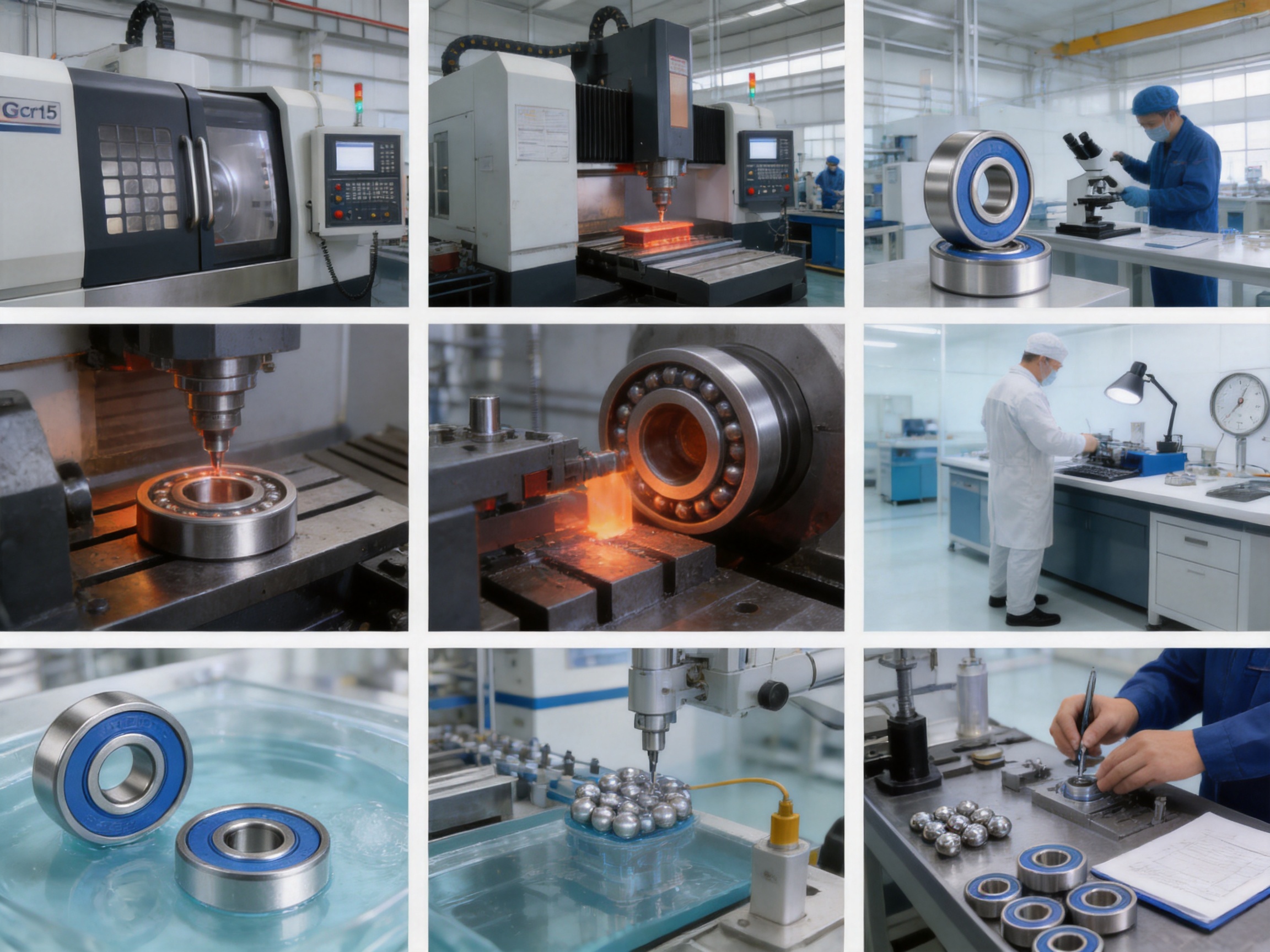
Raw Material Inspection

The manufacturing process begins with the inspection of bearing steel and other incoming materials. Chemical composition, surface condition, dimensional condition, and material certificates may be reviewed according to the company’s quality procedures. Consistent raw material provides a stable foundation for subsequent forging, turning, heat treatment, grinding, and assembly operations.

Inspection at this stage helps prevent defective material from entering the production line. It also supports process traceability, which is valuable when customers require batch identification, quality documentation, or investigation of an unexpected field issue.

Ring Forming and Turning

The inner and outer rings are formed and machined to create the basic geometry of the bearing. Turning operations establish the ring profiles, bore, outside diameter, width, shoulders, and other reference surfaces. Accurate turning reduces the amount of material that must be removed during grinding and helps ensure that the final components are stable during later operations.

At this stage, control of concentricity and reference surfaces is important. The inner-ring bore must be accurately related to the raceway, and the outer diameter must be correctly related to the outer raceway. Errors in these relationships may create eccentric rotation, uneven load distribution, vibration, or increased noise.

Heat Treatment

Heat treatment is one of the most important stages in the production of bearing components. GCr15 rings and rolling elements require a carefully controlled thermal cycle to develop the necessary hardness, microstructure, wear resistance, and fatigue performance. Heating temperature, holding time, cooling method, and tempering conditions must be controlled within appropriate limits.

After hardening, tempering is used to reduce excessive internal stresses and improve the balance between hardness and toughness. The final result should provide a durable working surface capable of withstanding repeated rolling contact. Heat-treatment records, furnace monitoring, sample testing, and hardness checks contribute to process stability.

Because heat treatment can cause dimensional change, it must be followed by precision grinding and inspection. Professional manufacturers account for expected distortion during earlier machining stages and use later operations to achieve the final dimensional requirements.

Raceway and Surface Grinding

Grinding operations refine the raceways and other critical surfaces after heat treatment. The raceway geometry affects rolling smoothness, contact stress, noise, vibration, and service life. A smooth and accurately formed raceway helps the balls travel with minimal sliding and irregular contact.

Surface finish is also essential. Rough or damaged raceways can increase friction, generate noise, retain abrasive particles, and accelerate fatigue. Precision grinding, suitable grinding wheels, controlled coolant, and careful dressing practices are used to create the required surface condition. Grinding burns, cracks, excessive waviness, and other surface defects must be controlled because they can significantly reduce bearing life.

Rolling Element Production

The balls used in the 608-2RS are manufactured and selected to match the precision requirements of the rings. Important characteristics include diameter variation, roundness, surface finish, hardness, and consistency within a set. If the balls differ excessively in size or shape, the load may not be distributed evenly around the bearing.

Accurate balls support smooth rotation and help maintain predictable internal clearance. They also reduce the likelihood of localized contact stress, vibration, and noise. In miniature bearings, small dimensional variations can have a relatively large effect because the overall bearing geometry is compact and the internal clearances are carefully controlled.

Cleaning and Assembly

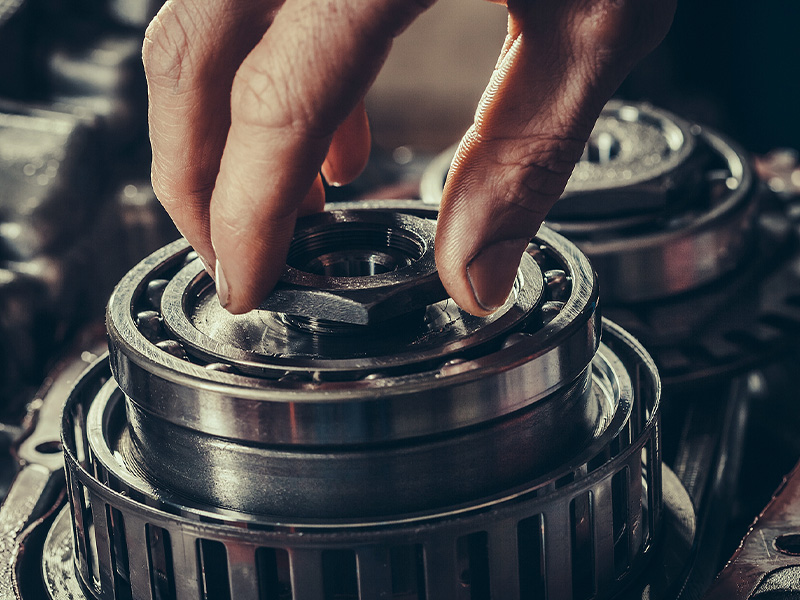
After grinding, components must be thoroughly cleaned to remove abrasive residue, chips, metal particles, and other contaminants. Clean assembly is especially important because contamination inside a bearing can damage raceways and rolling elements quickly. Assembly takes place under controlled procedures so that the rings, balls, cage, and sealing or shielding components are correctly positioned.

The internal clearance must be suitable for the intended operating conditions. Clearance allows the bearing to accommodate thermal expansion, shaft and housing tolerances, and operating loads. If clearance is too small, the bearing may run hot or develop excessive preload. If it is too large, vibration, noise, and uneven load distribution may increase.

Lubrication and Sealing or Shielding

Lubrication reduces friction and protects the rolling contacts from wear. The lubricant must be compatible with the bearing materials, expected speed, operating temperature, and application environment. The correct quantity is also important. Too little lubricant may cause premature wear, while too much may increase churning, temperature, and rotational resistance.

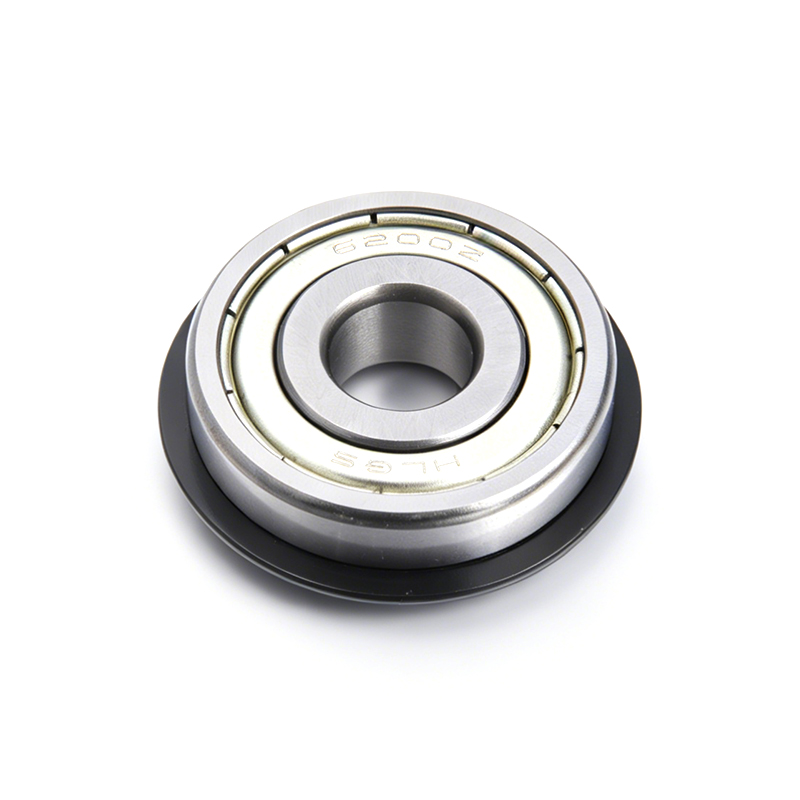
The supplied specifications list double metal shields as ZZ. Metal shields help limit the entry of larger dust particles and retain lubricant while generally providing low contact resistance because they do not normally rub directly against the inner ring. They are often appropriate for clean or moderately protected applications such as many small motors, enclosed mechanisms, and certain wheel assemblies.

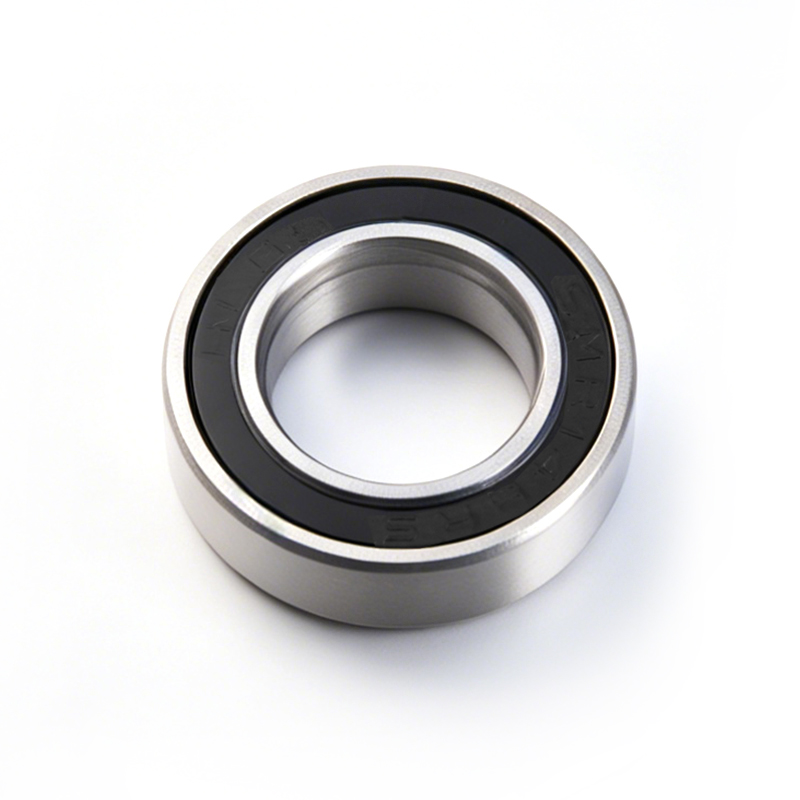
If the intended application is exposed to water spray, fine dust, mud, or aggressive contaminants, a contact-sealed 2RS configuration may be more appropriate. The final order should clearly specify whether the required product uses rubber seals or metal shields. This distinction is a practical advantage in procurement because it prevents an otherwise similar bearing from being selected for the wrong environment.

Performance Advantages Over General-Purpose Alternatives

Reliable Radial Load Support

The 608-2RS has a listed dynamic load rating of 3,450 N and a static load rating of 1,420 N. These ratings provide a reference for evaluating the bearing’s ability to withstand repeated operating loads and stationary or shock-related loads. Actual application life depends on load magnitude, speed, lubrication, alignment, contamination, temperature, mounting quality, and other factors, but the ratings help engineers compare bearing options during preliminary design.

The deep groove geometry distributes radial loads through multiple balls and raceway contacts. This makes the bearing suitable for rotating shafts, skate wheels, small pulleys, fans, and motor assemblies. It can also accommodate moderate axial loading in either direction, making it more versatile than a bearing designed only for one type of load.

Low Friction and Smooth Rotation

Low friction is a major reason for selecting a miniature ball bearing instead of a plain bushing or an incorrectly sized rolling element. Reduced friction can improve energy efficiency, reduce heat generation, and support smoother motion. In skate applications, low rotational resistance contributes to easier rolling. In small motors, it can reduce the torque required to start and maintain rotation. In power tools, it can help support efficient transmission of motor power to the working mechanism.

Low friction depends on more than bearing type. Raceway finish, ball quality, internal clearance, lubrication, seal design, mounting accuracy, and shaft alignment all contribute. The precision manufacturing process described for this product is intended to create the conditions required for smooth and stable operation.

Compact Standardization

Compared with larger or specially engineered bearing arrangements, the standard 608 size simplifies design and replacement. Designers can create a housing around a known bore, outside diameter, and width. Maintenance teams can keep a familiar bearing size in stock, and distributors can support a broad group of applications with one widely recognized product format.

This standardization may provide a practical advantage over obscure or nonstandard alternatives. A custom bearing might satisfy one specific assembly, but it can increase tooling requirements, minimum order quantities, replacement lead times, and inventory complexity. The 608 format offers a widely adopted solution while preserving compact dimensions.

Material and Process Consistency

Low-cost bearings may appear similar externally but differ substantially in steel quality, heat treatment, raceway finish, internal clearance, lubrication, and inspection standards. The use of GCr15 bearing steel, controlled thermal processing, precision grinding, and systematic testing helps distinguish a professionally manufactured bearing from an unverified substitute.

Consistency matters particularly for original equipment manufacturers. A bearing that performs well in one sample but varies significantly between production batches can create assembly problems and warranty risk. Stable production procedures and documented quality systems support more predictable performance over repeated orders.

Application Suitability

Skateboards and Inline Skates

The 608 bearing is strongly associated with skateboards, roller skates, and inline skates because its dimensions fit many standard wheel designs. In these applications, the bearing experiences radial loads from the rider and wheel, rotational speed generated by travel, occasional impact loads, and exposure to dust or moisture depending on the surface conditions.

Proper installation is essential. The bearing should be pressed into the wheel using the outer ring when installing it into the wheel seat. When mounting a shaft through the inner ring, force should be applied to the inner ring rather than transmitted through the balls. Striking the bearing directly or pressing through the wrong ring can damage the raceways even before the product enters service.

Wheel alignment, spacer selection, axle tightening, and contamination control also affect performance. A high-quality bearing cannot compensate for a distorted wheel seat, bent axle, excessive side loading, or incorrect installation force. When correctly fitted, the compact bearing provides a smooth and repeatable rolling interface for recreational equipment.

Miniature Motors

Small motors used in fans, pumps, toys, appliances, automation equipment, and electronic devices often require bearings that occupy little radial and axial space. The 608 format can support a small rotor shaft while maintaining a compact motor housing. Its deep groove design can accommodate radial rotor loads and moderate axial forces caused by magnetic or assembly effects.

Motor applications also benefit from low friction and controlled vibration. Excessive bearing noise can become especially noticeable in small products because the bearing may be close to the user or attached to a lightweight housing. Smooth raceways, consistent balls, proper clearance, and suitable lubrication contribute to quiet operation.

Power Tools

Power tools place demanding requirements on small bearings. They may operate at high speed, experience vibration, encounter rapid load changes, and generate heat within a compact housing. The 608-2RS can be used in suitable low- to moderate-load mechanisms where its size and load rating meet the engineering requirements.

Tool designers should evaluate operating speed, temperature, duty cycle, shock loading, dust exposure, shaft fit, and housing fit. If the tool operates in a heavily contaminated environment, the sealing arrangement becomes especially important. Metal-shielded and rubber-sealed versions should not be treated as interchangeable without reviewing the application conditions.

Household Appliances and Electromechanical Devices

Household appliances often require compact, quiet, and economical components. Small fans, rotating mechanisms, actuators, dispensers, and other electromechanical assemblies may use miniature deep groove ball bearings to reduce friction and maintain shaft alignment. The standardized 608 size supports repeatable assembly and convenient service replacement.

In appliance design, attention should also be given to humidity, cleaning chemicals, operating temperature, acoustic requirements, and expected service intervals. Where corrosion resistance is important, stainless steel alternatives may be considered, although the supplied product specification identifies GCr15 bearing steel as the standard material.

Mechanical Transmission Systems

Small pulleys, rollers, guide mechanisms, belt systems, and compact transmission devices can benefit from the bearing’s combination of radial support and low friction. Its compact width helps reduce the size of rotating assemblies, while its standardized geometry allows designers to use established shaft and housing tolerances.

The bearing should be selected only after calculating the actual combined radial and axial loads. If substantial axial load, severe misalignment, high shock, or extreme temperature is expected, another bearing arrangement may be more appropriate. The strength of the 608 design lies in its versatility within the range for which it was intended.

Quality Management and Manufacturing Strengths

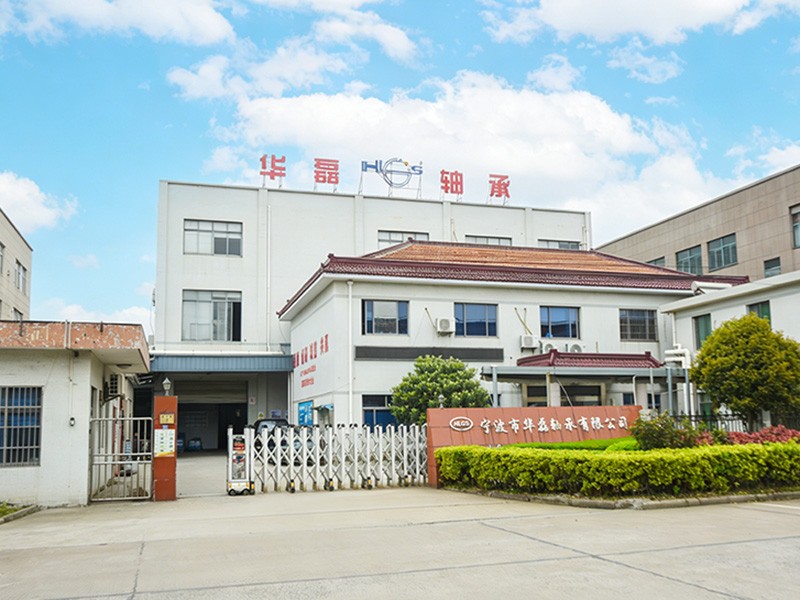
Ningbo Zhenhai Hualei Bearing Co., Ltd. was established in 2001 and specializes in miniature deep groove ball bearings. With more than two decades of industry experience, the company has developed production and quality practices for bearings used in food machinery, household appliances, automotive electromechanical systems, electric tools, mechanical transmission equipment, and motors.

The company operates under the HLGS registered trademark and has stated that its products are tested with advanced equipment. Its management systems follow ISO 9001 and ISO/TS 16949 requirements. ISO 9001 emphasizes structured quality management, process control, customer focus, corrective action, and continual improvement. ISO/TS 16949, historically associated with automotive quality requirements, places additional emphasis on defect prevention, process capability, traceability, and consistent production performance.

These management principles are relevant to miniature bearing customers because bearing quality cannot be judged only by appearance. A systematic quality organization helps connect raw-material control, machine maintenance, process parameters, inspection records, nonconformance handling, and customer feedback. This approach is particularly useful for OEM and ODM projects where a bearing must remain consistent across many production batches.

In 2016, the company established Ningbo Hotex Mechanical & Electrical Technology Co., Ltd. as its import and export department. This structure supports international customer communication, export coordination, OEM and ODM services, and technical cooperation with customers in different markets. For overseas buyers, a dedicated import and export function can simplify quotation, documentation, packaging coordination, order tracking, and shipment arrangements.

The company’s long-term focus on miniature deep groove ball bearings is another potential advantage. A manufacturer specializing in a product category can develop more focused process knowledge than a general trading organization. Experience with miniature bearing production may include better understanding of raceway geometry, internal clearance, seal or shield installation, lubrication quantities, noise control, and application-specific quality requirements.

OEM and ODM Support

OEM customers may require a standard 608 bearing with specific packaging, grease, clearance, shield, seal, noise, or inspection requirements. ODM customers may need assistance selecting a bearing for a new product or adapting the bearing configuration to a particular operating environment. A manufacturer with established production capabilities can review these requirements and help define a suitable specification.

OEM and ODM cooperation should begin with a clear technical document. The document should identify the bearing designation, dimensions, material, internal clearance, sealing or shielding arrangement, lubricant, load requirements, speed range, operating temperature, packaging, marking, and inspection standard. If the application involves dust, water, chemicals, vibration, or electrical considerations, these conditions should also be described.

For the 608 product, special attention should be given to the distinction between 2RS rubber seals and ZZ metal shields. This is one of the most important specification details because the two arrangements have different friction and contamination-protection characteristics. Clear drawings, samples, approval procedures, and batch records can reduce the risk of misunderstanding during OEM production.

Installation and Maintenance Recommendations

Before installation, inspect the shaft and housing for burrs, damage, contamination, and dimensional problems. The shaft should be clean and properly finished, while the housing should provide the intended fit without distortion. A bearing should not be forced into an incorrectly sized or misaligned seat.

Use suitable tools that apply force to the ring being fitted. If the bearing is being pressed onto a shaft through the inner ring, apply force to the inner ring. If the bearing is being installed into a housing through the outer ring, apply force to the outer ring. Applying installation force through the balls can create indentations in the raceways and lead to premature noise or failure.

Do not use a hammer directly on the bearing rings. If a press is unavailable, use an appropriate installation sleeve and apply controlled, even force. Avoid excessive axle tightening in skate applications because excessive clamping force can reduce internal clearance and increase rotational resistance.

Keep the bearing in its original packaging until installation. Avoid handling precision raceways with dirty hands or contaminated tools. Do not wash a pre-lubricated bearing unless a qualified procedure specifically requires it. Removing the factory lubricant or damaging a shield or seal can substantially reduce service life.

During maintenance, inspect for unusual noise, roughness, play, overheating, corrosion, or inconsistent rotation. A bearing that has experienced water entry, severe contamination, impact, or deformation should generally be replaced rather than reused. Because the 608 bearing is standardized and widely available, planned replacement is often more economical than attempting to restore a damaged miniature bearing.

How to Select the Correct Configuration

Selection should begin with the operating environment. For clean, enclosed mechanisms where low friction is important, a metal-shielded version may be appropriate. For applications exposed to dust, water spray, or fine particles, a contact-sealed version may provide stronger protection. For corrosive environments, stainless steel may be considered, although its load and fatigue characteristics should be evaluated against the standard GCr15 option.

Next, calculate the bearing loads and compare them with the dynamic and static load ratings. Consider not only the steady operating load but also starting loads, impact loads, belt tension, wheel loading, assembly forces, and possible overloads. Determine whether the bearing will experience primarily radial loading or whether axial forces are also significant.

Speed and temperature should then be reviewed. Higher speed increases frictional heat and places greater demands on lubrication, balance, clearance, and seal design. Temperature can reduce lubricant life and influence internal clearance. If the bearing is installed in a motor or tool with limited cooling, thermal analysis may be necessary.

Finally, evaluate installation tolerances, shaft and housing materials, maintenance access, expected service life, and replacement requirements. A bearing is part of a system, and good system design requires the bearing, shaft, housing, lubricant, seals, and load path to work together.

Purchasing and Technical Communication

When requesting a quotation, customers should provide more than the basic number 608-2RS. The inquiry should identify the exact required seal or shield, material, clearance, grease, quantity, packaging, application, and delivery requirements. If the supplied specification is to be followed exactly, the buyer should confirm how the manufacturer defines the 2RS designation and whether the requested product is fitted with metal shields or rubber seals.

For repeated orders, customers may request a control plan, inspection report, material confirmation, sample approval, batch traceability, and packaging photographs where appropriate. These documents help establish a common understanding between manufacturer and buyer and support stable quality over time.

Communication is especially important when the bearing is being used in an export product. Labeling, carton strength, moisture protection, product identification, and documentation should be agreed before production. A manufacturer experienced in international cooperation can help coordinate these requirements and reduce delays.

Environmental and Service-Life Considerations

Long service life reduces replacement frequency, maintenance labor, and the consumption of additional components. Precision manufacturing, correct lubrication, effective contamination control, and proper installation all contribute to this objective. However, no bearing can provide unlimited service life under unsuitable conditions. Excessive load, poor alignment, contamination, inadequate lubrication, electrical damage, or improper fitting can shorten life regardless of brand or material.

For equipment manufacturers, selecting a bearing with adequate capacity rather than the lowest initial price may reduce total ownership cost. A bearing that produces less vibration and operates consistently can also help protect adjacent components, reduce noise complaints, and support a more reliable finished product.

GCr15 steel is a practical standard material for many general-purpose applications. Where the environment requires higher corrosion resistance, customers should discuss stainless steel or other specialized materials with the manufacturer. Material changes may affect load ratings, hardness, magnetic behavior, and cost, so they should be evaluated as part of the complete design rather than treated as a simple substitution.

Frequently Asked Questions

What does the 608 bearing number mean?

The number 608 identifies a standardized deep groove ball bearing size. The supplied dimensions are an 8 mm bore, 22 mm outside diameter, and 7 mm width. These dimensions make the bearing suitable for many small rotating assemblies.

Is the 608-2RS a rubber-sealed or metal-shielded bearing?

The supplied product information identifies the bearing as 608-2RS but lists double metal shields, or ZZ, in the seal field. In common bearing terminology, 2RS often means two rubber contact seals, while ZZ means two metal shields. Buyers should confirm the exact configuration with the manufacturer before ordering.

What material is used for this bearing?

The listed material is GCr15 bearing steel. This high-carbon chromium steel is widely used for bearing rings and rolling elements because it can provide high hardness, wear resistance, and rolling-contact fatigue performance when properly heat treated.

What are the bearing’s load ratings?

The supplied dynamic load rating is 3,450 N, and the supplied static load rating is 1,420 N. These values are reference ratings rather than guarantees of a specific service life. Actual performance depends on load, speed, lubrication, alignment, contamination, temperature, and installation quality.

Can the bearing be used in skateboards and inline skates?

Yes. The 608 size is widely used in skateboards, roller skates, and inline skates. The bearing should be installed carefully, with forces applied to the correct ring, and the axle should not be tightened so severely that the bearing develops excessive preload.

Can it be used in a power tool?

It may be suitable for a power-tool assembly when the speed, temperature, load, contamination level, and service conditions are within the bearing’s capabilities. The designer should verify the required load and speed and select the correct seal or shield configuration for the tool environment.

What is the advantage of a deep groove design?

A deep groove design primarily supports radial loads and can also accommodate moderate axial loads in either direction. This makes it versatile for shafts, wheels, motors, pulleys, fans, and compact transmission systems.

How does GCr15 compare with stainless steel?

GCr15 is a common high-performance bearing steel offering strong hardness, wear resistance, and fatigue capability. Stainless steel can provide improved corrosion resistance in suitable applications, but its load capacity and hardness may differ. The best choice depends on the operating environment and design priorities.

Why is manufacturing precision important for a small bearing?

Miniature bearings operate with small clearances and highly concentrated rolling contact. Small errors in roundness, raceway geometry, ball size, or alignment can increase noise, vibration, friction, and wear. Precision grinding, controlled heat treatment, clean assembly, and inspection are therefore essential.

What quality systems does the manufacturer follow?

The company information states that the manufacturer follows ISO 9001 and ISO/TS 16949 management systems and uses advanced testing equipment. These systems support process control, quality assurance, defect prevention, traceability, and continual improvement.

Does the manufacturer offer OEM and ODM services?

Yes. The company information states that OEM and ODM services are available through its import and export department. Customers should provide detailed requirements for dimensions, material, clearance, lubrication, seal or shield type, packaging, and application conditions.

How should a 608 bearing be installed?

Use a suitable press or installation sleeve and apply force only to the ring being fitted. Do not strike the bearing directly or transmit installation force through the rolling elements. Check shaft and housing dimensions before installation and keep all components clean.

How can bearing life be improved?

Use the correct bearing configuration, maintain proper alignment, avoid overloads, protect the bearing from contamination, use suitable lubrication, and follow correct installation procedures. Regular inspection for noise, vibration, heat, corrosion, and play can also help identify problems before they damage surrounding components.

Conclusion

The 608-2RS Deep Groove Ball Bearing is a compact and adaptable solution for applications that require reliable rotation in limited space. Its 8×22×7 mm dimensions, GCr15 bearing steel construction, deep groove geometry, and listed load ratings make it suitable for skate equipment, miniature motors, power tools, household appliances, and small mechanical transmission systems.

Its principal advantages include standardized dimensions, efficient space utilization, low-friction operation, broad application compatibility, and the ability to support radial loads along with moderate axial forces. These advantages become more meaningful when supported by controlled material selection, heat treatment, precision grinding, clean assembly, appropriate lubrication, and systematic inspection.

The manufacturer’s experience in miniature deep groove ball bearings, stated ISO 9001 and ISO/TS 16949 management systems, advanced testing practices, and OEM and ODM capabilities provide a foundation for cooperation with equipment manufacturers and distributors. For the best result, customers should clearly confirm the seal or shield arrangement, particularly because the supplied information uses the 608-2RS designation while listing double metal shields as ZZ.

When correctly specified, installed, and maintained, this miniature bearing can help equipment designers achieve smooth motion, compact construction, dependable shaft support, and efficient long-term operation.

References

International Organization for Standardization. ISO 9001, Quality Management Systems—Requirements.

International Organization for Standardization. ISO/TS 16949, Quality Management Systems—Particular Requirements for the Application of ISO 9001 for Automotive Production and Relevant Service Part Organizations.

International Organization for Standardization. ISO 15, Rolling Bearings—Radial Bearings—Boundary Dimensions, General Plan.

International Organization for Standardization. ISO 76, Rolling Bearings—Static Load Ratings.

International Organization for Standardization. ISO 281, Rolling Bearings—Dynamic Load Ratings and Rating Life.

Timken. Rolling Bearing Catalog and Engineering Guidelines.

SKF. Rolling Bearings Catalogue and Bearing Maintenance Principles.

Product specifications and company information supplied for the 608-2RS Deep Groove Ball Bearing.

Product: 608-2RS Deep Groove Ball Bearing for Ideal for Skate, Power Tool and Mini Motor


Recent Articles