Amina Shen — Customer Support and Sales Specialist
Home / Author / Amina Shen — Customer Support and Sales Specialist / 688ZZ Deep Groove Ball Bearing: Compact Performance for Precision and Light-Duty Equipment

688ZZ Deep Groove Ball Bearing: Compact Performance for Precision and Light-Duty Equipment

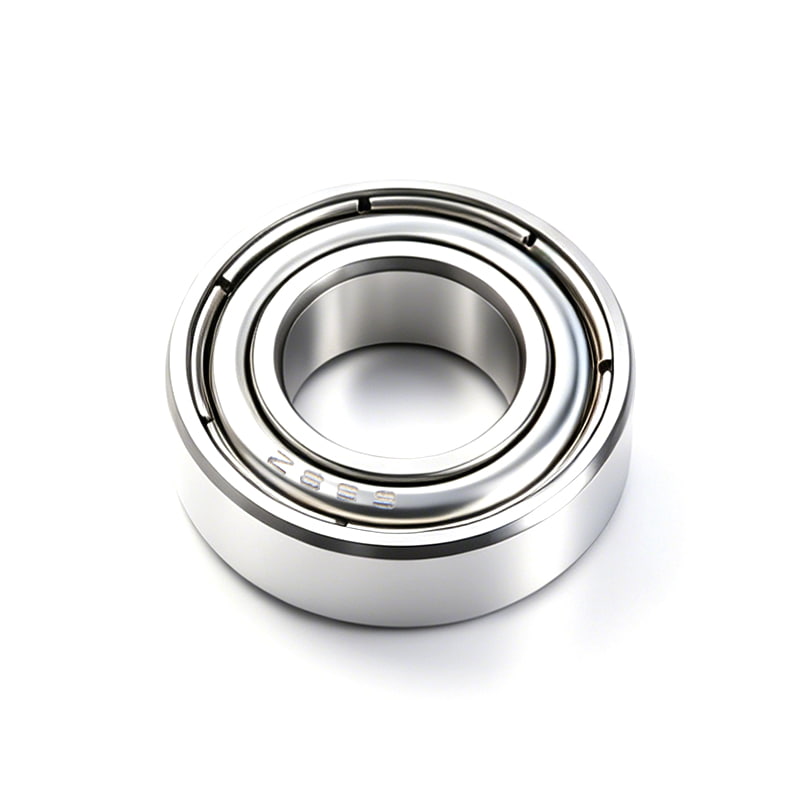
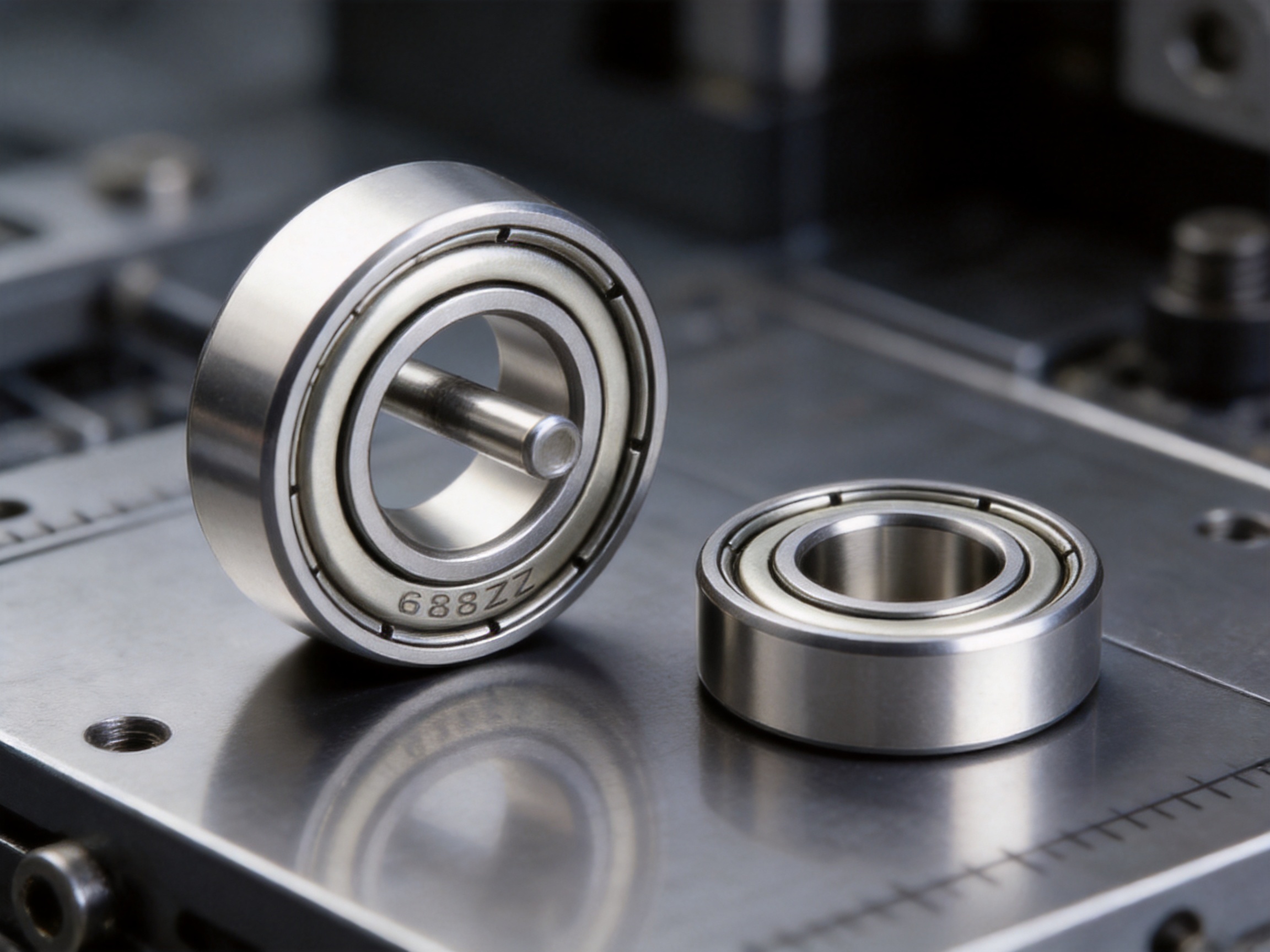
The 688ZZ deep groove ball bearing is a miniature bearing engineered for applications where limited installation space, smooth rotation, low friction, and dependable service are essential. With an 8 mm bore, 16 mm outside diameter, and 5 mm width, this compact bearing provides a practical solution for equipment designers who need reliable radial support without adding unnecessary size or weight to an assembly.

Although miniature bearings are small in physical form, their performance requirements can be demanding. A bearing installed in a miniature motor, office machine, electric toy, precision instrument, or small household appliance may rotate at high speed while operating in a confined space. It must maintain stable movement, limit frictional losses, protect its internal raceway and balls from contamination, and provide consistent service over repeated operating cycles. The 688ZZ is designed around these requirements.

Its single-row deep-groove configuration supports radial loads and limited axial loads in both directions. Double metal shields, identified by the ZZ suffix, help prevent dust and other external particles from entering the bearing while helping retain the factory-applied grease. Manufactured from GCr15 bearing steel, the bearing combines a compact design with the hardness, fatigue resistance, and dimensional stability expected from a standard miniature bearing.

The bearing has a grease-lubricated limiting speed of up to 36,000 revolutions per minute under suitable operating conditions. Its dynamic load rating is 1,260 N, while its static load rating is 590 N. These values make it appropriate for light-duty and moderate-duty miniature mechanisms in which smooth and efficient rotation is more important than the ability to carry extremely high loads.

Product Overview

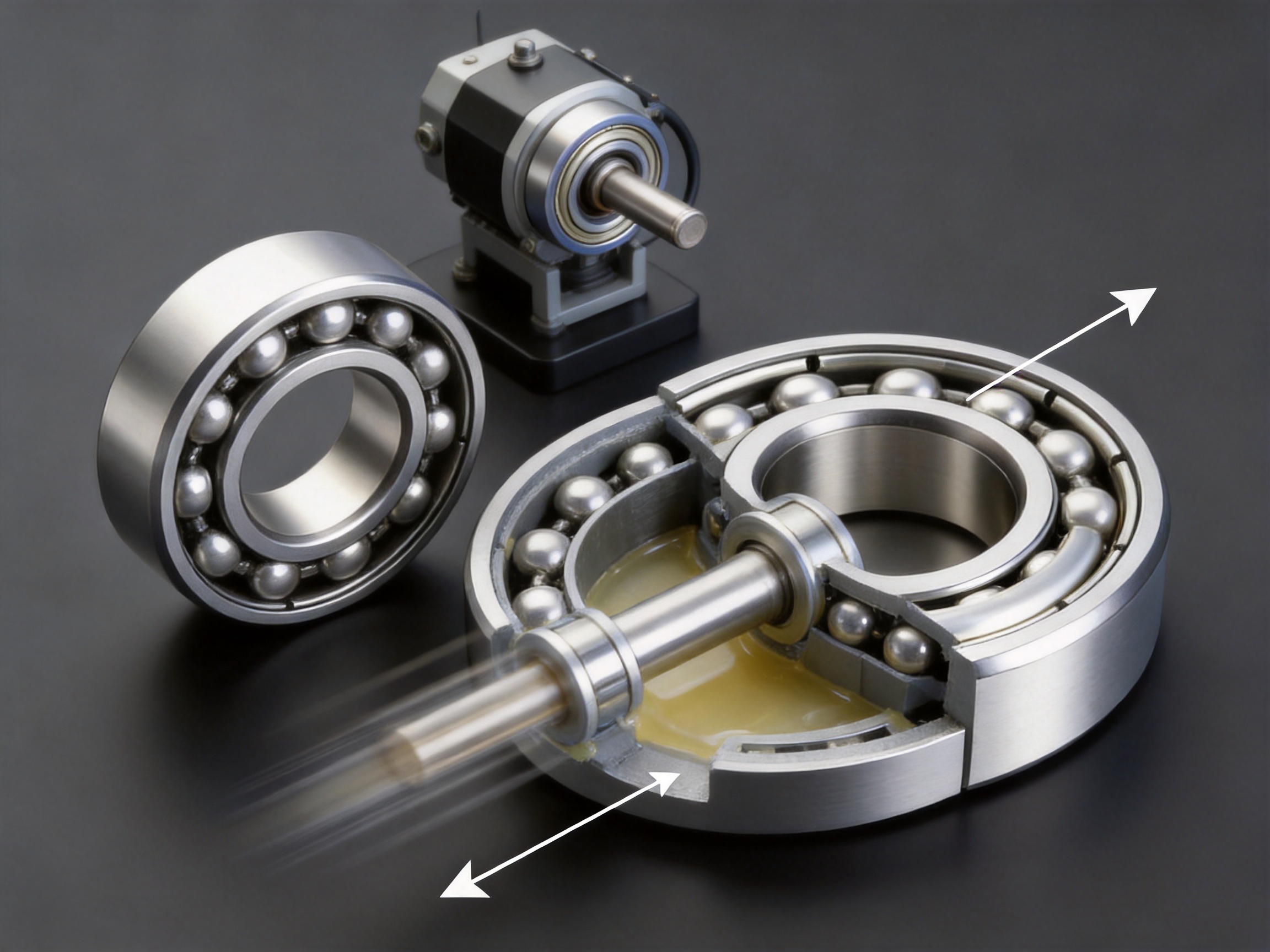
The 688ZZ is a standard miniature single-row deep-groove ball bearing. Its internal arrangement consists of precision-formed raceways, rolling balls, a cage, and double metal shields. The inner ring rotates with the shaft, while the outer ring is normally fitted into a housing or support structure. As the shaft turns, the balls roll between the two raceways, reducing sliding contact and allowing smooth rotational movement.

The designation “688” identifies the bearing size and basic series. The suffix “ZZ” indicates that both sides are protected by non-contact metal shields. This configuration is widely used when an application requires contamination protection and grease retention but does not require a contact seal with the additional friction that a rubber seal can introduce.

Because the bearing is only 5 mm wide, it can be integrated into assemblies where standard-size bearings would be too large. Its 8 mm bore is suitable for small shafts, and the 16 mm outside diameter allows it to fit into compact bearing seats. The combination of these dimensions gives designers flexibility when developing small motors, miniature gear systems, rotating displays, small fans, electronic mechanisms, and precision devices.

ParameterSpecification
Bearing number688ZZ
Bearing typeSingle-row deep-groove ball bearing
Bore diameter8 mm
Outside diameter16 mm
Width5 mm
Shield configurationDouble metal shields, ZZ
Dynamic load rating1,260 N
Static load rating590 N
MaterialGCr15 bearing steel
Grease-lubricated limiting speed36,000 rpm

The stated ratings and speed capability should always be evaluated together with the application’s actual load, speed, temperature, lubrication, shaft fit, housing fit, alignment, and operating environment. A bearing’s performance in service depends not only on its nominal specifications but also on the quality of the surrounding design and installation process.

Compact Dimensions for Space-Constrained Designs

One of the clearest advantages of the 688ZZ is its compact envelope. In miniature equipment, every millimeter can influence the final product size, internal layout, weight, and manufacturing cost. A bearing with an 8 mm bore and 16 mm outside diameter can provide a stable shaft support point without requiring a large housing or a substantial structural frame.

The 5 mm width is particularly useful in axial layouts where several components must be positioned close together. Designers can place gears, spacers, collars, rotors, pulleys, or small impellers near the bearing while keeping the assembly short. This can contribute to reduced equipment dimensions and may also simplify the arrangement of adjacent components.

Compared with larger bearings, the 688ZZ requires less installation space and generally has lower mass. This can be beneficial in portable devices, battery-powered products, compact actuators, and miniature motors in which rotating inertia and total weight are important design considerations. The bearing’s small size also enables manufacturers to use more compact packaging, frames, and support brackets.

However, compact dimensions should not be interpreted as unlimited load capacity. The 688ZZ is best suited to light-duty applications and appropriately sized mechanical systems. Designers should confirm that the bearing’s dynamic and static load ratings provide sufficient margin for the combined radial and axial forces generated during normal operation, start-up, stopping, vibration, and occasional shock.

Deep-Groove Geometry and Load Support

The deep-groove design is one of the most versatile bearing configurations used in rotating machinery. The raceway geometry allows the bearing to support radial loads while also accommodating limited axial loads from either direction. This makes the 688ZZ more flexible than a bearing designed only for one specific load direction.

Radial loads act perpendicular to the shaft axis. In a miniature motor, for example, radial force may result from rotor imbalance, belt tension, gear engagement, fan loading, or the weight of a rotating component. The 688ZZ distributes this load through the balls and raceways, allowing the shaft to rotate with reduced friction.

Axial loads act parallel to the shaft axis. In compact mechanisms, these forces may be generated by helical gears, thrust from a small impeller, assembly tolerances, or the movement of an attached component. The 688ZZ can accommodate light axial loads in both directions, although excessive axial force can shorten bearing life and increase operating temperature.

The single-row arrangement provides a practical balance between compactness and load support. A multi-row bearing could provide higher capacity, but it would usually require more installation space and may be unnecessary for a light-duty mechanism. For applications that require a small, general-purpose support bearing, the single-row deep-groove configuration is an efficient choice.

Double Metal Shields for Practical Protection

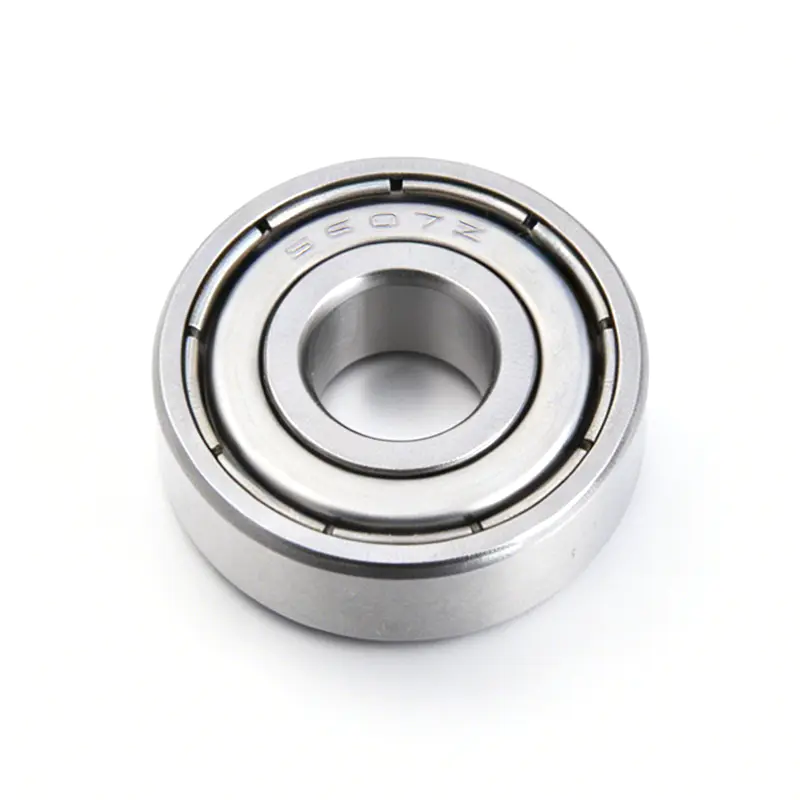
The ZZ configuration means that the bearing is fitted with metal shields on both sides. These shields create a barrier against dust, particles, and general environmental contamination. They also help keep the factory-applied grease inside the bearing during normal service.

Metal shields are non-contact components. Unlike contact seals, they normally do not rub directly against the inner ring. This contributes to low friction and supports high-speed operation. For applications in which rotational efficiency, quiet running, and speed are important, the non-contact shield design can provide a useful performance advantage over more heavily contacting sealing arrangements.

The shields are not intended to make the bearing completely waterproof or suitable for severe contamination without additional protection. If the bearing is exposed to liquid, abrasive dust, chemicals, washdown procedures, or outdoor weather, the machine designer may need to use external covers, labyrinth structures, protective housings, or a different sealing configuration. Nevertheless, for clean or moderately dusty indoor equipment, the ZZ arrangement offers a practical combination of protection and low running resistance.

Double-sided protection is also helpful during handling, storage, and installation. Both sides of the bearing are shielded, so the installer does not need to orient one protected side toward a particular direction. This simplifies assembly and reduces the risk of installing the bearing incorrectly.

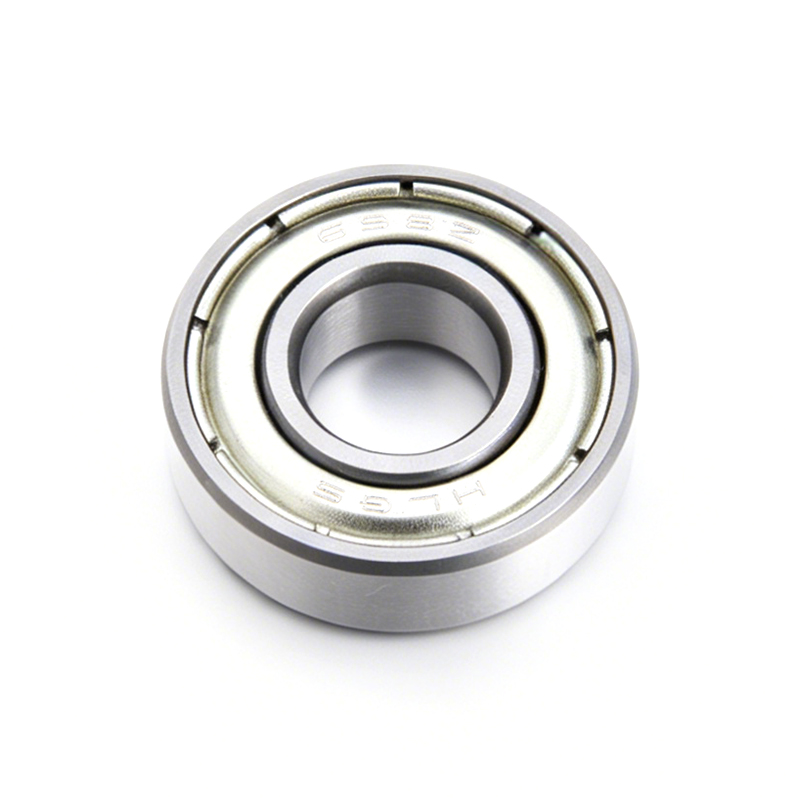
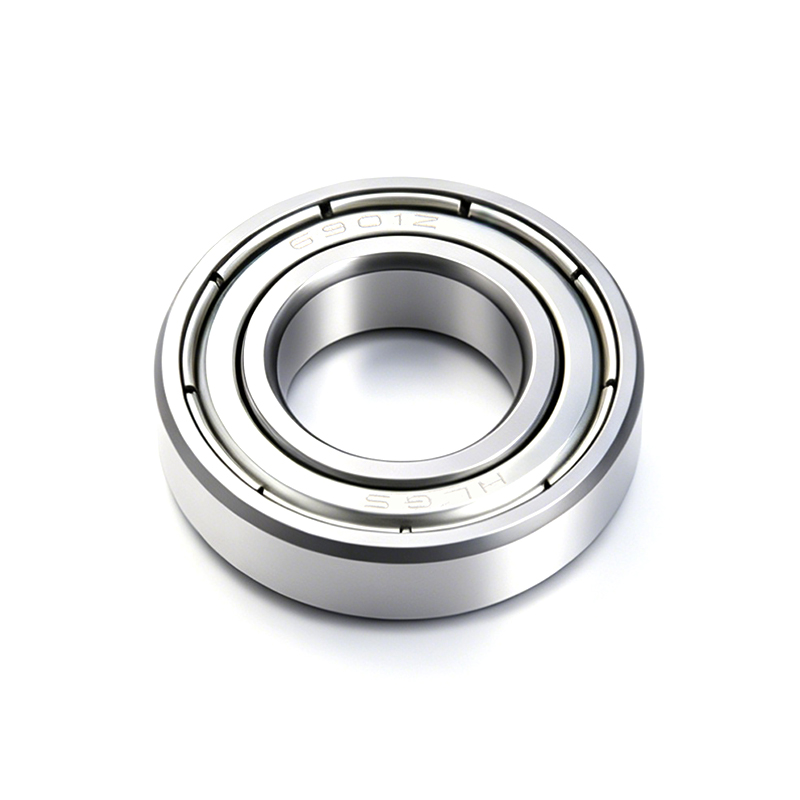
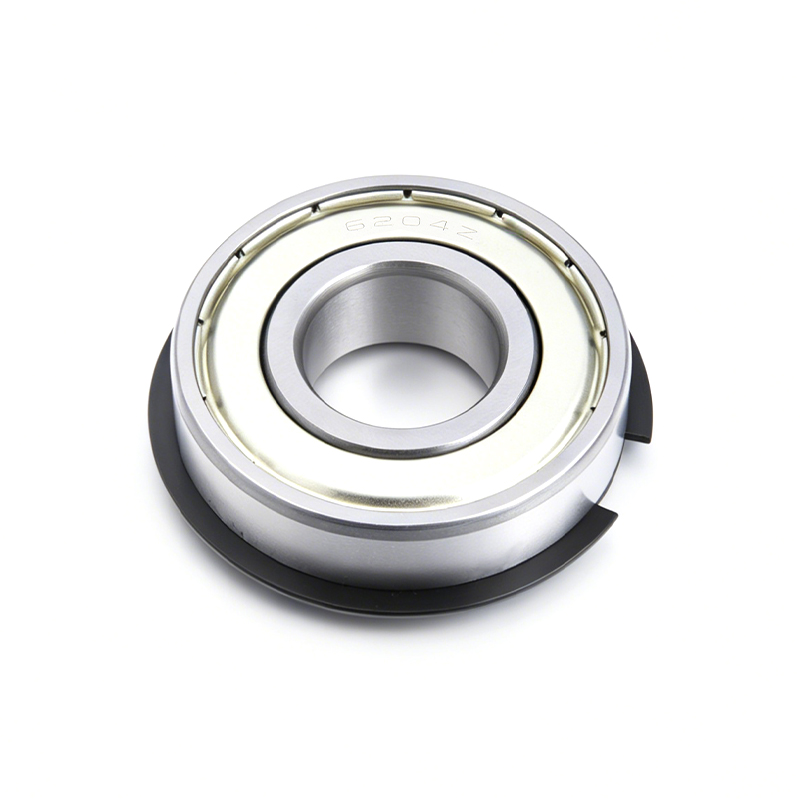
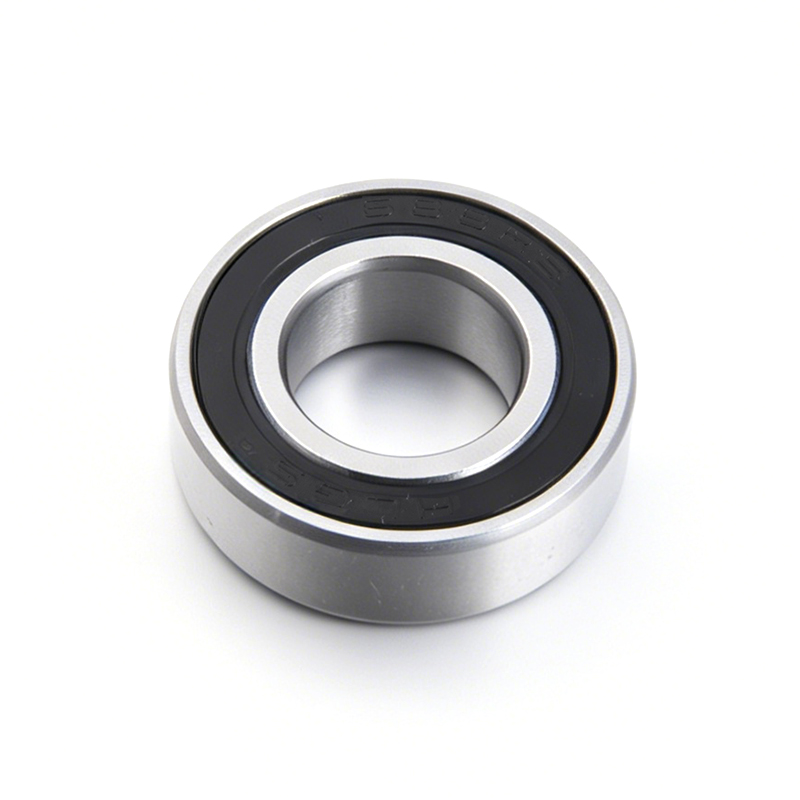
688ZZ Deep Groove Ball Bearing Features a Compact Design Ideal for Light-Duty Applications

GCr15 Bearing Steel and Material Reliability

The 688ZZ is manufactured from GCr15 bearing steel. This high-carbon chromium bearing steel is widely used for rings and rolling elements because it can achieve the hardness, wear resistance, and structural consistency needed for rolling-contact applications.

In a ball bearing, the rings and balls repeatedly experience concentrated contact stress. The contact area between a ball and a raceway is very small, so the local pressure can be high even when the overall bearing is carrying a relatively modest load. A suitable bearing steel helps the raceways and rolling elements resist permanent deformation, surface wear, and rolling-contact fatigue.

Material selection also affects dimensional stability. Miniature bearings have small raceways and closely controlled internal geometry. Variations in hardness, cleanliness, heat treatment, or microstructure can influence noise, vibration, load capacity, and service life. The use of an established bearing material provides a consistent foundation for the manufacturing and quality-control process.

GCr15 steel is not a substitute for correct application design. Excessive contamination, improper mounting, insufficient lubrication, misalignment, electrical current passage, or overloading can damage a bearing regardless of its material. The material provides the necessary performance potential, while correct design and handling are required to realize that potential in service.

High-Speed Performance and Low Friction

The 688ZZ has a grease-lubricated limiting speed of 36,000 rpm. This high speed capability is valuable in miniature motors, small blowers, compact fans, dental or laboratory mechanisms, office equipment, and other systems where a small shaft rotates rapidly.

Several features support high-speed operation. The bearing’s small dimensions reduce the mass of the rolling elements. Its single-row construction limits internal complexity. The non-contact metal shields help control contamination without adding substantial seal friction. The deep-groove arrangement provides stable rolling contact when the bearing is properly aligned and loaded.

High-speed performance is also influenced by grease selection and fill quantity. Grease must provide suitable viscosity, adhesion, temperature resistance, and mechanical stability for the intended speed. Too much grease can increase churning and heat generation, while unsuitable grease can separate, dry out, or lose its lubricating properties. The stated limiting speed should therefore be treated as a reference value rather than a universal operating speed for every installation.

Low friction is important for both performance and energy consumption. In a miniature motor, unnecessary bearing resistance can reduce available output, increase power consumption, raise operating temperature, and limit battery life. In precision instruments, excessive friction can affect positioning accuracy or create unwanted variation in movement. The 688ZZ is designed to provide smooth rotation with low mechanical resistance when operating conditions are suitable.

Low friction can also help reduce noise. Rolling bearings are not completely silent, and noise depends on raceway quality, ball accuracy, cage movement, lubrication, shaft geometry, mounting, and surrounding structure. However, precision manufacturing, suitable lubrication, and a non-contact shield configuration can contribute to quiet operation in appropriately designed equipment.

Load Ratings and Application Evaluation

The 688ZZ has a dynamic load rating of 1,260 N and a static load rating of 590 N. These values help engineers assess whether the bearing is appropriate for a particular application.

The dynamic load rating is used in calculations associated with bearing life under rotating load. It does not mean that the bearing should continuously operate at that force in every situation. Bearing life is affected by the magnitude and direction of the load, rotational speed, lubrication, contamination, alignment, operating temperature, and installation quality.

The static load rating relates to load conditions in which the bearing is stationary or rotating at very low speed. It helps evaluate the risk of excessive permanent deformation at the rolling contacts. Static capacity is important when the bearing experiences shock loads, vibration while stopped, heavy start-up loads, or intermittent loading.

For an engineering selection, the designer should identify the radial load, axial load, speed, duty cycle, ambient temperature, required service life, and environmental conditions. The combined load should then be compared with the bearing’s capability using recognized bearing-selection methods. A suitable safety margin is recommended, particularly where shock, vibration, uncertain loading, or difficult installation conditions are present.

The ratings make the 688ZZ suitable for many light-duty miniature mechanisms, but the bearing should not be selected solely because its dimensions fit. A physically compatible bearing may still be unsuitable if the load, speed, temperature, or contamination level exceeds its intended operating range.

Advantages Compared with General Miniature Bearing Options

The 688ZZ offers several practical advantages when compared with alternative miniature bearing configurations. The most important advantage is its balance of size, speed, protection, and general-purpose load capability.

Compared with open miniature bearings, the 688ZZ provides better protection against dust and helps retain grease through its two metal shields. Open bearings may be suitable for clean, enclosed assemblies where relubrication is easy, but they are more exposed during handling and operation. The shielded design reduces the likelihood of direct contamination reaching the rolling contacts.

Compared with contact-sealed bearings, the ZZ model can offer lower friction because the metal shields do not normally rub against the inner ring. This can be beneficial in high-speed applications or low-power equipment. Contact seals may provide stronger protection against moisture and contamination, but they can introduce additional rotational resistance and may generate more heat at high speed.

Compared with larger bearing series, the 688ZZ requires less radial and axial space. This supports smaller product designs and can reduce the size of associated components. The compact structure is especially useful where the bearing is one of several components installed around a small shaft.

Compared with specialized angular-contact or thrust bearings, the 688ZZ is a simpler and more economical choice for applications with primarily radial loading and only light axial loading. A specialized bearing may be necessary for high axial force, precision preload, or combined-load conditions, but it can also require more complex assembly and greater installation space.

Compared with low-grade miniature bearings, a bearing produced from GCr15 steel under controlled manufacturing and inspection conditions can provide a more dependable basis for consistent performance. The real advantage is not simply the material name; it is the combination of suitable material, controlled geometry, accurate assembly, clean handling, lubrication, and final inspection.

Manufacturing Strengths and Process Control

The performance of a miniature bearing is closely connected to the manufacturing process. Small bearings have limited physical dimensions, which means that small deviations in raceway geometry, ball size, shield position, or internal clearance can have a noticeable influence on noise, vibration, friction, and service life.

A professional manufacturing process begins with appropriate raw materials. GCr15 bearing steel must be selected and processed with attention to chemical composition, cleanliness, heat treatment, and mechanical properties. The rings and rolling elements require a controlled manufacturing route to achieve suitable hardness and dimensional stability.

Ring production typically includes forming or machining, turning, heat treatment, grinding, and superfinishing. The raceway surface must be accurately shaped and finished because it directly contacts the rolling elements. Surface irregularities, waviness, burns, or dimensional deviations can contribute to vibration and premature fatigue. Precision grinding and finishing help establish the smooth contact required for efficient rotation.

Rolling elements also require strict control. The balls must be manufactured and sorted to precise dimensional and geometric requirements. Differences in ball diameter can influence load distribution, internal clearance, and noise. Consistent ball quality helps ensure that the rolling elements share the load more evenly during operation.

The cage keeps the balls separated and guides their movement around the raceways. A properly produced cage supports stable rotation and helps prevent ball-to-ball contact. Cage geometry, material, balance, and assembly accuracy become especially important at high speed because centrifugal effects and dynamic movement increase with rotational speed.

Shield production and installation are also important. The metal shields must fit securely and maintain the intended protective function without interfering with the rotating components. Incorrect shield placement can create friction, noise, or insufficient grease retention. Controlled assembly helps ensure consistent shield performance across production batches.

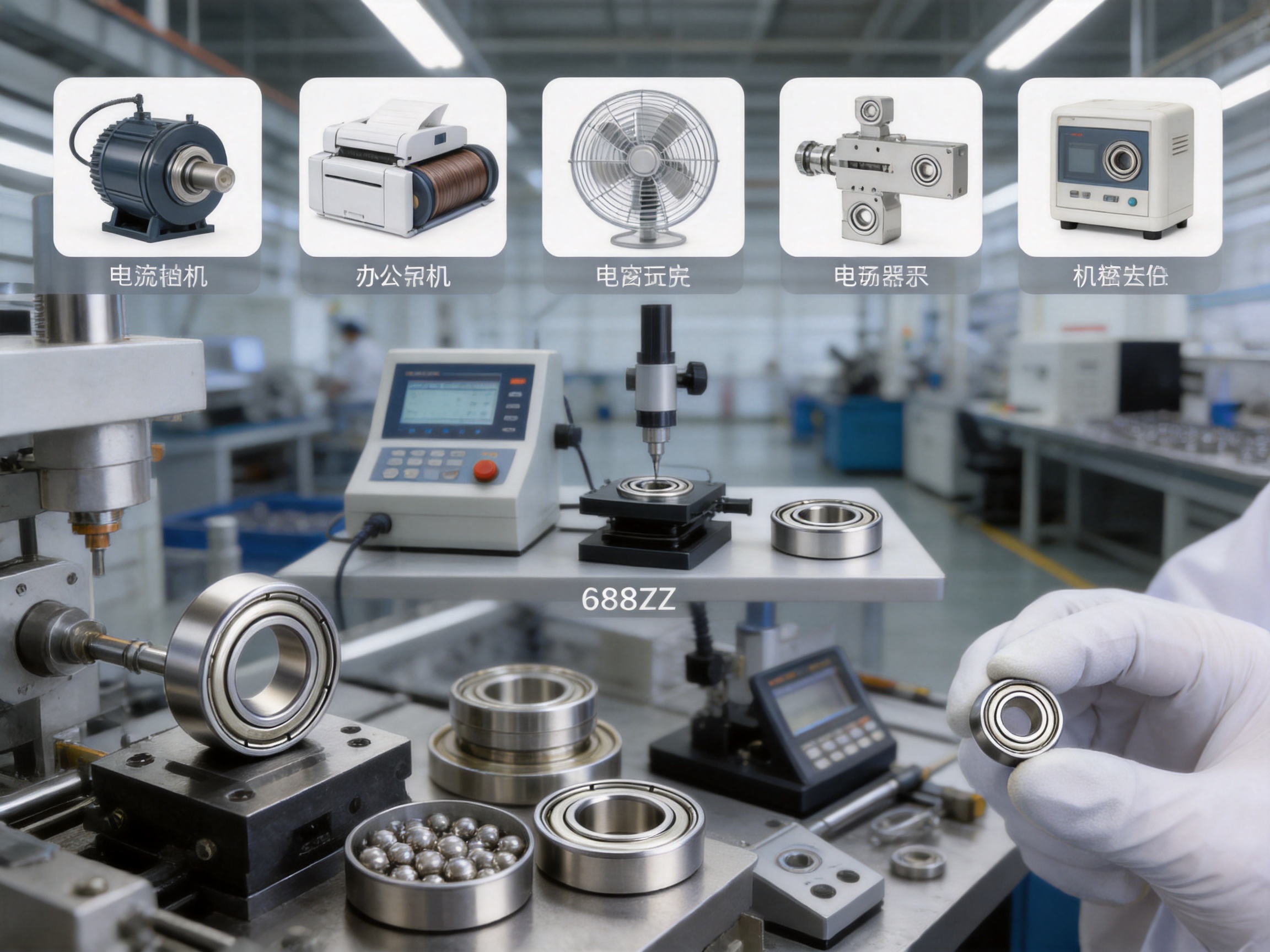
After component production, the bearing is assembled under controlled conditions. Cleanliness is critical because miniature bearing raceways are sensitive to small particles. Foreign matter can create indentation, increase noise, damage the grease, and accelerate wear. Good production practice includes organized work areas, controlled handling, suitable cleaning procedures, and protection against the introduction of contaminants during assembly.

Lubrication is another controlled process. The quantity and distribution of grease influence friction, noise, temperature, and service life. An appropriate grease fill should be applied consistently, and the bearing should be protected from contamination after lubrication. Consistency is especially important for customers who use large quantities of bearings in automated production lines.

Final inspection may include dimensional checks, rotational torque evaluation, noise and vibration testing, visual inspection, shield verification, and packaging review. The exact inspection plan depends on customer requirements and product standards, but the objective is the same: to confirm that the finished bearing meets the required specifications before shipment.

Quality Management and Technical Experience

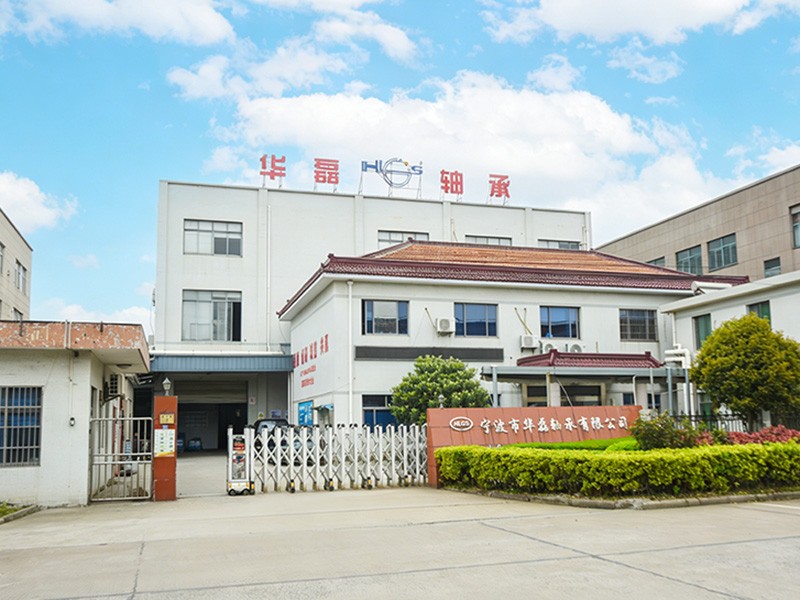
Ningbo Zhenhai Hualei Bearing Co., Ltd. was established in 2001 and has developed experience in the manufacture of miniature deep-groove ball bearings. This long-term specialization is relevant because miniature bearings require process knowledge that extends beyond basic machining. Stable production depends on understanding materials, heat treatment, grinding, assembly, lubrication, inspection, packaging, and application requirements.

The company operates under the HLGS registered trademark and provides deep-groove ball bearings for a range of industries. Its product experience includes applications in food machinery, household appliances, automotive electromechanical systems, electric tools, mechanical transmission equipment, and motors. This breadth exposes the manufacturer to different requirements for speed, load, noise, contamination protection, dimensional control, and service life.

The company states that its products are strictly tested with advanced equipment and that it follows ISO 9001 and ISO/TS 16949 management systems. These systems provide a framework for documented processes, quality responsibilities, traceability, corrective action, and continuous improvement. A management system does not remove the need for product-specific inspection, but it can help organize production and quality activities consistently.

For buyers, process discipline is important because a bearing is a precision component that is often installed in large quantities. A small variation repeated across thousands of units can affect assembly efficiency, equipment noise, warranty performance, and customer satisfaction. Consistent manufacturing and documented quality procedures help reduce such risks.

The manufacturer also established Ningbo Hotex Mechanical & Electrical Technology Co., Ltd. in 2016 as its import and export department. This supports international customer communication, order coordination, export documentation, and professional service. For overseas customers, a capable export function can simplify procurement and improve communication regarding specifications, packaging, delivery, and technical requirements.

OEM and ODM Support

Different equipment manufacturers may require variations in bearing clearance, lubrication, packaging, marking, inspection, or application-specific configuration. The company provides OEM and ODM services, allowing customers to discuss requirements beyond a standard catalog order.

OEM cooperation may be useful when a customer needs a bearing supplied under its own part number, packaging design, or documentation system. ODM cooperation may be appropriate when the customer needs support in developing a bearing solution for a particular machine or product family. The feasibility of any customization should be confirmed according to minimum order quantity, technical specifications, tooling, validation, and production schedule.

Technical communication is especially important for miniature bearings. A customer should provide shaft dimensions, housing dimensions, operating speed, radial load, axial load, temperature, contamination conditions, required noise level, expected service life, and lubrication preferences whenever possible. Complete information allows the supplier to recommend a suitable configuration and identify potential risks before mass production.

OEM and ODM support can also extend to packaging and traceability. Bearings for automated assembly may require specific tray arrangements, anti-corrosion protection, batch identification, inspection reports, or labeling. Clear packaging requirements can help reduce handling damage and improve warehouse control.

Applications of the 688ZZ

Miniature Motors

Miniature motors are among the most common applications for the 688ZZ. The bearing can support a small rotor shaft while maintaining a compact motor envelope. Its low friction and high-speed capability are valuable in motors used in office equipment, small fans, toys, pumps, and portable devices.

Motor designers should consider rotor balance, shaft fit, electrical insulation, operating temperature, and axial positioning. Excessive press fit can reduce internal clearance and increase friction, while insufficient fit can allow the ring to creep. Correct tolerances and controlled assembly are essential for realizing the bearing’s performance.

Electric Toys

Electric toys often include small motors, wheels, gear trains, rotating platforms, or articulated mechanisms. The 688ZZ can provide smooth support for these moving parts while keeping the assembly lightweight. Its shields help protect the grease and internal components from ordinary dust generated during handling and use.

Because toys may experience impact, intermittent overload, and irregular operating conditions, the bearing should be selected with suitable load margin. The surrounding housing should also prevent direct shock from being transmitted unnecessarily to the bearing.

Precision Instruments

Precision instruments may require low friction, stable rotation, and limited mechanical noise. The 688ZZ can be used in adjustment mechanisms, small scanners, laboratory devices, optical equipment, and compact positioning systems when the load and accuracy requirements are appropriate.

In these applications, bearing selection is only one part of the design. Shaft straightness, housing accuracy, preload, cleanliness, temperature stability, and vibration control may be equally important. A high-quality miniature bearing can support precision performance, but it cannot compensate for poor alignment or an inaccurately manufactured support structure.

Office Equipment

Printers, scanners, document-handling equipment, compact fans, and other office machines contain many rotating shafts and rollers. The 688ZZ may be used where a small bearing is required to guide a roller, support a gear, or reduce friction in a drive mechanism.

Office equipment often operates indoors but may be used for long duty cycles. Low noise, stable grease performance, and consistent torque are therefore important. The double metal shields can help protect the bearing from ordinary airborne dust while maintaining a low-friction configuration.

Small Household Appliances

Small household appliances may use miniature bearings in fans, actuators, rotating controls, compact pumps, and motorized mechanisms. The bearing’s standardized dimensions make it convenient for integration into products that must remain compact and economical.

Application conditions should be reviewed carefully if the appliance is exposed to water vapor, cleaning agents, high humidity, elevated temperature, or food-related contamination. Additional external protection or a more suitable sealing arrangement may be necessary in demanding environments.

Electric Tools and Mechanical Transmission Devices

Small electric tools and transmission mechanisms can use miniature bearings in gear supports, drive shafts, and compact motor assemblies. The 688ZZ may be suitable when the radial loads remain within its intended range and when the bearing is adequately protected from impact, abrasive particles, and excessive heat.

Tools often generate vibration and intermittent shock. Engineers should evaluate the static load margin and consider the effects of tool drop, sudden stopping, gear engagement, and variable speed. Proper housing support and shaft alignment can significantly improve service performance.

Installation Recommendations

Correct installation is essential for any precision bearing. Before installation, the bearing, shaft, housing, tools, and work area should be clean. The bearing should remain in its original protective packaging until it is ready to be installed.

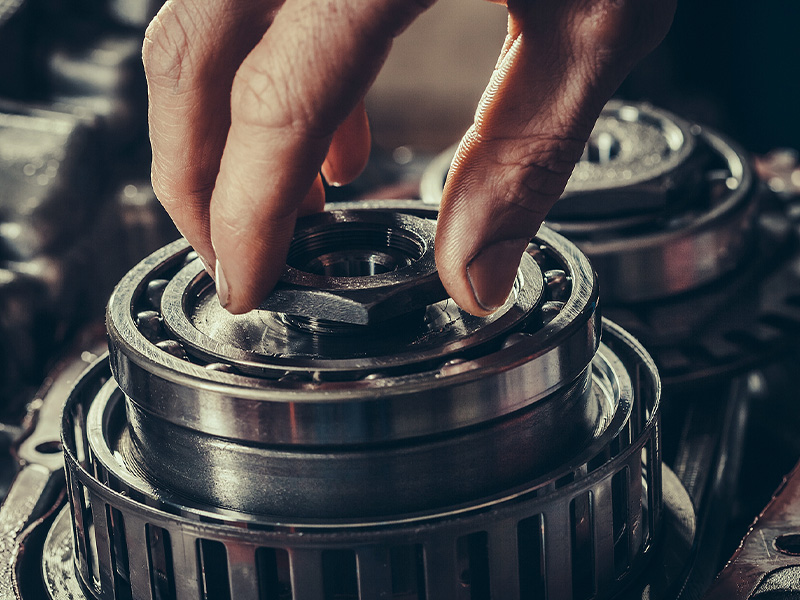
Pressing force should be applied only to the ring that has the interference fit. If the inner ring is fitted tightly to the shaft, force should be transmitted through the inner ring. If the outer ring is fitted tightly into the housing, force should be transmitted through the outer ring. Applying force through the balls can create raceway damage and brinelling.

Installation tools should be properly sized and aligned. Hammers, punches, or improvised tools can damage the shield, distort the ring, or introduce impact loads. A suitable press, mounting sleeve, or bearing installation tool provides more controlled force.

The shaft and housing should meet the specified dimensional and geometric requirements. A shaft that is too large can reduce internal clearance and raise operating torque. A shaft that is too small can permit ring creep. Housing ovality, shoulder misalignment, excessive chamfering, or poor perpendicularity can also affect bearing life.

Bearings should not be washed or relubricated unnecessarily if they are supplied pre-greased for life. Adding an incompatible grease can reduce performance or cause chemical and consistency problems. If relubrication is required, the grease type, quantity, cleanliness, and maintenance interval should be determined according to the application.

After installation, the assembly should be rotated by hand where possible. Unusual tightness, roughness, noise, or resistance may indicate a fitting problem, contamination, misalignment, or damage. Early inspection can prevent the bearing from being operated under harmful conditions.

Storage, Handling, and Maintenance

Miniature bearings should be stored in a clean, dry environment with stable temperature and humidity. Packages should remain sealed until use. Bearings should be protected from condensation, corrosive vapors, dust, vibration, and direct contact with moisture.

Handling should be done with clean hands or suitable gloves. Bearings should not be dropped, rolled across dirty surfaces, or stacked in a way that creates unnecessary impact. The shields are designed for protection during normal service, but they can be damaged by sharp tools or excessive handling force.

For sealed or shielded-for-life applications, routine maintenance generally focuses on the surrounding system rather than on adding lubricant to the bearing. Inspectors should monitor noise, vibration, temperature, torque, and visible contamination. A gradual increase in noise or temperature may indicate lubrication deterioration, contamination, overload, misalignment, or a developing surface defect.

Maintenance intervals should be based on operating conditions. A clean indoor motor running at moderate speed may require little direct bearing maintenance. A high-speed mechanism with vibration, dust, or elevated temperature may require more frequent inspection and earlier replacement planning.

Selection Checklist for Engineers and Buyers

Before ordering the 688ZZ, confirm that the 8 mm bore matches the shaft and that the 16 mm outside diameter and 5 mm width match the housing and available space. Confirm whether the required load is primarily radial and whether any axial force remains within the bearing’s suitable range.

Confirm the operating speed and compare it with the grease-lubricated limiting speed. If the application operates close to 36,000 rpm, review grease type, heat generation, balance, cage behavior, and mounting conditions carefully. Continuous operation near a limiting value may require additional validation.

Review the operating temperature range. Temperature affects grease viscosity, internal clearance, material expansion, shield performance, and service life. If the product operates at unusually low or high temperatures, a special configuration may be needed.

Evaluate the environment. The ZZ shields are appropriate for general dust protection but are not a guarantee of water resistance or complete contamination exclusion. For washdown, outdoor, chemically aggressive, or heavily abrasive conditions, discuss alternative protection with the supplier.

Determine whether standard packaging is sufficient or whether OEM packaging, labeling, batch traceability, inspection reports, or special delivery arrangements are required. Early agreement on these details can improve production efficiency and reduce procurement delays.

Frequently Asked Questions

What does 688ZZ mean?

688 identifies the bearing size and series, while ZZ indicates double metal shields. The bearing has an 8 mm bore, a 16 mm outside diameter, and a 5 mm width.

What type of bearing is the 688ZZ?

It is a single-row deep-groove ball bearing designed primarily for radial loads and light axial loads in both directions.

What is the material of the bearing?

The bearing is made from GCr15 bearing steel, a material commonly used for rolling-bearing rings and rolling elements because of its hardness, wear resistance, and suitability for rolling contact.

What is the speed rating of the 688ZZ?

The grease-lubricated limiting speed is stated as 36,000 rpm. Actual allowable speed depends on load, lubrication, temperature, mounting, alignment, and operating conditions.

Are ZZ shields waterproof?

No. Metal shields provide practical protection against dust and help retain grease, but they are not equivalent to contact rubber seals and should not be treated as a waterproof barrier.

Can the 688ZZ support axial loads?

Yes. As a deep-groove ball bearing, it can support limited axial loads in both directions. The axial load must remain appropriate for the bearing size and application conditions.

What is the dynamic load rating?

The dynamic load rating is 1,260 N. This value is used for bearing-life evaluation and should be considered together with speed, lubrication, contamination, alignment, and duty cycle.

What is the static load rating?

The static load rating is 590 N. It helps evaluate the risk of permanent deformation when the bearing is stationary, operating slowly, or exposed to shock and vibration.

Where can the 688ZZ be used?

Typical applications include miniature motors, electric toys, precision instruments, office equipment, small household appliances, electric tools, compact transmission systems, and other light-duty mechanisms.

Is the 688ZZ suitable for high-speed miniature motors?

It can be suitable when the load, temperature, grease, fit, alignment, and operating speed are appropriate. The stated limiting speed should not be applied automatically without reviewing the complete motor design.

Why choose a shielded bearing instead of an open bearing?

The double shields help limit the entry of dust and retain grease. This can improve convenience and protection in applications where regular relubrication is not practical.

Why choose metal shields instead of contact seals?

Metal shields generally create less friction because they do not normally contact the inner ring. This can be helpful in high-speed and low-power applications, although contact seals may provide stronger protection in wet or heavily contaminated environments.

Does the manufacturer provide OEM and ODM services?

The manufacturer provides OEM and ODM services. Customers should discuss required specifications, packaging, marking, inspection, quantity, and delivery conditions before placing a customized order.

What quality systems does the company follow?

The company states that it follows ISO 9001 and ISO/TS 16949 management systems and tests products using advanced equipment. Product-specific requirements should be confirmed during technical and commercial discussions.

How should the bearing be installed?

Use clean, properly aligned tools and apply mounting force only to the ring with the interference fit. Do not transmit installation force through the balls, and inspect the assembly for roughness or unusual resistance after installation.

Conclusion

The 688ZZ deep groove ball bearing provides a well-balanced solution for compact, high-speed, and light-duty equipment. Its 8 × 16 × 5 mm dimensions support space-efficient designs, while the single-row deep-groove structure provides radial capacity and limited axial support. Double metal shields help protect the internal components from ordinary dust and retain grease without the friction associated with many contact-seal designs.

With a dynamic load rating of 1,260 N, a static load rating of 590 N, GCr15 bearing steel construction, and a grease-lubricated limiting speed of 36,000 rpm, the bearing is suited to a broad range of miniature mechanisms. Its advantages are most apparent in miniature motors, electric toys, precision instruments, office equipment, small household appliances, and compact transmission devices where low friction, quiet operation, and small installation space matter.

The reliability of a miniature bearing depends on more than its catalog dimensions. Material quality, raceway finishing, ball accuracy, cage production, shield assembly, grease application, cleanliness, inspection, packaging, and installation all influence real-world performance. Ningbo Zhenhai Hualei Bearing Co., Ltd. combines long-term miniature bearing experience, documented quality management systems, advanced testing, and OEM and ODM support to serve customers requiring consistent bearing solutions.

For the best result, the 688ZZ should be selected through a complete review of load, speed, temperature, environment, fit, alignment, and service-life requirements. When these factors are properly controlled, this compact bearing can deliver efficient and dependable rotational support in a wide variety of modern products.

References

1. ISO 281, Rolling Bearings — Dynamic Load Ratings and Rating Life.

2. ISO 76, Rolling Bearings — Static Load Ratings.

3. ISO 9001, Quality Management Systems — Requirements.

4. ISO/TS 16949, Quality Management Systems for Automotive Production and Relevant Service Parts Organizations.

5. Bearing manufacturers’ technical handbooks covering miniature deep-groove ball bearings, bearing fits, lubrication, installation, and service life.

6. General engineering references on GCr15 bearing steel, rolling-contact fatigue, heat treatment, raceway finishing, and miniature bearing manufacturing.

Product: 688ZZ Deep Groove Ball Bearing Features a Compact Design Ideal for Light-Duty Applications


Recent Articles