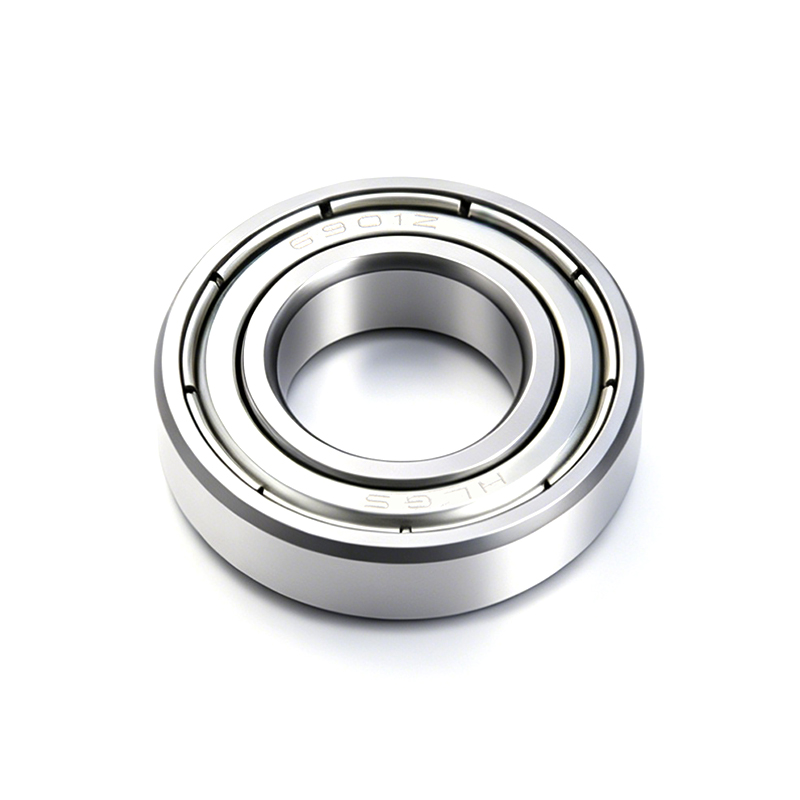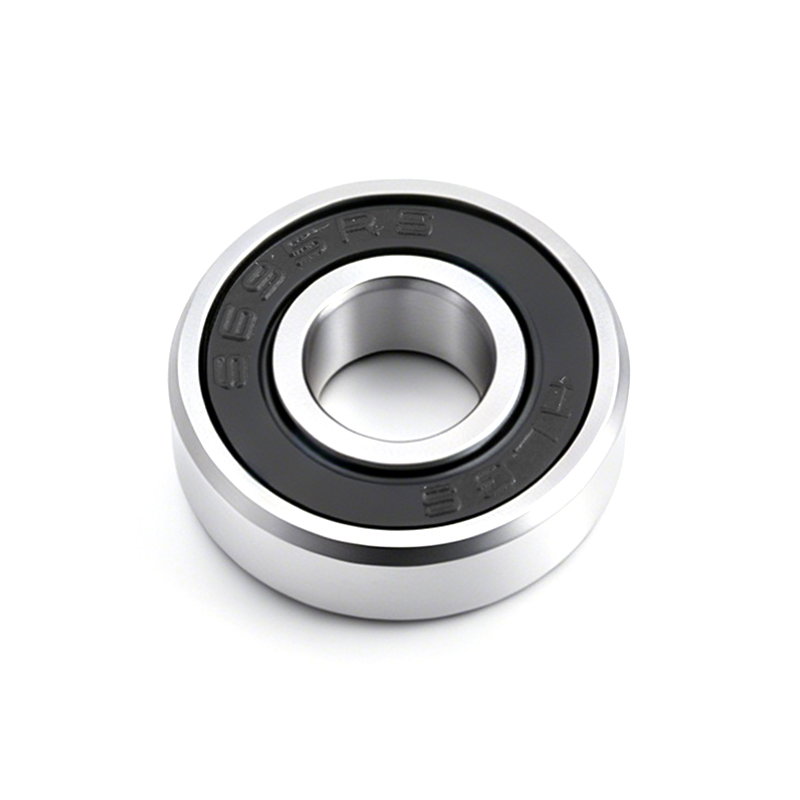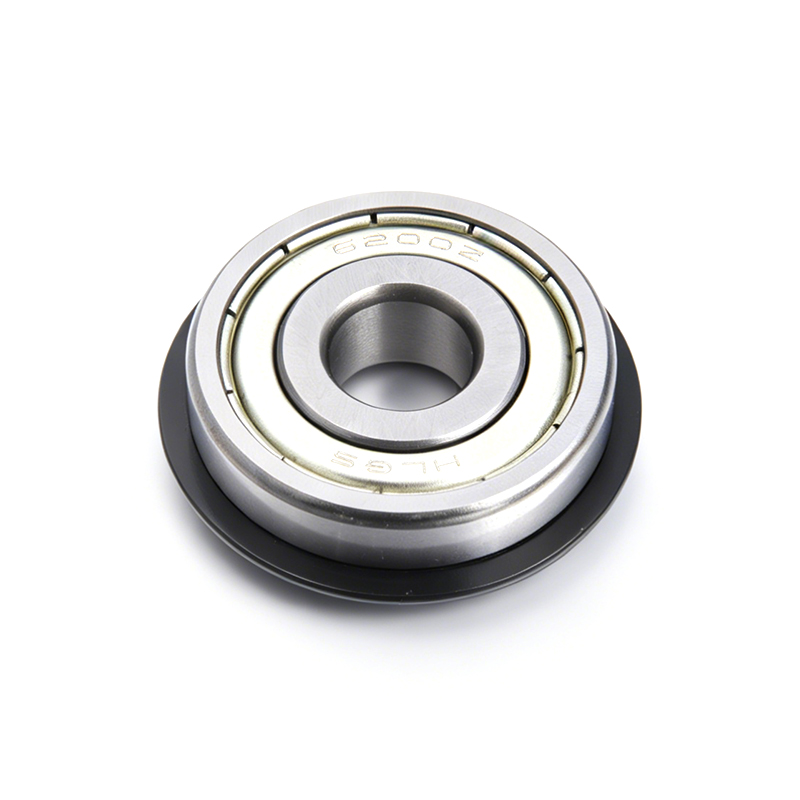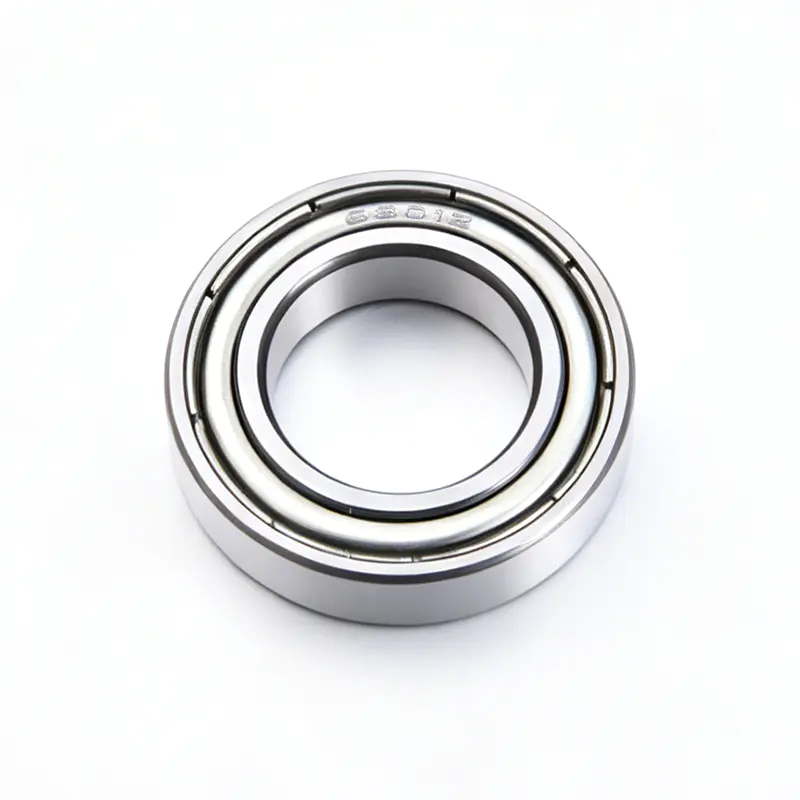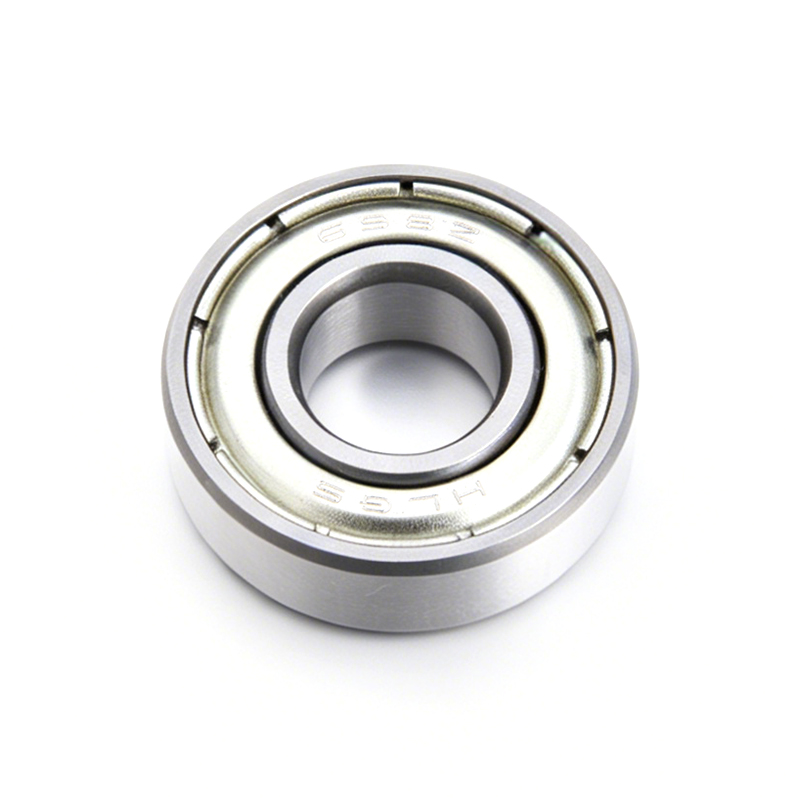
The 6901ZZNR is a compact snap ring deep groove ball bearing developed for equipment that requires reliable rotation, controlled dimensions, and efficient use of installation space. With a 12 mm bore, 24 mm outside diameter, and 6 mm width, this miniature bearing offers a practical combination of low profile, dependable load capacity, and straightforward axial positioning. Its design is particularly suitable for precision devices, miniature drives, household electronics, small power tools, and other light-load mechanical systems.
Although miniature bearings occupy less space than standard industrial bearings, they are not less demanding to manufacture or select. Their small dimensions mean that dimensional deviations, contamination, excessive friction, or poor sealing can have a noticeable effect on the performance of the finished assembly. For this reason, a miniature bearing must be evaluated not only by its nominal size, but also by its material quality, internal geometry, sealing arrangement, mounting features, rotational behavior, and production consistency.
The 6901ZZNR addresses these requirements through a thin-section deep groove design, dual metal shields, and an outer-ring snap ring. The double-shielded structure helps retain grease and reduce the entry of common external contaminants, while the snap ring simplifies axial retention during assembly. Manufactured from high-carbon chromium bearing steel, commonly identified as GCr15, the bearing is designed to provide stable operation under radial loads and bidirectional axial loads within its intended application range.
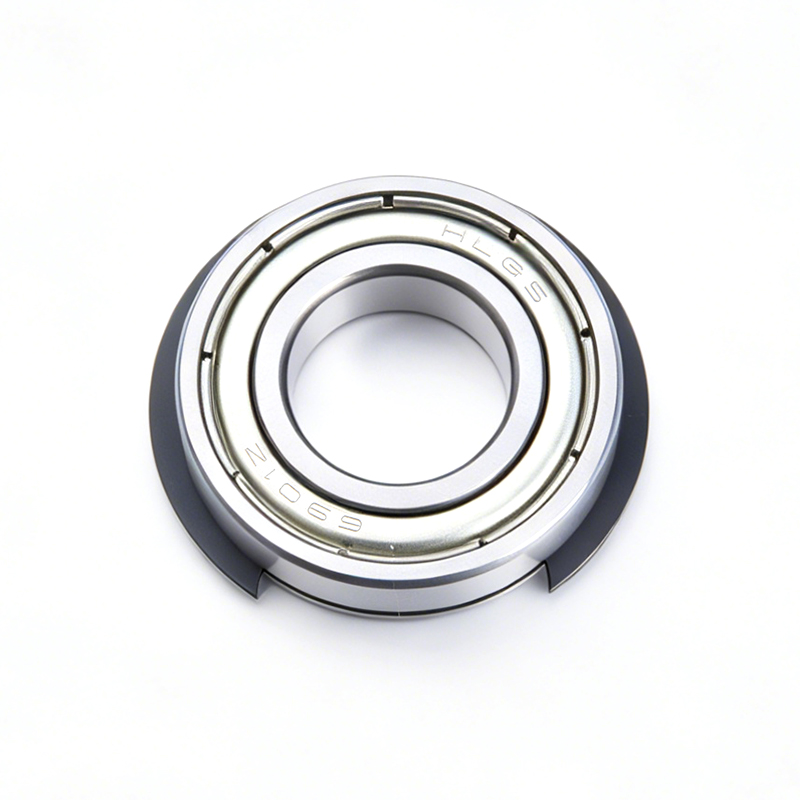
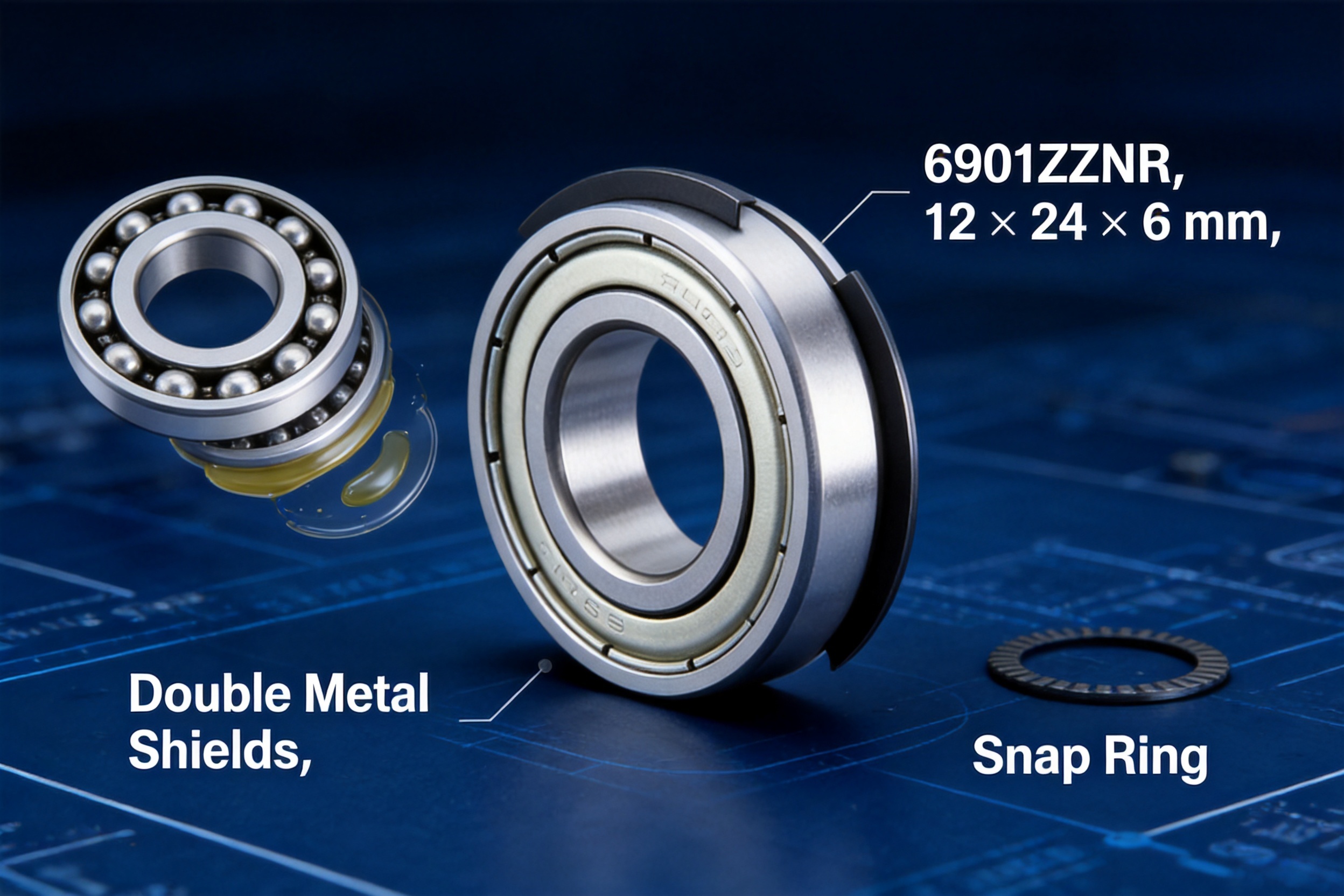
The 6901ZZNR is a miniature deep groove ball bearing with an integrated snap ring. The basic bearing designation identifies a 6901-size bearing, while the suffixes provide important information about its configuration. “ZZ” indicates double metal shields, and “NR” indicates that the outer ring is supplied with a snap ring and the corresponding retaining groove.
| Parameter | Specification |
|---|---|
| Bearing number | 6901ZZNR |
| Bore diameter | 12 mm |
| Outside diameter | 24 mm |
| Width | 6 mm |
| Sealing arrangement | Double metal shields, ZZ |
| Retention feature | Outer-ring snap ring, NR |
| Dynamic load rating | 2,340 N |
| Static load rating | 1,060 N |
| Material | High-carbon chromium bearing steel, GCr15 |
| Grease-lubricated limiting speed | 32,000 rpm |
The bearing’s 12×24×6 mm envelope makes it appropriate for assemblies where radial space and axial space are both limited. The six-millimeter width can help designers maintain a compact shaft-support arrangement, while the 24 mm outside diameter provides a practical housing interface for small rotating components. The snap ring adds an additional installation advantage by helping retain the bearing axially without requiring a separate external retaining component in applications designed around the ring groove.
A standard miniature deep groove bearing can support radial forces and limited axial forces in both directions. The 6901ZZNR preserves this basic versatility while adding two features that are valuable in compact equipment: metal shielding and snap-ring retention. These features can reduce assembly complexity and help protect the bearing’s internal working surfaces during normal service.
The “ZZ” configuration uses two non-contact metal shields, one on each side of the bearing. These shields form a protective barrier around the balls, raceways, and factory-applied grease. Compared with an open bearing, a double-shielded bearing is less exposed to dust, handling debris, and other ordinary contaminants. The shields also help keep lubricant within the bearing during operation.
Metal shields are especially useful where low friction and high rotational speed are important. Because the shields are non-contacting, they generally create less sealing drag than contacting rubber seals. This can help the 6901ZZNR maintain efficient rotation and low energy loss in miniature drives, compact motors, and instrument mechanisms. At the same time, the shields should not be interpreted as a guarantee of complete protection against water, pressure washing, or heavy contamination. Applications exposed to liquid ingress or aggressive environmental conditions should be reviewed separately to determine whether a different sealing arrangement is more suitable.
The “NR” suffix identifies the outer-ring snap ring. This ring is installed in the designated groove on the outside diameter of the bearing and can help secure the bearing axially in a housing. In a suitably designed housing, the snap ring may reduce the need for a separate retaining shoulder, cover, or additional axial fastener.
This feature can provide several practical benefits. It may reduce the number of assembly parts, shorten installation time, and make the bearing easier to position consistently. It can also help designers create compact housing arrangements where a conventional shoulder or cover would occupy valuable space. For equipment manufactured in volume, even a small reduction in assembly steps can improve production efficiency and reduce the chance of installation variation.
The housing groove and axial retention arrangement must be designed according to the relevant bearing and snap-ring dimensions. The snap ring should not be used to compensate for an unsuitable housing fit, excessive axial load, or incorrect groove geometry. Proper support on the outer ring remains important, particularly when the bearing is exposed to combined loading or vibration.

6901ZZNR Miniature Bearing Is Designed for Precision Devices and Small Mechanisms
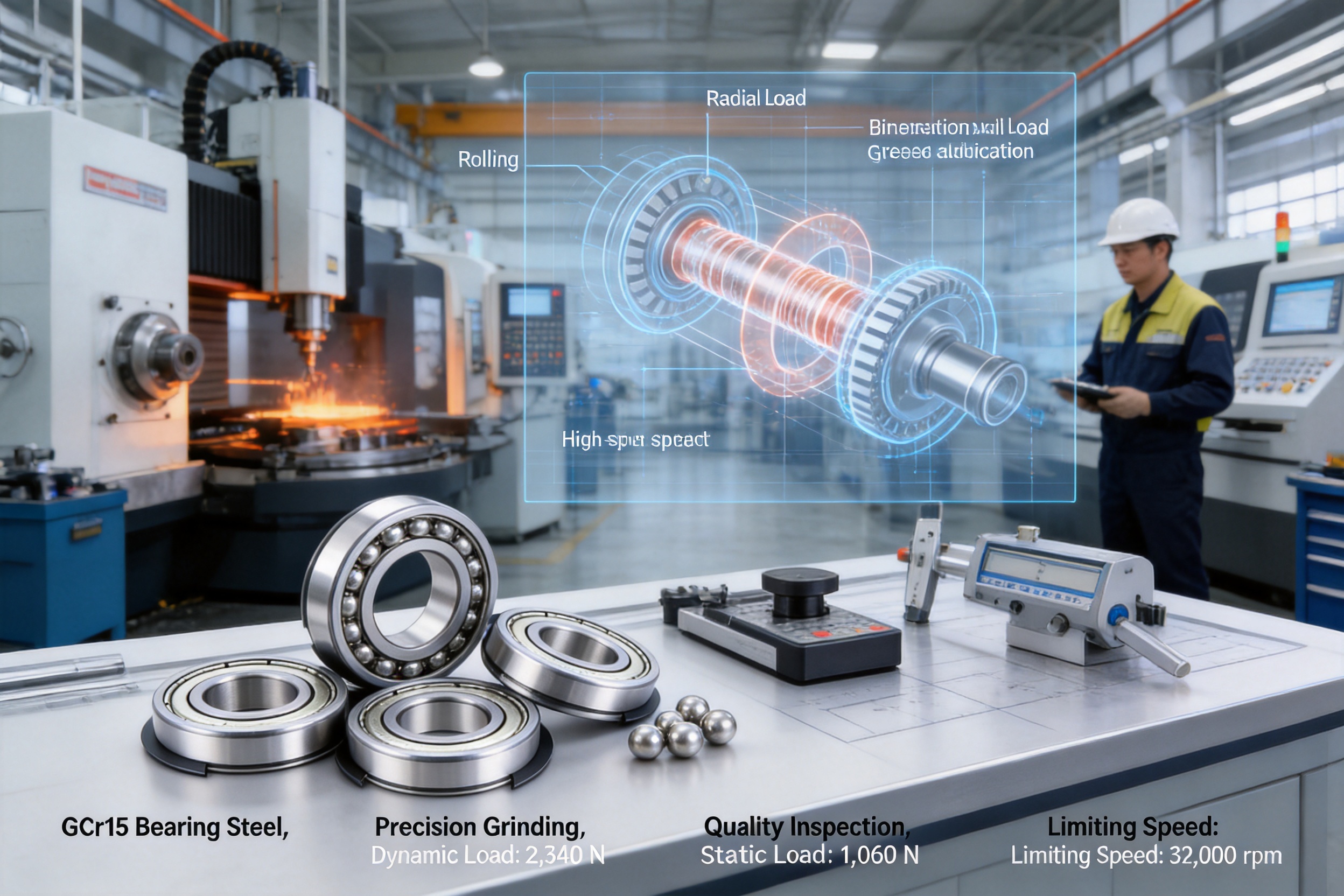
The 6901ZZNR has a listed dynamic load rating of 2,340 N and a static load rating of 1,060 N. These values provide a useful basis for bearing selection, but they should be interpreted together with speed, lubrication, temperature, mounting accuracy, load direction, shock, vibration, and expected service life.
Deep groove ball bearings are primarily used to support radial loads. In the 6901ZZNR, the inner ring, outer ring, balls, and raceway geometry work together to distribute radial force over the rolling elements. The high-carbon chromium bearing steel construction provides a hard, wear-resistant material system suitable for normal rolling contact operation when the bearing is correctly mounted and lubricated.
Radial load applications may include small pulleys, rollers, miniature gear systems, instrument shafts, compact fans, and small electric motors. In each case, the actual operating load should be compared with the bearing’s rating rather than judged only by the bearing’s physical size. A small bearing can provide useful load capacity, but its service life may be reduced by misalignment, excessive belt tension, shaft deflection, or impact loading.
The deep groove raceway profile also allows the 6901ZZNR to accommodate axial forces in both directions. This is useful in assemblies where the shaft may experience thrust from either side or where the direction of axial force changes during operation. Typical examples may include compact transmission systems, small actuators, and rotating mechanisms with helical gears.
Axial capacity depends on the magnitude and combination of radial and thrust loads. A bearing carrying a substantial radial load at the same time as a significant axial load may experience a different service-life condition from a bearing carrying radial load alone. Designers should therefore calculate the equivalent dynamic bearing load when necessary and confirm that the selected bearing is appropriate for the complete operating profile.
The 1,060 N static load rating is relevant when the bearing is stationary, rotating slowly, or subjected to shock and temporary overload. Excessive static loading can create permanent indentations in the raceways or rolling elements. Even small indentations may result in noise, vibration, torque variation, or premature failure during later rotation.
For mechanisms that stop and start frequently, remain stationary under load, or experience impact during transportation or operation, static load conditions deserve particular attention. The bearing should be protected from shock during handling, and installation tools should apply force only to the ring being fitted. Pressing through the rolling elements can damage the raceways before the equipment is placed into service.
The 6901ZZNR has a listed grease-lubricated limiting speed of 32,000 rpm. This makes the bearing suitable for many compact, high-speed mechanisms where low rotational resistance and stable running are important. The non-contact metal shields can support efficient rotation by avoiding the greater friction associated with contacting seal lips.
A limiting speed is not an automatic operating recommendation for every application. Actual permissible speed can be affected by bearing load, lubrication type and quantity, ambient temperature, shaft and housing fits, cage design, vibration, balance, and heat dissipation. Operation near the limiting speed requires careful attention to lubrication and temperature. If the application involves continuous operation at high speed, prototype testing and temperature monitoring are recommended.
At moderate loads, a correctly installed 6901ZZNR can help minimize energy loss in small rotating assemblies. Reduced friction is valuable in miniature motors and battery-powered equipment because it can improve electrical efficiency and help preserve available power. It may also support quieter operation and more consistent motion in precision devices, although total system noise depends on the shaft, housing, gears, motor, mounting structure, and manufacturing tolerances of the complete assembly.
The bearing is suitable for grease lubrication and is supplied in a shielded configuration intended to retain lubricant within the bearing. The correct grease quantity is important. Too little lubricant can increase wear and temperature, while excessive grease can create churning resistance and reduce high-speed performance.
When the bearing is supplied pre-lubricated, users should avoid washing out or mixing the original grease with an incompatible lubricant. If relubrication is required in a special application, the grease type, base oil, thickener, operating temperature, speed factor, and compatibility should be reviewed. Lubrication requirements for a food-processing environment, for example, may differ from those for a household appliance or electric tool.
The 6901ZZNR is manufactured from high-carbon chromium bearing steel, identified in the supplied specifications as GCr15. This material is widely used for rolling bearings because it can be processed to achieve the hardness, fatigue resistance, dimensional stability, and surface characteristics required for rolling contact components.
The bearing rings and balls must withstand repeated contact stress during operation. Material cleanliness, heat treatment, grinding quality, and surface finish all influence the ability of the bearing to resist fatigue and wear. A suitable bearing steel alone does not determine the final performance; the complete manufacturing process must transform the raw material into accurately controlled rings and rolling elements.
Heat treatment is a critical stage in the production of bearing steel components. The objective is to develop an appropriate hardened structure while maintaining the dimensional stability needed for accurate rotation. The exact heat-treatment schedule depends on the component, material condition, equipment, and quality requirements.
Properly controlled heat treatment can help the raceways and rolling elements withstand repeated load cycles. It also supports the consistent hardness needed for grinding and finishing. In miniature bearings, dimensional changes after heat treatment must be controlled carefully because even small variations can influence internal clearance, noise, friction, and fit.
After heat treatment, bearing rings and rolling elements undergo precision machining and finishing operations. Grinding helps establish the required raceway geometry, ring dimensions, and surface characteristics. The final surface condition affects lubricant film formation, rolling contact behavior, friction, and noise.
For a miniature bearing, production accuracy is especially important because the internal parts are small and the operating clearances are closely controlled. Consistent grinding and inspection help ensure that the inner ring, outer ring, and balls work together as a matched assembly. A carefully finished raceway can support smooth rolling contact and reduce localized stress concentrations.
Ningbo Zhenhai Hualei Bearing Co., Ltd. was established in 2001 and specializes in miniature deep groove ball bearings. The company manufactures a broad range of deep groove bearing products under the HLGS registered trademark. Its stated application fields include food machinery, household appliances, automotive electromechanical systems, electric tools, mechanical transmission equipment, and motors.
The company’s long operating history provides experience in producing small bearing types for different equipment requirements. Miniature bearing manufacturing requires repeatable control of dimensions, materials, heat treatment, assembly, lubrication, and inspection. Experience across multiple application sectors can help a manufacturer understand the different priorities associated with speed, load, noise, environmental exposure, cost, and installation structure.
The supplied company information states that the manufacturer follows ISO 9001 and ISO/TS 16949 management systems. ISO 9001 provides a framework for quality management, process control, customer requirements, corrective action, and continual improvement. ISO/TS 16949 was developed for the automotive supply chain and emphasizes process consistency, defect prevention, traceability, and risk control.
Management-system certification does not replace product-specific technical evaluation, but it can indicate that quality activities are organized around documented processes. For buyers, this may be valuable when sourcing bearings for repeat production, OEM programs, or applications that require supplier accountability. Documentation, inspection records, process controls, and corrective-action procedures can make it easier to maintain consistent product quality across production batches.
The company states that all products are strictly tested with advanced equipment. In bearing production, testing and inspection may include dimensional checks, visual examination, rotational torque assessment, noise and vibration evaluation, material verification, hardness inspection, and sampling of assembled products. The exact inspection plan depends on the bearing type and customer requirements.
For the 6901ZZNR, important quality characteristics may include bore diameter, outside diameter, width, snap-ring position, shield installation, internal clearance, rotational smoothness, and cleanliness. Load-related verification and speed-related testing may also be applied where required by the product specification or customer program.
Inspection is most effective when it is integrated throughout production rather than performed only at the final stage. Incoming material control, in-process measurement, equipment maintenance, process parameter monitoring, and final product testing can work together to prevent defects and improve consistency. This approach is particularly important for miniature bearings because a small dimensional error can affect both installation and operating behavior.
In 2016, Ningbo Zhenhai Hualei Bearing Co., Ltd. established Ningbo Hotex Mechanical & Electrical Technology Co., Ltd. as its import and export department. The company provides OEM and ODM services for customers in international markets. This structure can support product development, technical communication, packaging requirements, export coordination, and customized supply programs.
OEM and ODM customers may require more than a standard bearing number. They may need specific grease, packaging, marking, clearance, tolerances, inspection records, or delivery arrangements. A manufacturer with experience in customized supply can help connect the bearing design with the customer’s assembly and purchasing requirements. Before production, all customized specifications should be confirmed in writing, including the exact seal type, snap-ring configuration, material, lubricant, tolerance class, and inspection criteria.
The 6901ZZNR offers a combination of features that may provide advantages over a basic open 6901 bearing or a bearing without an integrated retention ring. The most important advantage is functional integration: the same compact component provides rolling support, grease retention, basic contamination protection, and an axial mounting feature.
An open bearing exposes the rolling elements and raceways to the surrounding environment. This may be acceptable in a clean housing with an external lubrication system, but it can increase the risk of contamination during assembly and service. The 6901ZZNR’s two metal shields provide a more protected internal environment for many general-purpose applications.
The shielded arrangement can also reduce maintenance requirements in equipment where the bearing is not intended to be regularly relubricated. Because the shields are integrated into the bearing, the designer does not need to rely solely on a separate external cover to retain grease or limit the entry of ordinary dust.
Contact-sealed bearings can offer stronger protection against certain contaminants and moisture, but the sealing lips may increase friction and heat, particularly at high speed. The 6901ZZNR’s non-contact metal shields can be advantageous when rotational efficiency, speed, and low operating resistance are more important than maximum sealing capability.
The correct choice depends on the environment. For clean, dry, enclosed equipment, metal shields may offer an efficient balance. For applications with water spray, fine abrasive particles, or direct exposure to contaminants, a contact-sealed configuration or additional external protection may be more appropriate.
A standard bearing without an outer-ring snap ring may require a housing shoulder, end cover, retaining plate, or external circlip to control axial movement. These additional parts can increase assembly time and occupy more space. The NR configuration allows the designer to use the bearing’s integrated snap ring in a compatible housing design.
This can be especially helpful in compact devices where the bearing is installed in a thin housing wall or where access for a separate retaining component is limited. It may also support more consistent positioning during assembly, provided the housing groove and axial support surfaces are manufactured correctly.
Using a larger bearing than necessary can increase package size, weight, cost, and rotational inertia. The 6901ZZNR provides a compact option for light-load applications that do not require the capacity of a larger bearing. Its small envelope can help designers reduce the overall size of miniature mechanisms and leave additional space for electronics, wiring, gears, or protective structures.
A smaller bearing should not be selected solely to reduce dimensions. The bearing must still satisfy the required load, life, speed, stiffness, temperature, and environmental conditions. Within its appropriate operating range, however, the 6901ZZNR can provide a balanced solution for compact product design.
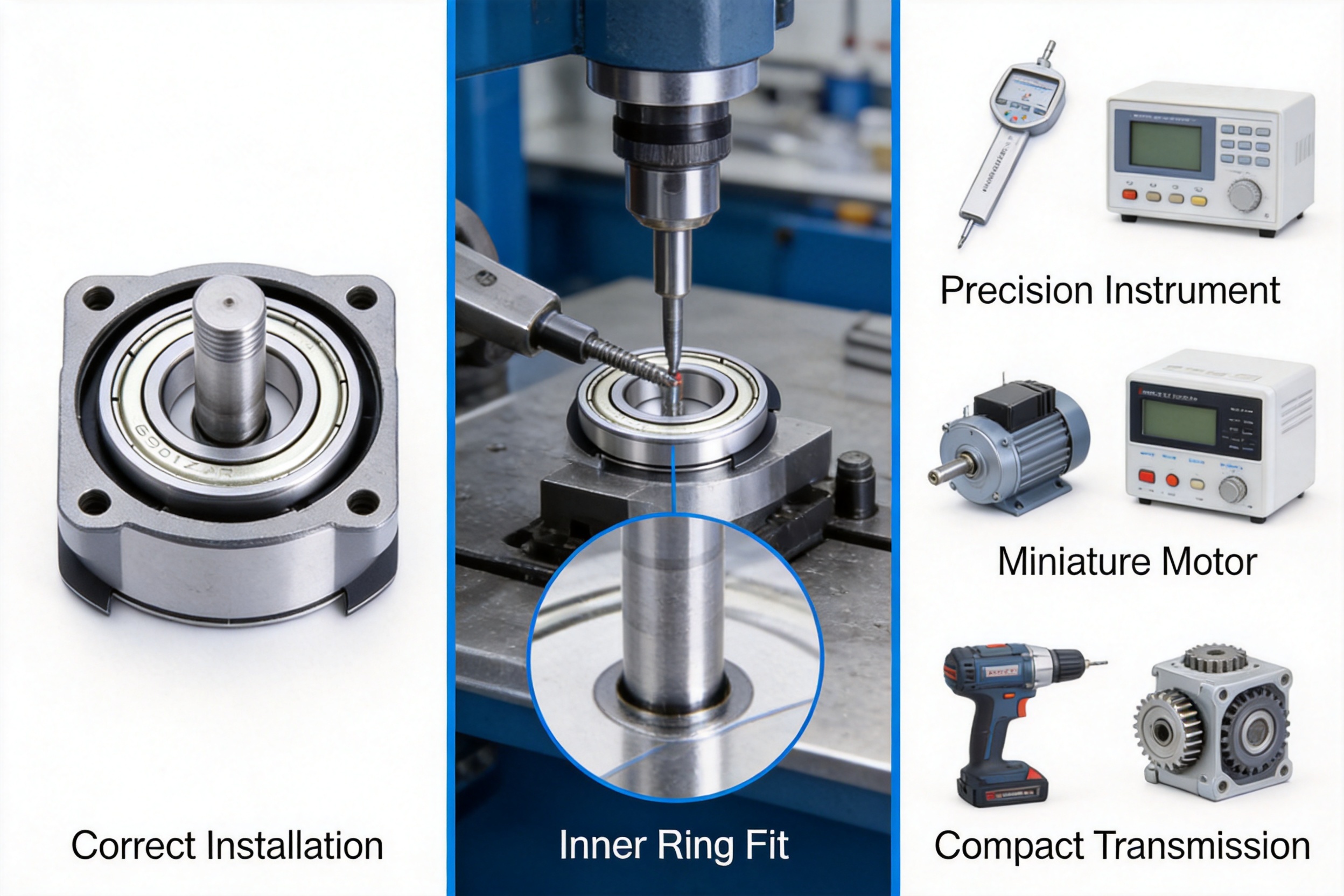
Precision instruments often require stable rotation, controlled friction, and compact support components. The 6901ZZNR can be used in small adjustment mechanisms, optical equipment, measuring devices, laboratory instruments, and compact positioning systems where the bearing is protected from severe contamination.
Instrument designers should pay close attention to starting torque, running torque, vibration, and noise. Bearing selection should be coordinated with shaft accuracy, housing geometry, preload or clearance requirements, and the desired motion profile. A bearing that is technically suitable by load rating may still be unsuitable if the instrument requires extremely low torque variation or special noise performance.
The 12 mm bore makes the bearing suitable for many small shafts used in miniature drives, motors, fans, and transmission mechanisms. Its grease-lubricated limiting speed of 32,000 rpm provides useful speed potential for compact rotating equipment, subject to actual load and thermal conditions.
In motor applications, the bearing may support a rotor shaft and help maintain the alignment between rotating and stationary components. Correct fits are important: an excessively loose fit can allow creep or vibration, while an excessively tight fit can reduce internal clearance and increase operating temperature. Shaft and housing tolerances should be selected according to the load direction, speed, temperature, and mounting arrangement.
Household electronics often place a premium on compactness, quiet operation, service life, and cost-effective assembly. The shielded 6901ZZNR can be considered for small fans, rotating controls, compact actuators, media mechanisms, and other light-load devices.
The integrated snap ring may help simplify housing design and assembly. In high-volume production, this can support efficient installation, reduce the number of separate retaining parts, and help maintain a consistent axial position. The equipment designer should still verify noise, torque, electrical compatibility, temperature rise, and expected duty cycle through application testing.
Small power tools may expose bearings to vibration, intermittent impact, dust, and rapidly changing loads. The 6901ZZNR can be used where the bearing’s capacity and shield configuration are suitable, particularly inside a housing that provides additional environmental protection.
Power-tool designers should evaluate acceleration and deceleration, tool imbalance, shaft alignment, temperature, and shock loading. The listed dynamic and static load ratings provide starting points for calculation, but testing under realistic tool conditions is strongly recommended. If abrasive dust or moisture can reach the bearing, external sealing and housing protection become especially important.
Compact gearboxes, rollers, idlers, pulleys, and small transmission systems may benefit from the bearing’s ability to support radial loads and bidirectional axial loads. The 6901ZZNR can provide a compact support point for shafts where space is restricted and where an integrated snap ring is useful for axial positioning.
Transmission applications should account for gear forces, belt tension, shaft deflection, misalignment, and the combined effects of radial and axial loading. A deep groove ball bearing is versatile, but it should not be treated as a universal substitute for an angular-contact bearing, thrust bearing, or cylindrical roller bearing when the application involves substantial directional thrust or high stiffness requirements.
Proper installation is essential to achieving the expected performance of the 6901ZZNR. Before assembly, confirm the bearing number, dimensions, shield arrangement, snap-ring condition, and housing compatibility. The bearing should remain in its original protective packaging until the work area and mating components are clean and ready.
When pressing the bearing onto a shaft, apply force to the inner ring. When pressing it into a housing, apply force to the outer ring. If both rings are fitted simultaneously, use a tool that applies force evenly to both rings. Force transmitted through the balls can damage the raceways and create premature noise or vibration.
The shaft and housing should be free from burrs, corrosion, raised edges, and machining chips. The housing groove for the snap ring must be correctly positioned and sized. The ring should seat completely in the groove, and the bearing should be supported in the intended axial direction. Do not strike the bearing directly with a hammer or use the snap ring as a tool for forcing the bearing into position.
Alignment is also important. Angular misalignment between the shaft and housing can create uneven load distribution, elevated torque, and premature fatigue. The surrounding components should be checked for squareness and concentricity, especially in high-speed or low-noise equipment.
Bearings should be stored in a clean, dry environment with stable temperature and humidity. They should remain sealed in their original packaging until installation. Avoid placing heavy objects on bearing cartons, and protect the products from vibration, condensation, corrosive chemicals, and excessive dust.
When handling the 6901ZZNR, keep hands and tools clean. Do not rotate the bearing unnecessarily before installation, and do not remove the metal shields. The factory-applied grease is selected for the supplied configuration and should not be contaminated by external oils, solvents, or unapproved lubricants.
In service, maintenance personnel should monitor unusual noise, temperature rise, vibration, torque increase, and changes in axial or radial play. These symptoms may result from bearing wear, contamination, insufficient lubrication, excessive load, poor fit, shaft damage, housing distortion, or problems elsewhere in the machine. Replacing the bearing without correcting the root cause may lead to repeated failure.
Before specifying the 6901ZZNR, confirm that the 12 mm bore matches the shaft and that the 24 mm outside diameter fits the housing. The six-millimeter width should be checked against available axial space and the position of adjacent components.
Confirm that the dynamic load rating of 2,340 N and static load rating of 1,060 N are adequate for the calculated operating conditions. Include radial load, axial load, shock, acceleration, duty cycle, and expected service life in the evaluation.
Verify that the double metal shields are appropriate for the environment. The ZZ arrangement is suitable for many clean and protected applications, but it is not intended to provide the same environmental resistance as a heavy-duty contact seal.
Check the expected speed against the 32,000 rpm grease-lubricated limiting speed. If the operating speed is high or continuous, evaluate heat generation, grease suitability, balance, clearance, and cooling conditions.
Confirm that the housing is designed for the NR snap ring. The retaining groove, axial shoulders, insertion direction, and assembly tooling should all be included in the mechanical design review.
Discuss any special requirements with the supplier before ordering. These may include internal clearance, grease type, packaging, marking, inspection documentation, batch traceability, OEM labeling, and delivery schedule.
The 6901ZZNR is a thin-section deep groove ball bearing with double metal shields and an outer-ring snap ring. It is designed for radial loads and bidirectional axial loads in compact mechanical assemblies.
“ZZ” indicates two metal shields, one on each side of the bearing. “NR” indicates that the outer ring includes a snap ring and the corresponding retaining groove for axial installation in a compatible housing.
The bearing has a 12 mm bore, a 24 mm outside diameter, and a 6 mm width. Its basic dimensions are commonly written as 12×24×6 mm.
The listed dynamic load rating is 2,340 N, and the listed static load rating is 1,060 N. These ratings should be used with application calculations that consider speed, load combination, shock, mounting, temperature, and service-life requirements.
Yes. As a deep groove ball bearing, it can support axial forces in both directions in addition to radial loads. The allowable axial load depends on the magnitude and combination of all applied forces.
The listed grease-lubricated limiting speed is 32,000 rpm. Actual operating speed may be lower depending on load, lubrication, temperature, clearance, mounting accuracy, vibration, and heat dissipation.
No. The ZZ metal shields provide practical protection against ordinary dust and help retain grease, but they are not equivalent to contact seals designed for water or heavy contamination. The complete housing and environmental conditions must be considered.
The snap ring can simplify axial retention in a compatible housing. It may reduce the need for separate retaining plates, covers, or external circlips and can help create a more compact assembly.
The stated material is high-carbon chromium bearing steel, GCr15. This material is widely used for bearing rings and rolling elements because it can provide suitable hardness and rolling-contact fatigue resistance when properly processed.
Potential applications include precision instruments, miniature drives, household electronics, small power tools, motors, compact transmission systems, and other light-load mechanisms. Application suitability should be confirmed through load, speed, environmental, and service-life evaluation.
Use suitable pressing tools and apply force to the ring being fitted. Press on the inner ring when fitting the bearing to a shaft, and press on the outer ring when fitting it into a housing. Keep the bearing and mating components clean, and verify that the snap ring is fully seated.
Replacement or additional lubrication should only be performed after confirming grease compatibility, operating speed, temperature, and quantity. Mixing incompatible greases or overfilling a high-speed bearing can cause increased friction and temperature.
The shielded design is intended to retain grease and reduce routine maintenance in suitable applications. However, users should monitor operating noise, vibration, temperature, and torque. Maintenance requirements depend on the equipment, environment, speed, and duty cycle.
Ningbo Zhenhai Hualei Bearing Co., Ltd. provides miniature deep groove ball bearings and states that it offers OEM and ODM services. Buyers can discuss product specifications, packaging, inspection documentation, customization, and export requirements with the supplier.
The 6901ZZNR provides a focused solution for compact rotating equipment that needs reliable rolling support, efficient operation, and convenient axial retention. Its 12×24×6 mm size fits space-limited designs, while the double metal shields help retain grease and protect the internal rolling elements in clean or enclosed applications. The integrated snap ring can simplify housing design and reduce the number of separate retention components.
With a dynamic load rating of 2,340 N, a static load rating of 1,060 N, and a listed grease-lubricated limiting speed of 32,000 rpm, the bearing offers useful performance potential for miniature drives, precision devices, household electronics, small power tools, motors, and light-duty transmission systems. Its GCr15 high-carbon chromium bearing steel construction supports the durability requirements of rolling contact service when the bearing is correctly selected, mounted, lubricated, and protected.
The product is supported by the manufacturing experience of Ningbo Zhenhai Hualei Bearing Co., Ltd., a miniature deep groove bearing manufacturer established in 2001. The company’s stated quality-management systems, testing approach, application experience, and OEM and ODM capabilities make it suitable for customers seeking both standard miniature bearings and organized supply support for customized programs.
As with any bearing, final performance depends on the complete application rather than the product designation alone. Proper load calculation, speed evaluation, housing design, installation, lubrication, cleanliness, and environmental protection are essential. When these factors are addressed, the 6901ZZNR can serve as a compact and practical bearing choice for precision devices and small mechanisms.
1. Product specification information for the 6901ZZNR miniature snap ring deep groove ball bearing.
2. General engineering principles for deep groove ball bearing selection, mounting, lubrication, and service-life evaluation.
3. ISO 9001 quality management system principles.
4. ISO/TS 16949 quality-management guidance for automotive-related manufacturing supply chains.
5. General technical literature on GCr15 high-carbon chromium bearing steel and rolling-contact fatigue.
6. General bearing-industry guidance concerning metal shields, contact seals, snap rings, internal clearance, and limiting speed.
Direct Answer Small-sized bearings, typically ranging from about 1 millimeter to 30 millimeters in...
The Direct Answer: Match Precision Class to Rotational Accuracy Needs, Not to the Highest Available...
Fundamental Definitions and Classifications of Miniature Transmission Systems In modern precision me...
Direct Answer Stainless steel bearings are the correct choice whenever a rotating assembly must re...