Lin Yutong — After-Sales Service Manager
Home / Author / Lin Yutong — After-Sales Service Manager / F688ZZ Flanged Miniature Bearing: Space-Saving Performance for Precision Devices

F688ZZ Flanged Miniature Bearing: Space-Saving Performance for Precision Devices

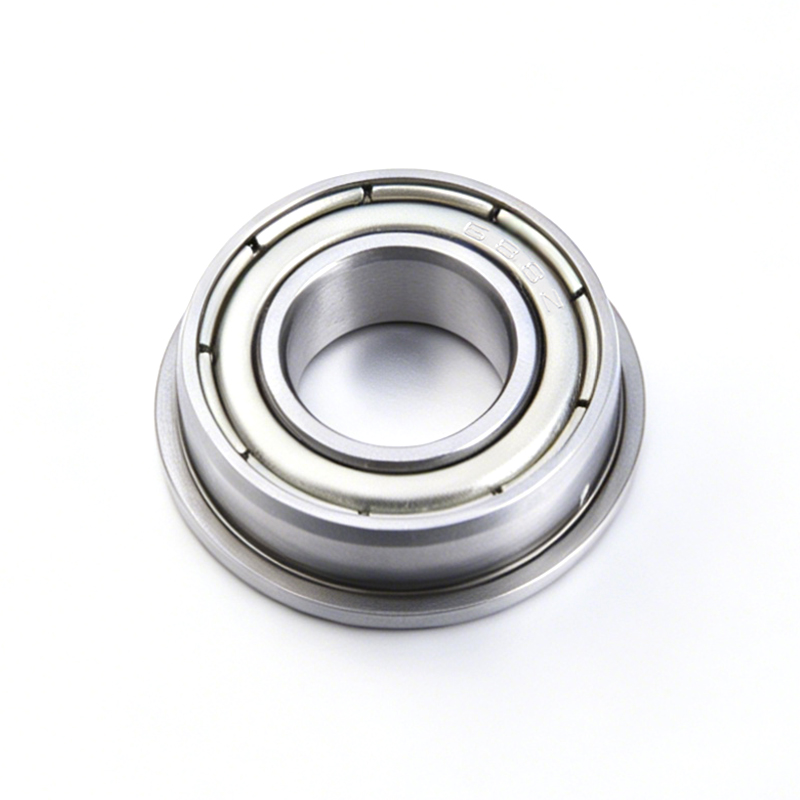
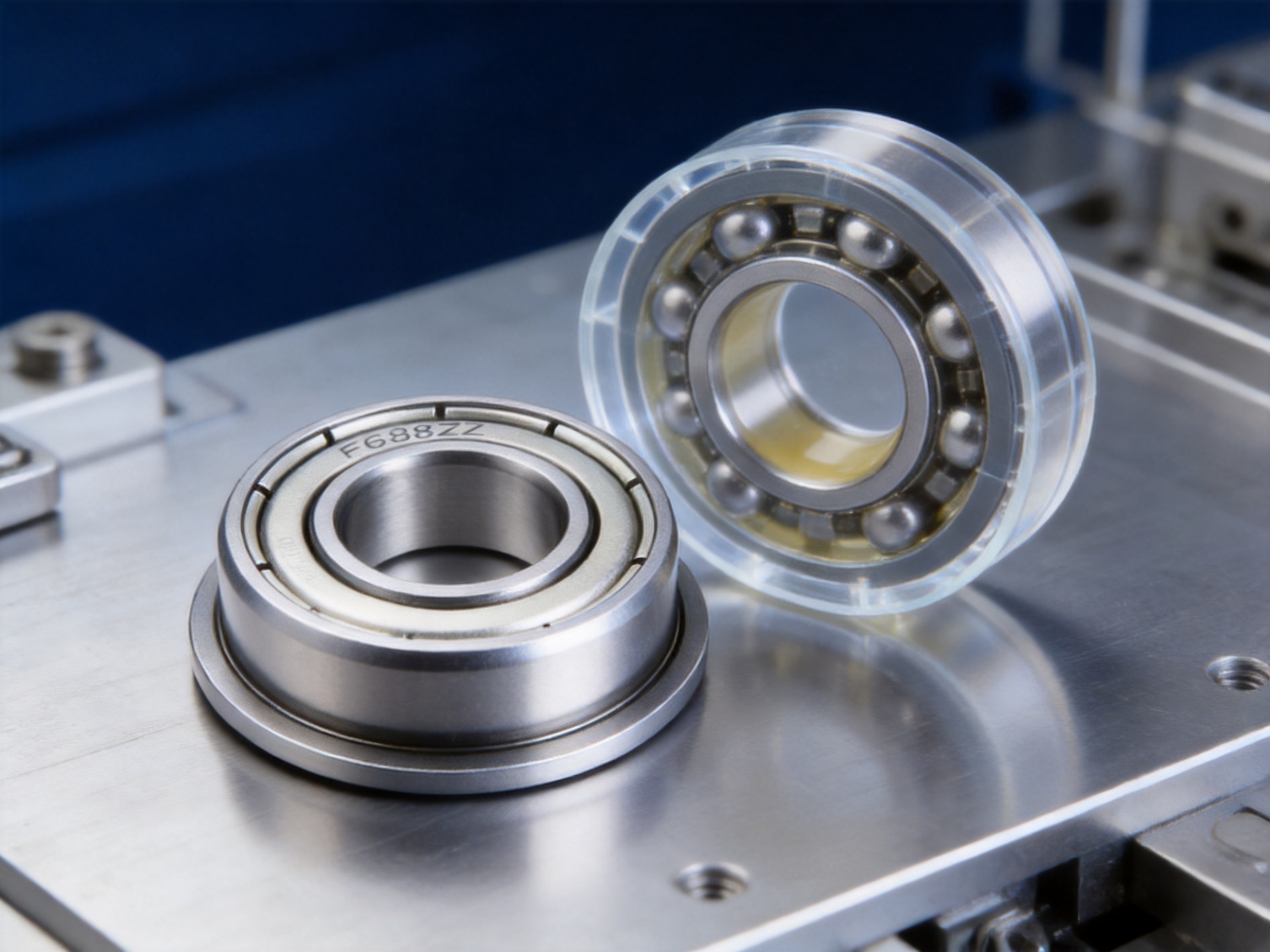
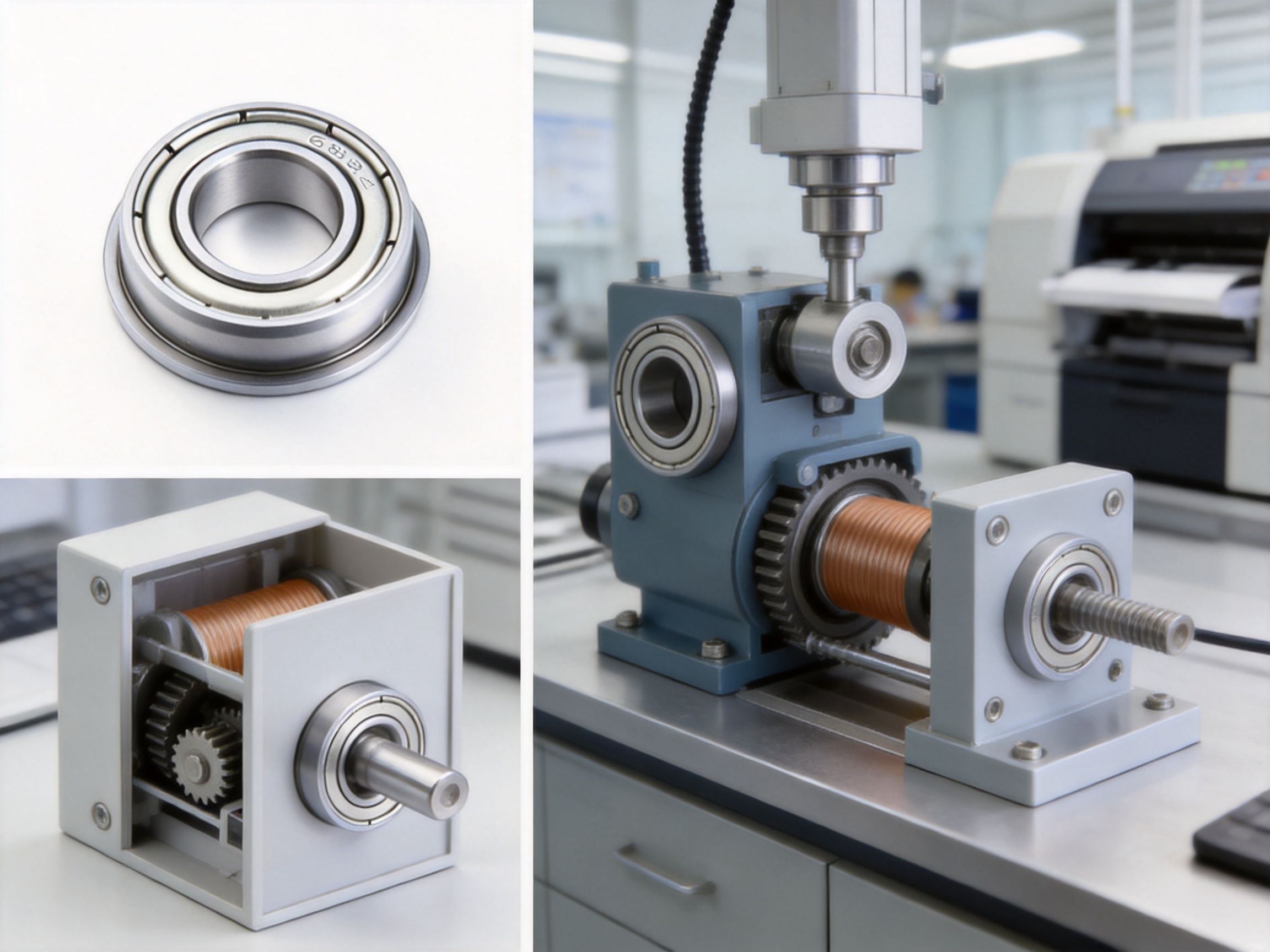
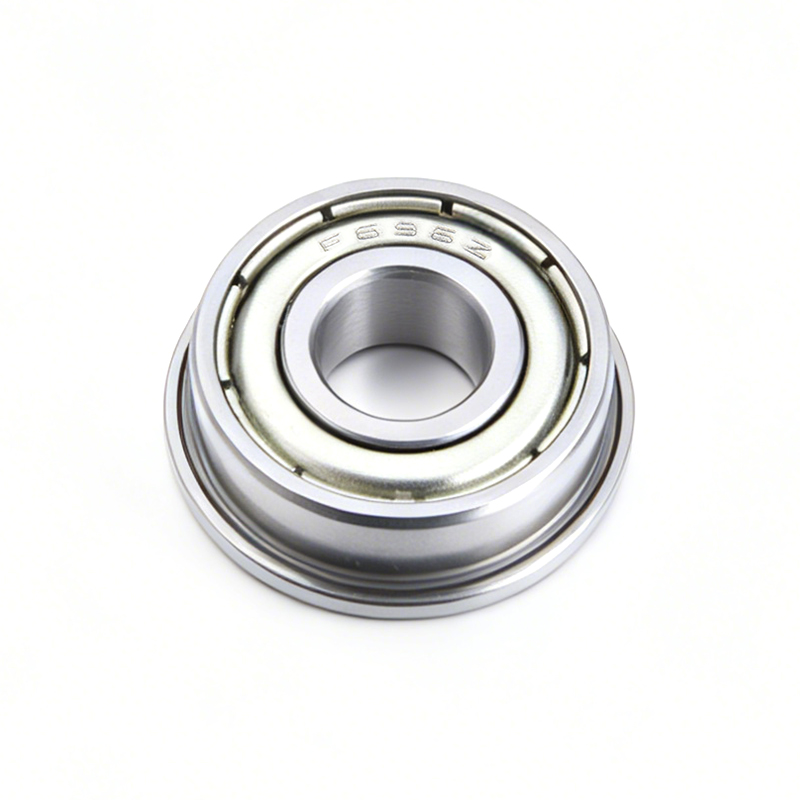
The F688ZZ flanged miniature deep groove ball bearing is designed for applications that require reliable rotational support in a very limited installation space. With an 8 mm bore, 16 mm outside diameter, 5 mm width, and 17.5 mm flange diameter, this compact bearing combines the basic versatility of a deep groove ball bearing with the positioning convenience of an integrated flange.

Small bearings are often used in products where every millimeter matters. Precision instruments, compact motors, office equipment, household appliances, consumer electronics, and miniature mechanisms all depend on bearings that can operate smoothly without adding unnecessary weight or occupying excessive space. In these environments, a bearing must do more than simply rotate. It must support alignment, reduce friction, resist contamination, operate quietly, and maintain dependable performance over repeated cycles.

The F688ZZ addresses these requirements through a compact flanged structure, double metal shields, bearing-grade materials, and a configuration suitable for light-duty continuous operation. Its design makes installation easier while helping prevent axial movement in applications where a conventional unflanged miniature bearing may require additional locating components.

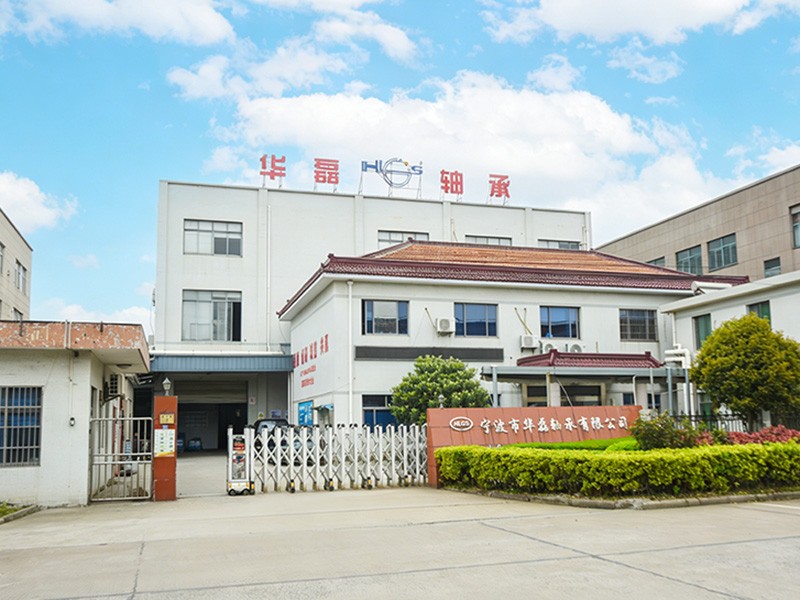
Manufactured by Ningbo Zhenhai Hualei Bearing Co., Ltd., the bearing benefits from the company’s long-term specialization in miniature deep groove ball bearings, structured quality management, advanced testing equipment, and OEM and ODM capabilities. These strengths support consistent production for customers who need dependable miniature bearings in standard or customized quantities.

F688ZZ Flanged Mini Bearing Features a Space-Saving Design Ideal for Small Devices

What Is the F688ZZ Flanged Miniature Bearing?

The F688ZZ is a flanged version of the 688-series miniature deep groove ball bearing. The “F” designation commonly identifies the external flange, while “ZZ” indicates double metal shields. The bearing’s internal rolling elements are arranged to support radial loads and moderate axial loads in both directions, making the design useful for a broad range of compact rotating assemblies.

The external flange extends beyond the standard outer ring. During installation, this flange can act as an integrated shoulder or locating feature. Instead of relying entirely on a separate spacer, retaining ring, stepped housing, or additional axial positioning component, the user can use the flange to help locate the bearing in a suitable housing or panel.

This feature is especially valuable in thin plates, compact frames, small brackets, and molded components where a simple press-fit installation is preferred. The flange can help establish a repeatable seating position and improve installation stability when the surrounding design is correctly matched to the bearing dimensions.

The F688ZZ is not intended to replace larger bearings in heavy industrial equipment. Its principal value lies in compact precision applications where low friction, low noise, limited radial envelope, and straightforward mounting are more important than very high load capacity.

F688ZZ Key Specifications

Parameter Specification Practical Significance
Bearing number F688ZZ Identifies the flanged miniature deep groove ball bearing configuration
Bore diameter 8 mm Fits an 8 mm shaft when the shaft and bearing tolerance requirements are correctly matched
Outside diameter 16 mm Provides a compact radial envelope for small assemblies
Width 5 mm Supports slim installation in space-limited mechanisms
Flange diameter 17.5 mm Provides an integrated locating surface larger than the bearing outside diameter
Shield configuration Double metal shields, ZZ Helps retain lubricant and reduce entry of larger dust particles
Dynamic load rating, Cr 1260 N Reference value for bearing life calculations under dynamic loading
Static load rating, Cor 590 N Reference value for evaluating stationary or shock-related loading conditions
Material GCr15 / stainless steel Supports durability and allows material selection according to application requirements

Dimensions and ratings should always be reviewed together with operating speed, temperature, lubrication, shaft and housing fits, mounting orientation, contamination level, and expected duty cycle. Load ratings are reference values rather than guarantees of service life under every operating condition.

Compact Dimensions for Efficient Product Design

The most visible advantage of the F688ZZ is its small envelope. With a 16 mm outside diameter and a 5 mm width, it can fit into mechanisms where a larger bearing would force the designer to enlarge the housing, increase the frame thickness, or redesign the drive system.

Miniaturization is important in many modern products. Portable equipment, compact actuators, small fans, handheld tools, laboratory instruments, automated office devices, and consumer products often need moving components that occupy as little space as possible. A smaller bearing can provide more freedom for wiring, sensors, gears, belts, shafts, and protective covers.

The 8 mm bore is also useful for small shafts and axles. When the shaft diameter is already established, selecting a bearing with a matching bore allows the designer to avoid unnecessary sleeves or adapters. Fewer additional parts can reduce assembly time and simplify inventory management.

The 5 mm width contributes to a slim axial arrangement. In a compact mechanism, excessive bearing width can create interference with gears, pulleys, couplings, or adjacent structural members. The F688ZZ helps designers maintain a short shaft span while still obtaining rolling support.

Although the bearing is small, dimensional compactness does not mean that the component is limited to one type of product. The same basic size can be incorporated into different assemblies, provided that the load, speed, temperature, and environmental requirements remain within suitable limits.

Integrated Flange for Easier Positioning

A standard miniature bearing normally depends on the housing and shaft shoulders to control its position. The F688ZZ adds a flange to the outer ring, creating an additional locating surface. This integrated feature can simplify housing design and reduce the need for separate retention components.

In a thin housing or panel, the flanged outer ring can seat against a prepared surface. When the fit is correctly designed, the flange helps establish the bearing’s axial location during installation. It may also make the bearing easier to handle and align before final assembly.

The flange can be particularly useful when the housing is manufactured from sheet metal, molded polymer, or a compact machined support. Instead of creating a deep stepped bore, the designer may use a simpler through-hole with a suitable seating face. This approach can reduce structural complexity and provide a more repeatable installation process.

The flange is not a substitute for correct interference, clearance, or retention design. The housing must support the bearing evenly, and installation force should be applied to the appropriate ring. If the outer ring is being fitted into a housing, force should be directed through the outer ring rather than through the shields or rolling elements.

When the bearing is exposed to axial forces, the flange can assist with positioning, but the application should still be evaluated for thrust direction and magnitude. It is important to distinguish between a locating feature and a component specifically designed for heavy axial load. The F688ZZ is primarily a miniature deep groove ball bearing for compact, light-duty precision mechanisms.

Double Metal Shields for Practical Protection

The “ZZ” designation identifies double metal shields installed on both sides of the bearing. These shields help retain the factory-applied lubricant and reduce the entry of larger particles from the surrounding environment. They also maintain a compact bearing profile without the additional contact friction associated with many rubber sealing arrangements.

Metal shields are suitable for applications that require low rotational resistance and clean, relatively controlled operating conditions. They are commonly used in small motors, office equipment, instruments, household appliances, and other mechanisms where the bearing is not directly exposed to heavy water spray, abrasive slurry, or large volumes of fine contamination.

Because the shields are non-contact or have limited contact depending on the specific design, they can support smooth rotation and low noise. This is valuable in products where audible bearing noise may affect user perception or interfere with precision operation.

However, users should select the shield type according to the environment. A ZZ-shielded bearing is not automatically waterproof or hermetically sealed. If the application involves washing, high humidity, chemical exposure, or direct contamination, the complete bearing design should be reviewed with the manufacturer. In some cases, a contact-sealed configuration, external cover, special grease, or additional environmental protection may be more appropriate.

Low Friction and Smooth Rotation

Rolling bearings reduce sliding friction by using balls between the inner and outer rings. In a miniature bearing, the rolling elements, raceways, cage, lubricant, shields, and dimensional accuracy must work together to produce stable rotation. A defect in any one of these areas can cause vibration, noise, heat generation, or premature wear.

The F688ZZ is designed for low-friction operation in light-duty rotating assemblies. Its compact deep groove configuration supports continuous movement while limiting energy loss. This characteristic is useful in small motors and precision mechanisms where the available drive power may be limited.

Low friction can also help reduce heat generation. Excessive heat in a compact assembly may be difficult to dissipate because the housing has limited surface area and airflow. By reducing unnecessary resistance, the bearing can contribute to more efficient operation and improved thermal control.

Actual friction depends on several factors. Speed, lubricant quantity, shaft alignment, preload, fit, temperature, contamination, and external sealing all affect torque. The bearing should therefore be evaluated as part of the complete mechanism rather than considered in isolation.

Proper shaft and housing tolerances are particularly important. An overly tight fit can increase internal stress and running torque, while an overly loose fit may allow ring creep, vibration, or positional instability. A well-designed assembly allows the bearing to rotate freely while maintaining the required location and load distribution.

Low Noise for Precision and Consumer Applications

Noise performance is a major consideration in small devices. Users often notice sound from fans, office machines, compact motors, household appliances, and electronic products because these products may operate near people. A bearing with inconsistent raceways, poor cleanliness, inadequate lubrication, or incorrect installation can produce tonal noise and vibration.

The F688ZZ is intended to provide smooth, quiet operation when used under suitable conditions. Precision manufacturing and controlled inspection help support consistent raceway geometry, rolling contact, and running behavior. The double metal shields also help protect the internal lubricant and reduce the risk of larger external particles entering the rolling path.

Quiet operation depends on more than the bearing itself. Motor balance, shaft straightness, gear mesh, housing rigidity, electrical commutation, fan blade balance, and assembly alignment can all influence the final acoustic result. For this reason, product testing should evaluate the complete assembly at the actual operating speed and load.

For sensitive applications, customers can work with the manufacturer to define requirements such as noise level, vibration level, rotational torque, lubrication type, and inspection method. OEM and ODM support can be valuable when the standard product must be integrated into a new mechanism or manufactured for a specific operating profile.

Material Options and Durability

The listed material for the F688ZZ is GCr15 or stainless steel. GCr15 is a widely used bearing steel known for hardness, wear resistance, and suitability for precision rolling contact. It is commonly selected for general-purpose bearing applications where load capacity and durability are important.

Stainless steel can be considered when corrosion resistance is a greater priority. The exact stainless-steel grade, heat treatment, lubricant, and manufacturing configuration should be confirmed for the intended application. Stainless construction may be beneficial in humid environments or equipment where corrosion control is important, although corrosion resistance does not eliminate the need for appropriate sealing and maintenance.

Material selection should reflect the full operating environment. Factors include atmospheric humidity, exposure to water or cleaning agents, operating temperature, load, speed, electrical conditions, and required service life. A bearing that performs well in a dry indoor instrument may require a different material or protection system in food-processing equipment or outdoor machinery.

The use of bearing-grade materials supports stable raceway surfaces and durable rolling contact. These features are essential for maintaining smooth operation during repeated rotation. When paired with suitable lubrication and correct assembly, they can help the bearing withstand the recurring light-duty loads found in compact mechanisms.

Dynamic and Static Load Considerations

The F688ZZ has a listed dynamic load rating of 1260 N and a static load rating of 590 N. These values help engineers compare bearing capacity and estimate performance under defined loading conditions. They should not be interpreted as the exact permissible load for every application.

The dynamic load rating is used in bearing life calculations when the bearing rotates under load. A simplified basic rating life relationship for ball bearings is commonly expressed as:

L10 = (C/P)3

In this relationship, L10 represents the basic rating life in millions of revolutions, C is the dynamic load rating, and P is the equivalent dynamic bearing load. The calculation is a starting point and does not account for every real-world influence, including contamination, lubrication quality, mounting errors, vibration, material fatigue, and extreme temperatures.

The static load rating is used when the bearing is stationary or exposed to slow movement, shock, or intermittent loading. Excessive static load can create permanent indentation in the raceways or rolling elements. In a precision instrument, even a small permanent deformation may increase noise or reduce rotational accuracy.

Engineers should calculate radial and axial loads together when the application includes thrust. The equivalent load depends on the internal geometry and load ratio. If the product experiences sudden impacts, belt tension, gear forces, or misalignment, these effects should be included in the evaluation.

The compact size of the F688ZZ makes it ideal for light-duty mechanisms, but compactness should not be confused with unlimited capacity. Correct bearing selection requires a balance between load, speed, life, stiffness, and installation space.

Applications for the F688ZZ

Precision Instruments

Precision instruments frequently use miniature bearings in adjustment mechanisms, rotary controls, optical systems, measuring devices, and compact actuators. The F688ZZ can be useful where a small shaft must rotate smoothly and the supporting structure has limited room.

The flange can simplify installation in a panel or thin support plate. Low friction can improve the feel of manual adjustment mechanisms, while low noise helps maintain a refined operating experience. For sensitive instruments, the manufacturer and customer should confirm runout, torque, vibration, and cleanliness requirements.

Small Motors

Small electric motors use bearings to support rotor shafts and maintain the air gap between the rotor and stator. The F688ZZ’s 8 mm bore and compact outer diameter can suit miniature motor designs, provided the shaft load, operating speed, and temperature are appropriate.

Motor applications often require careful attention to grease selection, electrical current passage, rotor balance, shaft fit, and axial positioning. The integrated flange can help locate the bearing in a motor end shield or compact mounting plate, while the ZZ shields help retain lubricant during ordinary indoor operation.

Consumer Electronics

Compact electronics and electromechanical products may contain fans, rotary controls, small gear trains, scanning assemblies, or positioning mechanisms. In these products, the bearing must occupy little space and operate with limited vibration and sound.

The F688ZZ can be integrated into a housing where the flange provides a simple locating surface. Its standard miniature dimensions also make it easier to plan around established shaft and bore sizes during product development.

Home Appliances

Small household appliances often include motors, rotating knobs, rollers, pumps, and compact transmission systems. The bearing may be exposed to changes in temperature and occasional household dust. In such applications, product designers should verify the suitability of the shield arrangement and lubricant.

Where moisture, detergent, steam, or direct washing is expected, additional protection may be required. The standard F688ZZ is best evaluated for the actual environment rather than assumed to be suitable for all appliance conditions.

Office Equipment

Printers, scanners, copiers, document feeders, label equipment, and other office machines depend on accurate and repeatable motion. Bearings in these products may support rollers, guide shafts, small motors, and positioning mechanisms.

The low-friction design can help reduce drive resistance, while the flanged structure may simplify installation in compact frames. Consistent bearing quality is important because vibration or variable torque can affect paper handling, scanning accuracy, and operating noise.

Compact Precision Mechanisms

Robotics modules, miniature linear systems, laboratory devices, educational equipment, and small automation assemblies may use flanged bearings as simple rotational supports. The F688ZZ is particularly attractive when the mechanism requires a standard 8 mm shaft and a slim bearing seat.

Designers can combine the bearing with pulleys, gears, rollers, linkages, and small couplings. The correct combination depends on the radial and axial load paths, shaft stiffness, housing construction, and expected operating cycle.

Manufacturing Strengths and Quality Management

Ningbo Zhenhai Hualei Bearing Co., Ltd. was established in 2001 and specializes in miniature deep groove ball bearings. Long-term specialization in this product category provides an important foundation for understanding miniature bearing dimensions, raceway quality, shield assembly, lubrication, packaging, and customer-specific requirements.

The company reports that its products are strictly tested with advanced equipment. For miniature bearings, inspection and testing are essential because small dimensional deviations can influence noise, torque, vibration, fit, and service life. Effective quality control must cover materials, heat treatment, ring dimensions, raceway condition, rolling elements, cage assembly, shields, lubricant, and final rotation performance.

The company follows ISO 9001 and ISO/TS 16949 management systems. These systems provide a structured framework for documentation, process control, traceability, corrective action, supplier management, and continual improvement. For customers in automotive electromechanical systems, motors, power tools, and industrial equipment, a formal quality management approach can support purchasing confidence and production consistency.

A controlled manufacturing process typically begins with qualified raw materials. Bearing steel must meet required chemical and metallurgical conditions before it enters forming and machining operations. Ring production then requires accurate shaping, heat treatment, grinding, and finishing. The raceways must achieve the required geometry and surface quality so that rolling contact remains stable.

Rolling elements also require close dimensional control. Ball diameter variation, roundness, surface finish, and sorting influence load distribution and noise. The cage must hold the balls in their correct positions while allowing smooth movement. Shield installation must provide consistent coverage without damaging the ring or creating excessive rotational resistance.

Although the supplied company information does not specify every machine, tolerance grade, or inspection value used for the F688ZZ, the reported use of advanced testing equipment indicates an organized approach to product verification. Customers requiring detailed process capability data, inspection plans, material certificates, or special acceptance criteria should request the relevant documentation before placing an order.

Process Control for Miniature Bearing Production

Raw Material Control

Material quality affects the long-term performance of a bearing. The steel must have the necessary cleanliness, hardness potential, toughness, and dimensional stability. Incoming inspection and supplier control help reduce variation before production begins.

Ring Forming and Machining

The inner and outer rings must be formed and machined accurately to establish the bearing’s basic geometry. For a flanged bearing, the flange requires additional dimensional and positional control because it serves as a locating feature during installation.

Heat Treatment

Heat treatment develops the hardness and microstructure required for rolling contact. Inconsistent heat treatment can reduce wear resistance or create dimensional instability. Controlled processing and inspection help maintain suitable properties across production batches.

Grinding and Superfinishing

Grinding and finishing influence raceway geometry, surface roughness, roundness, and runout. These characteristics affect friction, vibration, noise, and fatigue life. Precision finishing is especially important in miniature bearings because the rolling contacts are small and sensitive to surface defects.

Assembly and Lubrication

Assembly brings together the rings, balls, cage, shields, and lubricant. Cleanliness is critical because small particles can create noise or damage the raceways. The lubricant quantity must be controlled to balance protection, friction, temperature rise, and service life.

Final Inspection

Final inspection may include dimensional checks, rotational torque testing, vibration or noise evaluation, visual inspection, shield verification, and sampling-based performance checks. The specific inspection program should reflect the customer’s application and quality requirements.

Advantages Compared with Conventional Unflanged Miniature Bearings

The F688ZZ’s primary advantage over a comparable unflanged bearing is its integrated locating flange. A standard bearing may require a stepped housing or an additional retaining component to establish axial position. The flanged version can simplify this part of the design.

This simplified arrangement may reduce the total number of components. Fewer parts can mean fewer assembly operations, less inventory, and fewer opportunities for incorrect installation. In high-volume production, even a modest reduction in assembly time can produce meaningful cost and productivity benefits.

The flange can also assist with repeatable seating. When the housing has a correctly designed shoulder or mounting surface, the bearing can be installed to a predictable position. This is useful in mechanisms where the bearing must align with a gear, pulley, roller, or optical component.

Compared with larger bearings, the F688ZZ offers a smaller radial and axial footprint. This can support lighter product structures and more compact packaging. Compared with plain bushings, the rolling design can offer lower friction and more consistent rotation in suitable applications.

The F688ZZ also provides a practical balance between protection and low resistance. Double metal shields help retain lubrication and reduce larger particle entry while maintaining a compact configuration. In clean or moderately controlled environments, this can be more suitable than a larger, heavily sealed bearing.

These advantages do not mean that the F688ZZ is superior for every application. A larger bearing may be better for high loads, a fully sealed bearing may be better for wet contamination, and a plain bushing may be preferable in certain oscillating or low-speed designs. The competitive advantage of the F688ZZ is its combination of flange-based positioning, miniature dimensions, low-friction rotation, and practical shield protection.

Installation Recommendations

Correct installation is essential to achieving the expected performance of any miniature bearing. Before assembly, inspect the shaft, housing, flange seat, and surrounding components. Surfaces should be clean, free from burrs, and within the specified dimensional tolerances.

The shaft should enter the 8 mm bore without excessive force or angular misalignment. If the fit is tight, use an appropriate press or installation tool. Do not strike the shields, cage, or rolling elements. When pressing the inner ring onto a shaft, apply force to the inner ring. When pressing the outer ring into a housing, apply force to the outer ring.

The flange should seat evenly against the intended locating surface. An uneven or damaged shoulder can tilt the bearing and cause shaft misalignment. The housing should not apply uncontrolled force to the flange, and the flange should not be used as a pressing surface unless the installation tool is designed for that purpose.

After installation, rotate the shaft by hand if possible. Check for abnormal resistance, grinding, sticking, or uneven motion. In motor applications, verify that the rotor remains correctly centered and that the bearing is not subject to excessive preload.

Do not wash a pre-lubricated ZZ bearing with solvents unless the bearing is intended to be cleaned and relubricated. Solvents can remove or damage the factory lubricant. If the application requires special grease, high-temperature lubrication, vacuum compatibility, or low-outgassing performance, confirm the specification with the supplier.

Design Factors for Service Life

Bearing life depends on the relationship between load and dynamic capacity, but other operating factors can have an equally important effect. Contamination, lubricant degradation, moisture, misalignment, electrical damage, vibration, and improper fitting may shorten service life even when the calculated load is low.

Speed should be checked against the application’s operating temperature and lubrication condition. Higher speed increases frictional heat and may alter lubricant behavior. Small bearings have limited heat dissipation, so the housing design and surrounding airflow can be important.

Alignment is another critical factor. A miniature bearing can tolerate only limited angular error before the load becomes unevenly distributed. Shaft deflection, housing distortion, and inaccurate mounting surfaces may create edge loading and vibration.

Preload should be controlled carefully. Excessive preload increases friction and heat, while insufficient control may allow vibration or axial movement. The correct arrangement depends on the shaft, housing, axial load direction, and mechanism architecture.

Environmental cleanliness should be considered from the beginning of product development. If the bearing is installed inside a sealed enclosure, the enclosure design, assembly cleanliness, and internal lubricant compatibility all matter. If it is exposed to dust or moisture, the shield configuration and external protection should be reviewed.

OEM and ODM Support

Ningbo Zhenhai Hualei Bearing Co., Ltd. established Ningbo Hotex Mechanical & Electrical Technology Co., Ltd. in 2016 as its import and export department. According to the supplied company information, this structure supports international business, OEM and ODM services, and cooperation with customers worldwide.

OEM support can help customers source a standard F688ZZ bearing for integration into an existing product. ODM support may be useful when a customer needs assistance with a modified configuration, packaging program, marking requirement, material option, lubrication specification, or application-specific inspection plan.

When requesting a quotation or technical review, customers should provide as much application information as possible. Useful details include shaft size, housing dimensions, radial and axial loads, operating speed, temperature range, contamination level, duty cycle, required noise level, expected service life, packaging requirements, and annual demand.

Clear technical communication helps the supplier determine whether the standard F688ZZ is suitable or whether an alternative should be considered. It also allows quality requirements to be documented before production, reducing ambiguity during sampling and mass delivery.

Purchasing and Quality Verification

Before purchasing, confirm that the bearing number, dimensions, flange diameter, shield arrangement, material, and load ratings correspond to the application. Product drawings and formal technical data should be reviewed when the bearing is used in a safety-critical or high-precision assembly.

For incoming inspection, customers may check packaging condition, visible surface quality, basic dimensions, flange integrity, rotation smoothness, and bearing identification. More advanced checks may include radial clearance, torque, vibration, noise, material verification, and sampling-based dimensional analysis.

Packaging should protect miniature bearings from impact, dust, moisture, and uncontrolled handling. The bearing should remain in its original protective packaging until assembly whenever possible. Opened packages should be resealed or stored in a clean, dry area.

Traceability is valuable for production control. Batch identification, inspection records, material information, and shipment documentation can help customers investigate any variation and maintain consistent manufacturing records.

Why Choose a Specialized Miniature Bearing Manufacturer?

A supplier that focuses on miniature deep groove ball bearings is more likely to understand the practical issues associated with small components. These issues include low-torque control, noise reduction, shield assembly, miniature raceway finishing, precise flange dimensions, packaging, and high-volume consistency.

Specialization also supports better communication during product development. A manufacturer familiar with miniature bearing applications can help identify possible conflicts between shaft fit, housing fit, speed, lubrication, and load. This technical dialogue can prevent costly redesigns after the product has entered testing.

Hualei’s history since 2001, its emphasis on miniature deep groove ball bearings, structured quality systems, and stated use of advanced testing equipment provide a foundation for supplying the F688ZZ to industrial and commercial customers. Its product range and OEM and ODM capabilities can also support customers who need more than a single standard bearing.

The company’s experience across food machinery, household appliances, automotive electromechanical systems, electric tools, mechanical transmission devices, and motors indicates familiarity with varied operating requirements. Each industry demands different combinations of durability, cleanliness, noise control, corrosion resistance, and production reliability.

Application Selection Checklist

Before selecting the F688ZZ, verify that the shaft diameter is compatible with the 8 mm bore and that the 16 mm outside diameter fits the housing. Confirm that the 5 mm width and 17.5 mm flange diameter are compatible with neighboring parts and the available locating surface.

Estimate the radial and axial loads, including shock and belt or gear forces. Compare the calculated equivalent load with the dynamic and static ratings. If the application involves severe impacts, frequent starts and stops, or high vibration, ask for a detailed technical review.

Confirm the operating speed and temperature. Review whether the standard lubricant and ZZ shields are suitable. For high humidity, liquid exposure, aggressive chemicals, or heavy dust, discuss alternative sealing or material requirements.

Evaluate noise and vibration expectations at the complete product level. If the bearing is used in a quiet consumer device or precision instrument, specify measurable acceptance criteria during the quotation and sample stages.

Finally, consider the expected quantity, packaging, labeling, delivery schedule, inspection documentation, and long-term supply requirements. These commercial and quality factors are as important as the initial dimensional selection for a successful production program.

Frequently Asked Questions

What does F688ZZ mean?

F688ZZ identifies a flanged miniature deep groove ball bearing in the 688 size family. The “F” refers to the integrated flange on the outer ring, while “ZZ” indicates double metal shields.

What are the dimensions of the F688ZZ?

The bearing has an 8 mm bore, a 16 mm outside diameter, and a 5 mm width. Its flange diameter is 17.5 mm.

What is the main advantage of the flange?

The flange provides an integrated locating feature that can simplify axial positioning and installation in a suitable housing or panel. It may reduce the need for a separate retaining ring or stepped housing design.

Is the F688ZZ suitable for high loads?

The F688ZZ is intended primarily for compact, light-duty precision mechanisms. Its listed dynamic load rating is 1260 N and its static load rating is 590 N, but actual suitability depends on load direction, speed, shock, lubrication, fit, and service-life requirements.

Are ZZ shields waterproof?

No. Double metal shields help retain lubricant and reduce the entry of larger particles, but they should not automatically be treated as waterproof seals. Applications involving water, washing, or heavy contamination may require another protection arrangement.

What materials are available?

The supplied specification lists GCr15 or stainless steel. The appropriate choice depends on load, corrosion exposure, temperature, speed, and customer requirements. The exact material grade should be confirmed before ordering.

Where can the F688ZZ be used?

Typical applications include precision instruments, small motors, consumer electronics, home appliances, office equipment, and compact precision mechanisms. It may also be used in small automation and transmission assemblies when the operating conditions are suitable.

How should the bearing be installed?

Keep the bearing and mating components clean, remove burrs, and use suitable tools. Apply force only to the ring being fitted. Do not press through the shields, cage, or rolling elements, and ensure that the flange seats evenly against its locating surface.

Can the bearing be customized?

Customers can discuss OEM and ODM requirements with the manufacturer. Possible topics may include material, lubrication, packaging, marking, inspection criteria, and other application-specific specifications, subject to technical and production review.

How should the bearing be stored?

Store it in its original packaging in a clean, dry environment away from corrosive materials, excessive humidity, vibration, and uncontrolled temperature changes. Opened packaging should be protected from dust and moisture until assembly.

Conclusion

The F688ZZ flanged miniature bearing offers a practical combination of compact dimensions, integrated positioning, low-friction rotation, double metal shielding, and dependable bearing-grade construction. Its 8×16×5 mm body fits space-limited designs, while the 17.5 mm flange can simplify housing arrangements and improve installation stability.

The bearing is well suited to small motors, precision instruments, consumer electronics, office equipment, home appliances, and other compact mechanisms that require smooth and repeatable rotation. Its listed load ratings provide a useful starting point for engineering calculations, while the final selection should account for speed, temperature, contamination, lubrication, fit, alignment, and service life.

Supported by specialization in miniature deep groove ball bearings, advanced testing equipment, ISO 9001 and ISO/TS 16949 management systems, and OEM and ODM capabilities, Ningbo Zhenhai Hualei Bearing Co., Ltd. can provide a technical and manufacturing base for customers seeking consistent miniature bearing supply. When the application is matched correctly and installation is carefully controlled, the F688ZZ can contribute to compact product design, simplified assembly, reduced friction, and reliable light-duty performance.

References

1. ISO 9001, Quality Management Systems—Requirements.

2. IATF 16949, Quality Management System Requirements for Automotive Production and Relevant Service Parts Organizations.

3. ISO 281, Rolling Bearings—Dynamic Load Ratings and Rating Life.

4. ISO 76, Rolling Bearings—Static Load Ratings.

5. General engineering principles for miniature deep groove ball bearing selection, installation, lubrication, and maintenance.

6. Manufacturer-supplied F688ZZ product specifications and company information.

Product: F688ZZ Flanged Mini Bearing Features a Space-Saving Design Ideal for Small Devices


Recent Articles