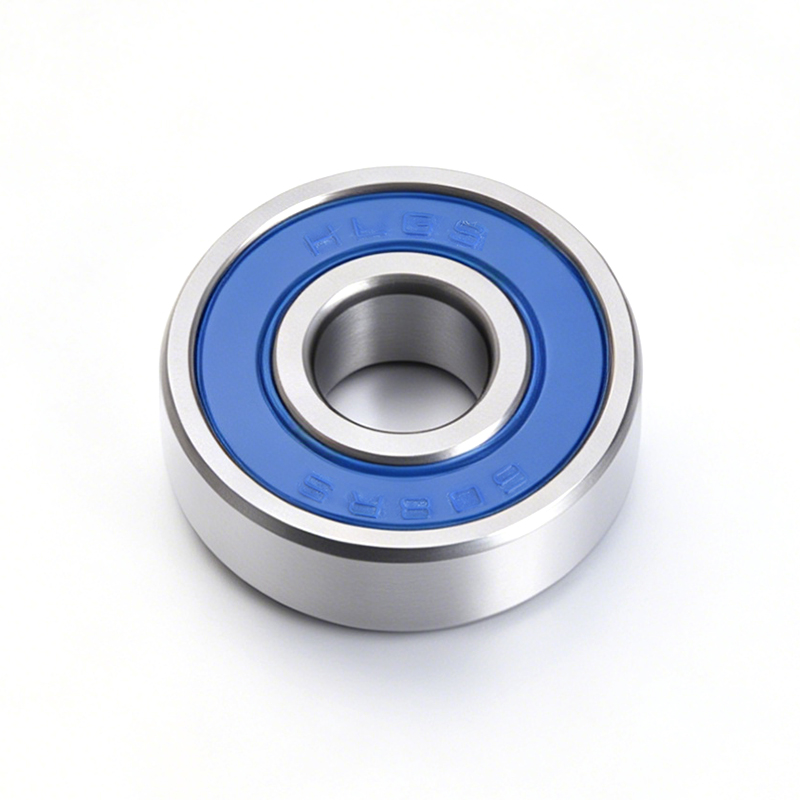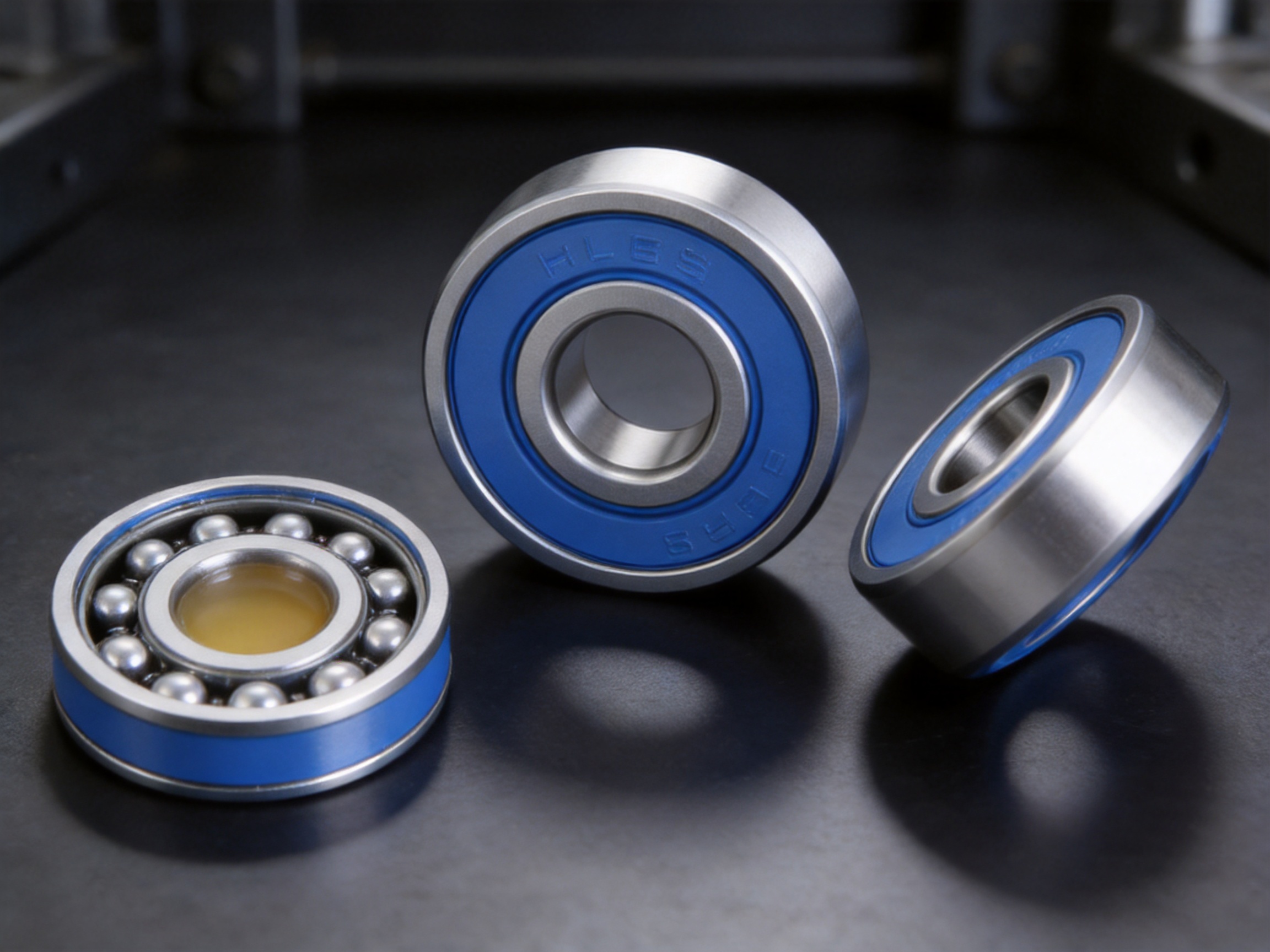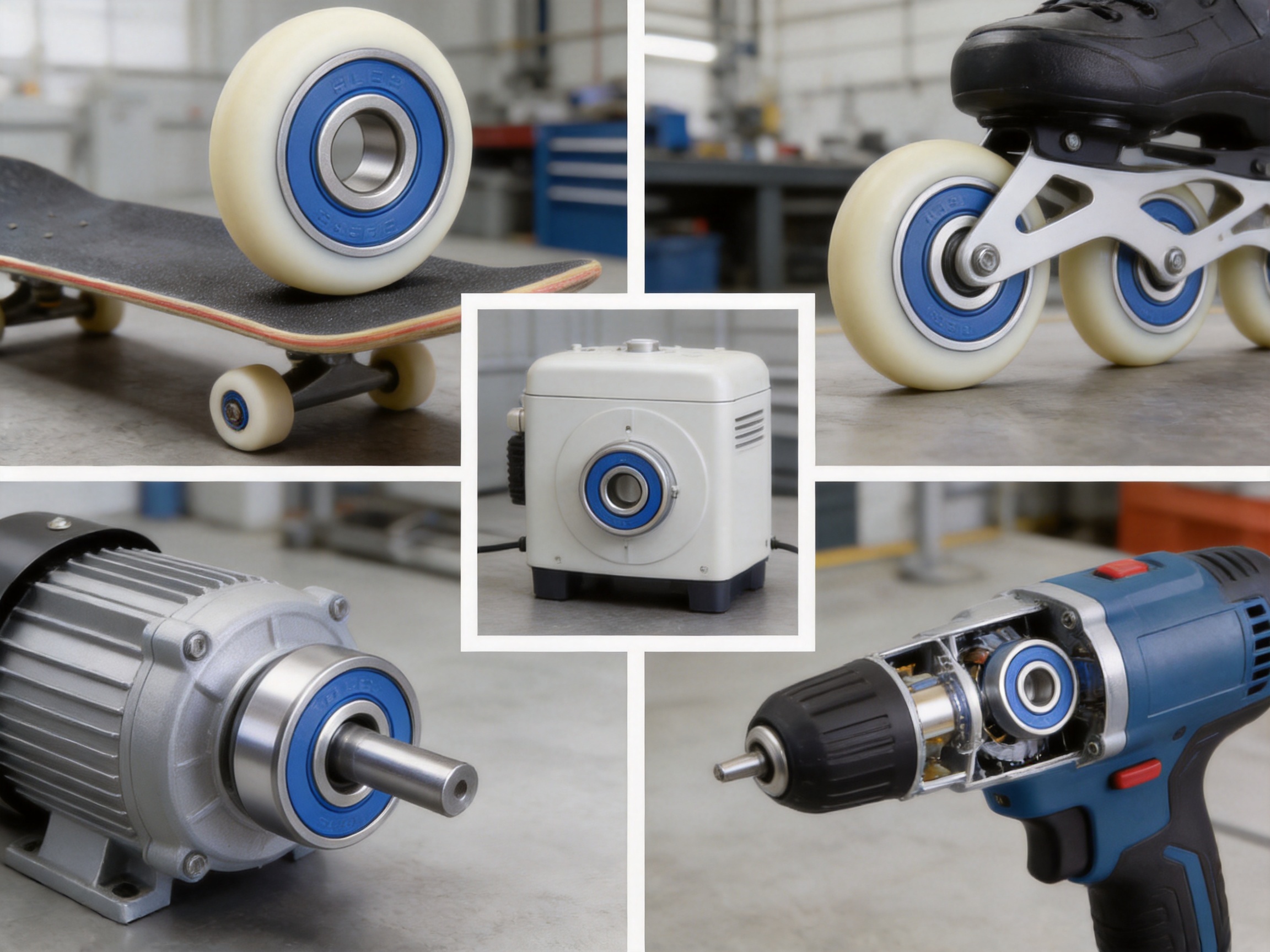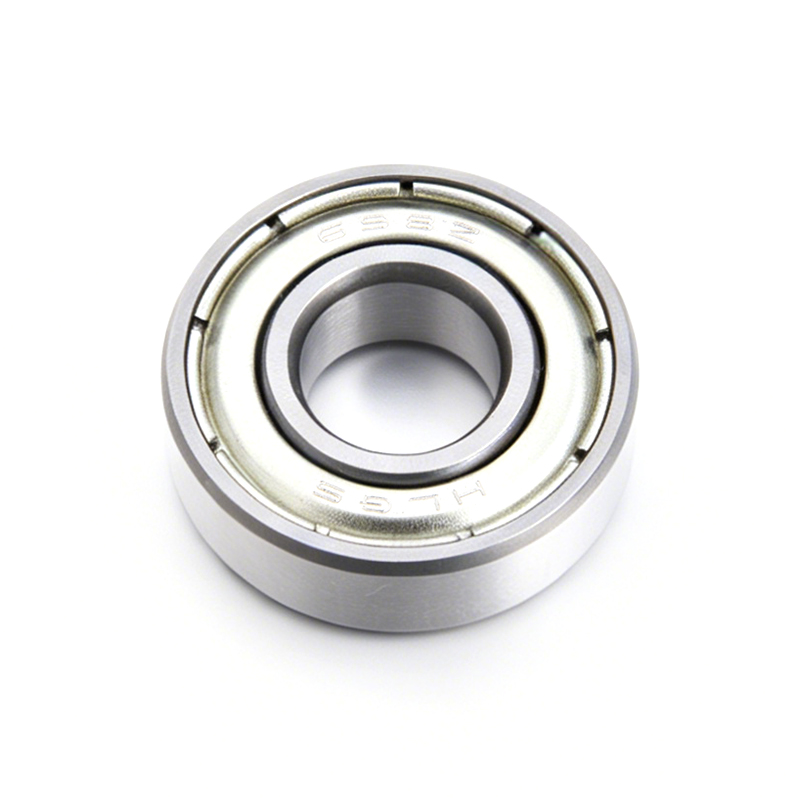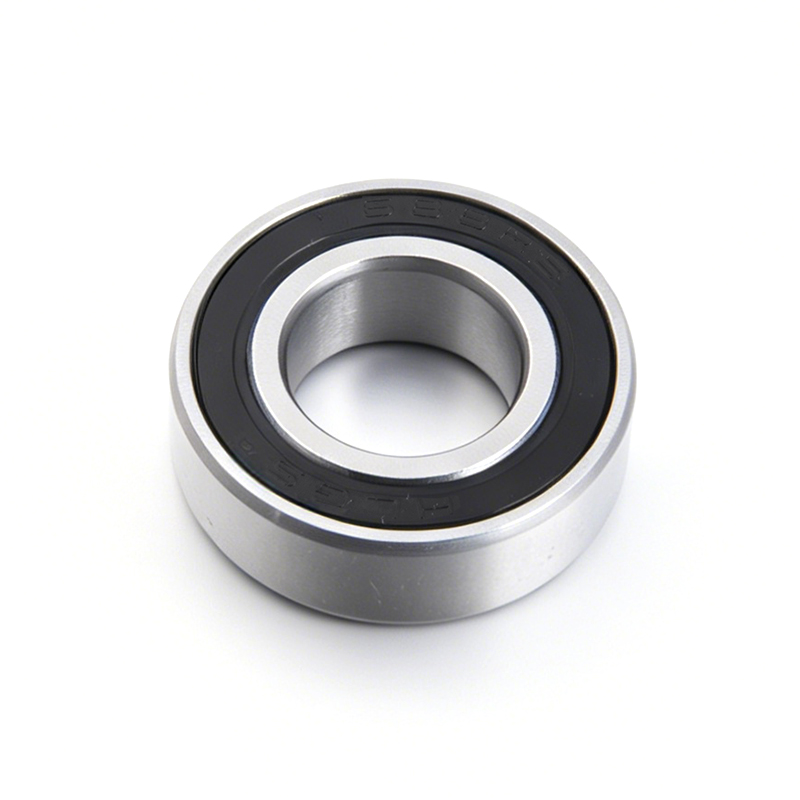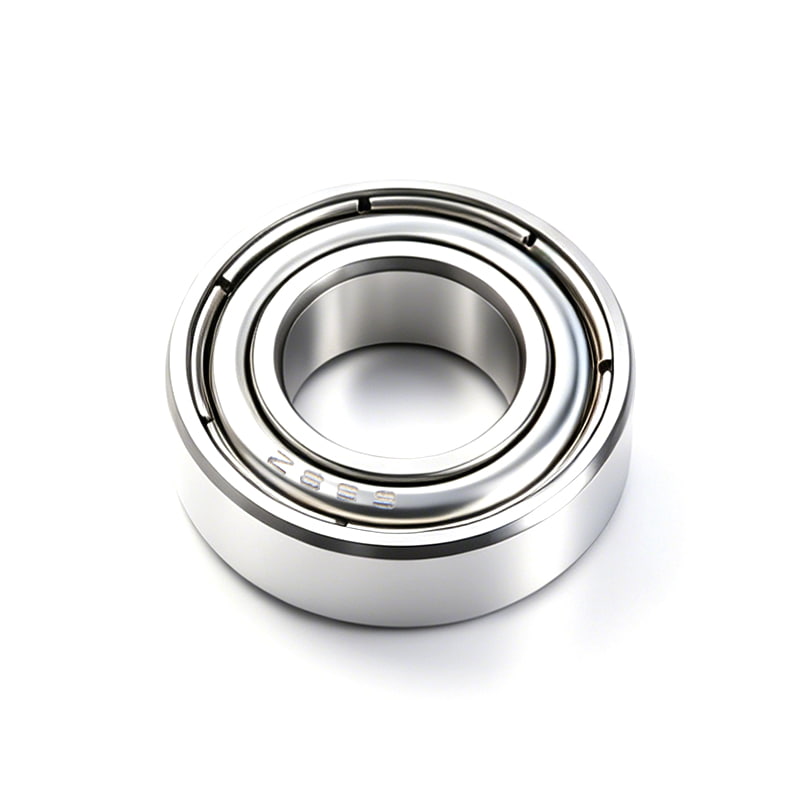
The 608-2RS deep groove ball bearing is one of the most recognizable miniature bearing sizes in modern mechanical design. With an 8 mm bore, 22 mm outside diameter, and 7 mm width, it provides a practical combination of compact dimensions, dependable radial load capacity, low friction, and smooth rotation. These characteristics have made the 608 bearing a standard choice for skate wheels, inline skates, small electric motors, power tools, household appliances, mechanical transmission systems, and many other space-constrained applications.
Although its dimensions are modest, a high-quality 608 bearing is a precision-engineered component rather than a simple commodity part. Its performance depends on the quality of its bearing steel, the accuracy of its raceways, the roundness and grade of its balls, the effectiveness of its seals or shields, the consistency of its heat treatment, and the control exercised during assembly and inspection. Small deviations in any of these areas can increase noise, friction, vibration, or premature wear.
The 608-2RS product described in this article is manufactured from GCr15 bearing steel and is specified with a dynamic load rating of 3,450 N and a static load rating of 1,420 N. The supplied product information identifies its closure as double metal shields, commonly designated ZZ. Because bearing suffixes can vary between manufacturers and markets, customers should confirm whether the required version is a rubber-sealed 2RS bearing or a metal-shielded ZZ bearing before placing an order. The dimensions and performance requirements should also be checked against the application.

608-2RS Deep Groove Ball Bearing for Ideal for Skate, Power Tool and Mini Motor
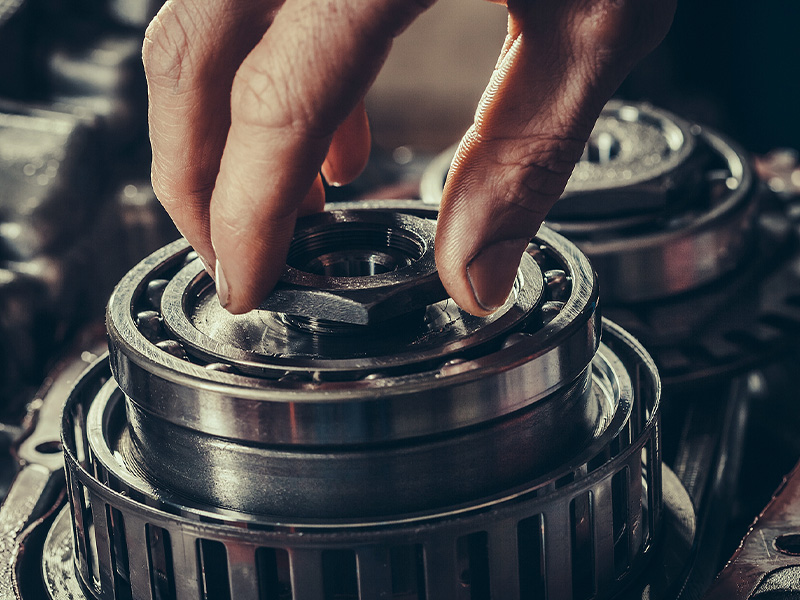
A deep groove ball bearing supports rotating shafts while reducing friction between the shaft and the stationary housing. The 608 bearing uses two hardened steel rings, a set of precision balls, a cage, and protective closures. The inner ring rotates with the shaft, the outer ring is normally fitted into a housing or wheel hub, and the balls roll along the raceways between the two rings.
The deep groove raceway geometry enables the bearing to carry primarily radial loads while also accommodating moderate axial loads from either direction. This makes the design more versatile than a bearing intended only for one type of load. In a skateboard wheel, for example, the bearing carries radial loads generated by the rider and the wheel contact surface while also tolerating limited side forces during turning, landing, and uneven loading.
The 608 size is particularly valuable because it offers a widely standardized envelope. Designers can select a bearing with a known 8 × 22 × 7 mm footprint without dedicating excessive space to the support system. Replacement is also straightforward when the application follows the same dimensional standard. This interchangeability is useful for equipment manufacturers, maintenance teams, repair shops, and distributors.
| Parameter | Specification | Application Relevance |
| Bearing number | 608-2RS | Identifies the compact deep groove ball bearing size and configuration |
| Bore diameter, d | 8 mm | Fits an 8 mm shaft or axle arrangement |
| Outside diameter, D | 22 mm | Fits a 22 mm housing, wheel hub, or mounting seat |
| Width, B | 7 mm | Supports compact axial installation |
| Closure listed in supplied data | Double metal shields, ZZ | Helps restrict dust and larger contaminants while reducing lubricant loss |
| Dynamic load rating, Cr | 3,450 N | Indicates the bearing’s capacity under repeated rotating load conditions |
| Static load rating, Cor | 1,420 N | Indicates resistance to permanent deformation under stationary or slowly moving load |
| Material | GCr15 bearing steel | Provides hardness, wear resistance, and fatigue strength after suitable processing |
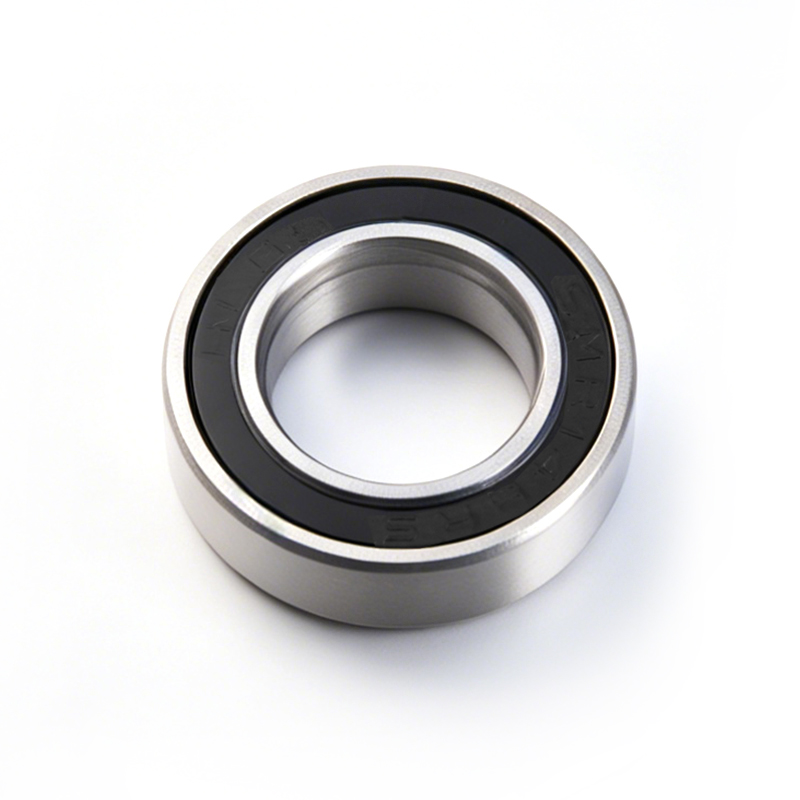
The product title uses the designation 608-2RS, while the supplied technical information lists double metal shields, ZZ. In common bearing terminology, 2RS generally refers to two rubber or elastomeric contact seals, whereas ZZ commonly refers to two metal shields. This distinction affects friction, contamination resistance, temperature performance, and lubrication retention. The manufacturing configuration should therefore be confirmed in the purchase specification, drawing, sample approval, or packing documentation.
The popularity of the 608 bearing is not based on a single feature. It results from the balance between size, load capacity, availability, installation convenience, and application flexibility. An 8 mm bore is suitable for many small axles and motor shafts, while the 22 mm outside diameter provides enough raceway area for practical radial capacity. The 7 mm width keeps the bearing compact in wheel hubs and small housings.
In skate applications, the 608 format has become a familiar standard. Skateboard and inline skate wheels are commonly designed around this bearing envelope, allowing users to replace worn bearings without replacing the entire wheel assembly. The same dimensional standard also supports efficient inventory management. A distributor can stock one widely used bearing type for several customer segments instead of maintaining many unique sizes.
Miniature motors also benefit from the 608 design. Small motors used in appliances, laboratory equipment, light automation, fans, tools, and electromechanical devices need bearings that fit into a restricted internal space. Excessive bearing size can enlarge the motor, increase rotating mass, and raise production cost. A correctly selected 608 bearing can provide the necessary shaft support while preserving a compact motor architecture.
Power tools place different demands on a small bearing. They may expose the bearing to vibration, speed changes, intermittent impact, dust, and thermal cycling. A bearing made with suitable steel, controlled raceway geometry, reliable closure components, and appropriate grease can help the tool operate smoothly over repeated duty cycles. The correct bearing selection must still consider actual speed, load, temperature, and contamination levels.
The 8 × 22 × 7 mm dimensions are a major advantage for equipment designers. The bearing occupies little radial and axial space, making it suitable for compact assemblies where every millimeter matters. Its standardized size also simplifies shaft, housing, and wheel design. Engineers can use established installation practices and avoid developing a custom bearing for applications that can use an existing standard.
Compact dimensions can reduce the overall weight of a mechanism. This is particularly important in portable power tools, personal mobility equipment, small motors, and consumer products. A smaller support component can contribute to a lighter product, provided that the bearing’s load, speed, and operating conditions remain within acceptable limits.
The listed dynamic load rating of 3,450 N reflects the bearing’s capacity for repeated load under rotating conditions according to established bearing-rating principles. It is not a direct statement that every application can apply 3,450 N continuously. Actual life depends on load magnitude, load direction, speed, lubrication, mounting accuracy, contamination, temperature, and operating duty cycle. Nevertheless, the rating demonstrates that this small bearing is designed for more than simple low-load rotation.
The deep groove raceways distribute load across the rolling elements and allow the bearing to support radial forces efficiently. In a wheel, this helps manage the load transferred from the axle through the bearing to the wheel. In a motor, it supports the rotor shaft and helps maintain the correct relationship between the rotating and stationary components.
Rolling contact produces substantially less friction than sliding contact when the bearing is properly manufactured, lubricated, and installed. Low friction helps reduce energy loss, operating temperature, and wear. It can also improve the user experience in products such as skates and small fans, where smooth motion and quiet operation are noticeable immediately.
Smooth rotation depends on more than the bearing’s nominal size. Raceway finish, ball quality, internal clearance, cage design, lubricant quantity, and seal or shield geometry all influence torque and noise. Consistent manufacturing and inspection are therefore important competitive factors. A bearing that meets the same dimensional specification as another product may still perform differently if its internal precision and production consistency are not equivalent.
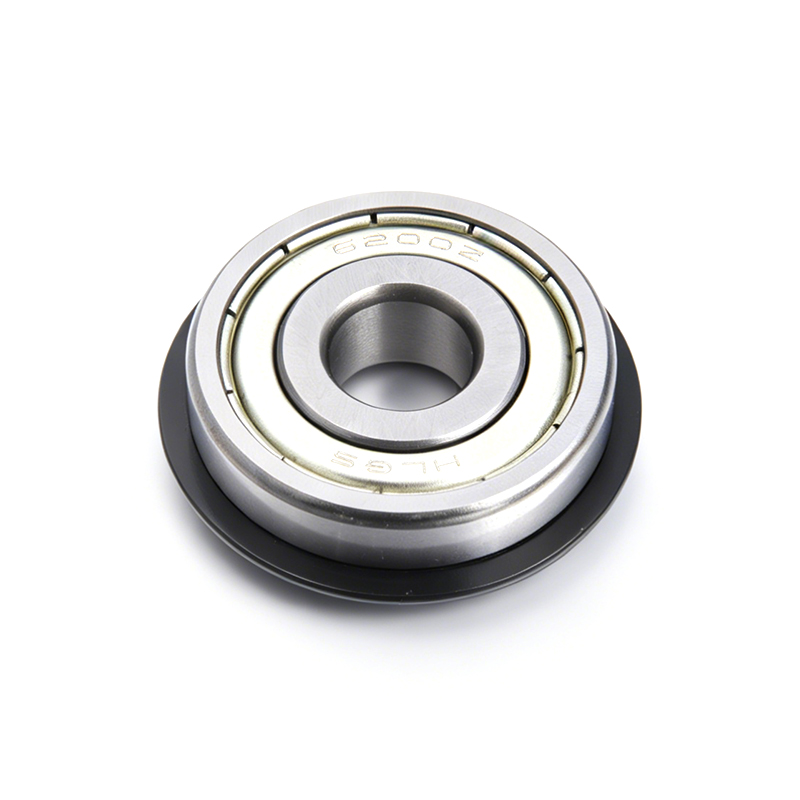
The supplied specification identifies double metal shields, or ZZ closures. These shields are designed to help prevent dust and larger particles from entering the bearing while helping retain factory-applied lubricant. Metal shields generally offer low friction because they do not normally make strong contact with the inner ring. This can be beneficial in applications where rotational efficiency and speed are important.
Metal shields are not the same as contact seals. A shielded bearing may not provide the same level of protection against water, fine slurry, or liquid contaminants as a properly selected rubber-sealed bearing. For dry environments such as many indoor mechanisms, small motors, and recreational wheel assemblies, shields may provide a suitable balance. For wet or heavily contaminated conditions, the customer should request and verify a sealing configuration designed for those conditions.
GCr15 is a widely used high-carbon chromium bearing steel. When processed correctly, it provides the hardness, wear resistance, fatigue strength, and dimensional stability needed for rolling-element bearings. The material is suitable for rings and other bearing components that must withstand repeated contact stress.
Material selection alone does not guarantee bearing life. The steel must be supported by controlled forging or forming, appropriate heat treatment, precision machining, grinding, cleaning, assembly, and inspection. The advantage of a professional bearing manufacturer is the ability to control these steps as an integrated process rather than treating the material as an isolated purchasing decision.
The 608 bearing can be used in many industries because the deep groove design is adaptable. Typical applications include skateboards, inline skates, roller skates, miniature motors, electric tools, household appliances, small transmission mechanisms, fans, office equipment, toys, compact pumps, and electromechanical products.
This versatility can simplify sourcing. A manufacturer that uses the 608 size in several product families may reduce the number of unique components, standardize maintenance procedures, and improve purchasing efficiency. It can also make spare parts easier to identify and replace.
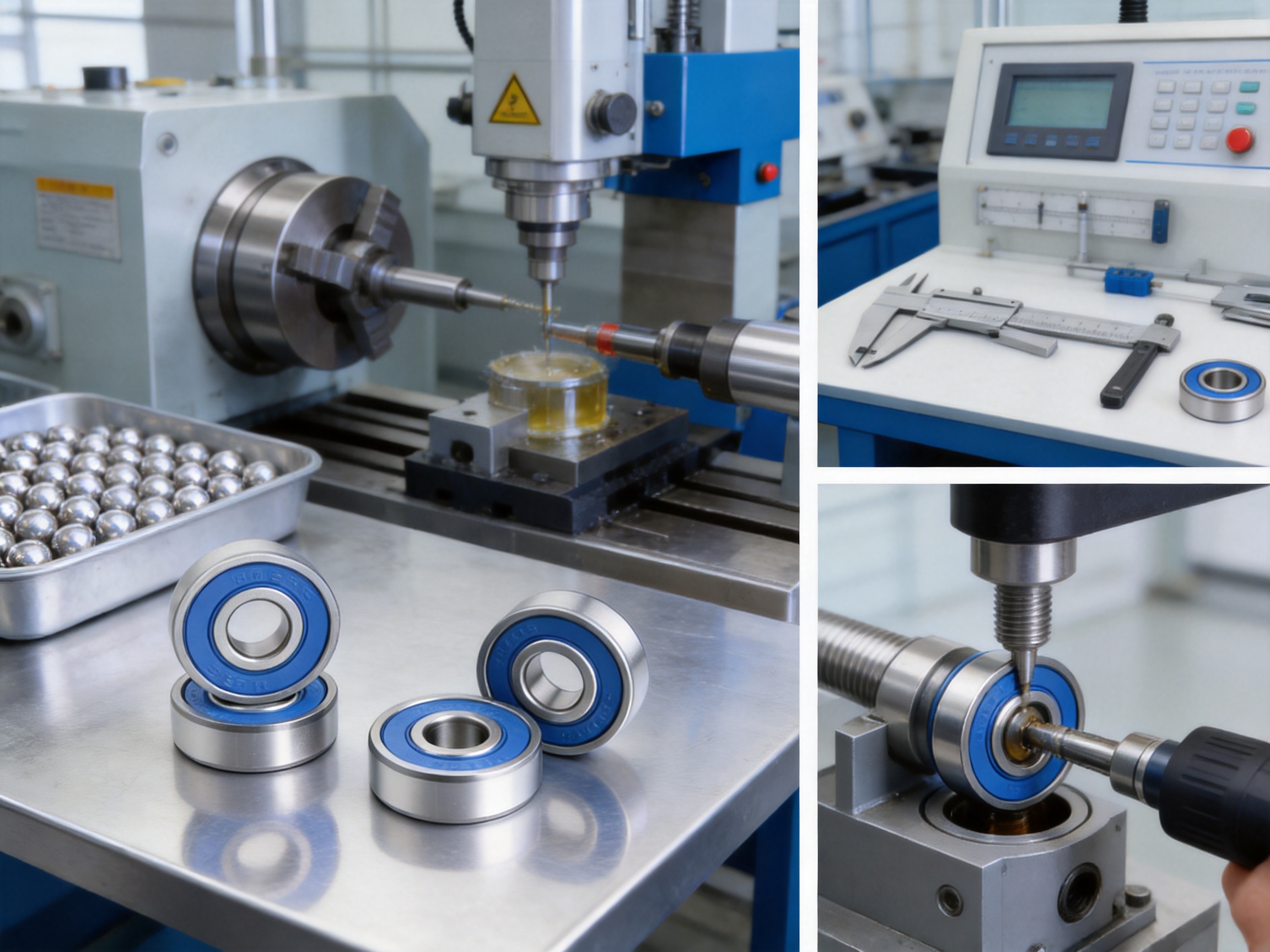
The performance of a miniature bearing begins with the manufacturing process. Because the bearing is small, dimensional variation can have a significant effect on fit, noise, vibration, and service life. A professional production system must control the complete route from raw material to finished bearing.
GCr15 bearing steel is selected for its suitability in rolling-contact applications. Material preparation includes control of chemical composition, cleanliness, internal structure, and traceability. High-quality steel helps reduce the risk of inclusions or structural irregularities that may become fatigue initiation points during service.
Material consistency is especially important for miniature bearings because the raceways and balls operate under concentrated contact stress. Even a small imperfection can influence noise or shorten fatigue life. Reliable incoming inspection and supplier management are therefore essential elements of the manufacturing system.
The inner and outer rings must be formed and machined to create accurate raceway profiles, bore dimensions, outside diameters, and shoulder geometry. Manufacturing operations may include forming, turning, heat-treatment preparation, and other controlled machining steps. The objective is to produce ring components with the correct geometry and enough material stability for subsequent hardening and grinding.
Dimensional control at this stage affects later operations. If a ring is not correctly prepared before heat treatment, distortion may increase the difficulty of achieving final precision. A disciplined process therefore combines production planning, tooling management, equipment maintenance, and inspection at multiple stages.
Heat treatment gives bearing steel the hardness and structural properties required for rolling contact. The process must be controlled to achieve the required hardness while limiting distortion, residual stress, and undesirable microstructural changes. After heat treatment, the rings must be evaluated and prepared for precision finishing.
The balance is important. Excessive softness can increase wear and plastic deformation, while excessive brittleness can reduce resistance to shock and fatigue. A stable heat-treatment process supports a longer and more predictable operating life.
Grinding is used to bring the rings to accurate final dimensions and improve the raceway surface. The bore, outside diameter, side faces, and raceways must be controlled so the bearing can be installed correctly and rotate with minimal irregularity. Surface roughness and waviness can influence friction, noise, lubricant behavior, and rolling-contact fatigue.
For miniature bearings, precision finishing is particularly significant because the small internal components leave limited tolerance for error. A raceway that is only slightly out of profile may cause uneven load distribution. A bore or outside diameter that is not properly controlled may create an incorrect fit, leading to creep, excessive preload, or reduced internal clearance.
The rolling balls must be manufactured and graded for consistent diameter, roundness, and surface quality. Uniform balls help distribute load evenly around the bearing. The cage maintains ball spacing and guides the rolling elements through the raceways. Cage material and geometry must be compatible with the bearing’s speed, lubricant, and operating environment.
Even when two bearings have identical external dimensions, differences in ball quality and internal assembly can affect running noise and torque. This is one reason why sourcing from a manufacturer with established process controls can offer an advantage over purchasing unverified low-cost alternatives.
Before assembly, components must be cleaned to remove machining residue, abrasive particles, and other contaminants. Clean assembly is essential because contamination can damage raceways and rolling elements. After the rings, balls, cage, and closure components are assembled, the bearing is filled with a suitable lubricant in a controlled quantity.
Too little lubricant may increase wear and heat, while too much lubricant may increase starting torque and operating temperature. The appropriate lubricant depends on speed, load, temperature, materials, and application requirements. For standard products, the factory lubricant is selected for general-purpose use, but specialized applications may require consultation and a different grease specification.
The supplied product specification lists double metal shields. The shields must be installed securely and concentrically without damaging the rings or interfering with rotation. Their purpose is to reduce the entry of external particles and help retain lubricant.
If a customer requires 2RS contact seals instead, the closure type should be stated clearly in the purchase order and technical documentation. Contact seals may provide stronger contamination resistance, while shields may offer lower friction. The correct choice depends on the application rather than on the designation alone.
Finished bearings should be inspected for dimensional accuracy, rotation condition, noise, vibration, appearance, and closure integrity. Load ratings are calculated or validated according to accepted bearing standards and design methods. Production testing helps identify problems that may not be visible through dimensional inspection alone.
The company information provided states that products are strictly tested with advanced equipment and that the organization follows ISO 9001 and ISO/TS 16949 management systems. These systems indicate a structured approach to quality management, process control, documentation, corrective action, and customer requirements. ISO/TS 16949 is particularly associated with automotive quality expectations, where traceability and process consistency are important.
The most important competitive advantage of a miniature bearing is not necessarily the lowest purchase price. A bearing that produces excessive noise, fails early, damages a shaft, or requires frequent replacement can increase the total cost of ownership. Consistent quality, predictable dimensions, dependable materials, and responsive technical support may provide greater value over the full service life of the equipment.
Manufacturers of professional bearings establish documented processes to reduce variation from one production batch to another. Consistent dimensions and internal performance help customers maintain stable assembly results. This is valuable for OEMs that produce thousands or millions of units and cannot afford frequent adjustments to shafts, housings, or automated assembly equipment.
Unverified alternatives may use inconsistent steel, variable heat treatment, irregular lubricant quantities, or poorly controlled closure components. Such variation can be difficult to detect until the bearing is installed in the final product. A stable manufacturing system reduces this risk.
A bearing should be evaluated as a complete system. A high load rating is not enough if the bearing has poor noise performance. Low starting torque is not enough if contamination quickly damages the raceway. Attractive pricing is not enough if the dimensions do not remain within the customer’s required tolerance.
The 608 product combines a compact standardized envelope, GCr15 steel, listed dynamic and static load ratings, protective closures, and suitability for multiple industries. This balance can make it more useful than a product optimized around only one feature.
The company’s import and export department provides OEM and ODM services. This is an advantage for customers who require private-label packaging, customized documentation, application-specific specifications, or coordinated production. OEM and ODM support can help customers integrate the bearing into a broader supply chain rather than treating it as an isolated purchase.
Customization should always be defined precisely. Possible discussion points include bearing material, closure type, lubricant, clearance, packaging, marking, inspection standards, and delivery quantities. Customers should request written confirmation for any deviation from the standard product.
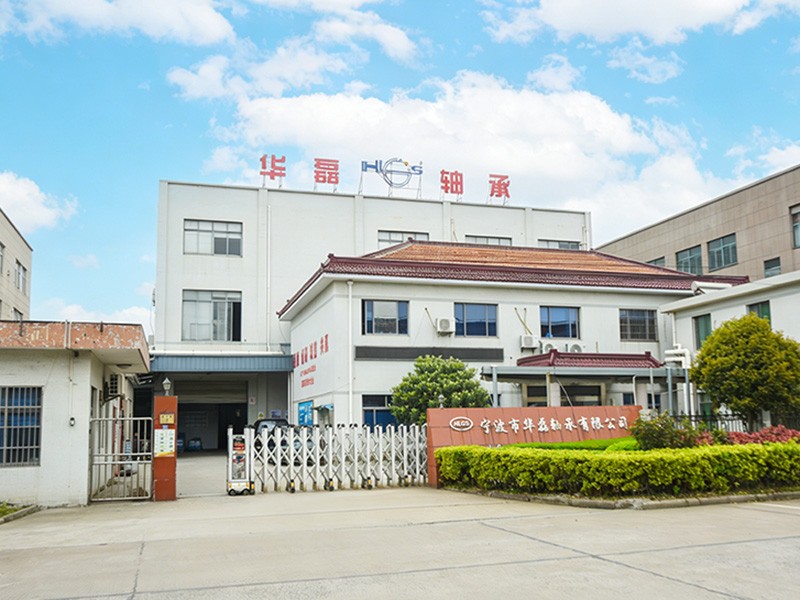
Ningbo Zhenhai Hualei Bearing Co., Ltd. was established in 2001 and specializes in miniature deep groove ball bearings. Long-term experience in a focused product category can support practical knowledge of ring processing, miniature bearing assembly, customer applications, and quality problems that arise in real operating conditions.
The company supplies bearings used in food machinery, household appliances, automotive electromechanical systems, electric tools, mechanical transmission devices, and motors. This range of applications suggests experience with different requirements for cleanliness, noise, speed, load, durability, and supply consistency.
The company follows ISO 9001 and ISO/TS 16949 management systems and has established an import and export department to serve customers in international markets. A structured quality system can support clearer specifications, production records, inspection procedures, and corrective actions. International supply capability can also simplify communication, documentation, packaging coordination, and export arrangements for overseas customers.
Skate wheels typically subject bearings to radial loads, shock, vibration, dust, and occasional moisture. The 608 format fits many standard wheel designs and can be installed in pairs or sets depending on the wheel construction. Correct axle alignment is essential. If the bearing is forced into the wheel at an angle, the rings may be damaged or the internal clearance may be altered.
Installation tools should apply force to the ring with the interference fit. If the bearing is being pressed into a wheel hub, pressure should normally be applied to the outer ring. If it is being installed onto an axle, pressure should normally be applied to the inner ring. Applying force through the balls can create brinelling or raceway damage.
Skate bearings should be protected from unnecessary water and abrasive contamination. Metal shields can reduce dust entry, but they are not a guarantee of waterproof performance. Users should avoid aggressive washing methods that force water or grit into the bearing. Replacement intervals depend on riding conditions, cleaning practices, load, speed, and storage.
In a miniature motor, the bearing supports the rotor and helps maintain the air gap between rotating and stationary components. The bearing’s radial accuracy and smooth operation can affect motor noise, vibration, efficiency, and service life. Shaft and housing fits must be selected carefully so that the rings are secure without producing excessive deformation.
Motor designers should evaluate operating speed, starting torque, continuous temperature, electrical environment, shaft loading, and expected operating hours. A standard bearing may be suitable for many general-purpose motors, while high-speed or high-temperature motors may require a different internal clearance, lubricant, cage, or closure configuration.
Power tools may generate high rotational speed, intermittent impact, vibration, dust, and heat. The 608 bearing can be used in compact tool mechanisms where its load and speed capabilities are appropriate. However, the tool designer must consider the complete duty cycle rather than relying solely on a catalog load rating.
Good housing support, accurate shaft alignment, suitable grease, and protection from abrasive dust are all important. If the application produces substantial impact or contamination, the customer may need to discuss a specialized bearing configuration. Contact seals may be preferred where dust and liquid exposure are significant, while metal shields may be favored where low friction and higher rotational efficiency are priorities.
Household appliances often require quiet operation, compact size, reliable service, and stable supply. A 608 bearing may be suitable for fans, small drives, actuators, rollers, and other rotating mechanisms. Noise and vibration can be especially important in appliances used near people, so production consistency and proper installation are critical.
Designers should also assess exposure to cleaning agents, humidity, temperature variation, and long periods of intermittent operation. The selected closure and grease must be compatible with these conditions.
In small transmission devices, the bearing supports shafts, gears, pulleys, or rollers. The deep groove design can handle radial forces and moderate axial forces, but it is not a substitute for an angular-contact, tapered-roller, or thrust bearing when the application produces heavy axial or combined loads. Proper bearing selection begins with understanding the direction and magnitude of every significant load.
Before installation, inspect the bearing packaging and confirm the bearing number, dimensions, closure type, and quantity. The shaft and housing should be clean, free of burrs, and within the required dimensional tolerances. Dirt, metal chips, paint, or corrosion on the mounting surfaces can misalign the bearing or create localized stress.
Use suitable pressing tools rather than striking the bearing directly with a hammer. The installation force must be applied to the ring that has the interference fit. When a bearing is mounted simultaneously onto a shaft and into a housing, a tool that supports both rings may be necessary. Excessive force can damage the raceways even when the bearing appears visually intact.
Do not rotate a dry or contaminated bearing at high speed. Standard factory-filled bearings are generally ready for installation, but the customer should not remove or add lubricant unless the application specification requires it. Mixing incompatible greases can reduce performance. If relubrication is necessary, the lubricant type, viscosity, operating temperature range, and quantity should be confirmed.
During operation, monitor unusual noise, vibration, temperature rise, looseness, or changes in rotational resistance. These symptoms may indicate incorrect fit, misalignment, overloading, contamination, insufficient lubrication, electrical damage, or bearing fatigue. Early inspection can prevent damage to adjacent shafts and housings.
Storage conditions also matter. Bearings should remain in their original packaging until needed and should be stored in a clean, dry environment with limited temperature fluctuation. Exposure to humidity, corrosive chemicals, or excessive vibration may affect the bearing before installation.
The first selection step is dimensional compatibility. The shaft must accommodate an 8 mm bore, the housing or wheel hub must accommodate a 22 mm outside diameter, and the available axial space must accept the 7 mm width. Customers should also confirm whether the fit is loose, transition, or interference-based and whether thermal expansion will change the fit during operation.
The second step is load evaluation. Radial load, axial load, shock load, and load distribution should be considered together. The listed dynamic rating of 3,450 N and static rating of 1,420 N provide reference values, but application life calculations require actual operating data. Static loading should be evaluated carefully when equipment remains stationary under load or experiences impact.
The third step is speed and temperature. Higher speed increases frictional heat and places greater demands on lubricant and closure design. Higher temperature can reduce lubricant life and affect internal clearance. If the application operates continuously at elevated temperature, the customer should request a configuration and lubricant appropriate for that environment.
The fourth step is contamination. Dry dust, fine abrasive particles, water, oil, chemicals, and food-processing materials create different protection requirements. The supplied 608 product is listed with double metal shields. If the application requires stronger sealing against liquid or fine contaminants, the required rubber-sealed configuration should be explicitly ordered and documented.
The fifth step is noise and vibration. Motors, fans, appliances, and office equipment may require a low-noise grade or tighter control of internal components. Customers should describe the acceptable noise level and operating speed when requesting a quotation or technical recommendation.
For standard replacement orders, customers should provide the bearing number, quantity, closure requirement, material requirement, packaging preference, and delivery schedule. If the bearing will be used in a regulated or safety-sensitive product, the customer should also specify inspection records, material documentation, and quality requirements.
For OEM projects, the manufacturer should receive drawings or assembly data showing shaft and housing dimensions, load conditions, speed, temperature, contamination, expected life, and installation method. This information helps determine whether the standard 608 configuration is suitable or whether a different clearance, seal, grease, or material option is necessary.
Private-label and ODM projects may involve custom marking, packaging, product documentation, inspection plans, or coordinated supply schedules. These details should be approved before mass production. Sample testing is recommended when the bearing is being introduced into a new product or when the closure, lubricant, or internal specification differs from the standard version.
Customers should also pay attention to the naming of 608-2RS and 608-ZZ. Because suffix conventions can vary, the purchase order should describe the physical closure rather than relying only on a suffix. For example, the customer can specify “two metal shields” or “two contact rubber seals” in addition to the requested bearing number.
It is a compact deep groove ball bearing commonly identified by an 8 mm bore, 22 mm outside diameter, and 7 mm width. It is used to support rotating shafts while reducing friction and is widely applied in skate wheels, miniature motors, power tools, appliances, and small mechanical systems.
The specified dimensions are 8 mm inside diameter, 22 mm outside diameter, and 7 mm width. These dimensions are often written as 8 × 22 × 7 mm.
The supplied product information lists double metal shields, identified as ZZ. However, the product number includes 2RS, which commonly refers to two rubber contact seals. Customers should confirm the exact closure configuration with the manufacturer before ordering, especially when water or fine contamination is present.
The listed material is GCr15 bearing steel. This high-carbon chromium steel is widely used for bearing rings and rolling elements because it can provide suitable hardness, wear resistance, and fatigue performance after controlled heat treatment.
The specified dynamic load rating is 3,450 N, and the specified static load rating is 1,420 N. These values are reference ratings rather than universal operating limits. Actual bearing life depends on load, speed, lubrication, contamination, mounting, temperature, and duty cycle.
Its compact standardized size fits many common skate wheel designs. The bearing provides radial support for the wheel and axle while allowing smooth, low-friction rotation. Correct installation, protection from contamination, and suitable maintenance remain important for service life.
Yes, it may be suitable for many miniature motors when the motor’s speed, load, temperature, clearance, lubricant, and fit requirements are compatible with the bearing. High-speed or high-temperature motor designs should be reviewed with the manufacturer before production use.
GCr15 is an established bearing material with known processing characteristics and the ability to achieve the hardness and fatigue resistance required for rolling contact. The advantage is greatest when the steel is combined with controlled heat treatment, precision finishing, clean assembly, and inspection.
No. A metal shield helps restrict dust and larger particles and helps retain lubricant, but it is not equivalent to a contact seal. Applications exposed to water, slurry, or fine liquid contamination may require a rubber-sealed design or additional external protection.
The shaft and housing should be clean and free of burrs. Use a suitable pressing tool and apply force to the ring with the interference fit. Do not transfer installation force through the balls, and do not strike the bearing directly. Misalignment and excessive force can cause hidden raceway damage.
The supplied company information states that OEM and ODM services are available through the company’s import and export department. Customers should discuss specifications such as marking, packaging, lubricant, closure, clearance, inspection, and delivery requirements in writing.
The company information states that Ningbo Zhenhai Hualei Bearing Co., Ltd. follows ISO 9001 and ISO/TS 16949 management systems. It also states that products are strictly tested with advanced equipment.
The 608-2RS deep groove ball bearing is a compact, versatile, and widely applicable solution for rotating mechanisms. Its 8 × 22 × 7 mm dimensions make it valuable where space is limited, while its GCr15 bearing steel construction, listed 3,450 N dynamic load rating, 1,420 N static load rating, and protective double-closure design support reliable operation in many general-purpose applications.
Its strongest advantages are the balance of compact size, standardized installation, smooth rotation, practical radial capacity, and broad application compatibility. For skates, miniature motors, power tools, household appliances, and small electromechanical systems, this balance can simplify design and replacement while supporting dependable performance.
The quality of the final bearing depends on the entire manufacturing system. Material control, heat treatment, precision grinding, component grading, clean assembly, lubrication, closure installation, and final testing all contribute to service life. The manufacturer’s experience in miniature deep groove bearings, international supply capability, OEM and ODM services, and stated ISO-based management systems provide a foundation for consistent production and customer support.
Before purchase, customers should verify the closure type because the supplied information refers to a 608-2RS product while specifying double metal shields, commonly known as ZZ. They should also confirm load, speed, temperature, contamination, fit, lubrication, and installation requirements. With the correct configuration and proper application engineering, the 608 bearing can provide efficient, reliable support in a wide range of compact mechanical products.
1. ISO 15, Rolling Bearings—Radial Bearings—Boundary Dimensions, International Organization for Standardization.
2. ISO 281, Rolling Bearings—Dynamic Load Ratings and Rating Life, International Organization for Standardization.
3. ISO 76, Rolling Bearings—Static Load Ratings, International Organization for Standardization.
4. ISO 9001, Quality Management Systems—Requirements, International Organization for Standardization.
5. ISO/TS 16949, Quality Management Systems for Automotive Production and Relevant Service Parts Organizations.
6. Bearing Steel Technical Literature for GCr15 High-Carbon Chromium Steel.
7. Rolling Bearing Selection, Mounting, Lubrication, and Maintenance Engineering Practices.
8. Product specifications and company information supplied for the 608-2RS deep groove ball bearing.
The Direct Answer: A Deep Groove Ball Bearing Supports Both Radial and Axial Loads Using a Simple, ...
Fundamental Definitions and Classifications of Miniature Transmission Systems In modern precision me...
The Direct Answer: Match Precision Class to Rotational Accuracy Needs, Not to the Highest Available...
What Do Flanged Bearings Do A flanged bearing supports a rotating shaft and locks it in a fixed axi...