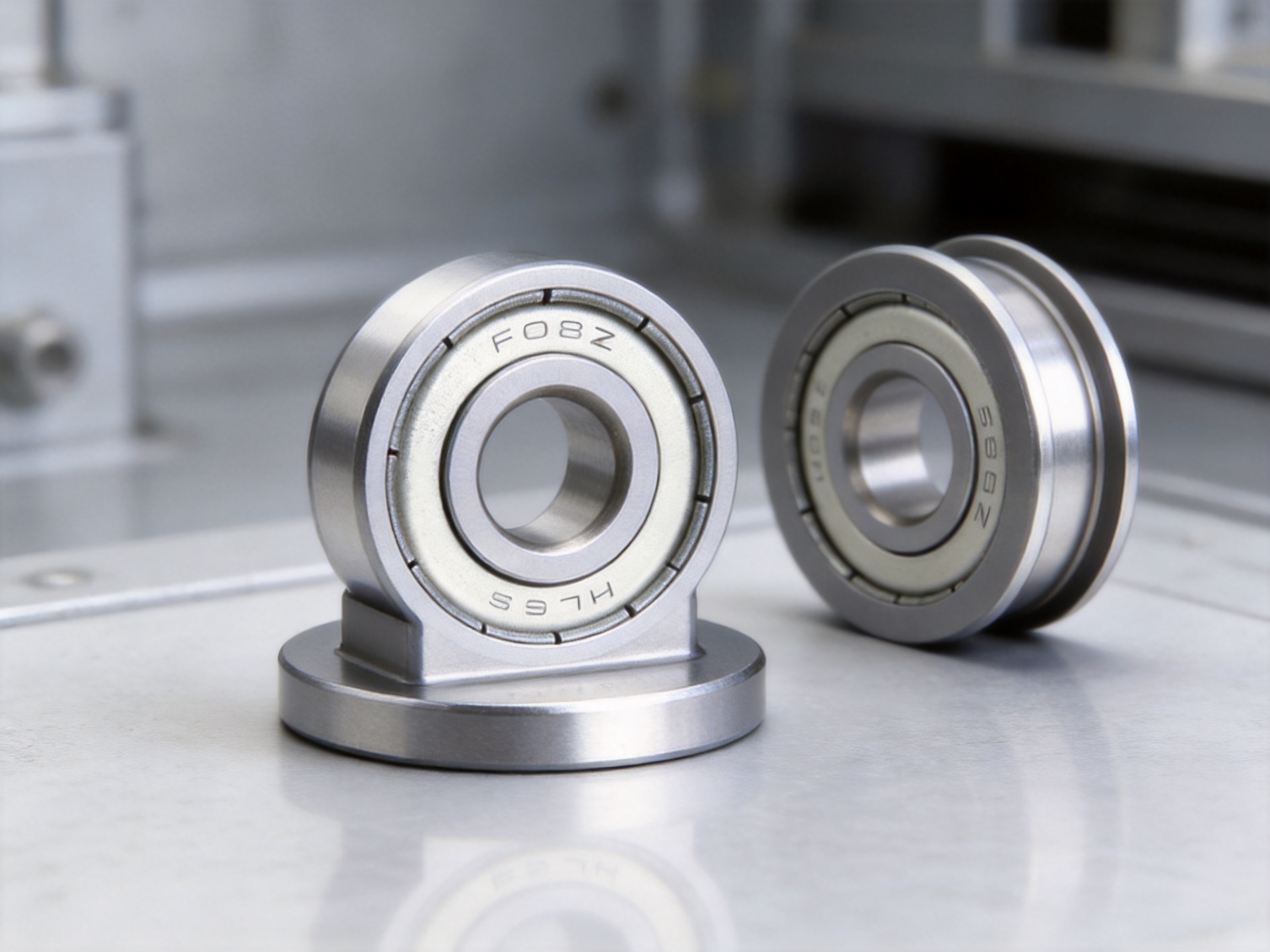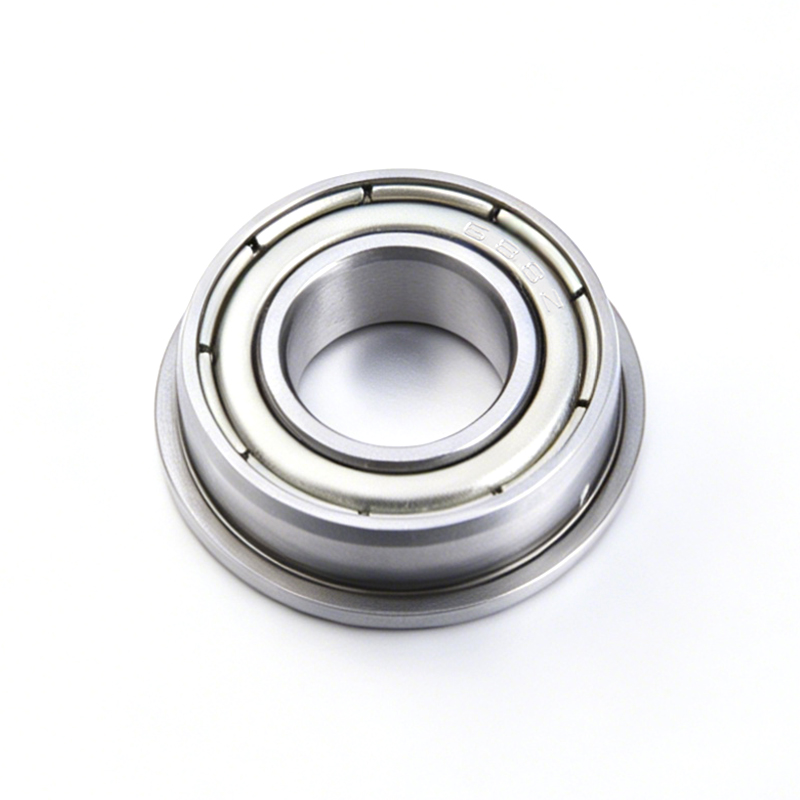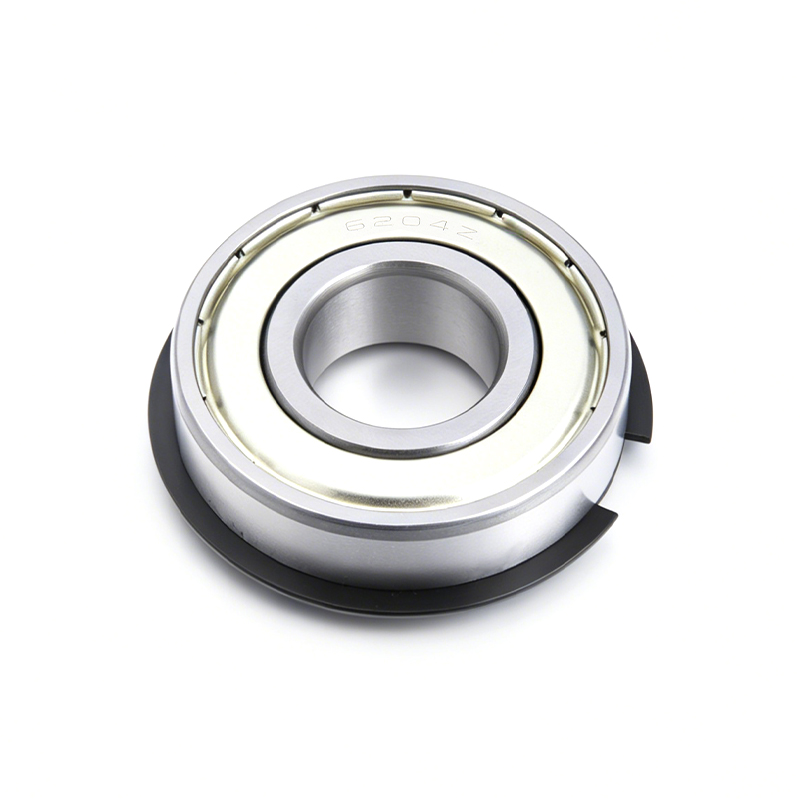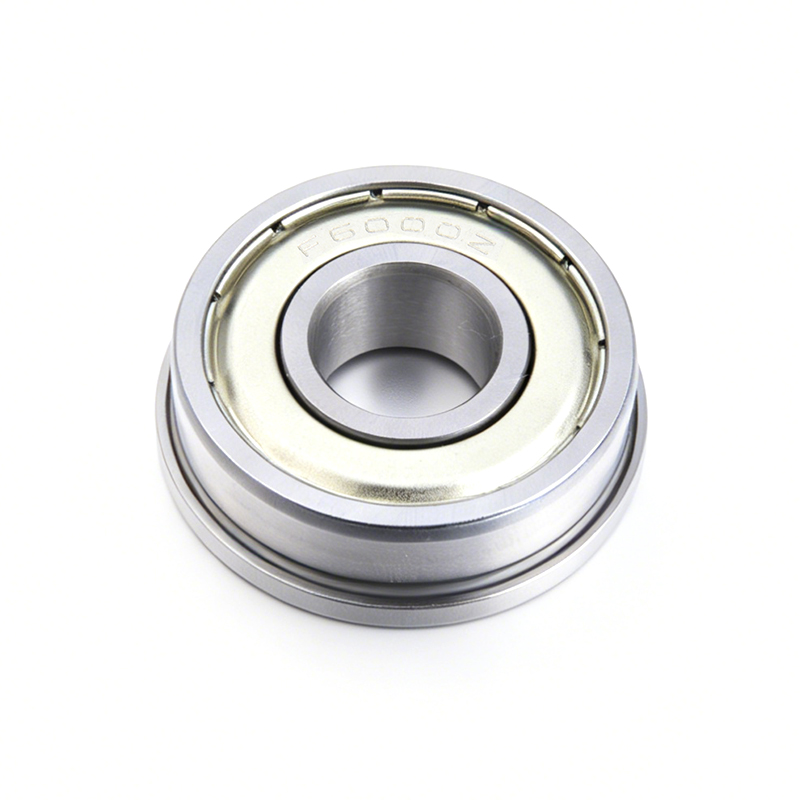
The F608ZZ flanged miniature deep groove ball bearing is designed for compact mechanical systems that require dependable rotation, accurate positioning, and long-lasting service. With an 8 mm bore, 22 mm outside diameter, and 7 mm width, this bearing provides a practical combination of small size, stable performance, and versatile installation. Its integrated flange increases axial location capability, while its double metal shields help protect the internal rolling elements from common operating contaminants.
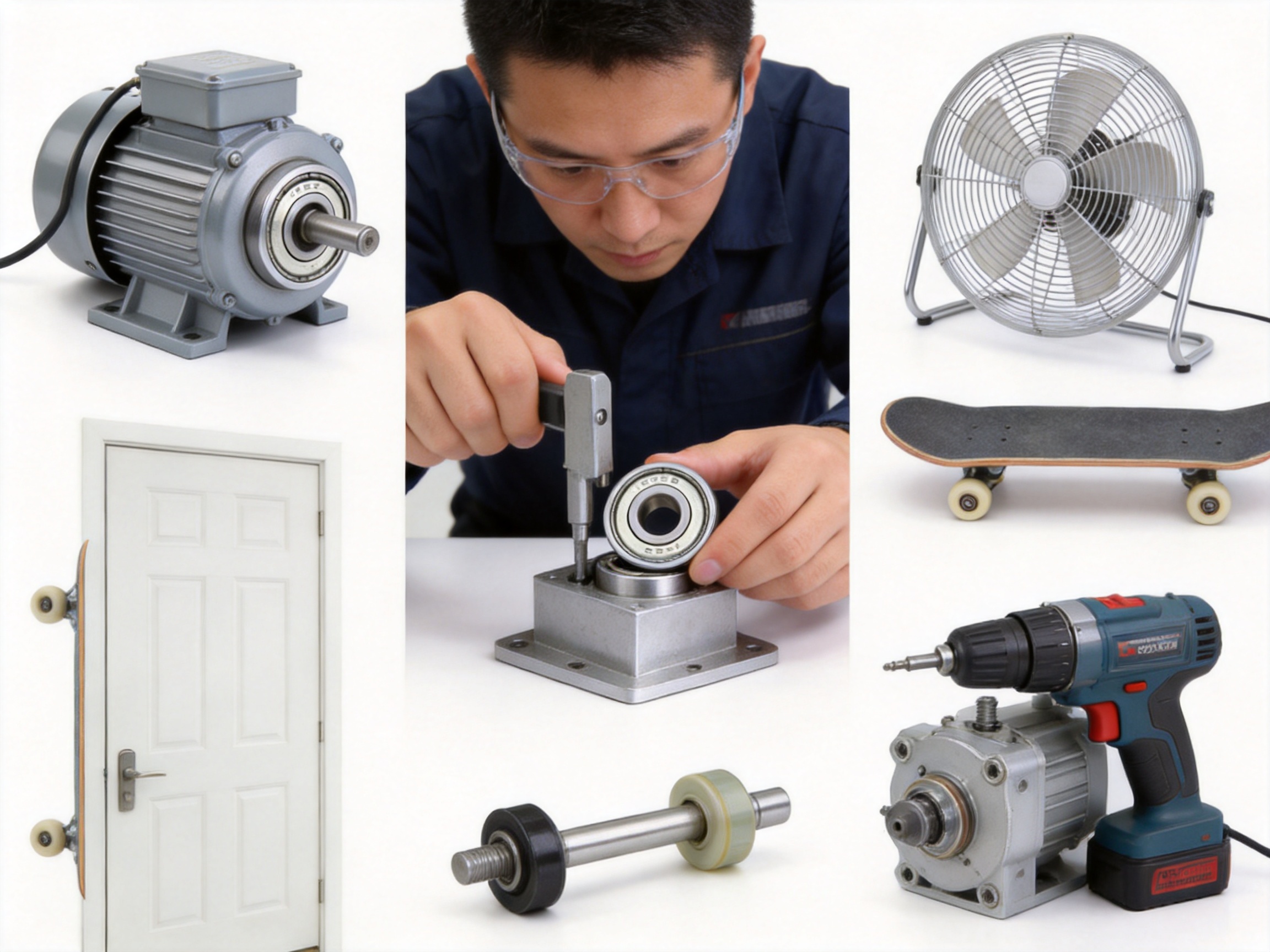
Miniature bearings are used in many products where installation space is restricted but rotational performance remains critical. Skateboards, small motors, cooling fans, power tools, door rollers, household equipment, and compact transmission assemblies all depend on bearings that can operate smoothly without occupying excessive space. In these applications, a bearing must do more than simply reduce friction. It must also maintain dimensional accuracy, tolerate repeated rotation, support operating loads, simplify assembly, and provide consistent performance over an extended service period.
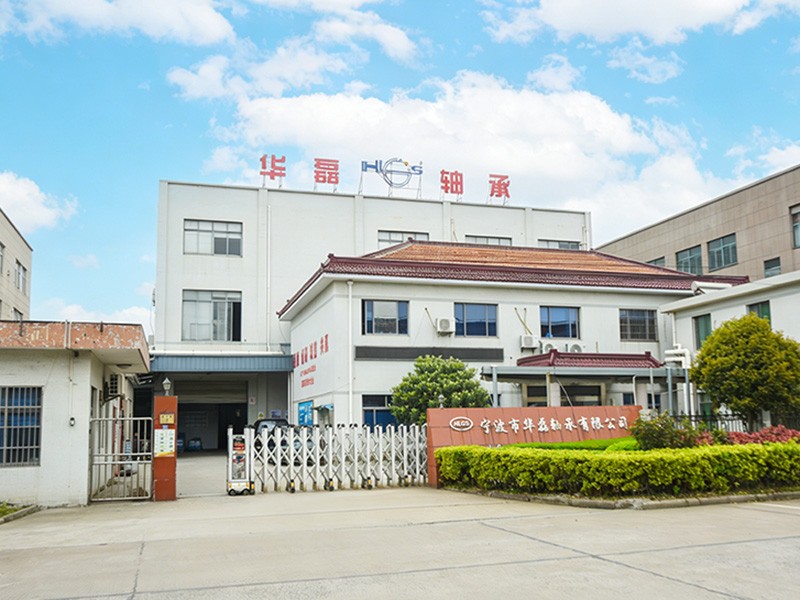
The F608ZZ addresses these requirements through a flanged structure, precision-machined raceways, carefully selected bearing steel, and a double-shielded configuration. It is manufactured by Ningbo Zhenhai Hualei Bearing Co., Ltd., a specialist producer with experience in miniature deep groove ball bearings and related products. The company combines established bearing technology with controlled production, inspection, OEM support, and international supply experience.
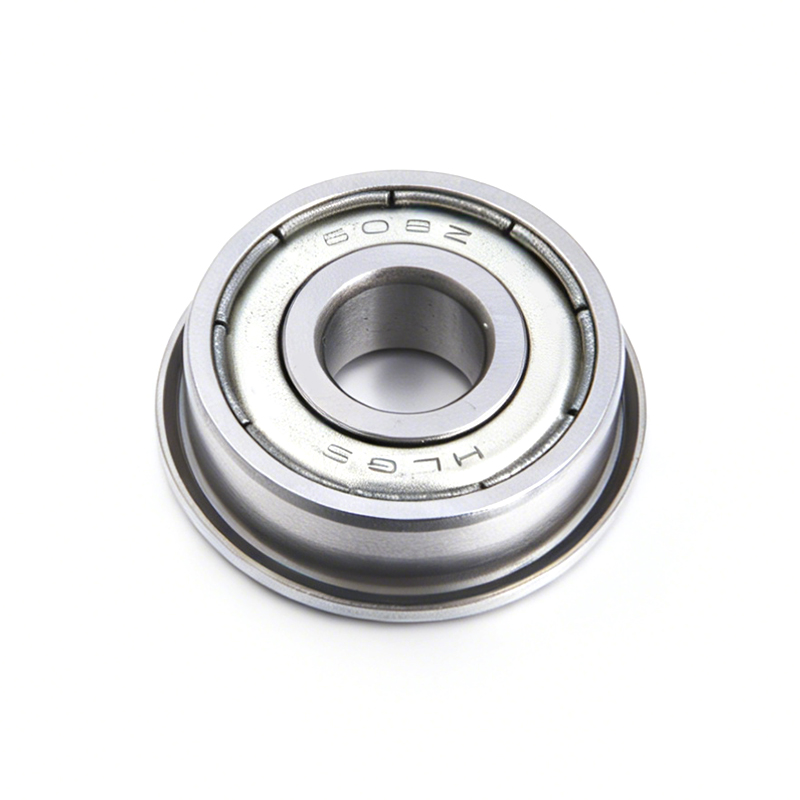
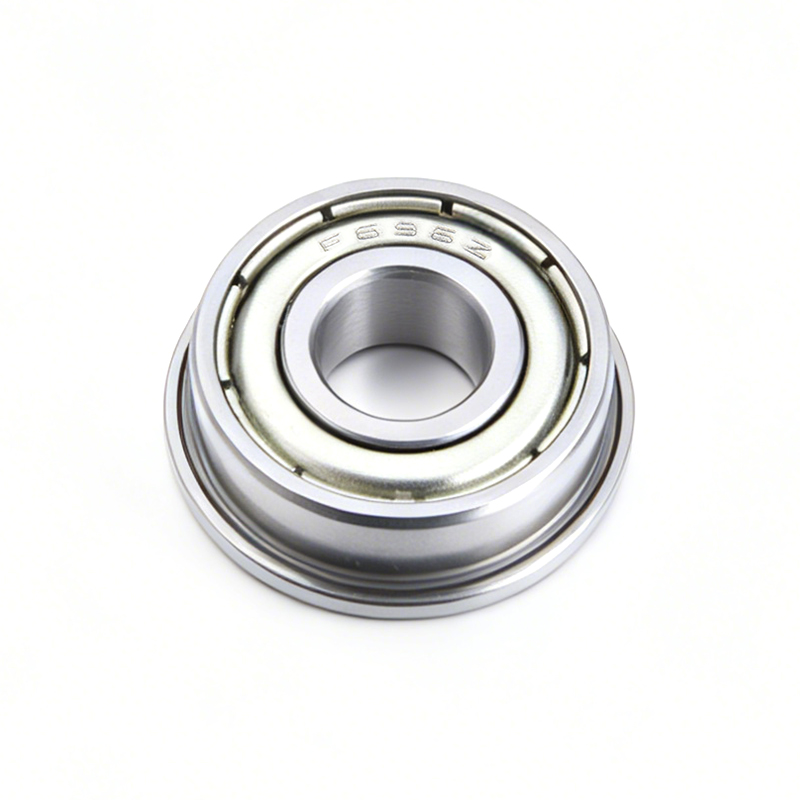
The F608ZZ is a flanged version of the 608-size miniature deep groove ball bearing. Its standard bearing section measures 8 × 22 × 7 mm, while the flange extends the outside diameter to 23.5 mm at the locating shoulder. This design allows the bearing to be seated against a housing shoulder or retained within a suitable mounting arrangement without requiring a separate axial locating component in every application.
The bearing uses double metal shields, identified by the suffix “ZZ.” These shields are fitted on both sides of the bearing to help retain lubricant and reduce the entry of dust, fibers, and other particles. Unlike contact seals, metal shields generally allow low rotational resistance and are well suited to applications where smooth rotation and moderate-speed operation are more important than complete exclusion of liquid contaminants.
Its nominal dynamic load rating is 3,450 N, and its static load rating is 1,420 N. These values provide engineers with a useful basis for preliminary bearing selection and service-life calculations. Actual performance depends on radial and axial loading, speed, lubrication, temperature, alignment, mounting accuracy, contamination, and the operating environment.
| Parameter | Specification |
| Bearing number | F608ZZ |
| Bore diameter | 8 mm |
| Outside diameter | 22 mm |
| Nominal width | 7 mm |
| Flange diameter | 23.5 mm |
| Shield arrangement | Double metal shields, ZZ |
| Dynamic load rating, Cr | 3,450 N |
| Static load rating, Cor | 1,420 N |
| Material options | GCr15 or stainless steel, according to configuration and application |
| Product category | Flanged miniature deep groove ball bearing |
A conventional miniature bearing may require a separate shoulder, retaining ring, spacer, or other housing feature to control its axial position. In compact assemblies, there may not be enough space for these additional components. The flange on the F608ZZ creates an integrated locating feature that can simplify housing design and improve installation consistency.
When the bearing is inserted into a correctly dimensioned housing, the flange can rest against the housing face. This helps control the bearing’s axial position and reduces the possibility of pushing the bearing too far into the mounting bore. It may also make assembly faster because the installer can use the flange as a clear seating reference.
The flanged design is particularly helpful in products manufactured in large quantities. During repeated assembly, a built-in locating shoulder can reduce dependence on operator judgment and simplify fixture design. It can also help product designers reduce the number of separate retention parts. Fewer components may result in lower assembly complexity, reduced inventory requirements, and less opportunity for incorrect installation.
The flange should not be treated as a substitute for proper load support in every direction. The housing, shaft, shoulder, and retaining method must be designed to withstand the expected radial and axial forces. The flange must also be protected from excessive impact during installation. Pressing through the rolling elements or applying force to the wrong ring can damage the raceways regardless of the bearing’s nominal load rating.
Small mechanisms frequently have limited room for traditional bearing retention. A flanged bearing offers a practical way to establish a repeatable axial reference while preserving the compact external dimensions of the bearing body. This can be valuable in small rollers, guide wheels, fan assemblies, and motor housings where a few millimeters of additional hardware can affect the overall product design.
The F608ZZ flange diameter of 23.5 mm is larger than the 22 mm outside diameter of the bearing section. This difference provides the locating lip required for axial positioning. Before production, engineers should verify the housing counterbore, shoulder diameter, fit tolerance, and clearance around the flange to ensure that the flange is fully supported without interference.
Deep groove ball bearings are widely used because they can support radial loads while also accommodating a degree of axial loading. Their internal geometry allows rolling elements to move between the inner and outer raceways with substantially less sliding friction than a plain bearing. For compact motors, rollers, and power transmission components, this can help reduce energy loss and support efficient operation.
The F608ZZ is intended for smooth, stable rotation in continuous medium-speed service. The bearing’s performance comes from the combined effect of accurate raceway geometry, round and consistent balls, suitable internal clearance, controlled lubrication, and careful assembly. No single feature determines bearing quality; reliable operation depends on the interaction of all these elements.
Low friction is important in miniature equipment because the available driving power may be limited. A small fan motor, portable tool, or compact actuator may have little excess torque. Excessive bearing resistance can increase power consumption, raise operating temperature, reduce speed, and shorten the useful life of the surrounding components. A properly selected F608ZZ can help the mechanism rotate freely and maintain consistent motion.
Stable rotation is also important for noise and vibration control. Variations in raceway accuracy, ball diameter, lubrication, or shield fit may create uneven running behavior. Precision production and inspection help reduce these variations. The result is a bearing suitable for mechanisms where repeatable movement and controlled running characteristics are required.

F608ZZ Flanged Mini Bearing Delivers Smooth Operation and Long Service Life
The two metal shields on the F608ZZ provide a balance between internal protection and low rotational resistance. The shields help keep the factory-applied lubricant inside the bearing and reduce the entry of ordinary airborne contaminants. They are especially practical for enclosed mechanisms, indoor equipment, and applications where the bearing is not directly exposed to water, heavy dust, or aggressive chemicals.
Metal shields are non-contact protective elements. Because they do not normally press directly against the rotating ring in the same way as contact seals, they can support efficient rotation and moderate-speed operation. This makes the ZZ configuration popular in small motors, fans, rollers, electric tools, and general machinery.
However, the shield arrangement must be matched to the environment. The F608ZZ is not intended to provide the same level of liquid exclusion as a sealed bearing with contact seals. If the application involves water spray, washdown, mud, abrasive dust, or high-pressure cleaning, the design engineer should evaluate a more suitable sealing configuration or provide additional external protection.
Proper storage is also important. Bearings should remain in their original packaging until installation whenever possible. They should be stored in a clean, dry environment away from condensation, corrosive vapors, vibration, and rapid temperature changes. Even a shielded bearing can be affected by poor storage conditions before it reaches the machine.
The F608ZZ can be supplied in GCr15 bearing steel or stainless steel configurations, depending on product requirements and application conditions. GCr15 is a widely used high-carbon chromium bearing steel known for hardness, wear resistance, fatigue strength, and suitability for precision bearing components. It is commonly selected for general industrial applications where the operating environment is controlled.
Stainless steel may be considered when improved corrosion resistance is important. It can be useful in equipment exposed to humidity, occasional moisture, or environments where surface corrosion must be limited. The final performance of a stainless-steel bearing depends on the specific material grade, heat treatment, load, speed, lubrication, and environmental conditions. Stainless construction does not make a bearing immune to all forms of corrosion.
Material selection should therefore be based on the complete operating profile rather than on a single property. Engineers should consider load, rotational speed, temperature, humidity, cleaning procedures, exposure to chemicals, expected service life, and maintenance access. Ningbo Zhenhai Hualei Bearing Co., Ltd. can support customers in evaluating suitable product configurations for different applications.
Bearing fatigue generally develops after repeated rolling contact over time. The raceways and rolling elements experience repeated stress cycles, and the service life depends on load magnitude, material quality, hardness, surface finish, lubrication, alignment, and contamination control. A bearing manufactured with consistent materials and controlled processes is better positioned to deliver predictable performance.
The F608ZZ is designed for continuous medium-speed operation and routine mechanical service. Its deep groove geometry, hardened bearing components, and controlled lubrication support dependable rolling contact. In practice, service life can be extended by avoiding excessive loads, preventing shaft and housing misalignment, keeping mounting forces on the correct ring, and protecting the bearing from contamination.
Ningbo Zhenhai Hualei Bearing Co., Ltd. was established in 2001 and focuses on the manufacture of miniature deep groove ball bearings. Over years of production, the company has developed experience in bearing manufacturing, product inspection, customer support, and international supply. Its product range serves food machinery, household appliances, automotive electromechanical systems, electric tools, mechanical transmission equipment, motors, and other industrial applications.
The company operates under the HLGS registered trademark and follows ISO 9001 and ISO/TS 16949 management systems. These management frameworks support controlled procedures for quality planning, production monitoring, documentation, inspection, corrective action, and continuous improvement. Certification alone does not determine the performance of an individual bearing, but a structured quality system provides an important foundation for consistent manufacturing.
In 2016, the company established Ningbo Hotex Mechanical & Electrical Technology Co., Ltd. as its import and export department. This structure strengthens its ability to support overseas customers, coordinate orders, manage export processes, and provide technical communication for international projects. It also supports OEM and ODM cooperation for customers requiring customized packaging, product specifications, or supply arrangements.
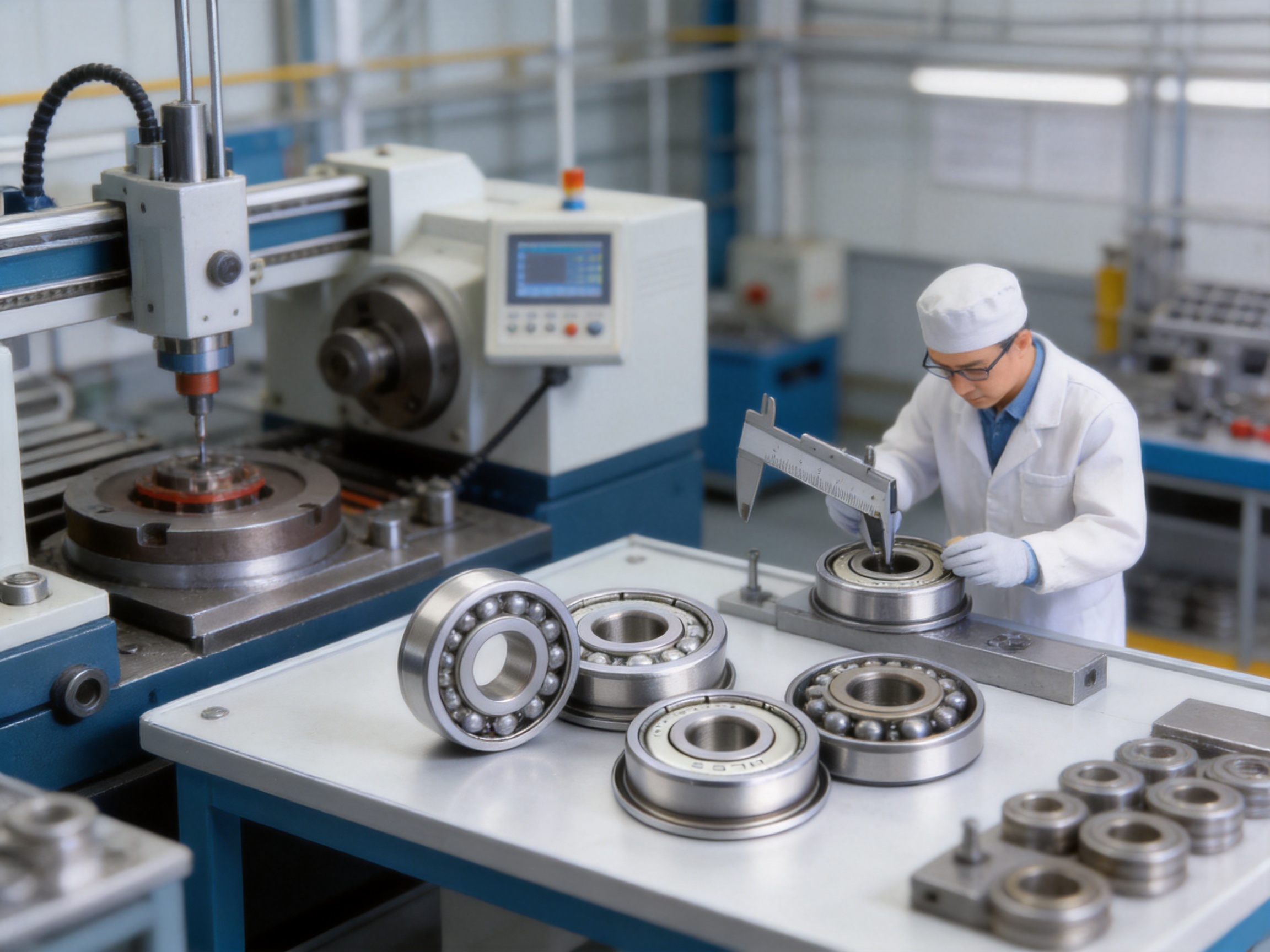
A miniature bearing contains multiple precision parts, including an inner ring, outer ring, rolling elements, cage, lubricant, and shields. Each component must meet dimensional and functional requirements before final assembly. The inner and outer rings require accurately formed raceways. The balls must maintain consistent size and sphericity. The cage must guide the balls while limiting friction and maintaining separation. The shields must fit correctly without creating unnecessary resistance.
Manufacturing typically includes raw material preparation, forming or machining, heat treatment, grinding, superfinishing, cleaning, component inspection, assembly, lubrication, shield installation, and final testing. The exact process may vary according to the bearing size, material, precision class, and customer requirements. For a small flanged bearing such as the F608ZZ, control of flange dimensions and concentricity is especially important because the flange affects housing location.
Grinding and finishing operations influence raceway geometry, surface texture, and running smoothness. Heat treatment influences hardness and resistance to rolling-contact fatigue. Cleaning helps remove residual processing particles before assembly. Lubrication must be applied in a controlled quantity because too little lubricant can increase wear, while excessive lubricant can increase drag and temperature during operation.
Inspection is an essential part of miniature bearing production. Dimensional checks may include bore diameter, outside diameter, width, flange diameter, roundness, and radial clearance. Functional checks may include rotational torque, noise, vibration, shield fit, appearance, and lubricant condition. Depending on the production program, inspection may be performed on incoming materials, individual components, assembled bearings, and finished batches.
Advanced inspection equipment improves the ability to identify deviations that may not be visible to the naked eye. Measuring instruments can verify critical dimensions, while noise and vibration testing can help detect irregular running conditions. Hardness and metallurgical checks can support material and heat-treatment control. Traceable records allow quality teams to analyze trends and respond to potential issues.
For customers purchasing large quantities, batch consistency is often as important as the performance of a single sample. Consistent inspection procedures help reduce variation between production lots. This is valuable for manufacturers of motors, fans, rollers, tools, and appliances, where a bearing may be installed in thousands of units and must perform similarly in each finished product.
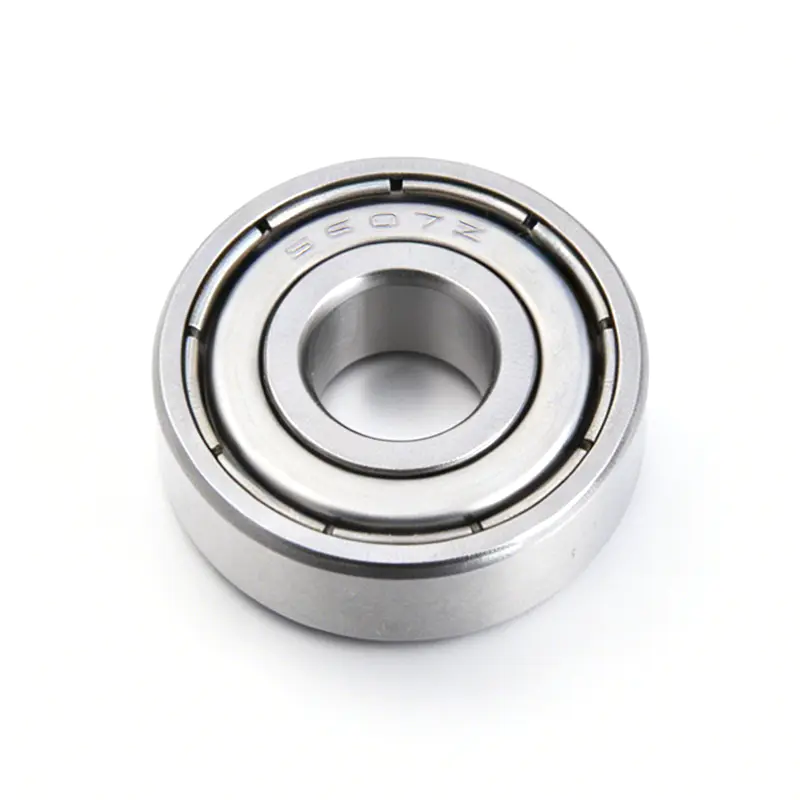
The most direct advantage of the F608ZZ is its integrated flange. A standard 608ZZ bearing may offer similar basic bore, outside diameter, and width dimensions, but it does not provide the same built-in axial locating feature. Depending on the housing design, a non-flanged bearing may require a shoulder, retaining ring, adhesive, spacer, or additional plate to control its position.
Using a flanged bearing can reduce part count and simplify assembly. It may also reduce the need for secondary machining operations in the housing, provided the housing is designed correctly. The flange gives the designer a clear reference surface and can help establish consistent bearing placement during production.
| Comparison factor | F608ZZ flanged bearing | Typical non-flanged miniature bearing |
| Axial location | Integrated flange provides a locating feature | Usually depends on housing shoulders or separate retainers |
| Assembly guidance | Flange can provide a visible seating reference | Position may require additional assembly control |
| External protection | Double metal shields | Depends on the selected suffix and configuration |
| Compact equipment suitability | Useful where space for retention parts is limited | May require additional surrounding components |
| General rotation characteristics | Low-friction rolling operation for medium-speed service | Depends on design, material, clearance, and lubrication |
| Design flexibility | Suitable for assemblies requiring a flange reference | Suitable where a separate axial locating method is available |
The flanged structure does not automatically make the F608ZZ better for every application. If the housing already includes a robust shoulder and retaining system, a non-flanged bearing may be more economical or may offer different mounting flexibility. The advantage of the F608ZZ is strongest when integrated axial location, compact assembly, and reduced component count are important design objectives.
Some low-cost bearings may appear interchangeable based only on nominal dimensions. In practice, differences in steel quality, heat treatment, raceway finish, ball consistency, internal clearance, lubricant, shield fit, and inspection can produce significant differences in operating behavior. A miniature bearing that rotates acceptably by hand may still generate excessive noise, vibration, heat, or premature wear under continuous service.
The F608ZZ is supported by a manufacturer with long-term experience in miniature bearing production and documented quality-management practices. Its stated load ratings, material options, shield configuration, and dimensional information give customers a clearer basis for product selection. Consistent manufacturing and testing can help reduce the risk associated with uncontrolled substitutions.
For OEM buyers, quality consistency also affects the finished product. An inconsistent bearing may increase assembly rejects, cause variation in motor noise, create premature field failures, or require additional inspection at the customer’s factory. Working with an established supplier can help customers create clearer specifications, establish incoming inspection procedures, and maintain continuity of supply.
The 8 mm bore is compatible with many compact wheel and axle arrangements. The flanged design may help locate the bearing within a wheel or housing when an axial reference is needed. For skateboard-related use, designers should account for impact loading, shock, contamination, moisture, and the actual load distribution across multiple bearings. The bearing must be installed securely and protected from direct damage.
Small electric tools often require bearings that can withstand repeated rotation, vibration, and intermittent load changes. The F608ZZ can be used in suitable compact power transmission positions, gear supports, guide mechanisms, and motor-related assemblies. Application engineers should verify speed, temperature, radial load, axial load, and vibration levels before final selection.
Motor and fan assemblies benefit from bearings that rotate smoothly with consistent torque and controlled noise. The F608ZZ’s compact size and metal shields make it suitable for many enclosed or semi-enclosed designs. Correct shaft fit, housing alignment, rotor balance, and lubrication are important because even a high-quality bearing cannot compensate for a bent shaft or an imbalanced rotating assembly.
Door rollers, sliding mechanisms, and guide wheels often need a bearing that can maintain alignment while supporting repeated movement. The flange may simplify axial positioning inside a roller or support bracket. The designer should consider whether the application is exposed to outdoor moisture, dust, cleaning chemicals, or sudden impact. Where contamination is severe, additional external sealing may be necessary.
Household appliances contain numerous small rotating mechanisms, including fans, rollers, actuators, feed systems, and control assemblies. The F608ZZ can support compact designs where low friction, repeatable rotation, and straightforward assembly are valuable. In appliance development, attention should also be given to operating noise, temperature rise, service accessibility, and the compatibility of the bearing lubricant with the intended environment.
Correct installation is essential to achieving the expected performance of any miniature bearing. Before assembly, inspect the shaft and housing for burrs, dents, dirt, corrosion, and dimensional errors. The shaft and housing should have suitable fits based on the load direction, rotation of the ring, operating temperature, and expected assembly method.
When mounting the bearing onto a shaft, apply installation force to the inner ring if the fit is on the shaft. When inserting the bearing into a housing, apply force to the outer ring if the fit is in the housing. Applying force through the rolling elements can create brinelling, raceway damage, shield deformation, or internal misalignment.
The flange should be supported evenly against its intended housing surface. Do not use the flange as an impact surface, and do not hammer directly on the bearing. A suitable press, mandrel, or controlled installation fixture is preferred for production assembly. The mounting tool should contact the correct ring and remain aligned with the bearing axis.
After installation, rotate the assembly by hand where possible. Check for abnormal tightness, roughness, scraping sounds, axial movement, or interference between the flange and surrounding components. In motor or fan applications, verify that the shaft rotates freely before energizing the assembly.
A fit that is too loose may allow ring creep, fretting, noise, and wear. A fit that is too tight may reduce internal clearance, increase friction, and create excessive operating temperature. The correct fit depends on which ring rotates relative to the load, the magnitude and direction of the load, temperature changes, shaft and housing materials, and the required service life.
The flange also requires adequate clearance in the housing. The housing face should be flat and perpendicular to the bearing axis. If the housing shoulder is uneven, the bearing may be tilted during installation, increasing friction and reducing the effective load capacity. In high-volume production, checking housing tooling and assembly fixtures is as important as checking the bearing itself.
The F608ZZ is supplied with internal lubrication appropriate to its configuration and intended general use. The correct lubricant helps reduce friction, protect contact surfaces, and dissipate heat. Lubricant selection should account for speed, temperature, load, noise requirements, compatibility with nearby materials, and the expected service environment.
Additional lubricant should not be added automatically. Excess grease can increase rotational resistance and temperature, particularly in a small bearing with limited internal space. If relubrication is required for a specialized application, the lubricant type and quantity should be determined by the bearing supplier or a qualified application engineer.
Operating temperature should remain within the limits of the selected material, lubricant, shields, and surrounding equipment. Continuous operation at elevated temperature can reduce lubricant life and alter internal clearance. Sudden temperature changes may also cause condensation or dimensional changes in the shaft and housing.
The stated dynamic and static load ratings are reference values for bearing selection, not guarantees of identical service life in every machine. Engineers should calculate the equivalent dynamic load and evaluate the expected fatigue life using recognized bearing-selection methods. Shock loads, vibration, contamination, misalignment, and poor fits can reduce practical service life even when the average load appears acceptable.
Customers purchasing miniature bearings may need more than a standard part number. They may require specific materials, packaging, grease, clearance, tolerance class, inspection documents, labeling, or delivery schedules. Ningbo Zhenhai Hualei Bearing Co., Ltd. provides OEM and ODM services through its manufacturing and international trade organization.
OEM cooperation can support customers that already have a defined bearing specification but require a stable manufacturing source. ODM cooperation can assist customers developing a new assembly or adapting a bearing to a particular mechanical structure. Early technical communication helps clarify shaft and housing dimensions, operating speed, load conditions, environmental exposure, packaging requirements, and quality expectations.
For international buyers, effective communication is important because miniature bearing applications often involve detailed requirements that are not visible from the bearing number alone. A supplier should receive complete information about the equipment, installation method, duty cycle, expected life, temperature, contamination, and regulatory needs. This allows the selected bearing to be evaluated according to the real application rather than only nominal dimensions.
When evaluating the F608ZZ for production use, buyers should confirm the required dimensions, flange diameter, shield type, material, load ratings, internal clearance, precision level, lubrication, packaging, and inspection requirements. They should also ask whether the same specification will be maintained across future production batches.
Supplier evaluation should include manufacturing experience, quality-management systems, production capacity, testing capability, traceability, export support, and response time. Ningbo Zhenhai Hualei Bearing Co., Ltd. has operated since 2001 and specializes in miniature deep groove ball bearings. Its ISO 9001 and ISO/TS 16949 management systems provide a structured basis for production and quality control.
Sample testing is recommended before approving a bearing for mass production. The evaluation may include dimensional inspection, rotation torque, noise, vibration, temperature rise, load testing, endurance testing, and environmental exposure appropriate to the customer’s equipment. Results should be compared with the actual acceptance criteria for the finished product.
Bearings should be packaged to prevent impact, contamination, and moisture during transportation. The packaging should identify the bearing number, quantity, batch information, and any customer-specific requirements. On receipt, the buyer should inspect cartons and inner packaging for damage and store the product in a clean, dry location.
Bearings should not be stored directly on a damp floor or next to chemicals that may attack metal surfaces or lubricant. Long-term storage should be managed according to the supplier’s recommendations. First-in, first-out inventory control can help prevent unnecessary storage periods and maintain orderly production planning.
Before specifying the F608ZZ, confirm that the 8 mm bore matches the shaft and that the 22 mm bearing-section outside diameter matches the housing. Confirm that the 7 mm width fits the available axial space and that the 23.5 mm flange has sufficient room to seat against the housing shoulder.
Calculate the expected radial and axial loads and compare them with the 3,450 N dynamic load rating and 1,420 N static load rating. Consider peak and shock loads rather than relying only on average operating load. Verify that the required speed is compatible with the ZZ shield configuration, selected lubricant, internal clearance, and operating temperature.
Evaluate whether the environment contains water, abrasive dust, food-processing residue, chemicals, or other contaminants. If the bearing will be exposed to severe contamination, consider additional protection or another sealing configuration. Confirm whether GCr15 or stainless steel is more appropriate for corrosion resistance and mechanical requirements.
Finally, review installation forces, shaft and housing tolerances, alignment, maintenance access, expected service life, noise limits, and quality documentation. A complete engineering review helps ensure that the F608ZZ performs as intended in the finished equipment.
F608ZZ identifies a flanged miniature deep groove ball bearing based on the 608 bearing size. The “F” indicates the flanged configuration, while “ZZ” indicates double metal shields. The bearing has an 8 mm bore, a 22 mm bearing-section outside diameter, and a 7 mm width.
The stated flange diameter is 23.5 mm. This is larger than the 22 mm outside diameter of the main bearing section and provides an integrated shoulder for axial location in a suitable housing.
The F608ZZ is described as suitable for continuous medium-speed operation. High-speed suitability depends on the actual bearing clearance, lubricant, temperature, load, balance, mounting accuracy, and operating conditions. A high-speed application should be reviewed with the supplier before approval.
As a deep groove ball bearing, the F608ZZ can accommodate radial loads and a degree of axial load. The allowable axial load depends on the magnitude, direction, speed, clearance, mounting arrangement, and operating temperature. The flange provides axial location in the housing but should not be confused with an independent high-capacity thrust-bearing feature.
ZZ shields are metal, generally non-contact protective elements that help retain lubricant and reduce the entry of ordinary contaminants while supporting low rotational resistance. Rubber seals can provide stronger exclusion of dust and moisture but may create greater contact friction. The correct choice depends on the environment and speed requirements.
The listed material options are GCr15 bearing steel and stainless steel. GCr15 is commonly used for general-purpose bearing applications requiring hardness and wear resistance. Stainless steel may be selected when improved corrosion resistance is needed. The appropriate option depends on the complete operating environment and customer specification.
The F608ZZ can be used in suitable skateboards, power tools, small motors, cooling fans, door rollers, household equipment, and compact power transmission components. The final application must be checked for load, speed, temperature, contamination, and installation requirements.
Use a clean, aligned installation method and apply force only to the ring with the interference fit. Support the inner ring when mounting onto a shaft and the outer ring when installing into a housing. Do not transmit installation force through the rolling elements, and ensure that the flange seats evenly against the intended housing surface.
Not necessarily. The flange can provide one axial locating reference, but the complete assembly may still need a retaining feature depending on the direction of load, housing design, vibration, shock, and safety requirements. The machine designer must determine the appropriate retention method.
The company provides OEM and ODM services and can discuss customized product, packaging, and supply requirements. Customers should provide detailed information about dimensions, material, shields, lubricant, tolerance, operating conditions, inspection, and delivery needs.
The F608ZZ flanged miniature bearing combines the familiar compact dimensions of an 8 mm bore deep groove bearing with an integrated 23.5 mm flange for practical axial location. Its double metal shields support lubricant retention and everyday contamination protection while maintaining a low-friction design suitable for continuous medium-speed operation.
With a 3,450 N dynamic load rating, a 1,420 N static load rating, GCr15 or stainless-steel material options, and applications ranging from skateboards and fans to power tools and compact transmission assemblies, the F608ZZ offers useful flexibility for equipment designers and purchasing teams. Its principal advantage over a standard non-flanged bearing is the ability to simplify axial positioning and reduce dependence on separate housing or retention components.
The product is supported by Ningbo Zhenhai Hualei Bearing Co., Ltd., a manufacturer established in 2001 with experience in miniature deep groove ball bearings, ISO 9001 and ISO/TS 16949 management systems, advanced testing practices, and OEM and ODM service capabilities. When the bearing is matched correctly to the load, speed, environment, and installation method, it can provide stable rotation, efficient operation, and dependable service in a broad range of compact mechanical systems.
1. ISO 9001, Quality Management Systems—Requirements.
2. IATF 16949, Quality Management System Requirements for Automotive Production and Relevant Service Parts Organizations.
3. ISO 281, Rolling Bearings—Dynamic Load Ratings and Rating Life.
4. ISO 76, Rolling Bearings—Static Load Ratings.
5. ISO 15243, Rolling Bearings—Damage and Failures—Terms, Characteristics, and Causes.
6. SKF, Rolling Bearings Catalogue, technical guidance on bearing selection, lubrication, mounting, and service life.
7. Timken, Engineering Manual, guidance on rolling-bearing design, installation, loading, and maintenance.
8. NSK, Rolling Bearings Technical Reference, information on bearing construction, materials, seals, lubrication, and operating conditions.
The Direct Answer: Flanges Solve Axial Positioning and Simplify Mounting Without Extra Hardware A f...
What Do Flanged Bearings Do A flanged bearing supports a rotating shaft and locks it in a fixed axi...
Direct Answer A flanged bearing is the right choice whenever a design needs the bearing to locate ...
A motor that has run for years rarely announces a bearing failure early. The first sign is a low hu...