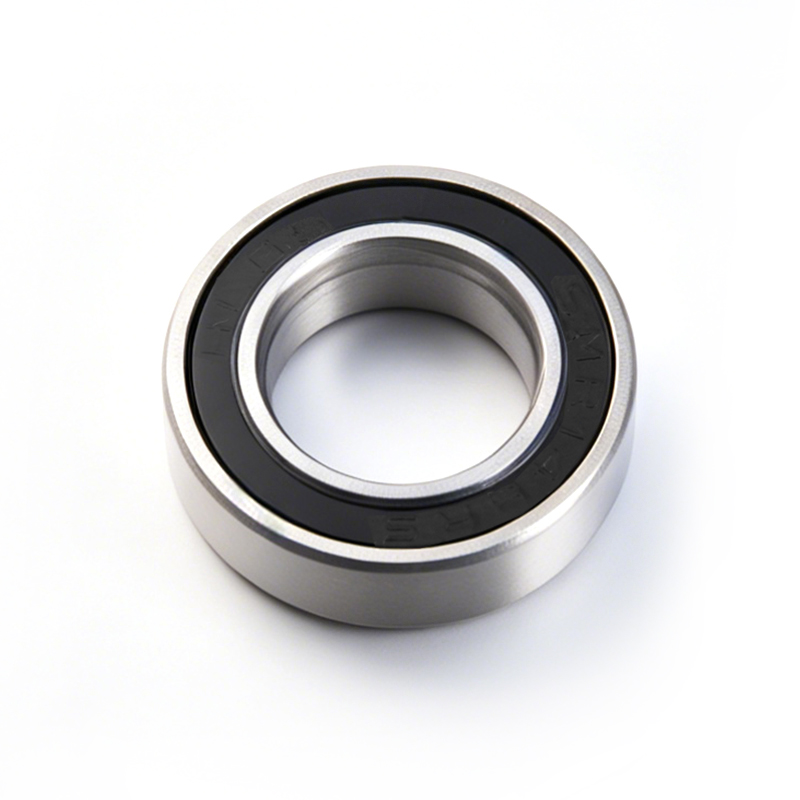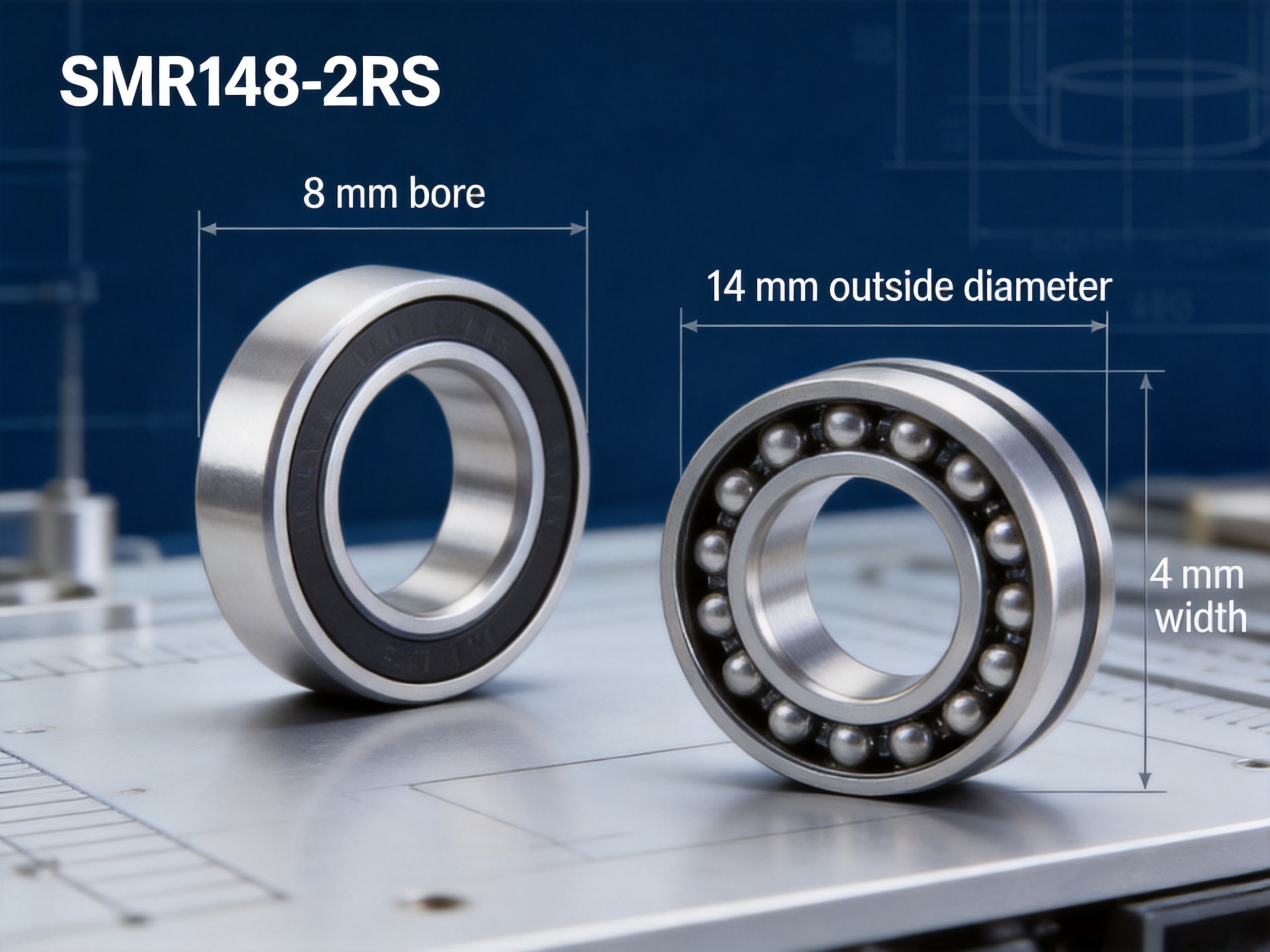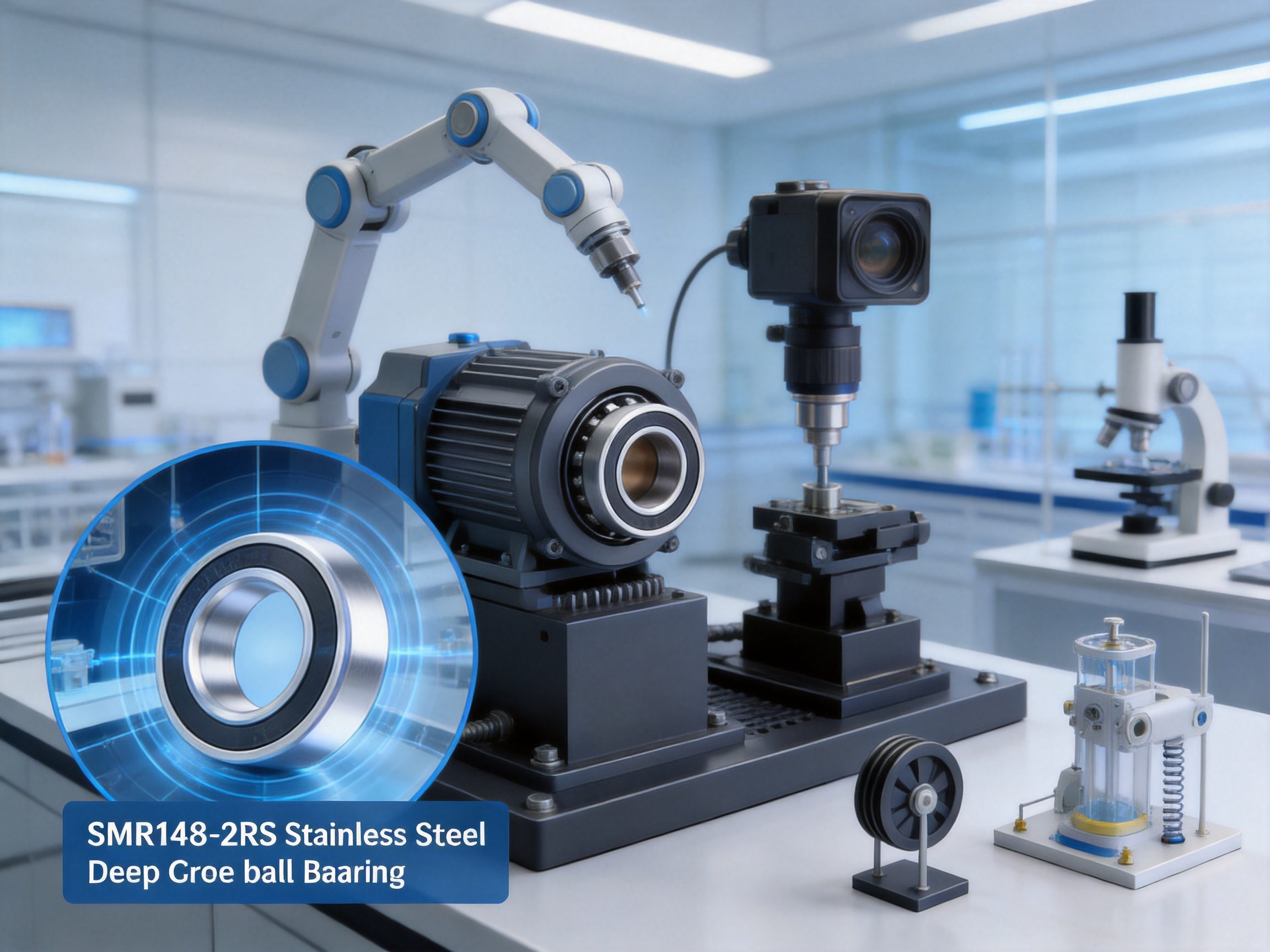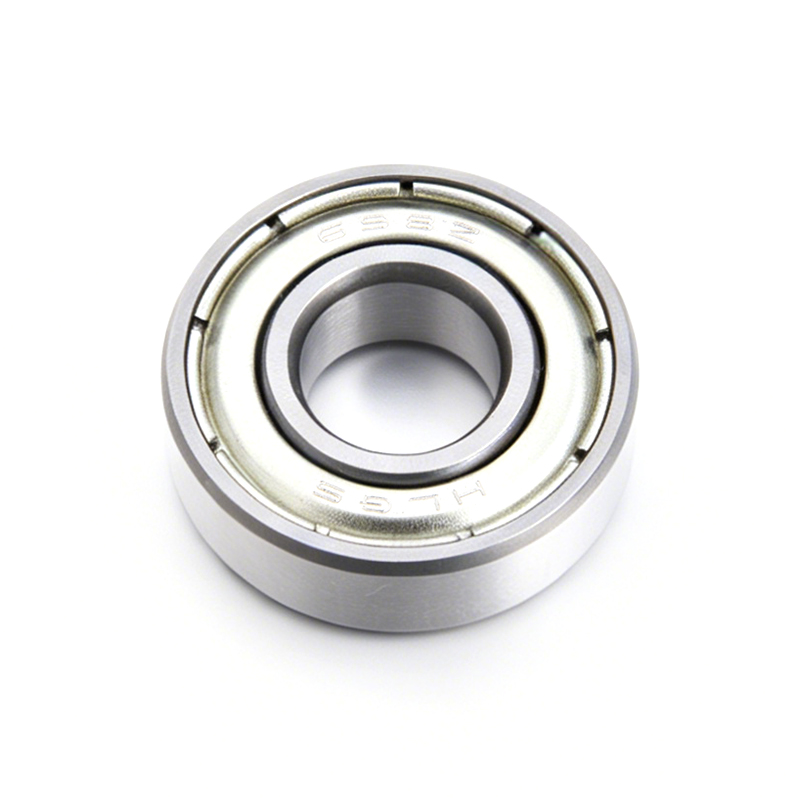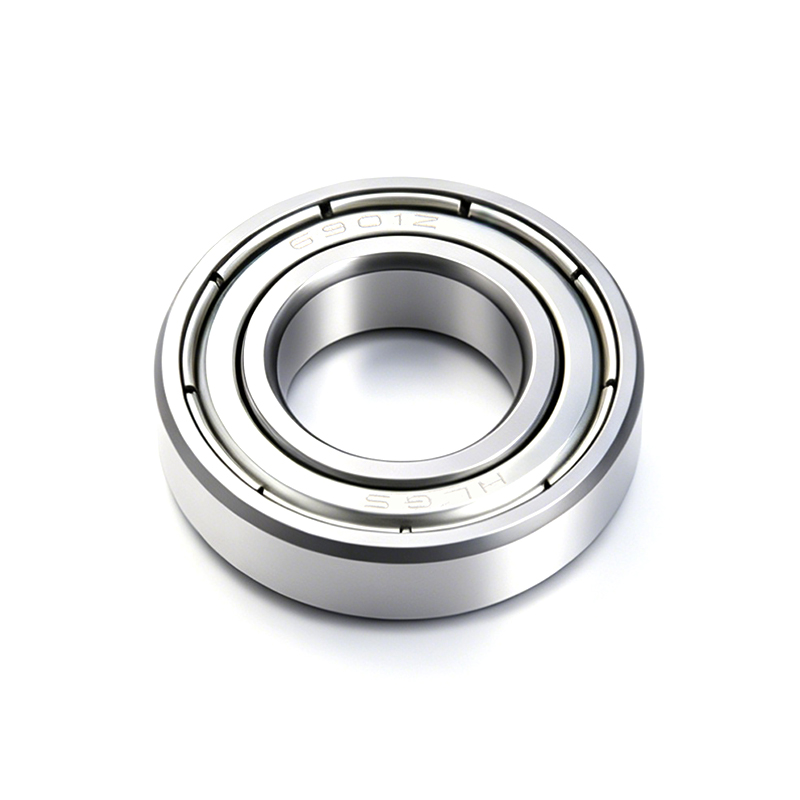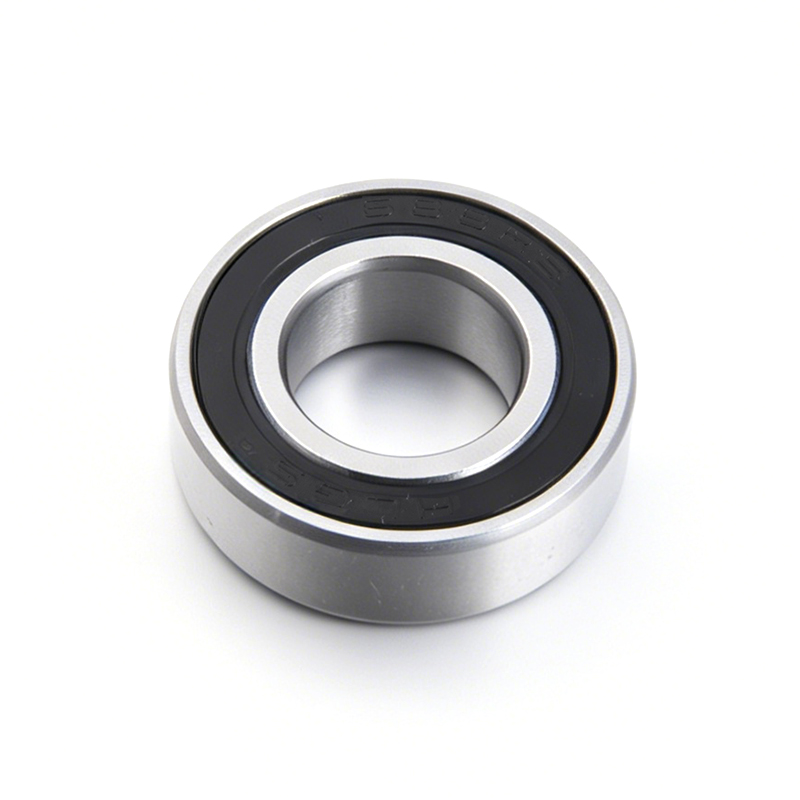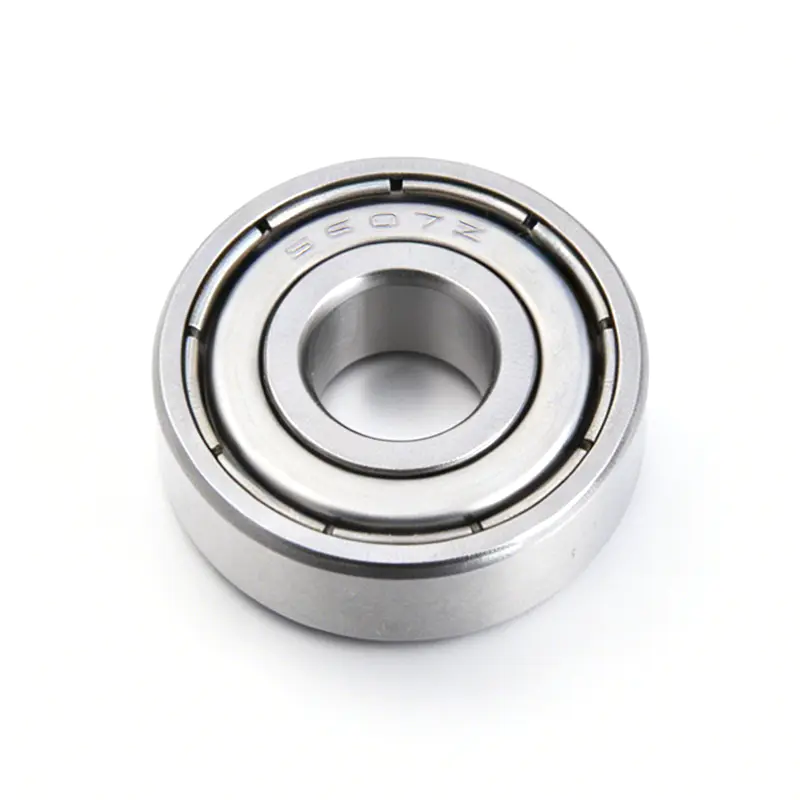
Miniature deep groove ball bearings are essential components in equipment where installation space is limited but smooth, dependable motion is still required. Although their dimensions are small, these bearings influence the noise level, operating life, positioning accuracy, energy consumption, and overall reliability of the finished product. The SMR148-2RS miniature bearing is designed for this type of demanding environment, offering a compact 8 mm bore, 14 mm outside diameter, and 4 mm width in a stainless steel construction.
With its slim profile and corrosion-resistant material, the SMR148-2RS is suitable for small motors, robots, mechanical models, precision instruments, medical devices, dental tools, camera modules, hard disk drives, and other compact electronic or electromechanical equipment. Its miniature geometry allows designers to save valuable space, while its deep groove configuration supports stable radial rotation and moderate combined loading in a wide range of applications.
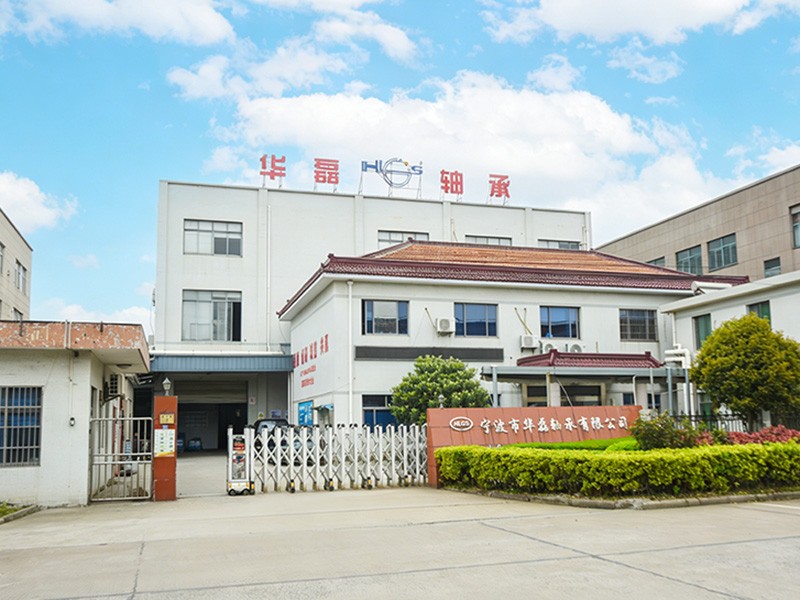
The bearing is manufactured by Ningbo Zhenhai Hualei Bearing Co., Ltd., a specialized producer with experience in miniature deep groove ball bearings dating back to 2001. The company combines controlled production procedures, precision inspection, ISO-based management systems, and OEM and ODM capabilities to serve customers requiring consistent dimensions and repeatable performance. This article examines the product’s construction, technical characteristics, application advantages, manufacturing strengths, quality considerations, installation requirements, and selection criteria.
The SMR148-2RS is a miniature stainless steel deep groove ball bearing intended for compact mechanisms. Its nominal dimensions are 8 × 14 × 4 mm, consisting of an 8 mm bore diameter, a 14 mm outside diameter, and a 4 mm bearing width. These dimensions make it suitable for shafts and housings where standard-size bearings would occupy excessive space or add unnecessary weight.
The bearing uses a deep groove raceway design. This configuration allows the balls to run smoothly between the inner and outer rings while supporting primarily radial loads and limited axial loads in both directions. Deep groove ball bearings are among the most widely used bearing types because they offer a practical balance of low friction, simple installation, rotational stability, and cost efficiency.
The supplied product information identifies the bearing as an SMR148-2RS and describes it as having double metal shields, also commonly designated ZZ. In commercial bearing catalogs, the suffix “2RS” is frequently associated with rubber seals, while “ZZ” generally indicates metal shields. Because suffix conventions can vary by manufacturer, customers should confirm the exact closure construction, lubricant, and suffix interpretation before placing a large order. For the product described here, the stated closure is double metal shielding intended to keep out dust and help retain internal lubrication.
The bearing is made from stainless steel identified in the product information as 440C or AISI 304. These materials have different characteristics, so the exact grade should be confirmed for each purchase specification. Stainless steel construction generally provides better corrosion resistance than ordinary bearing steel, making the bearing more appropriate for humid environments, light contamination, laboratory equipment, and applications where exposed surfaces must have improved resistance to oxidation.
| Parameter | Specification |
| Product number | SMR148-2RS |
| Bearing type | Miniature stainless steel deep groove ball bearing |
| Bore diameter | 8 mm |
| Outside diameter | 14 mm |
| Width | 4 mm |
| Closure stated in supplied data | Double metal shields, commonly identified as ZZ |
| Material stated in supplied data | Stainless steel, 440C or AISI 304 |
| Dynamic load rating | 610 N |
| Static load rating | 290 N |
| Approximate weight | 0.002 kg |
The published dynamic load rating is 610 N, while the static load rating is 290 N. These values are useful for preliminary selection, but they should not be treated as a complete guarantee of service life. Actual performance depends on speed, load direction, shaft and housing fits, lubrication, temperature, contamination, vibration, mounting accuracy, and the required reliability level.

SMR148-2RS Miniature Bearing Is Ideal for Small Motors, Robots and Mechanical Models
One of the primary advantages of the SMR148-2RS is its small envelope. An 8 mm bore accommodates a relatively small shaft, while the 14 mm outside diameter minimizes the housing size. The 4 mm width is especially valuable in assemblies where axial space is restricted. Designers can use the bearing in thin gearboxes, miniature actuators, compact rollers, small pulleys, and lightweight moving mechanisms without enlarging the surrounding structure.
Reducing bearing size can create several secondary benefits. A smaller bearing may reduce the mass of a rotating assembly, lower the torque required for acceleration, simplify the design of support brackets, and provide more room for wiring, sensors, seals, gears, or control boards. In portable equipment and battery-powered devices, reduced rotating mass can help limit energy demand, although system-level testing is always required to quantify the effect.
Miniature bearings also support product miniaturization. Robotics manufacturers can use them in small joints, grippers, sensor linkages, and wheel assemblies. Model builders can incorporate them into articulated mechanisms without compromising the appearance or scale of the model. Manufacturers of camera modules, compact drives, and precision instruments can use the 4 mm width to maintain a thin product profile.
Compared with larger conventional bearings, the SMR148-2RS may reduce the amount of material required for the shaft support and housing. This can simplify machining and lower the total assembly footprint. However, a smaller bearing is not automatically suitable for every load. It must be selected according to the actual radial and axial forces, operating speed, shock conditions, and expected operating life.
Stainless steel is a major differentiating feature of this miniature bearing. Ordinary bearing steels can provide high hardness and load capacity, but they may require greater protection in humid or corrosive environments. Stainless steel offers a useful alternative when resistance to surface oxidation and atmospheric moisture is important.
The product information references 440C and AISI 304 stainless steel. Hardenable 440C stainless steel is commonly selected for bearing rings and rolling elements because it can achieve suitable hardness after heat treatment. AISI 304 is widely recognized for general corrosion resistance, although its mechanical and bearing-related properties differ from those of 440C. Since the two grades are not interchangeable in every performance category, the exact material configuration should be stated clearly on drawings, purchase orders, inspection documents, and approval samples.
In practical terms, the stainless construction can be beneficial in small devices exposed to humidity, occasional condensation, laboratory conditions, clean production areas, and environments where visible corrosion would be unacceptable. It can also be advantageous where routine maintenance is difficult and the bearing must remain stable over long storage or operating periods.
Stainless steel does not mean that the bearing is immune to all forms of corrosion. Chlorides, aggressive cleaning chemicals, salt spray, abrasive contamination, and prolonged immersion can exceed the capability of a standard miniature bearing. Customers working in medical, food-processing, marine, outdoor, or chemical environments should confirm the appropriate grade, lubricant, shielding arrangement, and corrosion test requirements.
When compared with non-stainless miniature bearings of similar dimensions, the SMR148-2RS can offer a stronger corrosion-resistance proposition. This may help reduce premature staining, surface degradation, and maintenance concerns. The actual advantage depends on the competing bearing’s material, coating, seals, lubricant, and exposure conditions, so comparative testing is recommended for critical equipment.
The deep groove raceway is a versatile design that allows the bearing to support radial loads while accommodating limited axial loads. The inner and outer raceways are formed with a continuous groove that closely follows the ball profile. This geometry promotes stable rolling contact and makes the bearing suitable for many rotating components.
For the SMR148-2RS, the deep groove configuration is appropriate for small motors, model mechanisms, instrument shafts, rollers, pulleys, and compact transmission systems. The bearing can help maintain shaft alignment while reducing sliding friction compared with plain bearing arrangements. Its two-directional axial capability can also simplify the design of mechanisms that experience light thrust from either side.
Deep groove bearings are generally easier to install than more specialized bearing types. They do not normally require a complicated adjustment procedure, and they can be used with common shaft and housing arrangements. This simplicity benefits manufacturers producing multiple product models because the same basic bearing type can be incorporated into different mechanisms.
Nevertheless, the bearing should not be subjected to loads outside its intended range. Heavy axial forces, severe shock, large misalignment, excessive belt tension, or high bending moments can shorten service life. If the application includes substantial thrust or angular misalignment, an alternative bearing arrangement may be required.
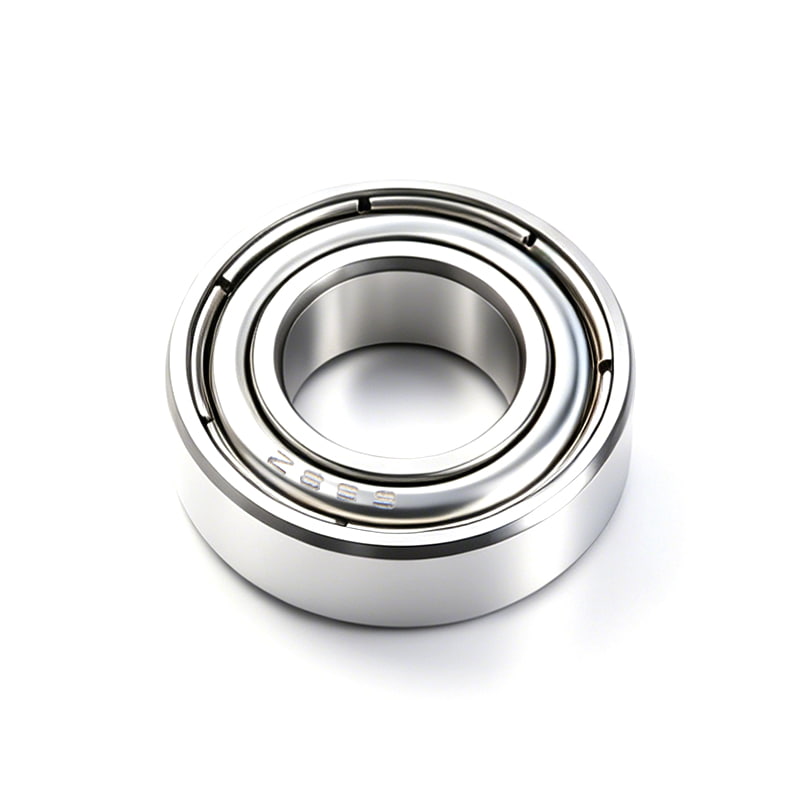
The supplied information describes double metal shields. Metal shields create a narrow non-contacting gap between the shield and the rotating ring. This arrangement helps limit the entry of dust and larger particles while reducing friction compared with a contacting seal. It also assists in retaining the factory-applied lubricant inside the bearing.
Shielded bearings are commonly selected for clean or moderately dusty applications where low rotational resistance is important. They are particularly useful in small motors, fans, instruments, electronic devices, and mechanical models. Because the shields do not normally contact the rotating ring, they can support smooth rotation at higher speeds than some contacting seal arrangements, subject to the bearing design and lubrication limits.
A shield is not a pressure-tight seal. Fine dust, liquid, vapor, or cleaning fluid can still enter through the clearance if the bearing is exposed to severe contamination. In environments involving water spray, oil immersion, abrasive dust, or frequent washdown, a suitable contacting seal or an application-specific bearing design may be more appropriate.
The internal lubricant is an important part of bearing performance. Correct lubrication reduces metal-to-metal contact, limits heat generation, and helps protect the raceways and rolling elements. Because miniature bearings have very small internal volumes, excessive grease can create drag and heat, while insufficient lubricant can accelerate wear. Customers should avoid adding incompatible grease without confirming the original lubricant type and the recommended filling quantity.
Storage conditions also affect lubricant stability. Bearings should be kept in clean, dry packaging away from corrosive vapors, excessive temperature changes, and vibration. Packaging should remain sealed until the bearing is ready for installation. If a bearing has been stored for an extended period, the customer should inspect the packaging and confirm that the lubricant has not dried, separated, or become contaminated.
The 8 × 14 × 4 mm format provides an advantage over larger standard bearings where installation space is limited. A smaller bearing can help reduce the size of the overall mechanism and support compact product architecture. This is valuable in portable electronics, micro-actuators, small robotics, and precision models.
Compared with conventional carbon or chrome steel bearings, stainless steel can provide improved resistance to atmospheric corrosion. This is a practical benefit for applications where moisture exposure or long-term storage could affect ordinary bearing surfaces. The advantage is strongest when the complete bearing specification, including rings, balls, shields, and lubricant, is selected for the operating environment.
Miniature equipment often operates close to users, sensors, microphones, or precision measurement systems. Bearing noise can therefore become a noticeable product issue. A properly manufactured and correctly installed miniature deep groove bearing can deliver smooth rotation and low operating noise. Raceway quality, ball roundness, internal clearance, lubricant condition, and assembly cleanliness all contribute to the final acoustic result.
The compact deep groove design and non-contacting metal shields can help maintain low friction. Reduced rotational resistance is important in small motors, battery-powered devices, and low-torque mechanisms. However, friction is influenced by load, speed, grease quantity, temperature, shaft fit, and seal or shield design. Performance should be validated in the complete assembly rather than judged from the bearing alone.
The SMR148-2RS can serve multiple industries without requiring a highly specialized structure. Its dimensions and deep groove design make it suitable for small electric motors, robotics, medical instruments, dental tools, optical equipment, camera assemblies, hard disk drive mechanisms, and mechanical models. This versatility can reduce the number of unique bearing sizes that a product developer needs to manage.
With an approximate weight of 0.002 kg, the bearing contributes little mass to the finished assembly. Low component weight can support fast acceleration and deceleration in robotic joints and small motor systems. It can also help designers meet portable product targets, although the total system weight and inertia remain the most important factors.
The performance of a miniature bearing depends on more than its nominal dimensions. The rings, rolling elements, cage, shields, lubricant, and packaging must work together within narrow tolerances. A company experienced in miniature bearing production can apply process controls that are specifically suited to small components, where minor defects may have a significant effect on noise and life.
Ningbo Zhenhai Hualei Bearing Co., Ltd. was established in 2001 and focuses on miniature deep groove ball bearings. Its product range covers deep groove bearing applications used in food machinery, household appliances, automotive electromechanical systems, electric tools, mechanical transmission devices, and motors. This industry exposure gives the manufacturer experience with different load conditions, operating speeds, environmental requirements, and customer quality expectations.
A typical precision bearing manufacturing process begins with material preparation. Bearing steel or stainless steel is inspected and processed into ring blanks. Material identity, cleanliness, hardness potential, and dimensional stability are important at this stage. For stainless steel products, the selected grade and heat-treatment response must match the intended bearing function.
The ring blanks are then turned and formed to create the basic inner and outer ring geometry. Subsequent heat treatment improves hardness and wear resistance where required. Grinding and superfinishing operations refine the raceways and bearing surfaces. These stages are critical because raceway waviness, roughness, and form errors can increase vibration, noise, and friction.
Rolling elements are manufactured and graded for size, roundness, and surface quality. In a miniature bearing, a small difference in ball diameter can affect load distribution and rotational smoothness. Ball selection and matching must therefore be controlled carefully. The cage holds the balls at a suitable spacing and helps guide them around the raceways.
After component preparation, the bearing is assembled in a controlled environment. The rings, balls, cage, shields, and lubricant must be fitted without introducing dirt, scratches, dents, or deformation. Clean assembly is particularly important for miniature bearings because their internal clearances are small and their lubricant volume is limited.
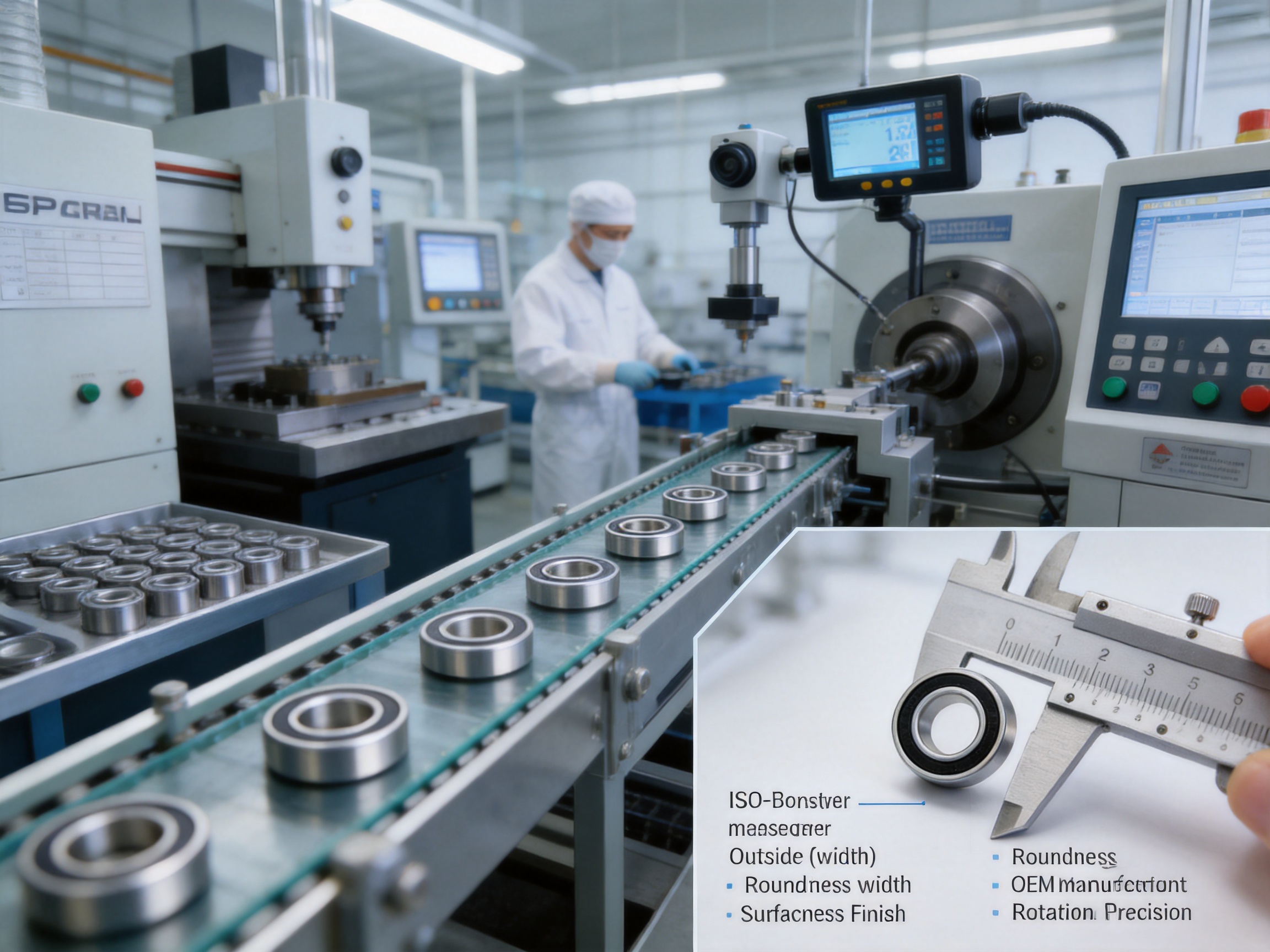
The completed bearings are inspected for dimensions, rotation, noise, vibration, appearance, and other customer-defined characteristics. Advanced inspection equipment allows manufacturers to identify deviations that may not be visible during a basic visual examination. Process data can also support corrective action and improve consistency across production batches.
The company states that it follows ISO 9001 and ISO/TS 16949 management systems. ISO 9001 provides a structured framework for quality management, documentation, process control, customer feedback, corrective action, and continual improvement. ISO/TS 16949 was developed for automotive-related quality requirements and emphasizes defect prevention, traceability, process capability, and risk-based control.
These management systems can be valuable even when a bearing is used outside the automotive industry. Customers in electronics, motors, robotics, appliances, and industrial equipment also benefit from documented procedures and consistent inspection practices. A structured quality system helps ensure that production is not dependent only on individual operator experience.
For a miniature bearing, useful quality checks may include bore diameter, outside diameter, width, radial runout, axial runout, internal clearance, shield fit, rotational torque, noise, vibration, surface finish, and corrosion appearance. Depending on the customer’s specification, testing may also include speed testing, temperature evaluation, load testing, grease compatibility, and endurance testing.
Dynamic and static load ratings should be supported by appropriate calculation methods and product testing. The published 610 N dynamic rating and 290 N static rating provide a reference for product selection, but the bearing’s actual life depends on application conditions. For high-volume or safety-related products, customers may request inspection reports, sample approval, process capability data, or batch traceability documentation.
Incoming material inspection is another important quality step. Stainless steel should be verified against the agreed material grade, while shield material, cage material, and lubricant should be controlled according to the product drawing or technical agreement. Such controls reduce the risk of variation between production batches.
Packaging inspection is also important. Miniature bearings can be damaged by impact, moisture, or contamination before they reach the assembly line. Suitable packaging should protect the bearing from dust, corrosion, and deformation during storage and transport. Clear labeling supports inventory control and helps prevent the accidental mixing of similar bearing sizes.
Different customers may require variations in material, clearance, lubricant, shield arrangement, packaging, inspection, or marking. The company established Ningbo Hotex Mechanical & Electrical Technology Co., Ltd. in 2016 as its import and export department and provides OEM and ODM services. This structure supports communication with international customers and allows product requirements to be discussed beyond standard catalog specifications.
OEM cooperation is useful when a customer already has a defined bearing drawing or an established bill of materials. The manufacturer can produce according to the agreed dimensions, materials, tolerances, marking, packaging, and inspection requirements. ODM cooperation is more appropriate when the customer needs technical assistance in adapting a standard bearing to a new device or application.
For a product such as the SMR148-2RS, customization discussions may include stainless steel grade, internal clearance, cage configuration, shield material, lubricant, noise class, dimensional tolerance, corrosion testing, and packaging quantity. Any change should be documented and confirmed through samples before mass production.
Professional technical communication is especially important when suffixes have different meanings in different markets. The discrepancy between the “2RS” product designation and the stated metal shield arrangement illustrates why a drawing or written specification should define the closure type directly. Clear terminology reduces the possibility of receiving a product that technically matches a name but differs from the customer’s intended construction.
Small motors require bearings that can rotate smoothly while occupying minimal space. The SMR148-2RS can support rotor shafts in compact motors used in appliances, instruments, fans, toys, and automation equipment. The low mass and miniature dimensions help preserve the motor’s compact design, while the metal shields assist with lubricant retention and dust control.
Motor designers must consider rotational speed, shaft fit, electrical current paths, temperature, vibration, and balance. If a motor operates at high speed, the bearing should be tested at the intended speed with the selected lubricant and preload arrangement. Electrical current passing through a bearing can cause surface damage, so the complete motor design should address insulation and grounding requirements when applicable.
Small robots and automated mechanisms often contain numerous rotating joints, linkages, rollers, and sensor assemblies. The 4 mm width of the SMR148-2RS can help reduce joint thickness and preserve space for actuators or control electronics. Its stainless construction is useful in environments where equipment may experience humidity, handling, or frequent changes in operating conditions.
Robotic applications may generate reversing loads, acceleration shocks, and intermittent duty cycles. The bearing should therefore be evaluated under the actual motion profile rather than only under a constant-speed rotation test. Proper shaft alignment and housing rigidity are also essential because miniature bearings have limited tolerance for mounting distortion.
Mechanical models, educational mechanisms, remote-control equipment, and hobby devices benefit from small bearings that are easy to integrate. The SMR148-2RS can provide smoother movement than a simple hole, bushing, or improvised spacer. Its small size allows model builders to create realistic wheels, pulleys, gear trains, and articulated sections.
Model applications may involve relatively low loads but frequent starts and stops. Clean assembly is still important because dust, fibers, and excess adhesive can interfere with the bearing shields or enter the rolling path. The bearing should be pressed into position using the correct ring, not by transmitting assembly force through the rolling elements.
Compact medical and laboratory equipment can require smooth, low-noise motion and improved corrosion resistance. The bearing may be used in small pumps, instrument mechanisms, sample-handling systems, optical adjustments, and other low-load assemblies. Stainless steel can be advantageous where visible oxidation or material degradation would be undesirable.
The bearing should not be assumed to be suitable for direct patient-contact equipment, sterilization cycles, liquid immersion, or regulated medical applications without additional validation. Customers should review material declarations, lubricant compatibility, cleaning procedures, biocompatibility requirements, and relevant regulatory documentation before use.
Dental equipment often includes miniature high-speed mechanisms where vibration, noise, heat, and contamination control are important. The SMR148-2RS may be considered for appropriate low-load auxiliary mechanisms, compact drive components, or instrument assemblies. However, high-speed dental handpieces can impose demanding conditions that require specialized bearing designs, precise lubrication, and rigorous endurance testing.
Camera modules, optical instruments, and focusing mechanisms frequently have very limited installation space. A miniature bearing can support smooth adjustment of rotating rings, lens components, shutters, or small drive mechanisms. Low noise and low torque are valuable because irregular movement may affect focusing accuracy or user perception.
Optical equipment manufacturers should pay close attention to lubricant outgassing, particle generation, temperature range, and dimensional repeatability. A bearing that performs well in a general mechanical assembly may require additional qualification before use in a sensitive optical or imaging environment.
Hard disk drives and other precision electronic systems depend on stable, low-vibration rotating components. Miniature bearing dimensions can support compact drive architectures, while controlled manufacturing helps reduce vibration and acoustic disturbances. The final suitability depends on the equipment’s speed, balance, cleanliness standard, lubricant requirements, and long-term reliability target.
For highly sensitive electronic equipment, customers should request application-specific data rather than relying only on general catalog values. Noise and vibration classifications, cleanroom assembly requirements, and endurance results may be necessary for product approval.
Correct installation is essential for achieving the expected performance of any miniature bearing. Before installation, inspect the bearing and packaging for damage. Confirm the product number, dimensions, closure type, material specification, and quantity. Do not install a bearing that has visible dents, rust, contamination, shield deformation, or abnormal roughness during manual rotation.
The shaft and housing should be clean, correctly dimensioned, and free from burrs. A shaft that is too large can reduce internal clearance and increase friction, while an undersized shaft can permit creeping or fretting. Similarly, an excessively tight housing fit can distort the outer ring and raceway. Fit selection should account for the rotating ring, load direction, temperature, material expansion, and operating speed.
When pressing the bearing onto a shaft, apply force only to the inner ring if the fit is on the inner ring. When pressing the bearing into a housing, apply force only to the outer ring. Passing installation force through the balls can create brinelling, raceway dents, or hidden damage that later appears as noise and premature failure.
Use clean tools with suitable alignment. Avoid hammering directly on the bearing. If a press is unavailable, an appropriate installation sleeve may distribute force evenly, but improvised tools should not contact or deform the shields. Do not rotate the bearing aggressively while it is being pressed into position.
After installation, verify that the shaft turns freely and that there is no unusual noise, binding, or excessive play. Check the alignment of adjacent components and ensure that belts, gears, couplings, or pulleys are not applying unintended side loads. If the bearing is installed in a motor or precision assembly, perform a run-in test at gradually increasing speed.
Shielded miniature bearings are often supplied with factory lubricant and may be intended for maintenance-free operation under normal conditions. Nevertheless, service life is influenced by the cleanliness of the surrounding assembly. Dust, metal particles, fibers, condensation, and aggressive chemicals can shorten life even when the bearing itself is correctly manufactured.
Maintenance personnel should monitor changes in noise, vibration, temperature, torque, and running smoothness. A gradual increase in noise may indicate lubricant deterioration, contamination, raceway wear, or mounting problems. Increased temperature can result from excessive load, incorrect fit, over-lubrication, high speed, or inadequate heat dissipation.
Re-lubrication is not always practical for a shielded miniature bearing. Removing the shields may damage them or introduce contamination. If relubrication is required, the customer should obtain the manufacturer’s recommendation for lubricant type, quantity, compatibility, and procedure. Mixing different greases without technical confirmation can cause separation, hardening, or reduced lubrication performance.
Operating life calculations should include the actual load spectrum. Intermittent mechanisms may experience different stresses from continuous rotating equipment. Start-stop cycles, reversing motion, shock loads, vibration, and storage time can influence the result. For critical applications, endurance testing using production-intent parts is more reliable than a calculation based only on nominal load ratings.
When selecting the SMR148-2RS, customers should first confirm the required dimensions: 8 mm bore, 14 mm outside diameter, and 4 mm width. They should then define the load, speed, temperature, contamination level, humidity, expected life, and installation arrangement. A complete specification prevents the bearing from being selected solely by size.
The closure designation should be clarified in writing. The supplied information describes double metal shields, commonly called ZZ, while the product number includes “2RS.” Customers should request a drawing or technical data sheet that identifies whether the closure is a non-contacting metal shield, a contacting rubber seal, or another construction. This detail affects friction, speed, water resistance, lubricant retention, and operating temperature.
Material requirements should also be confirmed. If the application needs hardened stainless steel, the customer should specify the required grade and heat-treatment condition. If general corrosion resistance is the main concern, the customer should define the exposure conditions and corrosion test method. A material name alone may not provide enough information for regulated or highly demanding applications.
Customers should ask about radial internal clearance, precision class, noise grade, lubricant, cage material, shield material, and packaging. For large-volume programs, sample approval, first-article inspection, lot traceability, and change-control procedures can help maintain consistency. OEM and ODM communication should include drawings, tolerance requirements, acceptance criteria, and the intended use environment.
Supplier capability is another important selection factor. A bearing supplier with long-term experience, documented management systems, advanced inspection equipment, and international OEM support can provide more than a standard component. Technical assistance during design review may help prevent fit errors, overloading, incorrect sealing assumptions, and unsuitable lubricant choices.
A specialized miniature bearing manufacturer understands that small bearings require different process priorities from large industrial bearings. Dimensional tolerances are compact, internal volumes are small, and noise or torque variations can have a noticeable effect on the customer’s product. Dedicated production experience helps the supplier identify these factors during design, manufacturing, inspection, and application support.
Ningbo Zhenhai Hualei Bearing Co., Ltd. has operated since 2001 and concentrates on miniature deep groove ball bearings. Its experience across food machinery, household appliances, automotive electromechanical products, electric tools, transmission systems, and motors indicates familiarity with varied customer requirements. The company’s stated ISO 9001 and ISO/TS 16949 management systems provide a framework for documented quality control and continual improvement.
The company also emphasizes advanced testing equipment and strict product inspection. For customers, this can support more predictable incoming quality and reduce the risk of production interruptions caused by inconsistent bearing dimensions or abnormal noise. The availability of OEM and ODM services further assists customers that need customized specifications, packaging, or technical cooperation.
Another strength is its export-oriented support structure. International customers often need clear documentation, responsive communication, shipment coordination, and consistent product identification. A dedicated import and export department can help coordinate these activities and support long-term cooperation with overseas buyers.
Supplier strength should ultimately be evaluated through samples, documentation, audits, testing, and performance in the customer’s own equipment. However, manufacturing history, quality-system experience, product focus, and technical service capability are valuable indicators when comparing potential sources.
The SMR148-2RS is intended for compact, light-load, precision-oriented applications. It should not be treated as a universal replacement for larger bearings, full-contact sealed bearings, high-capacity roller bearings, or specialized high-speed spindle bearings. Applications involving heavy shock, high thrust, severe contamination, continuous water exposure, extreme temperature, or substantial misalignment require additional evaluation.
The stated dynamic and static load ratings should be compared with the calculated application loads using an appropriate safety factor. Static loading can cause permanent deformation if excessive force is applied while the bearing is stationary or oscillating slowly. Dynamic loading can produce fatigue over time, especially when the bearing operates continuously at elevated speed.
Stainless steel provides corrosion resistance but may have different load and hardness characteristics from standard bearing steel. Customers who prioritize maximum load capacity should compare the stainless model with an equivalent bearing made from high-carbon chromium steel. Customers who prioritize corrosion resistance, appearance, or environmental stability may find stainless construction more suitable.
Finally, product suffixes, material descriptions, and shield terms should be confirmed before purchasing. A clear technical agreement is the best way to ensure that the delivered bearing matches the intended performance.
The nominal dimensions are 8 mm bore diameter, 14 mm outside diameter, and 4 mm width. These dimensions make it a compact miniature bearing for small shafts and limited installation spaces.
It is a miniature stainless steel deep groove ball bearing. The deep groove design primarily supports radial loads and can accommodate limited axial loads in both directions.
The supplied product information describes double metal shields, commonly designated ZZ, although the product number contains “2RS.” Because suffix conventions differ among manufacturers, customers should confirm the exact closure construction with the supplier before ordering.
The stated dynamic load rating is 610 N. This value is used for preliminary bearing selection and life calculations, but actual service life depends on load, speed, lubrication, temperature, fit, alignment, contamination, and operating cycle.
The stated static load rating is 290 N. The actual allowable static load should be determined according to the required safety factor, load direction, shock conditions, and acceptable permanent deformation.
Stainless steel can provide improved resistance to atmospheric moisture and surface corrosion compared with ordinary bearing steel. It is useful in humid, clean, laboratory, outdoor, or appearance-sensitive applications, provided the selected grade and lubricant are suitable for the environment.
It may be suitable for certain small motors, but speed capability must be confirmed through the manufacturer’s technical data and application testing. Shield type, lubricant, internal clearance, balance, temperature, and shaft fit all influence high-speed performance.
It may be considered for suitable low-load mechanisms in medical or laboratory equipment. However, medical applications require additional validation of materials, lubricant, cleaning, sterilization, corrosion resistance, particle generation, and regulatory requirements.
Re-lubrication should not be performed without technical guidance. The correct grease type, quantity, compatibility, and shield-removal procedure must be confirmed. In many miniature applications, replacing the bearing is more practical than attempting to service it.
Keep the bearing and surrounding components clean, use correctly dimensioned shafts and housings, and apply installation force only to the ring being fitted. Avoid transmitting force through the balls and do not strike the bearing directly with a hammer.
Potential applications include small motors, robotics, mechanical models, precision instruments, small medical devices, dental tools, camera modules, hard disk drives, household equipment, electronic mechanisms, and compact transmission systems.
The manufacturer provides OEM and ODM services. Potential customization areas may include material, clearance, lubricant, shield arrangement, precision, noise requirements, packaging, marking, and inspection documentation. Any customization should be confirmed through a technical drawing and approved samples.
Customers should confirm dimensions, closure construction, stainless steel grade, internal clearance, load ratings, speed requirements, lubricant, tolerance class, noise grade, packaging, inspection documents, traceability, delivery requirements, and any special environmental or regulatory standards.
The SMR148-2RS miniature bearing is designed for applications that require compact dimensions, smooth rotation, low noise, and improved resistance to corrosion. Its 8 × 14 × 4 mm format allows it to fit into small motors, robots, mechanical models, precision instruments, camera assemblies, electronic equipment, and other space-constrained mechanisms. The deep groove design provides versatile radial support with limited axial capacity, while the stated double metal shields help reduce dust entry and retain internal lubrication.
Its most important advantages over general-purpose alternatives are its miniature envelope, stainless steel construction, low weight, broad application compatibility, and suitability for precision-oriented equipment. At the same time, customers should select the bearing according to real operating conditions rather than dimensions alone. Load, speed, temperature, contamination, fit, alignment, lubricant, and required service life all affect performance.
Ningbo Zhenhai Hualei Bearing Co., Ltd. supports the product with long-term miniature bearing manufacturing experience, structured quality management, advanced inspection practices, and OEM and ODM services. Its experience serving multiple industries provides a foundation for supplying standard and customized deep groove ball bearings to international customers.
Before final approval, buyers should clarify the apparent difference between the “2RS” product designation and the stated metal shield construction, confirm whether the stainless steel is 440C or AISI 304, and request application-specific technical documentation. With these details controlled, the SMR148-2RS can be a practical and reliable solution for compact rotating mechanisms that require precision, stable performance, and improved environmental resistance.
International Organization for Standardization. Quality Management Systems — Requirements, ISO 9001.
International Automotive Task Force. Quality Management System Requirements for Automotive Production and Relevant Service Parts Organizations, IATF 16949.
International Organization for Standardization. Rolling Bearings — Dynamic Load Ratings and Rating Life.
International Organization for Standardization. Rolling Bearings — Static Load Ratings.
International Organization for Standardization. Rolling Bearings — Tolerances, Internal Clearances, and Dimensional Specifications.
Association for the Advancement of Medical Instrumentation. General principles for the evaluation of materials and components used in medical equipment.
Manufacturer-provided product specifications for the SMR148-2RS miniature stainless steel deep groove ball bearing.
Manufacturer-provided company information concerning miniature bearing production, quality management, OEM services, and ODM services.
A motor that has run for years rarely announces a bearing failure early. The first sign is a low hu...
Direct Answer Stainless steel bearings are the correct choice whenever a rotating assembly must re...
Imagine a small electric motor in a kitchen appliance that starts making a grinding noise after a f...
The Direct Answer: A Deep Groove Ball Bearing Supports Both Radial and Axial Loads Using a Simple, ...